Pecans Resources
-
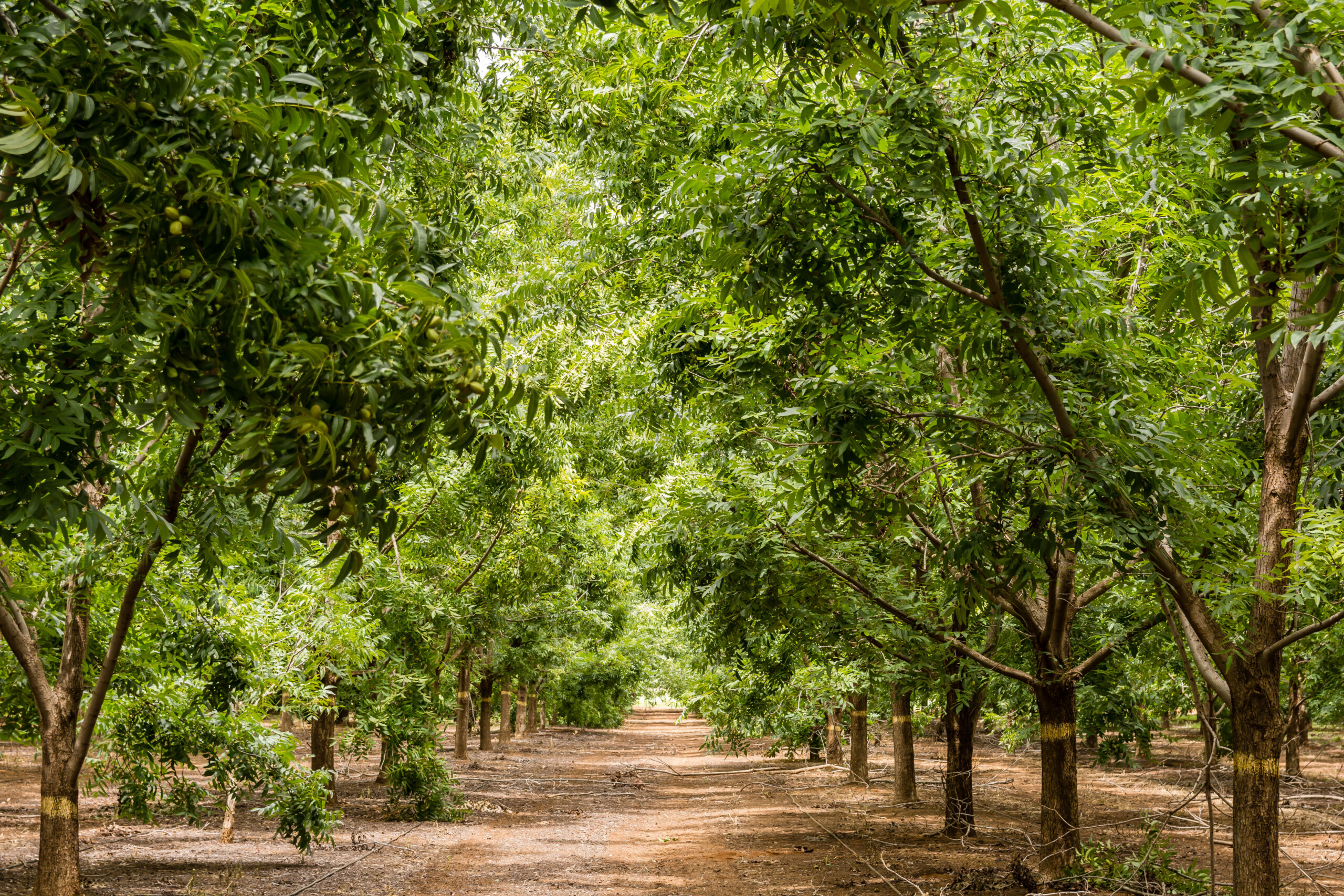
As pecan trees grow in an orchard, their tree canopies encroach upon one another, causing excessive shading, which can increase alternate bearing intensity and reduce tree health and orchard profitability. The southeastern U.S. is a relatively low-light environment, exhibiting significant cloud cover and atmospheric water vapor throughout the growing season, which can further limit sunlight in orchard systems. Mechanical hedge pruning offers a solution to this problem, which can also help minimize issues related to pecan scab, hurricanes/tropical storms, and alternate bearing.
|
-

AP 130-1-04
2023 Fruits and Tree Nuts Outlook
1. The three major U.S. peach-producing states experienced a significant fall in production which cumulatively reduced our 2022 production by 15%. Since it is difficult to predict whether the weather and water shortage that contributed to the decrease in production will persist, chances are that the situation may improve in 2023, but not by much. 2. The significantly high price received by peach and orange producers was instrumental in maintaining a strong consumer price index in 2022. The producer price index is expected to stay strong in 2023. 3. In 2023, blueberry imports from Chile, Peru, and Mexico will continue to increase—domestic harvests only get into the market beginning mid-March, and total production is not enough to satisfy high domestic demand. 4. Georgia pecans will continue to dominate the tree-nut industry in the 2023 crop year and prices are expected to improve, especially if China increases it imports of U.S. pecans.
|
-

C 1174
Pecan Management
This resource is a handy reference calendar for pecan production in the Southeastern U.S. to assist in management decisions regarding crop phenology, irrigation and fertilization requirements, disease, and insect and mite arthropod pest management. It also includes information on production activities including timing for planting, harvesting, and nutrient sampling. Information on bearing and non-bearing trees are provided to address the different management requirements for these orchards. Temporally precise management decisions on horticultural activities, disease suppression, and insect pest control will maximize efficiency, improve tree health, optimize crop quality and yield, and promote ecological and economic sustainability.
|
-
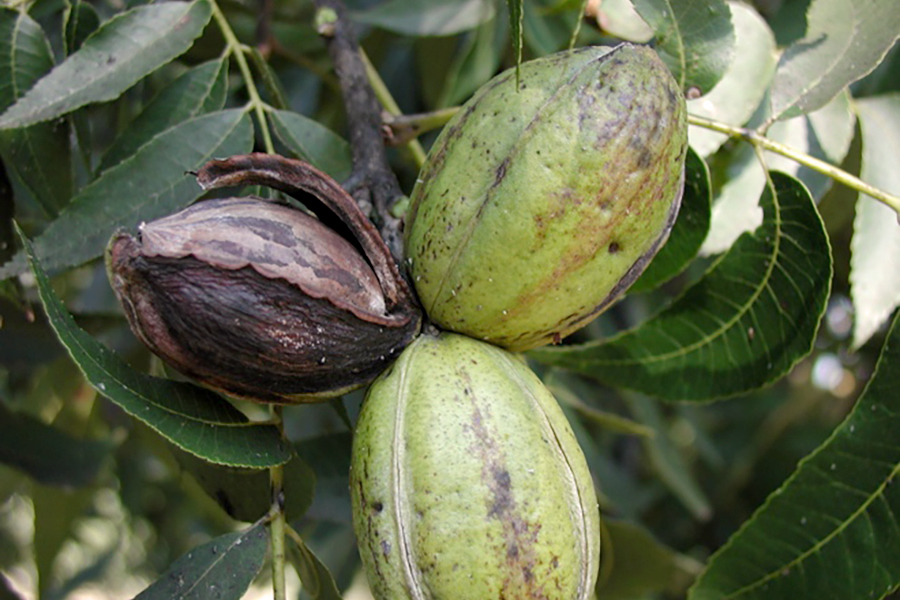
Some of the more difficult-to-diagnose pecan disorders include nutritional imbalances, nutrient deficiencies, or environmentally induced disorders. Some nutrients may be more available than others on certain soil types and under certain soil conditions, and complex interactions often occur between nutrients. This resource explains to pecan growers what to look for and how to handle these issues.
|
-

Georgia pecan orchards are often found growing adjacent to fields of annual row crops, timber, and pastures. As a result, the tree canopies of these orchards are susceptible to injury from herbicide drift from the adjacent operations when herbicide applications are made under conditions unsuitable for spraying. Drift may also occur when cotton fields are sprayed with chemical defoliants in the fall. Pecan tree roots often extend into an adjacent row crop fields and can compete with the row crop for available soil, water, and nutrients. Under such conditions, trees may also absorb residual herbicides from the soil in these fields.
|
-
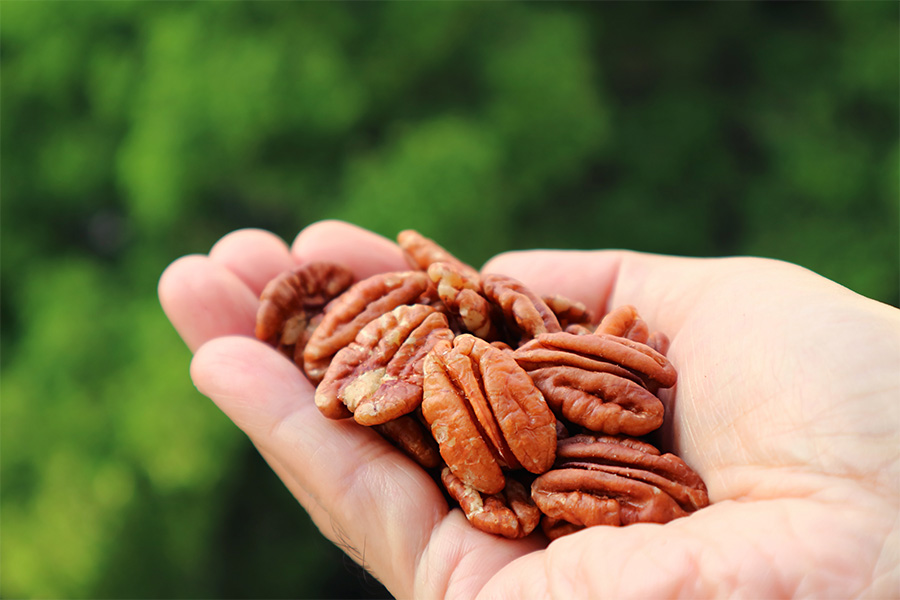
The most fundamental step in pecan production is the selection of varieties or cultivars to be planted in the orchard. Planting the wrong pecan variety can be a costly mistake, resulting in considerable expense. This publication includes descriptions and photos of pecan varieties suitable for planting in Georgia orchards.
|
-

Research shows that drip irrigation is highly beneficial to pecan trees in Georgia, even in wet years. This resource explains the benefits that drip irrigation offers.
|