UGA College of Agricultural & Environmental Sciences Field Report
  • Stories
    Almanac

    Science in service of humanity and the environment

    Read our annual magazine here

    READ


    Dive into engaging stories that showcase our statewide, national and global impact.

    Check out our written stories here

    LOOK


    Browse curated photo galleries capturing the people, places and programs that bring CAES to life.

    Check out our photo galleries here

    WATCH


    Experience our stories through videos that highlight our people, projects and passions in action.

    Check out our video library here

    LISTEN


    Tune in to “Cultivating Curiosity,” our podcast featuring in-depth conversations with CAES experts.

    Check out our podcast here
  • Expert Resources

    Expert Resources


    From farms and gardens to families and finances, our expert resources empower Georgians with trustworthy, practical science.

    Gardening
    Invasive species
    Food and food safety
    Ants, termites and other pests
    Pollinators
    Livestock
    Emergency preparedness
    Home safety and maintenance
    Health, family and finances
    Nutrition
    Water quality
    Lawn maintenance and landscaping
    Turfgrass
    View all topics

    What is an Expert Resource?


    We publish unbiased, research-backed expert advice to empower Georgians with practical, trustworthy information they can trust.

    These resources are written and reviewed by experts in the UGA College of Agricultural and Environmental Sciences and the UGA College of Family and Consumer Sciences.

    Learn how we produce science you can trust
  • Events
  • Contact
  • Read
  • Look
  • Watch
  • Listen
Subscribe
  • LinkedIn
  • Facebook
  • Instagram
  • Stories
    Almanac

    Science in service of humanity and the environment

    Read our annual magazine here

    READ


    Dive into engaging stories that showcase our statewide, national and global impact.

    Check out our written stories here

    LOOK


    Browse curated photo galleries capturing the people, places and programs that bring CAES to life.

    Check out our photo galleries here

    WATCH


    Experience our stories through videos that highlight our people, projects and passions in action.

    Check out our video library here

    LISTEN


    Tune in to “Cultivating Curiosity,” our podcast featuring in-depth conversations with CAES experts.

    Check out our podcast here
  • Expert Resources

    Expert Resources


    From farms and gardens to families and finances, our expert resources empower Georgians with trustworthy, practical science.

    Gardening
    Invasive species
    Food and food safety
    Ants, termites and other pests
    Pollinators
    Livestock
    Emergency preparedness
    Home safety and maintenance
    Health, family and finances
    Nutrition
    Water quality
    Lawn maintenance and landscaping
    Turfgrass
    View all topics

    What is an Expert Resource?


    We publish unbiased, research-backed expert advice to empower Georgians with practical, trustworthy information they can trust.

    These resources are written and reviewed by experts in the UGA College of Agricultural and Environmental Sciences and the UGA College of Family and Consumer Sciences.

    Learn how we produce science you can trust
  • Events
  • Contact
  • Read
  • Look
  • Watch
  • Listen
Subscribe
  • LinkedIn
  • Facebook
  • Instagram
Subscribe
  • LinkedIn
  • Facebook
  • Instagram
  1. Home
  2. Expert Resources
  3. Topics
  4. Animal Production
  5. Poultry

Poultry Resources

Use the Advanced Search
  • Nutritional Response Determination Optimization Workbook v. 1.0

    B 1468

    Nutritional Response Determination Optimization Workbook v. 1.0

    An Excel workbook, Nutritional Response Determination Optimization (NuRDO). has been developed to simulate the optimal number or nutrient levels and replicates per level when planning nutritional requirement studies. With NuRDO, researchers can simulate data from what they think is the real shape of the response curve. They can then run up to 1,000 simulated experiments to see the combination of levels and replications that minimize the standard error or the requirements and other parameters for the broken-line models. SK and hyperbolic models. For example, consider the BLL model with a “true” requirement (REQ) of 5.2, a maximum of 99 units, a rate constant of 18.6 and a CV of 10%:For 5 input levels and 10 reps per level, the estimated REQ ± SD is equal to 5.196±0. 106, for 10 levels & 5 reps each, the REQ is 5.231±0 .157. The workbook can be used in this manner to determine the best combination of levels and reps to improve the chances or getting the best results possible from experiments.

    Gene M. Pesti

    |

    Feb. 3, 2017
  • B 1301

    Poultry Drinking Water Primer

    Water is a critical nutrient that receives little attention until a problem arises. Not only should producers make an effort to provide water in adequate quantity, they should also know what is in the water to be used in evaporative cooling systems and consumed by the birds.

    Casey W. Ritz and Brian D. Fairchild

    |

    April 14, 2015
  • Small Farm Nutrient Management Primer: For Un-permitted Animal Feeding Operations

    B 1293

    Small Farm Nutrient Management Primer: For Un-permitted Animal Feeding Operations

    Producers need to be aware of the impacts that manure can have on water and air quality. However, management of manure and other byproducts of livestock and poultry production has important impacts on farm profitability, neighbor relations and protecting soil and water quality.

    This publication covers: Farm and Homestead Maps; Manure Storage and Treatment; Nutrient Budgeting with Nitrogen and Phosphorus; Land Application of Manure and Fertilizers; Grazing Land; Pesticide and Chemical Management for Water Quality; Mortality Management; Record Keeping; Coexisting with Neighbors; Emergency Action Plans; and other resources.

    L. Mark Risse and Thomas M. Bass

    |

    Feb. 17, 2015
  • Factors Contributing to Poultry House Structural Failures

    B 1391

    Factors Contributing to Poultry House Structural Failures

    Most structural failures in poultry houses are due to a combination of weaknesses in the structural members, including the foundation, walls, trusses and the connections between them. Improvements in any of the factors described in this publication will help the strength of the building.

    Michael Czarick, John W. Worley, and Sidney A. Thompson

    |

    Sept. 15, 2014
  • CNMP Development Checklist for Dry Litter Poultry CAFOs

    C 886

    CNMP Development Checklist for Dry Litter Poultry CAFOs

    This publication outlines the information needed to develop a Comprehensive Nutrient Management Plan (CNMP) for dry poultry litter operations.

    Casey W. Ritz

    |

    Dec. 16, 2013
  • Pen-size Optimization Workbook of Experimental Research Design (POWER for Poultry)

    B 1417

    Pen-size Optimization Workbook of Experimental Research Design (POWER for Poultry)

    This publication contains an Excel spreadsheet to help researchers determine the correct poultry population size for their experiments.

    Mi Yeon Shim and Gene M. Pesti

    |

    March 31, 2013
  • B 1287

    Environmental Factors to Control when Brooding Chicks

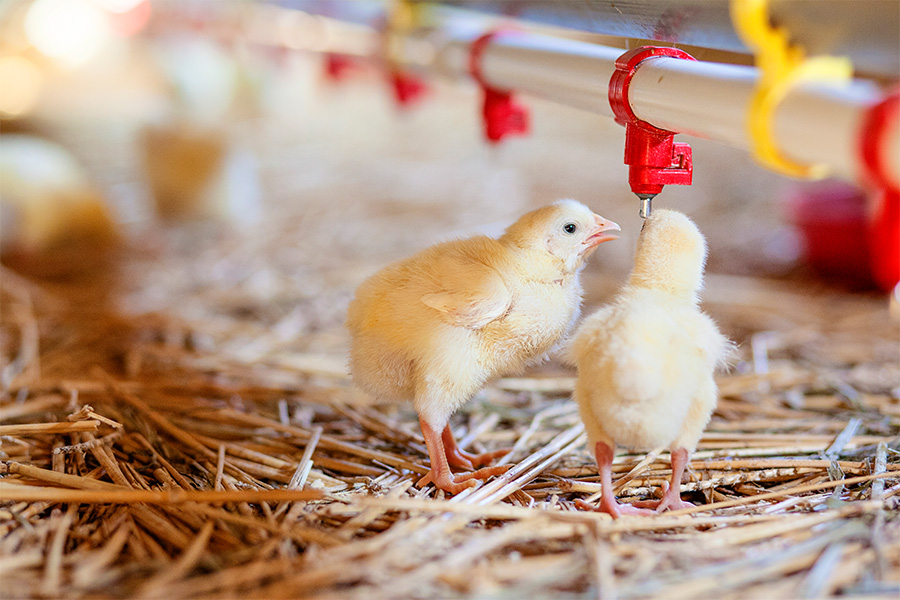
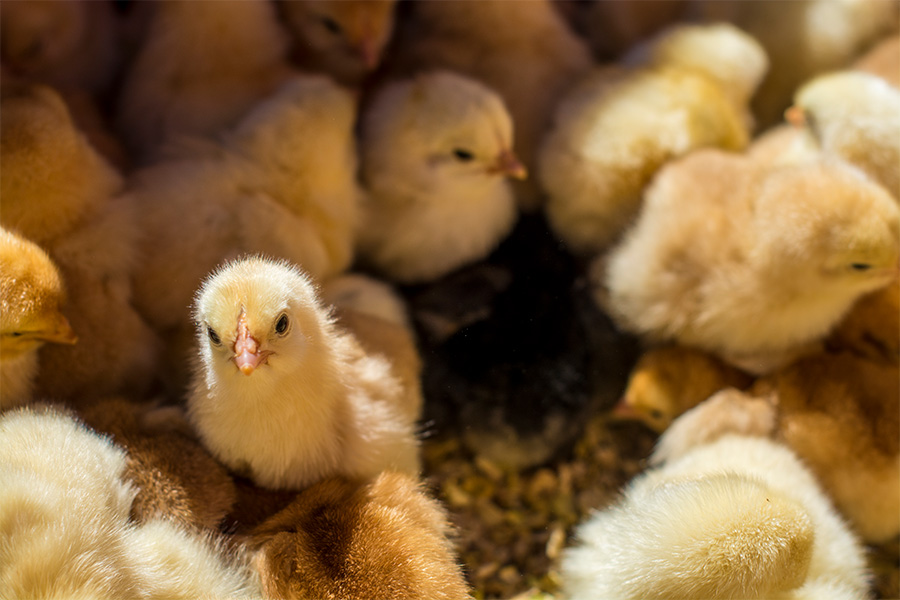
    The main objective in brooding chicks is to efficiently and economically provide a comfortable, healthy environment for growing birds. Temperature, air quality, humidity and light are critical factors to consider. Failure to provide the adequate environment during the brooding period will reduce profitability, resulting in reduced growth and development, poorer feed conversion, and increased disease, condemnation and mortality.

    Brian D. Fairchild

    |

    March 15, 2012
  • Land Application of Livestock and Poultry Manure

    C 826

    Land Application of Livestock and Poultry Manure

    This publication provides information on (1) the nutrient content of manures available for land application, (2) how to determine manure application rates and whether supplemental fertilizer will be needed for maximum crop production and (3) how to use management techniques to maximize the fertilization potential of farm manures.

    L. Mark Risse

    |

    Feb. 20, 2012
Previous Page
1 … 6 7 8

About CAES

CAES Home

Overview

History

Administration

Jobs

Personnel Directory

Privacy Policy

Accessibility Policy

AI Guidelines

Affiliations

UGA Cooperative Extension

Tifton Campus

Griffin Campus

University of Georgia
  • Schools and Colleges
  • Directory
  • MyUGA
  • Employment Opportunities
  • Copyright and Trademarks
  • UGA Privacy Policy
  • Report an Accessibility Barrier
  • Submit a Student Complaint
#UGA on
© University of Georgia, Athens, GA 30602
706‑542‑3000