Sustainable Agriculture Resources
-
Additional author: Mengmeng Gu, Professor, Colorado State University Department of Horticulture and Landscape Architecture.
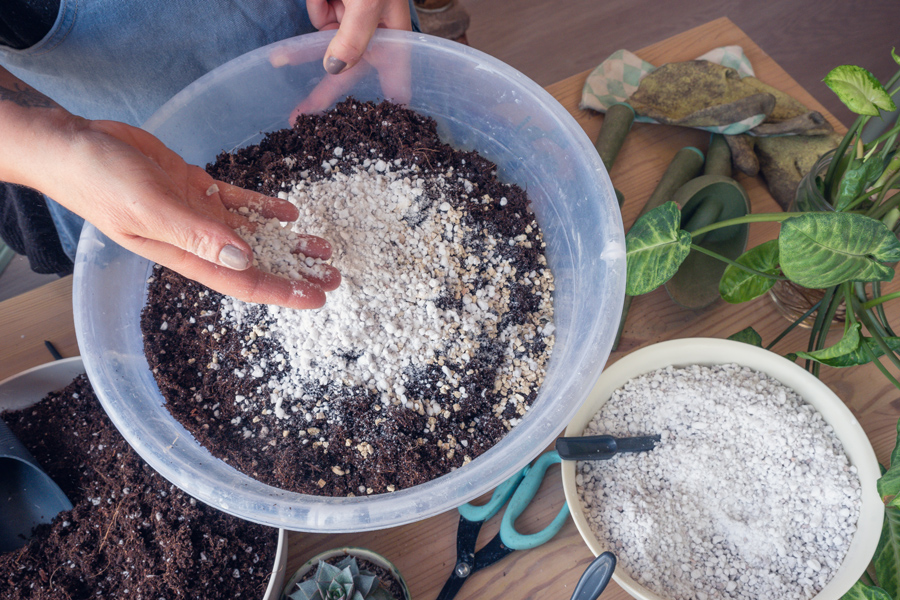
Container substrates must fulfill several functions for plant growth: create a suitable environment for root growth, physically support them, hold nutrients and water, and enable gas exchange between the roots and the atmosphere. Suitable physical and chemical container substrates’ properties facilitate these functions.
The physical properties of container substrates include air space (%), container capacity (%), total porosity (%), bulk density (g/cm3), and water holding capacity. Air space measures the proportion of air-filled large pores (macrospores) after drainage. Air space influences gas exchange and water holding capacity. Container capacity measures the maximum percentage volume of water a substrate can hold after drainage. Total porosity equals container capacity plus air space, and it measures the substrate volume that holds water and air. Bulk density measures how much one unit of the substrate weighs. Water holding capacity measures the container substrate’s ability to physically hold water against gravity; its maximum value equals container capacity.
Biochar can be derived from various feedstocks, processed under different pyrolysis temperatures, and subjected to various pre- or posttreatments, which can lead to dissimilar physical properties that affect the container substrate’s physical properties. Adding biochar may affect air space, container capacity, total porosity, and bulk density with variable effects. For instance, substituting peat moss with 50% green waste biochar (by volume) did not affect total porosity and container capacity, but significantly decreased air space, which was still in the optimal range (15%–30%) for container substrates. Similarly, a peat-moss-based substrate’s total porosity decreased with the increased addition of pelleted biochar. However, adding deinking sludge biochar increased the total porosity and air space of the container substrate.|
-
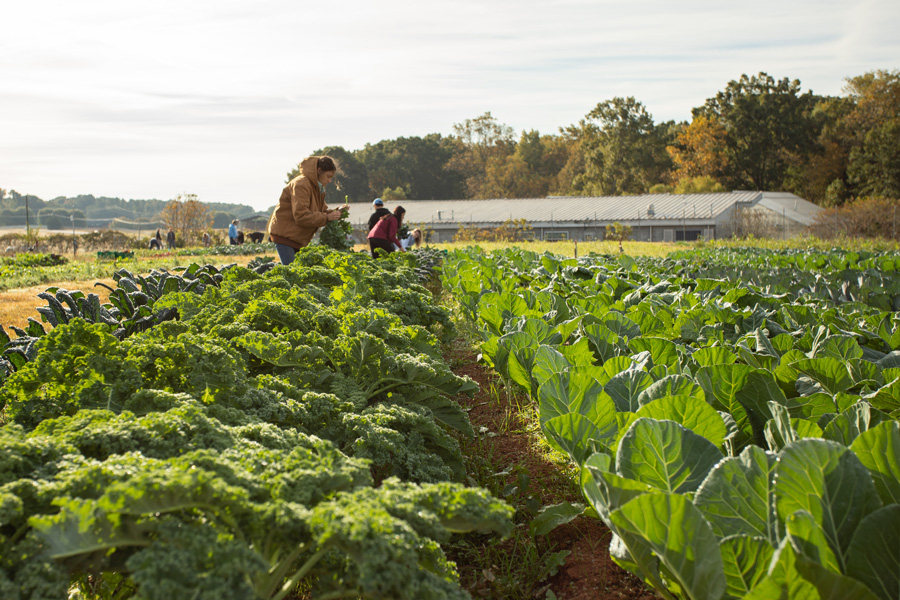
Label terms and certifications can be divided into those that are regulated and those that are unregulated. Regulated label terms and certifications are usually defined by the United States Department of Agriculture (USDA) or the Food and Drug Administration (FDA). Within the USDA, the Food Safety and Inspection Service (FSIS) is the agency responsible for the truthful labeling of meat and poultry products. The use of labels and certifications is governed by law and violations of use can have legal consequences. Unregulated terms have generally accepted definitions but do not have legal ramifications or verification of adherence. Many common label claims, such as “humanely raised” or “sustainably farmed,” refer to the process used to farm livestock but are unregulated, and there are no legal definitions for these claims. This publication summarizes some common regulated and unregulated terms in agriculture and livestock production.
|
-

Composting is the controlled biological process of decomposition and recycling of organic material into a humus-rich soil amendment known as compost. Mixed organic materials such as manure, yard trimmings, food waste and biosolids must go through a controlled heat process before they can be used as high quality, biologically stable and mature compost (otherwise it is just mulch, manure or byproduct). Compost has a variety of uses and is known to improve soil quality and productivity as well as prevent and control erosion.
|
-

Cover crops are in essential part of an organic production system. Cereal rye and crimson clover are cover crops that are commonly used. If organic cover crop production is a viable enterprise for growers, it could improve the availability of varieties adapted to the Southeast; provide a source for locally grown seeds; and be another profit center for growers, seed cleaners, and local seed companies.
This bulletin discusses what farmers need to know about producing cover crops organically and gives example enterprise budgets for cereal rye and crimson clover. A two-year on-farm trial indicated that producing organic cover crop seed may be profitable.
|
-

EB 102
Success with Cover Crops
This publication discusses the benefits of planting cover crops, how to select an appropriate cover crop to meet your needs, and includes information about using cover crops successfully.
|
-

Weed management is one of the most critical and costly aspects for container nursery production. Weeds can quickly outcompete the crop for light and other resources, reducing the rate and amount of crop growth as well as salability. Preventative practices are most effective, primarily with the use of preemergent herbicides. Weed management alternatives to synthetic herbicides include sanitation, exclusion, prevention, hand weeding, mulching and use of cover crops, heat, and nonsynthetic herbicides. Only some of these alternative methods can be used to control weeds in containers, but all can be used to manage weeds around containers and in noncrop areas.
|
-

This publication explains some of the options available to Green Industry professionals for dealing with these organic materials.
|
-

In 2004, the Georgia General Assembly passed and the governor signed House Bill 579, which required all permitted irrigation withdrawals in Georgia to be metered by 2009, depending on available funds. Farmers are continually trying to manage their irrigation systems to increase yields and improve the quality of food and fiber. Some management examples include end gun shut-offs (repaired or installed), uniformity tests, installing new sprinkler packages and improved irrigation methods. Each of these methods help improve the system, reduce costs and distribute more of the pumped water to the growing crop. The agricultural water meter also can be used for improved yields while conserving water.
|