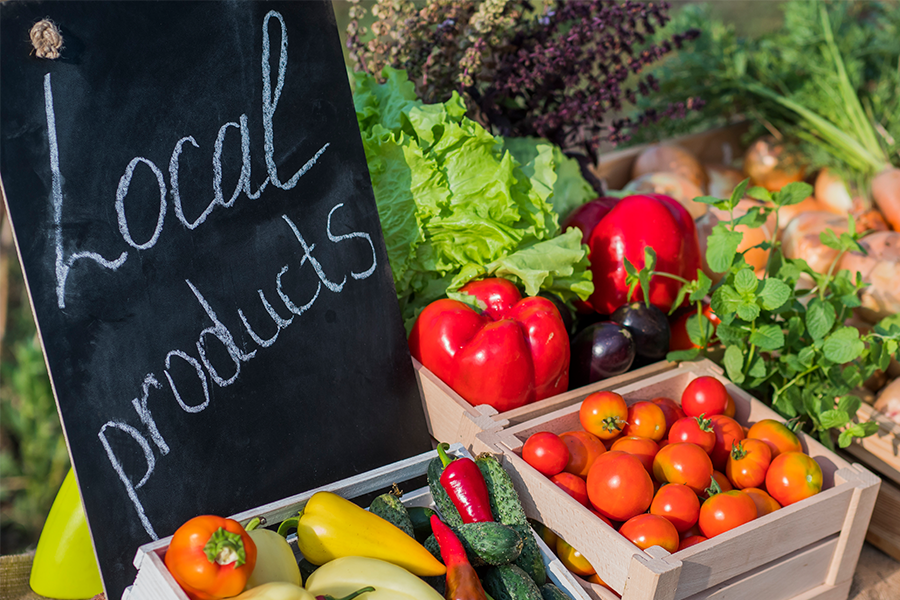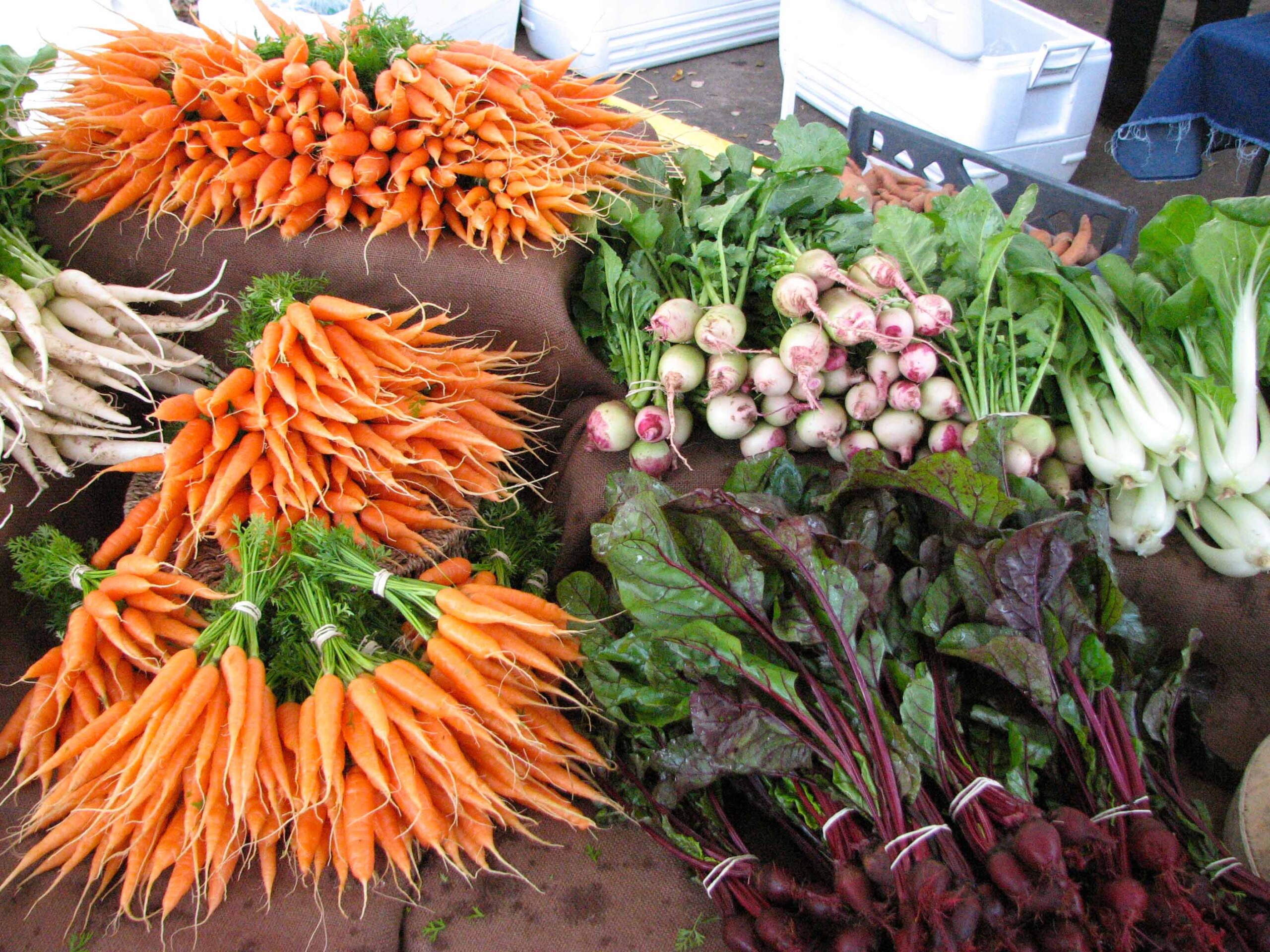
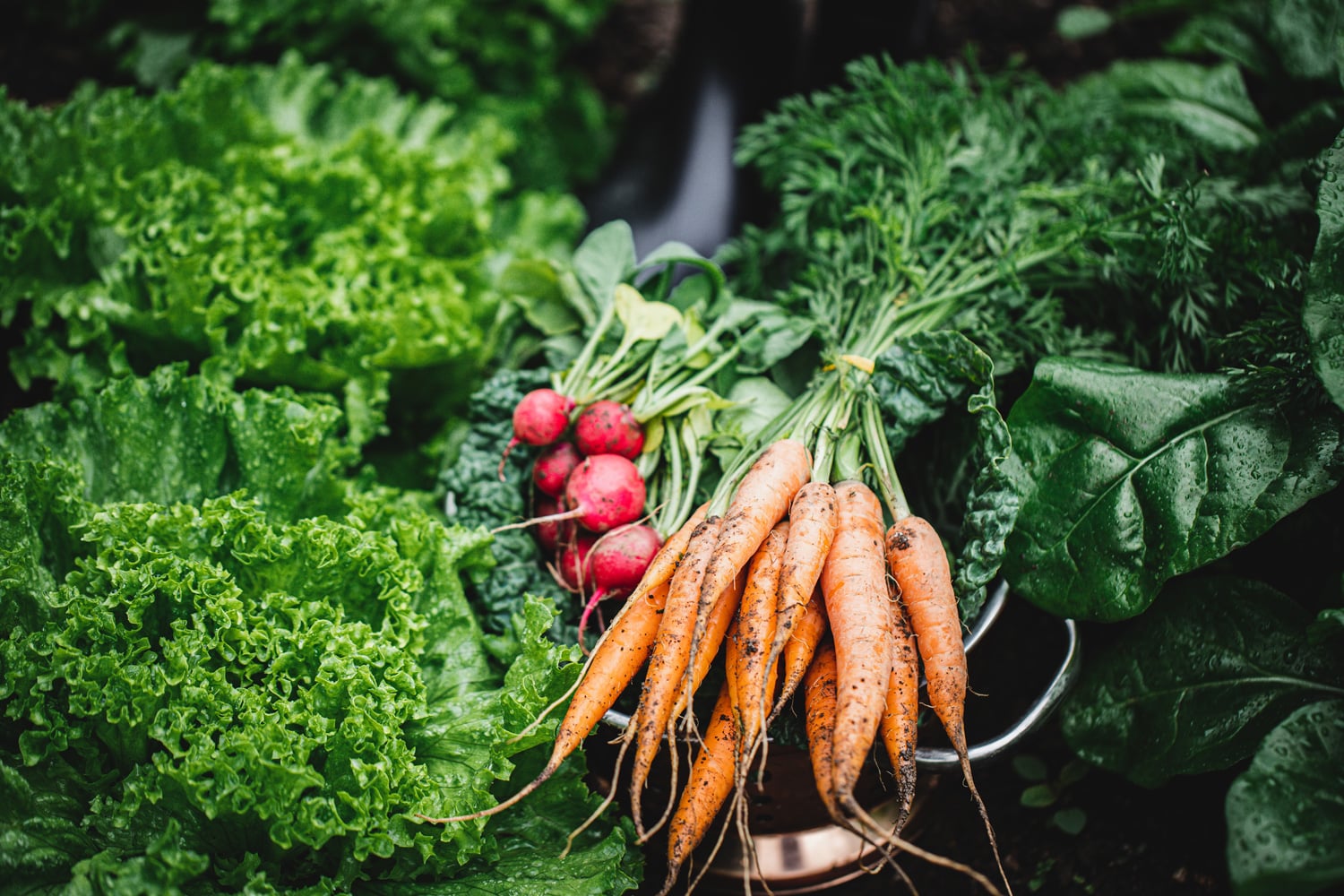

Vegetables are high value crops whose shelf life and visual appearance are impacted by proper postharvest handling and storage.
Lack of proper postharvest management of vegetable crops can result in significant financial losses due to quality deteriorations that may occur down the value chain, even to perfectly healthy freshly harvested produce items. Postharvest recommendations for each specific commodity include storage temperature, relative humidity, and ethylene compatibility during storage, as well as shipping and retail display.
Storage Temperature
Storage temperature is the most important factor in maintaining the quality and extending the shelf life of fresh produce. Suboptimal storage temperatures have detrimental cumulative effects on the quality of the product and contribute to food losses throughout the postharvest chain.
Delays to cooling (removing field heat) reduce visual quality, glossiness, and firmness, and increase visible symptoms of dehydration for many fresh vegetables. However, due to practical reasons, it is understandable that there will be delays between harvest, transportation, cooling, and retail display.
Acceptable delays to cool vary depending on the commodity and specific ambient conditions, but they should be minimized as much as possible. In general, there is an inverse relationship between the acceptable time that the product can remain in ambient conditions after harvest and the ambient temperature.
It is imperative that the freshly harvested vegetables are stored at or close to the recommended temperatures at all times. Temperatures that are too low or too high at any point of the postharvest life of the harvested product will negatively affect the final quality with disorders that often manifest themselves at a later point (e.g., after the consumer has purchased the product).
Relative Humidity
Relative humidity (RH) is the moisture content of the storage atmosphere, expressed as the ratio of the actual moisture content to the total possible moisture content (usually expressed as a percentage). Vegetables handled at RH levels lower than their relative water content will experience dehydration (water loss), decreased gloss, shriveling, and higher susceptibility to disease, ultimately degrading them to a lower market value. Furthermore, for products sold by weight, water loss leads to salable weight loss and reduced profits.
High RH levels (85%–95%) are usually recommended for storage and transportation of most fresh products in order to prevent moisture loss. However, products such as dried onions, garlic, and sweet potatoes need to be stored in conditions of lower relative humidity (60%–80%).
Ethylene
Ethylene is a naturally occurring hormone that is produced by many plant parts in an odorless, gaseous form. In general, the presence of ethylene in the storage place hastens ripening and senescence of ethylene-sensitive crops, hence reducing shelf life. Many factors can lead to increased ethylene production in the postharvest life of fresh produce, like injuries, temperature stress, fungal attacks, and exogenous presence (produced from other nearby items or sources) during shipping, handling, or storage.
Simple ways to avoid ethylene accumulation during postharvest storage are to avoid mixing ethylene-sensitive vegetables with ethylene-producing fruits and vegetables and to properly aerate the storage space (one air exchange/hour is usually sufficient).
Summary
Vegetables require careful handling, storage, and monitoring to ensure the maximum postharvest life span. Because we are dealing with live organisms, the maximum attainable shelf life of vegetables can easily be affected depending on pre- and postharvest factors that often manifest during storage.
Following the storage recommendations for each specific commodity reduces postharvest losses while it improves the overall quality and marketability of fresh produce. The following table contains basic guidance for the storage of most Georgia-grown vegetables.
| Vegetable crop | Spring planting dates | Fall planting dates | Crop length | Postharvest management | ||||
|---|---|---|---|---|---|---|---|---|
| Temperature (°F) | Storage life | Relative humidity | Ethylene sensitivity | Ethylene production | ||||
| Brassicaceae | ||||||||
| Cabbage | 1/15–3/15 | 8/1–10/1 | 80–100 days | 32 °F | 3–6 weeks | > 95% | Moderate (leaf abscission and yellowing) | Medium |
| Broccoli | 1/1–2/15 | 8/15–10/15 | 80–100 days | 32 °F 41 °F | 21–28 days 14 days | > 95% | Extremely high (yellowing) | High |
| Leafy greens | Year-round | 50–80 days | 32 °F 41 °F | 21 days 14 days | > 95% | Moderate (discolored spots on midrib, spotting, brown staining) | Medium | |
| Solanaceae | ||||||||
| Bell pepper | 3/1–4/15 | 8/1–9/15 | 60–90 days | 41 °F 45 °F | 2 weeks 3–5 weeks | > 95% | Very low | Low |
| Specialty pepper | 3/15–4/15 | 8/1–9/15 | 45–90 days | 41 °F 45 °F | 2 weeks 3–5 weeks | > 95% | Depends on the variety (chile poblanos may respond to treatment; jalapeño peppers do not) | Jalapeños: Very low Habaneros: Low-medium |
| Tomato | 3/1–4/1 | 8/1–9/1 | 60–90 days | 50–55 °F | 14 days | 90%–95% | Moderate; exogenous (color changes) | Medium-high |
| Eggplant | 3/1–4/15 | 8/1–9/15 | 80–100 days | 50–54 °F | < 14 days | 90%–95% | Moderate-high (calyx abscission, increased deterioration) | Low |
| Sweet potato | 5/1–7/1 | 100–120 days | 55–59 °F | 6–10 months | > 90% long-term storage; 70%–90% short-term handling | Low (adverse effects on flavor and color) | Low | |
| Cucurbitaceae | ||||||||
| Squash | 3/1–5/1 | 8/1–9/15 | 45–60 days | 41–50 °F | < 10 days | 95% | Low-moderate | Low |
| Zucchini | 3/1–5/1 | 8/1–9/15 | 45–60 days | 41 °F | < 14 days | 95% | Low-moderate | Low |
| Pumpkin | 5/1–7/15 | 90–110 days | 55–59 °F | 2–10 months | 50%–70%; 60% optimum | Moderate (degreening, stem abscission) | High | |
| Cucumber | 3/1–4/15 | 8/1–9/15 | 50–70 days | 50–55 °F 45 °F | < 14 days 2–4 days | 95% | High (yellowing, decay) | Low |
| Watermelon | 3/1–4/15 | 75–90 days | 50–59 °F | 14–21 days | 85%–90% | Very high (loss of firmness and eating quality) | Low | |
| Melon | 3/15–4/15 | 65–80 days | 36–41 °F | < 21 days | 90%–95% | Moderate (overripening) | Low | |
| Amaryllidaceae | ||||||||
| Mild onion | 10/1-1/1 | 130–150 days | 32 °F | < 1 month | 65%–70% with air circulation | Low (sprouting and growth of decay) | Low (odor) | |
| Pungent onion | 10/1-1/1 | 130–150 days | 32 °F | 6–9 months | 65%–70% with air circulation | Low (sprouting and growth of decay) | Low (odor) | |
| Garlic | 9/1-11/1 | 150–180 days | 30–32 °F | < 9 months | 60%–70% | Not sensitive | Low (odor) | |
| Poaceae | ||||||||
| Sweet corn | 3/1-5/1 | 7/1-9/1 | 60–100 days | 32–34 °F | < 7 days | 95%–98% | Very low | Low |
References
Agüero, M. V., Viacava, G. E., Moreira, M. R., & Roura, S. I. (2014). Delayed cooling or suboptimal storage temperatures reduce butterhead lettuce shelf-life. International Journal of Vegetable Science, 20(1), 59–77. https://doi.org/10.1080/19315260.2012.757572
Cantwell, M. (2018). Handling Lettuce. University of California Postharvest Technology Center. https://postharvest.ucdavis.edu/Online_Extension_to_Educate_Small_Farms/Handling_Lettuce/
Donis-Gonzalez, I. (2018). Cooling Packaging and Storage. University of California Postharvest Technology Center. https://postharvest.ucdavis.edu/Online_Extension_to_Educate_Small_Farms/Cooling_Packaging_and_Storage/
Gaskell, M. (2018). Why is Temperature Important? University of California Postharvest Technology Center. https://postharvest.ucdavis.edu/Online_Extension_to_Educate_Small_Farms/Why_is_Temperature_Important/
Mitcham, E. J. (2018). Defining produce quality. University of California Postharvest Technology Center. https://postharvest.ucdavis.edu/Online_Extension_to_Educate_Small_Farms/defining_produce_quality/
Thompson, J. F., Mitchell, F. G., & Rumsay, T. R. (2008). Commercial Cooling of Fruits, Vegetables, and Flowers, UCANR Publications, Technology & Engineering.
University of California Davis. (n.d.). Produce Fact Sheets. https://postharvest.ucdavis.edu/Commodity_Resources/Fact_Sheets/
The original manuscript for this publication was written by Angelos Deltsidis and Andre Luiz Biscaia da Silva.