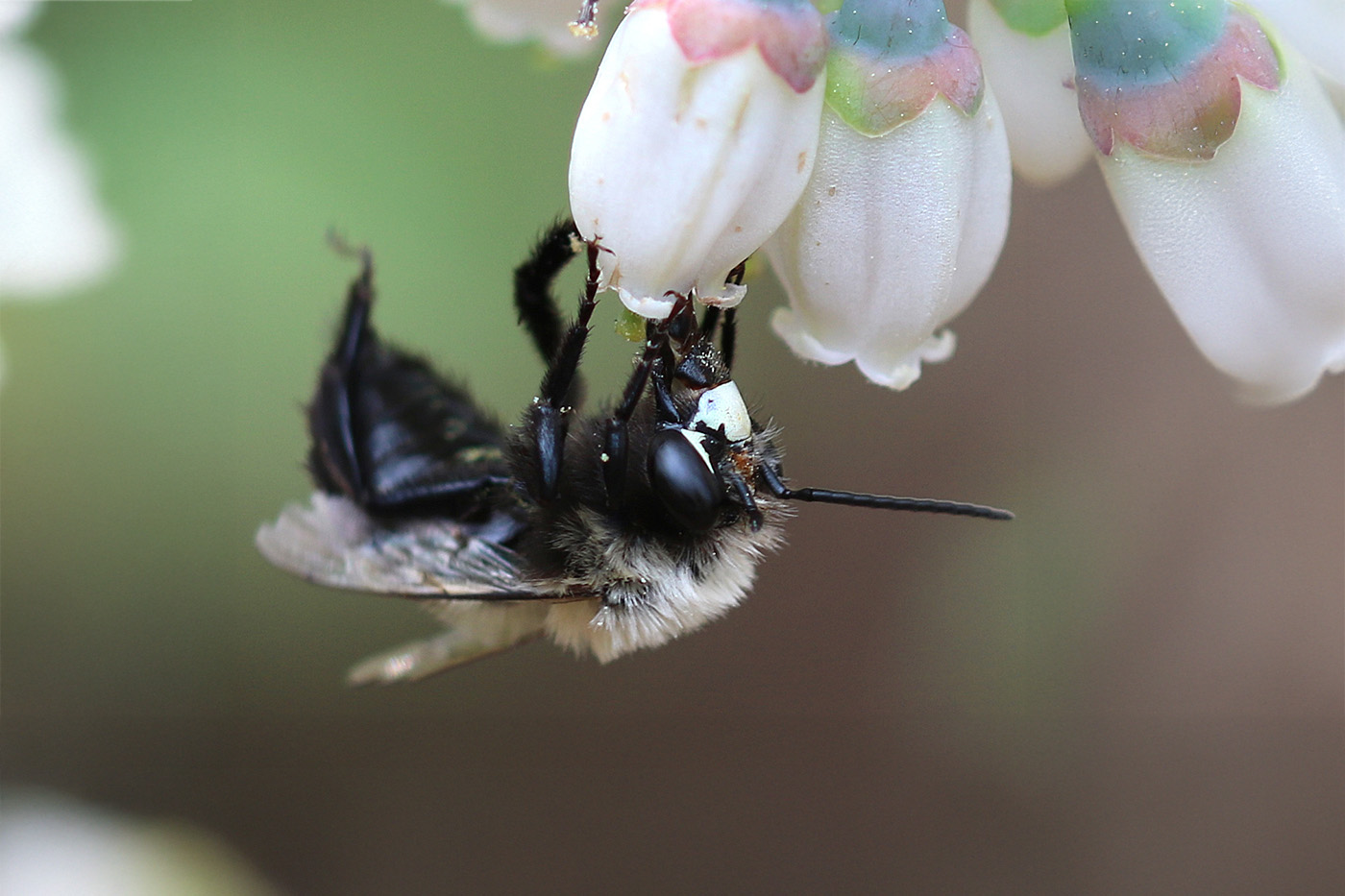


In Georgia, three types of blueberries are grown: rabbiteye (Vaccinium ashei), northern highbush (Vaccinium corymbosum L.), and southern highbush (Vaccinium corymbosum X Vaccinium darrowii). Rabbiteye is native to South Georgia, north Florida and southeast Alabama. It is the most commonly cultivated blueberry in Georgia. Northern highbush is a species well adapted to northern Georgia because of its higher winter chilling requirement and lower heat tolerance. Southern highbush is a hybrid between northern highbush and Darrow’s evergreen blueberry.
Both southern highbush and rabbiteye blueberries have a low to moderate winter chilling requirement that allows for their production in the warm temperate climate of South Georgia. Rabbiteye blueberries are better adapted to mineral soils and easier to grow than southern highbush blueberries. Southern highbush blueberries perform well on spodic soils with at least 3% organic matter or soils heavily amended with pine bark.
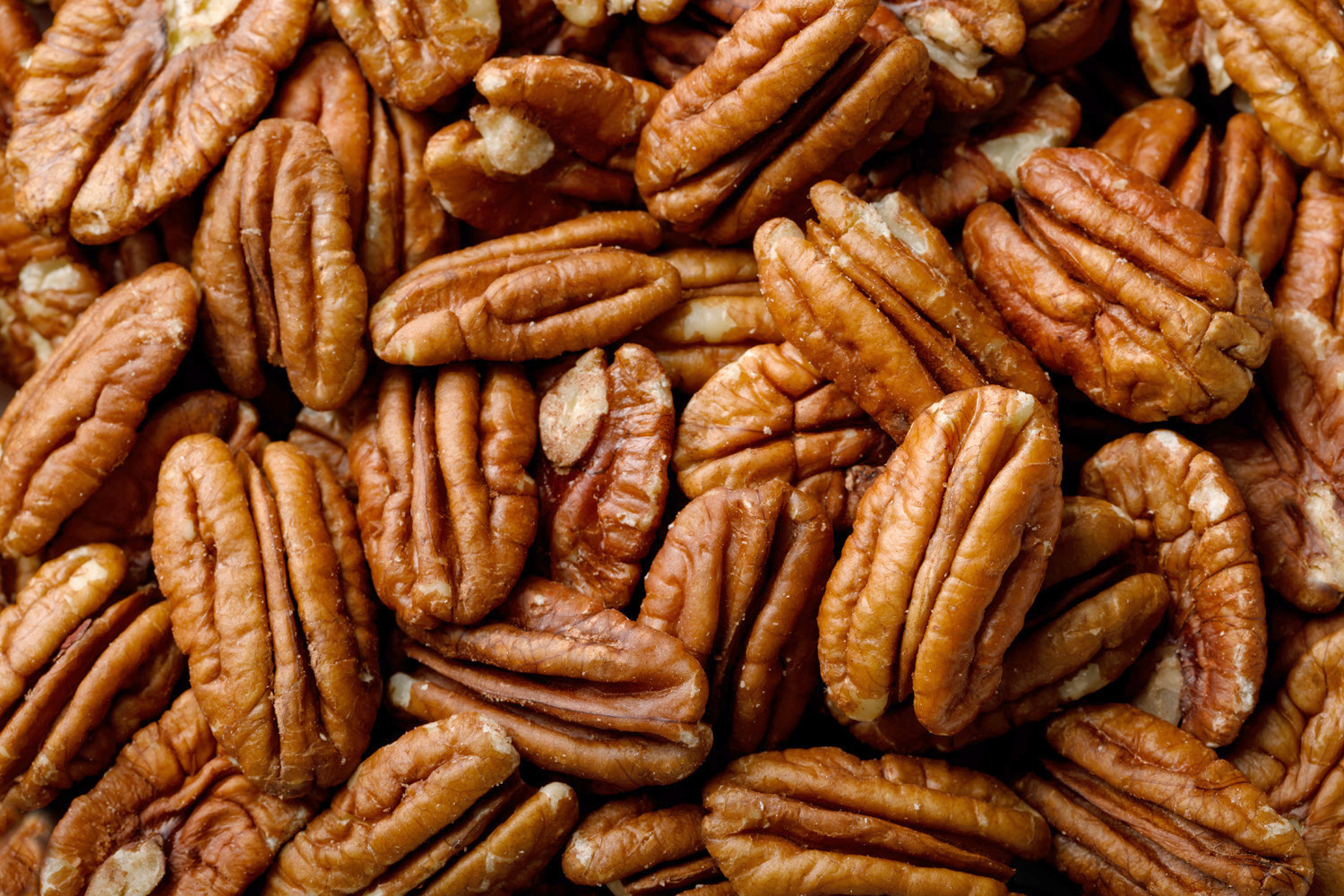
Despite production and marketing challenges, the Georgia blueberry industry has done extremely well, reaching its highest planted area of 30,166 acres in 2018. For instance, for the past decade, Georgia blueberry farm gate value has increased from $229 million in 2012 to $449 million in 2022. For a crop that was little-known in the past few decades, it first became the No. 1 fruit and tree nut crop in the state in 2014, generating $335 million in farm gate value and surpassing long-dominant pecans that contributed $313 million in the same year (Figure 1).

Blueberries are sold both fresh and frozen in Georgia. The percentage of each varies from year to year, but equal amounts are often produced. The price difference between fresh and processed is substantial.
Southern highbush blueberries are all fresh-market, and the cost of production is higher. The U.S. blueberry market has been consistently rising for the past 4 decades because of many factors, including an increase in consumer preferences, increase in improved varieties that increased year-round availability, health benefits, and increased advertising.
The U.S. is ranked first in blueberry production, producing about 33% of the world supply. According to a USDA report, the domestic per capita availability of both fresh and processed blueberries continues to trend higher on rising domestic output and larger imports.

In 2022, the United States produced 645.9 million lb of blueberries, a decrease of 6% compared to 2021. Out of that, 329 million lb—down by 8%—was for fresh market. Despite the decrease in overall production, North Carolina and Florida experienced an increase in fresh production while Washington, Oregon, Georgia, California, and Michigan experienced a decrease in fresh output.
On the other hand, imported fresh market blueberries increased by 10% to $1.8 billion at the same time. There was a 15% increase in volume to a record 657 million lb with the largest share being the “cultivated conventional fresh-market blueberries” (Figure 2).
According to the USDA report, there was a 14% increase in fresh market certified organic blueberries as 104 million lb were imported in 2022. The total U.S. blueberry exports to Canada, South Korea, and Japan stood at $258 million in 2022.
Assumptions Used in the Economic Analysis
Although there are several ways of doing a budget, this economic analysis adopted the risk-rated method. The risk-rated return assumes five different yields and prices per pound at the top of the budget, namely: “Best,” “Optimum,” “Median,” “Pessimistic,” and “Worst.” The best and worst yield or price levels were expected to occur very rarely. The median yield and price level was expected 50% of the time. The optimistic and pessimistic levels would be anticipated to occur once in 6 years.
Planting distance used for this study was 3 ft by 12 ft, even though growers are slowly adopting 2.5 ft by 10 ft. After planting and cultivation, it was assumed to have taken 4 years for the crop to attain full production.
Variable interest rates of 9% of total operating/variable costs were used for each year. Cost per flat was based on custom packaging. Hired utilized labor was contracted at a flat rate of $14.68 per hour. Harvesting yields were calculated based on a 95% fruit recovery rate: thus, 5% field and packaging loss. The brokerage fee was 15%, with cooling and handling included. The overhead and management fees were 15% of the total operating/variable cost. Compounded recaptured costs were based on a fixed-percentage interest rate, and the expected lifespan of a blueberry farm in the Georgia environment was 20 years. Machinery and equipment operation cost calculations were based on 20 acres and a 9% fixed interest rate.
The calculations included all the essential topics such as percentage use for crop, purchase price, salvage value, life span, depreciation, interest, tax, and insurance. All equipment was assumed to be new. Solid set irrigation was calculated based on 20 acres with a sprinkler spacing of 10 ft by 10 ft and a 4-in. well capable of pumping about 50 gallons/minute.
Risk-rated marketing prices and yields were obtained from growers and MBG Marketing Inc., while input and equipment prices were obtained from vendors and machinery dealers, respectively. The adopted variable interest rates for operating/variable costs were for short-term loans, while the fixed interest rates used for machinery and compounded establishment costs were for long-term loans (these rates were recommended and/or obtained from agricultural lending institutions across Georgia). A detailed calculation breakdown of fixed machinery and equipment, irrigation, and recaptured establishment costs may be provided upon request.
First-Year Estimated Establishment and Maintenance Cost
The 1st year in establishing southern highbush blueberries is highly crucial in terms of workload and cost. This budget includes all returns and costs associated with producing this crop in Georgia.
For this estimated analysis a planting distance of 3 ft by 12 ft was employed, amounting to 1,210 plants per acre at a cost of $4,235. Other notable cost components in land preparation include stumping, pushing, and burning, which costs $766.88 per acre; chopping, which costs $173.10 per acre; and milled pine bark at $941.60 for 20 tons. Fertilizers, along with pre- and postemergence weed control costs, equal $186.08, while pest and disease control costs were $269.40.
The total operating cost for the first year amounted to $8,671.16. Fixed costs consisting of a tractor and equipment, overhead and management, and irrigation totaled $2,296.32 Both of these together determined the total establishment costs for 1 year: $10,967.47.
Table 1. First-Year Estimated Establishment and Maintenance Cost Per Acre of Southern Highbush Blueberry in Soil in Georgia, 2024.
| Items | Applications | Unit | Quantity | Price | $ Amount | Your Cost |
| Land preparation | ||||||
| Preplant weed control | gal | 2.50 | 35.16 | 87.90 | ||
| Stumping, pushing, burning | 2/year | acre | 1.00 | 766.88 | 766.88 | |
| Chopping | acre | 3.00 | 57.7.00 | 173.10 | ||
| Phosphate (DAP or MAP) | lb | 150.00 | 0.60 | 90.00 | ||
| Copper sulfate | lb | 4.00 | 7 | 28.00 | ||
| Harrowing | acre | 3.00 | 57.7.00 | 173.10 | ||
| Bedding | acre | 1.00 | 173.09 | 173.09 | ||
| Breaking aisles | acre | 1.00 | 86.55 | 86.55 | ||
| Ditching and drainage | acre | 1.00 | 150.01 | 150.01 | ||
| Milled pine bark | ton | 20.00 | 47.08 | 941.60 | ||
| Planting | ||||||
| Plants (3 ft x 12 ft) | 1,210.00 | 3.50 | 4,235.00 | |||
| Planting labor | 1,210.00 | 0.30 | 363.00 | |||
| Fertilizers | 1/year | |||||
| Fertilizer (liquid) | gal | 64.00 | 0.71 | 45.44 | ||
| Weed control | 0.00 | |||||
| Preemergence | 2/year | acre | 2.00 | 35.16 | 70.32 | |
| Postemergence | 2/year | acre | 2.00 | 35.16 | 70.32 | |
| Tractor and sprayer | 4/year | hr | 4.00 | 14.68 | 58.72 | |
| Labor | 4/year | hr | 4.00 | 14.68 | 58.72 | |
| Insect and disease control | ||||||
| Fungicide | 4/year | acre | 4.00 | 16.52 | 66.08 | |
| Insecticide | 2/year | acre | 2.00 | 13.58 | 27.16 | |
| Tractor and sprayer | 6/year | acre | 6.00 | 14.68 | 88.08 | |
| Labor | 6/year | acre | 6.00 | 14.68 | 88.08 | |
| Pruning | 1/year | hr | 3.00 | 14.68 | 44.04 | |
| Irrigation | acre | 1.00 | 70.00 | 70.00 | ||
| Interest on operation costs | $ | 7,955.19 | 0.09 | 715.97 | ||
| Total preharvest costs | $8,671.16 | |||||
| Fixed costs | ||||||
| Tractor and equipment | acre | 1.00 | 813.29 | 813.29 | ||
| Overhead and management | $ | 8,671.16 | 0.15 | 1,300.67 | ||
| Irrigation | acre | 1.00 | 182.35 | 182.35 | ||
| Total fixed costs (TFC) | $2,296.32 | |||||
| Total costs (TC) | $10,967.47 | |||||
Second-Year Establishment and Maintenance Cost
During the 2nd year, the number of times insecticide and fungicide was applied doubled. Correspondingly, the labor involved in spraying also doubled. As a whole, this had a major impact on the total variable cost. Furthermore, the total operating cost for Year 2 was $1,325.71 It was assumed that 1,700 lb would be harvested in Year 2, equivalent to 493 flats (3.3 lb containing 12 to 125 g clamshells) with a 95% pack-out rate.
Harvesting and marketing costs, including harvesting, custom packing, cooling, handling, and brokerage fees, amounted to $3,532.01. Fixed costs similarly included tractors and equipment, overhead and management, and irrigation. These items amounted to a cost of $1,195.60 and altogether resulting in a gross establishment cost of $6060.65 per acre for Year 2. Assuming a return from receipts of 1,615 lb with a 95% pack-out rate and a selling price of $3.00 per pound (median), gross receipts would be $4,845.00. This reduces the total establishment cost in this year to $1,215.65.
Table 2. Second-Year Estimated and Maintenance Cost Per Acre for Georgia Southern Highbush Blueberry in Soil, 2024.
| Operating cost items | Applications | Unit | Quantity | Price | $ Amount | Your Cost |
| Fertilizers | ||||||
| Fertilizer (liquid) | year | gal. | 70.00 | 0.71 | 49.70 | |
| Weed control | ||||||
| Preemergence | 2/year | acre | 2.00 | 35.16 | 70.32 | |
| Postemergence | 2/year | acre | 3.00 | 35.16 | 105.48 | |
| Labor | 4/year | acre | 4.00 | 14.68 | 58.72 | |
| Insect and disease control | ||||||
| Fungicide | 8/year | acre | 6.00 | 16.52 | 99.12 | |
| Insecticide | 4/year | acre | 4.00 | 13.58 | 54.32 | |
| Tractor and sprayer | 12/year | acre | 12.00 | 14.68 | 176.16 | |
| Labor | 12/year | acre | 12.00 | 14.68 | 176.16 | |
| Pruning | 1/year | acre | 1,210.00 | 0.30 | 363.00 | |
| Irrigation | year | acre | 1.00 | 70.00 | 70.00 | |
| Interest on operation costs | $ | 1,222.98 | 0.09 | 110.07 | ||
| Total preharvest costs | $1,333.05 | |||||
| Harvesting and marketing costs | ||||||
| Harvesting | lb | 1,615.00 | 1.05 | 1,695.75 | ||
| Custom packing | lb | 1,615.00 | 0.99 | 1,594.01 | ||
| Cooling, handling, and brokerage | lb | 1,615.00 | 0.16 | 242.25 | ||
| Total harvesting and marketing costs (TH & MC) | $3,532.01 | |||||
| Fixed costs | ||||||
| Tractor and equipment | acre | 1.00 | 813.29 | 813.29 | ||
| Overhead and management | $ | 1,333.05 | 0.15 | 199.96 | ||
| Irrigation | acre | 1.00 | 182.35 | 182.35 | ||
| Total fixed costs (TFC) | $ | $1,195.60 | ||||
| Total gross cost per acre (TGC) | $ | $6,060.65 | ||||
| Less returns from receipts | $ | 1,615.00 | 3.00 | $4,845.00 | ||
| Total cost per acre (TC) | $ | $1,215.65 | ||||
Third-Year Establishment and Maintenance Costs
In the 3rd year, pruning was the largest variable cost component at $363.00, followed closely by tractor and sprayer at $205.52. Labor cost was $176.16 while preemergence and postemergence were $105.48 and $140.64, respectively. The combined weed control, which is the summation of pre + postemergence, is $246.12, making the operation the second most-expensive prevariable cost. Fertilizers for this year amounted to $60.35.
Total harvesting and marketing costs were $8,337.20. This included harvesting, custom packing, cooling, handling, and brokerage fees. Fixed costs, including tractor and equipment, overhead and management, and irrigation altogether cost $1,223.84. The overall total cost for Year 3 is $11,082.37. Assuming a return from receipts of 3,800 lb with a 95% pack-out rate and a selling price of $3.00 per pound, gross receipts were $11,400. Therefore, the total cost per acre resulted in a net gain of $317.63 in Year 3.
Table 3. Third-Year Estimated and Maintenance Cost Per Acre for Georgia Southern Highbush Blueberry in Soil, 2024.
| Operating cost items | Applications | Unit | Quantity | Price | $ Amount | Your Cost |
| Fertilizers | ||||||
| Fertilizer (fertigation) | year | Gal. | 85.00 | 0.71 | 60.35 | |
| Weed control | ||||||
| Preemergence | 2/year | acre | 3.00 | 35.16 | 105.48 | |
| Postemergence | 2/year | acre | 4.00 | 35.16 | 140.64 | |
| Labor | 4/year | acre | 6.00 | 14.68 | 88.08 | |
| Insect and disease control | ||||||
| Fungicide | 8/year | acre | 8.00 | 16.52 | 132.16 | |
| Insecticide | 4/year | acre | 4.00 | 13.58 | 54.32 | |
| Tractor and sprayer | 12/year | acre | 14.00 | 14.68 | 205.52 | |
| Labor | 12/year | acre | 12.00 | 14.68 | 164.04 | |
| Pruning | 1/year | acre | 1,210.00 | 10.39 | 12,571.90 | |
| Irrigation | acre | 1.00 | 70.00 | 70.00 | ||
| Interest on operation costs | $ | 1,395.71 | 0.09 | 125.61 | ||
| Total preharvest costs | $1,521.32 | |||||
| Harvesting and marketing costs | ||||||
| Harvesting | lb | 3,800.00 | 1.05 | 3,990.00 | ||
| Custom packing | lb | 3,800.00 | 0.99 | 3,750.60 | ||
| Cooling, handling, and brokerage | lb | 3,800.00 | 0.16 | 596.60 | ||
| Total harvesting and marketing costs | $8,337.20 | |||||
| Total variable costs (TVC) | $9,858.52 | |||||
| Fixed costs | ||||||
| Tractor and equipment | acre | 1.00 | 813.29 | 813.29 | ||
| Overhead and management | $ | 1,521.32 | 0.15 | 228.20 | ||
| Irrigation | acre | 1.00 | 182.35 | 182.35 | ||
| Total fixed costs (TFC) | $ | $1,223.84 | ||||
| Total cost (TC) per acre | $ | $11,082.37 | ||||
| Total receipt per acre | $ | 3,800 | 3.00 | $11,400.00 | ||
| Total net returns per acre | $ | $317.63 | ||||
Fourth Year—Full Production Costs
In Year 4, the blueberry field is assumed to be in full production. The chemicals and labor required for disease and pest control contributed the most to the total variable cost at $644.14. Pruning and mechanical topping increased significantly to $563.14 in Year 4. Total irrigation costs amounted to $252.35, while weed control costs were $392.92. The cost of fertilizer increased to $396.95 from the year before at $60.35. Total prevariable costs amounted to $2,252.20.
Total harvesting and marketing costs, including harvesting, custom packing, cooling, handling, and brokerage fees were $16,957.50. Fixed costs include tractor and equipment, overhead and management, and irrigation, totaling $1,333.62. Assuming a return from receipts of 7,000 lb with a 95% pack-out rate and a selling price of $3.00 per pound, gross receipts would be $19,950.
Table 4. Fourth Year of Full Production, Georgia Southern Highbush Blueberry in Soil, 2024.
| Item | Best | Optimistic | Median | Pessimistic | Worst | Yours |
| *Yield (lb) | 8,400 | 7,700 | 7,000 | 6,300 | 5,600 | |
| *Price per lb | 3.60 | 3.30 | 3.00 | 2.70 | 2.40 |
| Variable cost items | Applications | Unit | Quantity | Price | $ per acre | Your Cost |
| Fertilizers | ||||||
| Fertilizer (fertigation) | year | gal. | 85.00 | 4.67 | 396.95 | |
| Weed control (4-ft band) | ||||||
| Pre-emergence | 2/year | acre | 3.00 | 35.16 | 105.48 | |
| Postemergence | 3/year | acre | 4.00 | 35.16 | 140.64 | |
| Tractor and sprayer | 4/year | hr | 4.00 | 14.68 | 58.72 | |
| Labor | 4/year | hr | 6.00 | 14.68 | 88.08 | |
| Insect and disease control | ||||||
| Insecticides | 5/year | acre | 5.00 | 13.58 | 67.90 | |
| Fungicides | 8/year | acre | 10.00 | 16.52 | 165.20 | |
| Tractor and sprayer | 13/year | hr | 13.00 | 14.68 | 190.84 | |
| Labor | 13/year | acre | 15.00 | 14.68 | 220.20 | |
| Pruning | ||||||
| Pruning (manual, 3 ft x 12 ft) | 1/year | plants | 1,210.00 | 0.32 | 390.10 | |
| Mechanical topping | 1/year | acre | 1.00 | 173.04 | 173.04 | |
| Irrigation | acre | 1.00 | 70.00 | 70.00 | ||
| Interest on operation costs | $ | 2,067.15 | 0.09 | 186.04 | ||
| Total pre-variable costs | $ | 2,253.20 | ||||
| Harvesting and marketing costs | ||||||
| Harvesting | lb | 6,650.00 | 1.19 | 7,913.50 | ||
| Custom packing | lb | 6,650.00 | 1.18 | 7,847.00 | ||
| Cooling, handling, and brokerage | lb | 6,650.00 | 0.18 | 1,197.00 | ||
| Total harvesting and marketing costs | $ | 16,957.50 | ||||
| Total variable, harvesting, and marketing costs | $ | 19,210.70 | ||||
| Fixed costs | ||||||
| Tractor and equipment | acre | 1.00 | 813.29 | 813.29 | ||
| Overhead and management | $ | 2,253.20 | 0.15 | 337.98 | ||
| Irrigation | acre | 1.00 | 182.35 | 182.35 | ||
| Total fixed costs | $ | 1,333.62 | ||||
| Total budgeted cost per acre | $ | 20,544.32 | ||||
Risk-Rated Returns Over Total Costs
Table 5 indicates the probability of obtaining the various calculated risk-rated net returns over total costs. The “Returns ($)” row denotes seven different net return possibilities. These returns reflect the variability of prices and yields with respect to the expected net return.
The first “Chances (%)” row reflects the estimated percentage of obtaining the above net returns or more, and likewise, the second “Chances (%)” row shows the estimated frequency of obtaining the above net returns or less. According to the risk-rated returns over total costs, the base budgeted net revenue was $456 with a 58% chance of making a profit under Georgia conditions.
Table 5. Net Returns Over Total Costs of Producing Southern Highbush Blueberry in Soil in Georgia, 2024.
| Net returns/Chances | Best | Optimistic | Expected | Pessimistic | Worst | ||
| *Net Returns ($) | 3,664 | 2,594 | 1,525 | 456 | -614 | -1,683 | -2,752 |
| Chances (%) of obtaining this level or more | 7% | 16% | 31% | 50% | |||
| Chances (%) of obtaining this level or less | 31% | 16% | 7% | ||||
| Chances for profit = 58%; Base net revenue = $456 | |||||||
Farm Input Prices
Many factors had direct or indirect impact on input prices, cost of production and profitability. Farmers use motor sizes (HP) that are commensurate with their future targeted acreages. Quantity discounts for items such as packing supplies were factors that also affected prices of some inputs. The cost estimate in this study reflects a combination of the current agricultural practices in Georgia, which have changed drastically from the past decade, and recommendations from UGA specialists. Prices used were actual prices obtained from vendors around the counties involved in blueberry production areas, excluding quantity discounts.
Fixed Costs
The fixed machinery cost in this study includes a shielded herbicide sprayer, air-blast sprayer, rotary mower, tractor, fertilizer spreader, harrow, and hand-sprayer. The following were taken into consideration in the calculations: percentage of use for southern highbush, purchase price, salvage value of equipment, lifespan, depreciation, interest, taxes, and insurance. The calculation was based on 20 acres and a 9% fixed interest rate. The estimated fixed machinery cost per acre in this study was $1,333.62. Overhead and management cost was $337.98, or 15% of preharvest variable costs (Table 4).
Irrigation fixed cost per acre was $182.35 and included items such as pipes and fittings, sprinklers, an 8-in.-deep well, pump and motor, check valves, filter, meter base, cut off valve, water tank, miscellaneous items, and installation. The following were taken into consideration in the calculations: percentage of use for southern highbush, purchase price, salvage value of equipment, lifespan, depreciation, interest, taxes, and insurance. The calculation was also based on 20 acres and a 9% fixed interest rate (Table 4).
Conclusion
Georgia is the fourth- or fifth-highest producer of cultivated blueberries in the U.S., with almost 10% of production. Marketing and economic analysis were carried out to determine why the blueberry industry in Georgia has experienced tremendous growth. A risk-rated returns over total costs revealed that the base budgeted net revenue was $456 with a 58% chance of making a profit under Georgia conditions. Such a return on investment per acre indicates that the industry is struggling.
References
Economic Research Service. (2021, March 30). Fruit and tree nuts outlook (FTS-376). U.S. Department of Agriculture. https://esmis.nal.usda.gov/publication/fruit-and-tree-nuts-outlook/2021-03-30
Economic Research Service. (2022, March 30). Fruit and tree nuts outlook (FTS-376). U.S. Department of Agriculture. https://esmis.nal.usda.gov/publication/fruit-and-tree-nuts-outlook/2022-03-30
Economic Research Service. (2023, March 30). Fruit and tree nuts outlook (FTS-376). U.S. Department of Agriculture. https://esmis.nal.usda.gov/publication/fruit-and-tree-nuts-outlook/2023-03-30
Fonsah, E. G., Krewer, G., Harrison, K., & Bruorton, M. (2004). Economic analysis of producing southern highbush blueberries in soil in Georgia (Publication AGECON-04-93). Department of Agricultural and Applied Economics, College of Agricultural and Environmental Sciences, University of Georgia.
Fonsah, E. G., Krewer, G., Harrison, K., & Bruorton, M. (2007). Risk rated economic returns analysis for southern highbush blueberries in soil in Georgia. HortTech, 17(4), 571–579. https://doi.org/10.21273/HORTTECH.17.4.571
Fonsah, E. G., Krewer, G., Harrison, K., & Stanaland, D. (2005). Estimated costs and economics for rabbiteye blueberries in Georgia (Publication AGECON-05-108). Department of Agricultural and Applied Economics, College of Agricultural and Environmental Sciences, University of Georgia.
Fonsah, E. G., Krewer, G., Harrison, K., & Stanaland, D. (2008). Economic returns using risk-rated budget analysis for rabbiteye blueberries in Georgia. HortTech, 18, 506–515. https://doi.org/10.21273/HORTTECH.18.3.506
Fonsah, E. G., & Kunwar, S. R. (2024).Economics of satsuma citrus production using drip irrigation and frost protection in the United States. Agricultural Research and Technology: Open Access Journal, 28(4), 1–11. https://juniperpublishers.com/artoaj/ARTOAJ.MS.ID.556416.php
Kaninda, S., Fonsah, E. G., Boyhan, G. E., Little, E. L., & Gaskin, J. W. (2020). Economic analysis of crop rotation systems for high value cool-season vegetables in Southern region, USA. Agricultural Research and Technology: Open Access Journal, 25(2), 556300. https://doi.org/10.19080/ARTOAJ.2020.25.556300
Kunwar, S. R., & Fonsah, E. G. (2022). Economic analysis of southern highbush blueberry production using drip irrigation and frost protection in Georgia, USA. Journal of Extension, 60(1), Article 11. https://doi.org/10.34068/joe.60.01.12
National Agricultural Statistics Service. (2011). Noncitrus fruits and nuts, 2010 summary. U.S. Department of Agriculture. https://esmis.nal.usda.gov/publication/noncitrus-fruits-and-nuts/2011-07-07
Acknowledgments
This work was funded by a Southern Region Small Fruit Consortium (SRSFC) grant for which the authors are indebted. The authors are also indebted to the growers and vendors who provided valuable information for this work.
The original manuscript was prepared by Esendugue Greg Fonsah, UGA Department of Agricultural & Applied Economics, Julien Massonnat, ENSAT, Toulouse, France, Liz Wiggins, Georgia Institute of Technology, Gerard Krewer, UGA Department of Horticulture, Danny Stanaland, Bacon County Extension, and John Ed Smith, Bacon County Extension. Revised in 2024 by Esendugue Greg Fonsah and Guy Hancock.