

Autumn and winter are always busy seasons for beef cattle producers. Establishment of winter grazing, development of supplementation strategies, and preparation for the breeding season are at the forefront of most producers’ minds. But it’s also the time of year that acorns are on the ground. The leaves and acorns of most species of North American oak trees are considered toxic to cattle.
Many Southeastern cattle operations have pastureland that encompasses or borders oak timbers. This means that as cattle venture into timber ground and wooded lots in search of fall grazing, there is an increased chance that acorns will be consumed. In years when winter grazing is adequate and proper nutrition is provided, most cattle will not consume acorns. Unlike deer, hogs, and squirrels, most cattle do not preferentially consume acorns. However, there are some cattle that do exhibit a specific liking for them. The majority of cattle will exhibit symptoms of acorn toxicity; however, there is a small segment of the population that appears to exhibit no effects of acorn toxicity.
Why Are Acorns Harmful to Cattle?
Oaks, like many nut–bearing trees, produce tannins. Tannins are complex, polyphenolic compounds that are responsible for the flavor of many nuts, wines, coffees, and tobaccos. The toxin, gallotannin, concentrates in acorns in the fall, before they drop from the tree. Upon consumption of the acorn, the components are degraded in the rumen where gallotannin is metabolized to yield gallic acid and tannic acid. In most cattle, tannic acid will cause ulcerations in the mouth, esophagus, and gastrointestinal tract. The renal tubules are more prone to damage than other mucosa; therefore, acorn toxicosis is often characterized by kidney failure prior to death.
Recognizing Acorn Toxicosis in the Herd
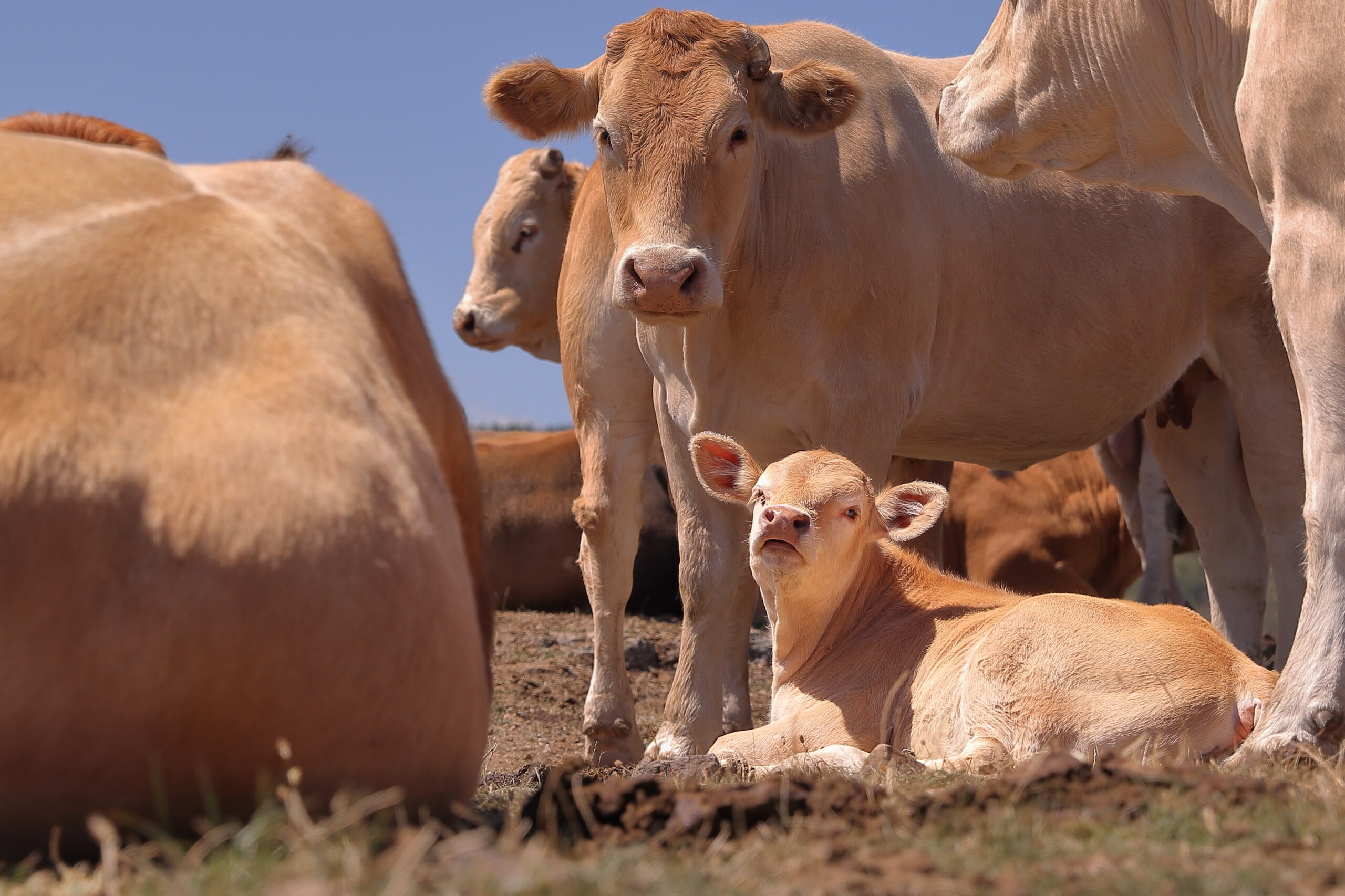
In Southeastern cow herds, the first place acorn toxicosis is likely to be noticed is in the calves. Tannins concentrate in milk, so fast–gaining calves (typically between 350–650 lb) who are nursing heavy–milking cows will often be the first animals to exhibit symptoms.
Initial symptoms will likely include constipation and subsequent decreased feed intake. Continued exposure will result in increased ulceration of the gastrointestinal tract, which will become apparent through the symptoms of black, watery diarrhea, which may or may not contain blood and be characterized by an extremely repulsive odor. Calves will likely be lethargic with edema (swelling) in the abdomen and extremities. In the advanced stages, blood may drain from the nose, and calves may have difficulty urinating and defecating, marked by straining. In adult animals symptoms will be similar with the addition of agalactia (reduced lactation) in lactating cows, and potential birth defects in calves born to poisoned, pregnant cows.
Producers should understand that the symptoms of acorn toxicosis are very similar to Bovine Viral Diarrhea (BVD) Type 2. The major differentiating factor is the presence or absence of a fever. Type 2 BVD is characterized by highly elevated body temperature, while acorn toxicosis will likely present with little or no fever at all.
Treatment
No known treatment exists that can reverse the effects of acorn toxicosis; however, removing animals from areas accessible to acorns and providing proper care can increase survival rates in adult animals and some calves. Care should begin with contacting a veterinarian. Fluid and electrolytes should be provided to ensure kidney function continues. If urination stops, kidney function has likely ceased and death will follow soon after. When constipation is first observed, a single dose of mineral oil may provide some relief in the form of a laxative. Finally, a broad–spectrum antibiotic should be used to prevent infections from the ulcerations of the gastrointestinal tract. A veterinarian should be consulted in order to ensure administration of antibiotics that do not metabolize in the kidney, as this could exacerbate the damage begun by the tannins.
Prevention
As with all toxins, prevention is the best medicine. The best way to prevent acorn toxicosis is to remove cattle from the affected area. Moving cattle to another pasture or temporarily fencing cattle out of oak timber during fall and early winter can accomplish this. If prevention cannot be accomplished by stopping exposure, a modified supplement can be fed. The goal of supplementation is to ensure that “at risk” cattle consume approximately 0.4 lb per day of hydrated lime (calcium hydroxide). An extremely palatable supplement is necessary because hydrated lime is largely unpalatable to cattle.
While some ingredients (oilseed meals, corn, or cottonseed hulls) can be interchanged, molasses is necessary to bind up the relatively high fraction of hydrated lime to prevent separation due to small particulate size. Grazing cattle may need to be slowly adapted to this type of supplement to avoid metabolic disorders. Hydrated lime will not cure poisoned animals, but it has shown some success in preventing toxicosis in Kentucky and Arkansas.
It is also important to ensure high–quality forage is available either in the form of winter grazing, hay, haylage, etc., in order to avoid scavenging cattle that may happen upon acorns. It should also be noted that in extreme cold, the incidence of acorn toxicosis tends to decrease. No data has been presented to indicate that tannin levels decrease as winter progresses, but rather as acorns decay, they become less appetizing to animals.
For more information on acorn toxicosis in beef cattle, contact your local Extension agent or call 1-800-ASK-UGA1.
The following ration is a recommendation for feeding hydrated lime
to cattle for the prevention of acorn toxicosis, though other variations
can be formulated.
| Ingredient | Inclusion Rate, % DM |
|---|---|
| Cottonseed or Soybean Meal | 44.0 |
| Corn or Cottonseed Hulls | 40.0 |
| Molasses | 6.0 |
| Hydrated Lime (Ca(OH)2) | 10.0 |
References
Barringer, S. (n.d.). Acorns can be deadly. West Virginia University Extension Service Livestock Production. Retrieved December 2, 2014, from http://www.wvu.edu/~agexten/pubnwsltr/TRIM/10633.pdf
Cothren, J. (2014). If you own cattle, watch out for those acorns. NC Cooperative Extension Service Wilkes County Center. Retrieved December 2, 2014, from http://wilkes.ces.ncsu.edu/2014/10/if-you-own-cattle-watch-out-for-those-acorns/
Powell, J. G. (2006). Livestock health series: Acorn poisoning in cattle (Fact Sheet No. FSA3104). Arkansas Cooperative Extension Service.