

Introduction
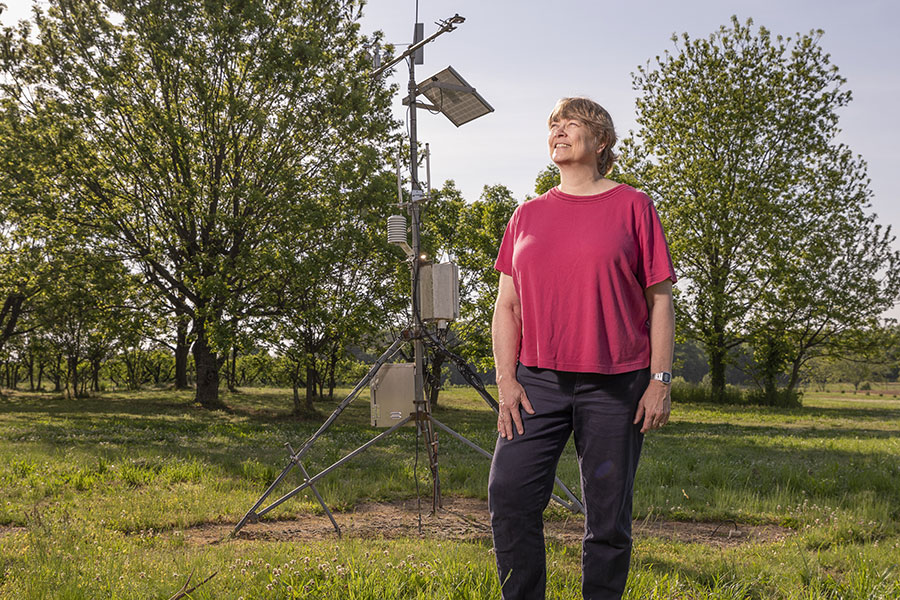
The University of Georgia weather network provides weather information to growers in the state of Georgia from a network of 90 automated weather stations distributed across the state. Weather data gathered and disseminated by the UGA weather network, as well as information derived from that data, such as drought severity, provide a critically-needed resource to vegetable producers in the state of Georgia.
The weather and climate information generated by the weather network provides the data for the underlying tools and calculators that have been developed to assist corn producers in Georgia, including growing degree day calculators and current solar radiation data. Precipitation and soil moisture data are used by the U. S. Drought Monitor to assess current drought status across the state during dry periods.
Materials and Methods
The UGA weather network continues to be maintained at a high level of functionality and provides high-quality weather information on time. In 2025, we added a new station at the UGA Grand Farm in Perry near the fairgrounds to support agricultural research there. We are continuing to look for a new station site near Columbus to fill in a hole in coverage there.
At the end of 2024, our senior technicians retired, and Christian Snyder was hired to take over maintenance of the stations. We are in the process of hiring a second technician to help with station maintenance. Support from the GACCV helps to provide salaries for these positions. We are evaluating the use of T-Mobile to take advantage of higher transmission speeds and are testing their modems and network coverage for suitability for the network.
Results
All data is currently collected and maintained in text files. A database, which will be used to store and manipulate all the data, has been created, and we are waiting for a new website to be migrated to our cloud server. It will remove the need for text files and allow additional calculators, such as a solar radiation accumulation tool, to be developed. We are in the process of switching over to the database with the help of Joe LaForest’s Bugwood Team at the University of Georgia Tifton campus. This process has been delayed by the hiring and move of a new programmer to Tifton, but it appears to be on track again.