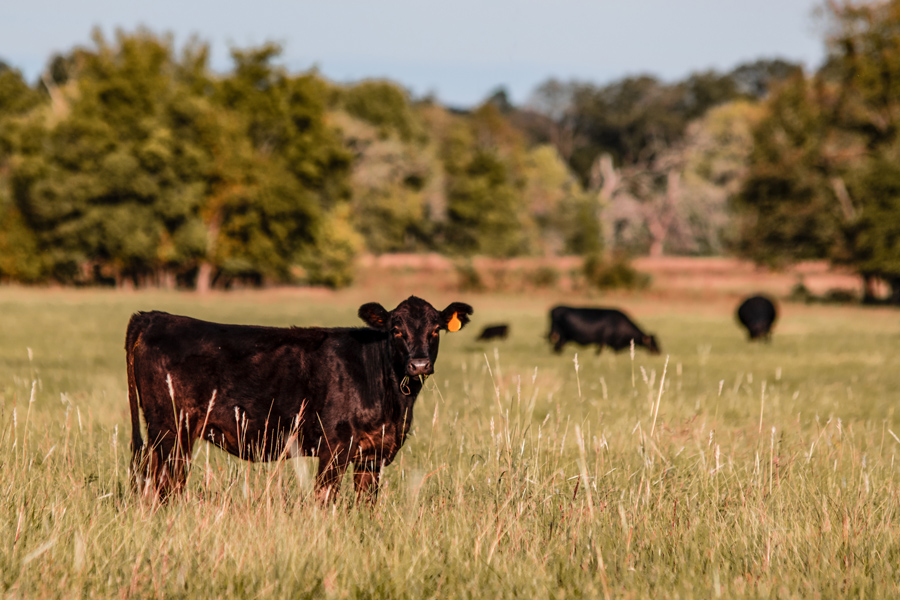

Drought can have a double impact on cattle producers. Not only is forage limited during the grazing months, the production of hay is limited. With the lack of forage, both grazed and conserved, many producers are looking for sources of feed for their cattle going into the fall and winter. Hay is an option, but it’s not the only option. Hay replacement rations can be an economical option to purchasing additional hay. Grains are often cheaper per unit of energy than hay, especially when hay prices increase during a drought period.
When considering these feeding options, producers should consider three major issues:
- Cost of the potential feeds and their nutrients,
- Which rations will meet the nutritional requirements of their cattle, and
- How to properly feed cattle with the hay replacement ration.
Cost of potential feeds
The first step in developing hay replacement ration is determining what is available and what it costs. Cost is the ultimate factor when determining a feed to purchase, so understanding the true value of a feedstuff is crucial. The Georgia Commodity Feed Source Listing (ugabeef.com/tools) is a good resource for determining what commodities are available in a specific area. Ultimately, feeds should be evaluated on a price per unit of nutrient, that is, cost per pound of crude protein (CP) or total digestible nutrients (TDN). In order to accomplish this, the price of the feed, the moisture content, and the nutrient content are needed. Have the feedstuffs tested to determine nutrient content. Hay is highly variable in nutrient content, but many of the by-product feeds are also highly variable in nutrient content. Contact your local county Extension agent to submit samples for testing. An example of how to calculate the price per pound of nutrient is illustrated below.
Formula for calculating price per pound of nutrient (CP or TDN), with a worked example using corn gluten feed.
Additionally, the cost of trucking or freight should be considered. During a drought, hay and feeds are often available in other parts of the country. Although they may appear to be an economical choice, the additional cost of having them delivered may make them more expensive. A simple method to account for the cost of shipping is to take the cost of shipping the load, divide by the total weight of the load, and then add it to the cost per ton of feed. This will allow you to assess the true cost of the feed. The UGA Feed Cost Analyzer is a decision aid available to help determine these values (see beef.caes.uga.edu/tools/).
Potential hay replacement rations
The goal of developing a ration is to meet the nutrient requirements of a specific group of cattle. Grouping cattle by class or stage of production will allow rations to efficiently meet the requirements of that specific group.
The rations in Tables 1 through 4 are balanced for specific groups of cattle, although the options presented are not exclusive. Additional rations can be developed using programs such as the UGA Basic Balancer (UGA Extension Bulletin 1371, also available on the Beef Team website mentioned above). Tables 1 and 2 are rations designed for free-choice feeding to lactating cows (Table 1) or dry cows (Table 2).
| Rations (lb/ton) | |||||||
|---|---|---|---|---|---|---|---|
| Ingredient | lb/ton | ||||||
| 1 | 2 | 3 | 4 | 5 | 6 | 7 | |
| Corn | 860 | 1000 | 450 | 600 | 550 | ||
| Whole cottonseed | 500 | 350 | |||||
| Corn gluten feed | 400 | 450 | |||||
| Soybean hulls | 650 | 750 | |||||
| Distillers grains | 550 | ||||||
| Cottonseed or soybean meal | 140 | ||||||
| Peanut hulls, cottonseed hulls, cotton gin byproducts, or hay | 1000 | 980 | 1050 | 1000 | 900 | 900 | 900 |
| Total | 2000 | 2000 | 2000 | 2000 | 2000 | 2000 | 2000 |
Note. Vitamin A should be added to the above rations at the rate of 3.5 million units per ton or provided in a good quality salt-mineral mix. Rumensin® or Bovatec® should be included. These can be purchased in a commercial mineral mix. Purchase a mineral mix that is approximately 20% calcium and is designed for use with grain-based diets. The mineral can be either mixed with the feed or fed free-choice. When feeding free-choice, monitor intake closely to ensure cows are eating the recommended daily rate of the mineral. If mixing minerals into the ration, include limestone at 15 lb per ton and trace mineral salt at 10 lb per ton. Hay can be limit fed at 4 to 5 lb per head per day to substitute for peanut hulls.
| Rations (lb/ton) | |||||||
|---|---|---|---|---|---|---|---|
| Ingredient | lb/ton | ||||||
| 1 | 2 | 3 | 4 | 5 | 6 | 7 | |
| Corn | 800 | 550 | 450 | 600 | |||
| Whole cottonseed | 300 | 250 | |||||
| Corn gluten feed | 450 | 400 | |||||
| Soybean hulls | 1000 | 550 | 650 | ||||
| Distillers grains | 350 | ||||||
| Cottonseed or soybean meal | 100 | ||||||
| Peanut hulls, cottonseed hulls, cotton gin byproducts, or hay | 1100 | 1000 | 1150 | 1100 | 1050 | 1100 | 1050 |
| Total | 2000 | 2000 | 2000 | 2000 | 2000 | 2000 | 2000 |
Note. Vitamin A should be added to the above rations at the rate of 3.5 million units per ton or provided in a good quality salt-mineral mix. Rumensin® or Bovatec® should be included. These can be purchased in a commercial mineral mix. Purchase a mineral mix that is approximately 20% calcium and is designed for use with grain based diets. The mineral can be either mixed with the feed or fed free-choice. When feeding free-choice, monitor intake closely to ensure cows are eating the recommended daily rate of the mineral. If mixing minerals into the ration, include limestone at 15 lb per ton and trace mineral salt at 10 lb per ton. Hay can be limit fed at 4 to 5 lb per head per day to substitute for peanut hulls.
All rations are based on average nutrient values for each ingredient and may require adjustments after feeds have been tested. To make these rations economical, a very cheap source of roughage must be available to mix with the grain. If cheap roughage is not available, limit-feeding the concentrate diet should be considered.
Table 3 lists rations that must be fed each day in limited amounts to either dry or lactating cows. The rations in Table 4 can be fed to newly weaned calves that are at least 60 days of age.
| Rations (lb/ton) | |||||||
|---|---|---|---|---|---|---|---|
| Ingredient | lb/ton | ||||||
| 1 | 2 | 3 | 4 | 5 | 6 | 7 | |
| Corn | 1200 | 1050 | 1000 | 850 | |||
| Whole cottonseed | 550 | 550 | 550 | ||||
| Corn gluten feed | 600 | 600 | |||||
| Soybean hulls | 1050 | 1050 | 1050 | ||||
| Distillers grains | 750 | ||||||
| Cottonseed or soybean meal | 400 | ||||||
| Peanut hulls, cottonseed hulls, cotton gin byproducts, or hay | 400 | 400 | 400 | 400 | 350 | 400 | 400 |
| Total | 2000 | 2000 | 2000 | 2000 | 2000 | 2000 | 2000 |
Note. Vitamin A should be added to the above rations at the rate of 3.5 million units per ton or provided in a good quality salt-mineral mix. Rumensin® or Bovatec® should be included. These can be purchased in a commercial mineral mix. Purchase a mineral mix that is approximately 20% calcium and is designed for use with grain based diets. The mineral can be either mixed with the feed or fed free-choice. When feeding free-choice, monitor intake closely to ensure cows are eating the recommended daily rate of the mineral. If mixing minerals into the ration, include limestone at 15 lb per ton and trace mineral salt at 10 lb per ton. Hay can be limit fed at 4 to 5 lb per head per day to substitute for peanut hulls.
| Rations (lb/ton) | ||||||
|---|---|---|---|---|---|---|
| Ingredient | lb/ton | |||||
| 1 | 2 | 3 | 4 | 5 | 6 | |
| Corn | 1050 | 1000 | 1000 | 400 | ||
| Whole cottonseed | 350 | |||||
| Corn gluten feed | 400 | |||||
| Soybean hulls | 1000 | 400 | 900 | |||
| Distillers grains | 500 | 500 | 600 | |||
| Cottonseed or soybean meal | 200 | 300 | 200 | 500 | 300 | |
| Peanut hulls, cottonseed hulls, cotton gin byproducts, or hay | 300 | 300 | 300 | 500 | 500 | 500 |
| Total | 2000 | 2000 | 2000 | 2000 | 2000 | 2000 |
Note. Feed rations 1, 2, and 3 at approximately 2.5% of body weight to achieve a gain of 2.25 lb per day. Rations 4, 5, and 6 can be fed free-choice. Start feeding the ration at 0.5% of body weight. Wait until calves are eating at least 2% of body weight before allowing free-choice access. These rations should be fed for approximately 100 days, or until calves reach approximate age/weight of typical weaning. At that point, rations can be adjusted to decrease CP, potentially decreasing feed cost. Rumensin® or Bovatec® should be included. These can be purchased in a commercial mineral mix. Purchase a mineral mix that is approximately 20% calcium and is designed for use with grain-based diets. The mineral can be either mixed with the feed or fed free-choice. When feeding free-choice, monitor intake closely to ensure cows are eating the recommended daily rate of the mineral. If mixing minerals into the ration, include limestone at 15 lb per ton and trace mineral salt at 10 lb per ton. Calves destined for sale should be implanted. Do not implant potential replacement heifers.
Feed management
It’s crucial to consider several management practices prior to, and during, the implementation of a hay-replacement feeding program. These management practices include:
- Adequate bunk space must be provided so that all cows can eat at one time to prevent less aggressive cows from getting too little feed. In addition, cows should be fed at the same time every day to decrease the risk of digestive problems.
- When selecting a site for feeding, make sure it is well drained and has a secure fence around it. Select an area with poor quality pasture and few trees.
- Corn or by-product feeds do not have to be cracked or ground before feeding. Sorghum grain and wheat must be ground or rolled before feeding.
- A limited amount of roughage must be fed every day to limit digestive problems such as bloat and acidosis. If feeding hay, square bales are the easiest way, but availability may be limited. The best way to feed a round bale is to either roll the hay out or place it in rings and limit the time cows are allowed to eat the hay. It will take some practice to estimate the time required for cows to eat 3 to 5 lb of hay, but expect 30 to 45 minutes to be the optimum amount of time. Also, all cows must be able to eat at one time, so make sure to provide adequate bales for all cows to eat at once.
- Cows will be eating approximately half as much feed as they are accustomed to. Therefore, cows will act very hungry for the first couple of weeks. Resist the temptation to feed cows more as this will negate feed cost savings. Only increase feed if cows are losing body condition.
- Cows should be gradually started on feed. Begin with feeding 5 lb of grain and increase 2 lb every other day until the desired grain level is reached.
- A mineral supplement that is high in calcium and contains trace minerals and vitamins must be fed. Grains are low in calcium, so a high calcium mineral supplement should be fed. An ionophore such as Bovatec or Rumensin must be fed. Feed efficiency is significantly improved and digestive upsets are greatly decreased by feeding cows an ionophore.
- Corn can be contaminated with aflatoxins. Make sure the corn is not contaminated before you buy it.
- Check feeders daily to make sure feed is not bridged in the feeder and to remove accumulated fines as needed.
- If rations are to be self-fed, they should be hand-fed for 1 week prior to self-feeding to adjust cattle to these rations. Start at 10 lb of total mix and increase 2 lb every day until cattle are on full feed. Expected consumption is 25 to 30 lb per day.
Physically getting the feed into the feed bunk and doing this every day is often the biggest challenge to feeding grains and by-product feeds. A mixer wagon works great for producers with larger herds. Producers with small herds may be able to have feed delivered into a feed bin and then auger the feed into buckets or small, mechanically operated feeding equipment.
Hopefully, employing some, or all, of these strategies will help producers make it through limited forage situations. If you have questions about establishing a winter feeding program, please contact your local Extension office at 1-800-ASK-UGA-1.