

Introduction
Vegetable production is an important part of Georgia’s agricultural economy, contributing more than $1.3 billion in farm gate value annually (Department of Agricultural and Applied Economics, 2022). Among the state’s top vegetable crops, bell peppers, tomatoes, snap beans, and broccoli are significant in terms of acreage, value, and regional specialization.
In 2021, Georgia ranked third nationally in bell pepper production, contributing 10.5% of total U.S. production with approximately 6,600 acres harvested—primarily from Tift, Colquitt, Echols, and Lowndes counties (Kane, 2023). Tomato production is concentrated in southwest Georgia counties, mainly Colquitt and Decatur, which benefit from extended growing seasons and robust farm infrastructure. Snap beans, especially bush-type varieties, are widely grown in Sumter, Echols, and Tift counties, and other counties where there are snap-bean packing facilities and growers can take advantage of multiple planting windows. Broccoli production continues to expand, particularly during the late fall, winter, and early spring seasons, with a developing wholesale industry in Colquitt and Tift counties (Coolong et al., 2025).
Because of the economic importance of these crops, there is a need for comprehensive, crop-specific data on grower priorities, varietal performance, and production constraints. The University of Georgia’s vegetable breeding program, in collaboration with UGA county Extension agents from major vegetable-producing counties, initiated a needs assessment survey employing concept-mapping methodology (Bridges, 2019) to assess growers’ preferences.
This project aims to systematically capture stakeholder input across multiple crops—including bell peppers, tomatoes, snap beans, and broccoli—to inform the development of regionally adapted high-performing varieties. By identifying key constraints, preferred traits, and grower experiences, the project will guide upstream breeding research (research on plant traits that precedes commercial variety development) and promote the release of improved varieties tailored to Georgia’s unique climate, market conditions, and sustainability goals.
The findings presented here are based on survey responses from 15 leading vegetable growers across eight key counties in Georgia: Tift, Colquitt, Worth, Echols, Brooks, Grady, Lowndes, and Sumter. Responses were primarily collected through in-person interviews conducted with the support of county Extension agents, which provided a grounded and regionally diverse view of stakeholder needs.

Insights from Georgia Bell Pepper Growers
Table 1. Traits to Prioritize in Upstream Pepper Breeding.
| Rank | Disease resistance | Pest resistance | Fruit quality | Abiotic stresses | Production challenges |
| 1 | Phytophthora blight | Pepper weevil | Size: Large, four-lobe, blocky Appearance: Dark green | Heat | Labor |
| 2 | Bacterial spot | Thrips | Shelf life | Freeze (Spring) | Mechanical harvesting |
| 3 | Anthracnose | Broad mites | Flavor | Drought | Planting time |
Grower-Identified Challenges
Bell pepper production in Georgia represents a key segment of the state’s vegetable economy (10.39%), with growers encountering several interrelated challenges that directly influence yield, quality, and profitability (Department of Agricultural and Applied Economics, 2025).
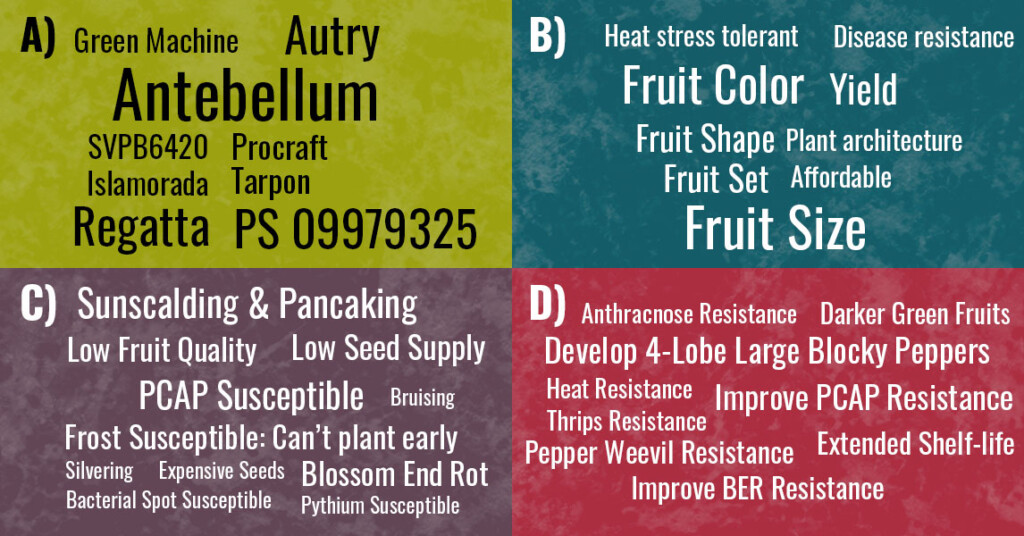
Survey findings (Table 1) indicate that Phytophthora capsici, the causal agent of Phytophthora root rot, has emerged as the most critical disease constraint, followed by bacterial spot (Xanthomonas campestris pv. vesicatoria) and anthracnose (Colletotrichum spp.), all of which affect plant vigor, yield, and fruit quality.
Among insect pests, pepper weevil (Anthonomus eugenii) was ranked highest because of its impact on fruit set and premature drop, while thrips (Frankliniella occidentalis) and broad mites (Polyphagotarsonemus latus) also posed significant threats to plant health. In addition to direct feeding damage, thrips are known vectors of tomato spotted wilt virus (TSWV), further compounding their impact on crop productivity.
Georgia’s climatic conditions present additional abiotic stressors (the negative effects of environmental factors on these plants), with heat, spring freeze events, and drought emerging as leading environmental challenges. Production issues, such as labor shortages, lack of adaptability to mechanical harvesting, and inflexible planting schedules, further compound these challenges.
Grower-Identified Desirable Traits
Both growers and markets greatly favor characteristics such as large, four-lobed, blocky fruits and a dark green appearance. Other important traits include shelf life and flavor, both of which affect postharvest fruit quality and consumer satisfaction. The word charts in Figure 1 provide a visual reference of the preferred bell pepper varieties and their most valued traits as reported by participating growers.

Insights from Georgia Tomato Growers
Table 2. Traits to Prioritize in Upstream Tomato Breeding.
| Rank | Disease resistance | Pest resistance | Fruit quality | Abiotic stresses | Production challenges |
| 1 | Bacterial spot | Whitefly | Size | Heat | Labor |
| 2 | Viruses (TYLCV & TSWV) | Thrips | Shelf life | Freeze | Mechanical harvesting |
| 3 | Bacterial wilt | Spider mites, cabbage looper, aphids | Flavor | Not applicable | Planting time |
Grower-Identified Challenges
Survey findings indicate that tomato production in Georgia faces significant challenges, particularly from diseases, pests, and labor limitations. A detailed ranking of these concerns (see Table 2) revealed that bacterial spot is the most critical disease, followed by insect-transmitted viral diseases, such as whitefly-transmitted tomato yellow leaf curl virus (TYLCV) and thrips-transmitted tomato spotted wilt virus (TSWV), and the soilborne pathogen Ralstonia solanacearum, the causal agent of bacterial wilt. Among insect pests, sweet potato whiteflies topped the list, with thrips and a mix of spider mites, cabbage loopers, and aphids also contributing to crop damage.
Abiotic stresses such as heat and the potential for a spring freeze were identified as major constraints on yield and planting decisions. On the production side, labor shortages, harvesting difficulties, and limited planting time periods present ongoing challenges.
Grower-Identified Desirable Traits
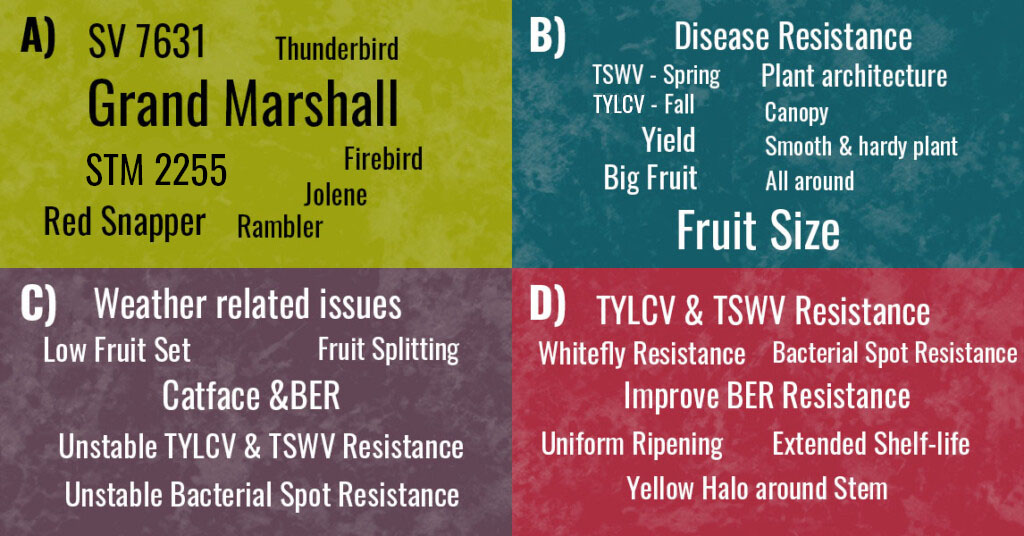
Growers prioritized fruit size, shelf life, and flavor as key quality traits needed to meet market demands. The trait preferences are further illustrated in the word clouds of growers’ responses, highlighting the most frequently mentioned tomato varieties and their valued attributes (Figure 2). These insights will shape targeted breeding strategies to develop resilient, high-quality tomato varieties suitable for Georgia’s production environments.

Insights from Georgia Snap Bean Growers
Table 3. Traits to Prioritize in Upstream Snap Bean Breeding.
| Rank | Disease resistance | Pest resistance | Fruit quality | Abiotic stresses | Production challenges |
| 1 | Tip rot | Whitefly | Size: Longer pods | Heat | Labor |
| 2 | Aerial pythium blight | Thrips | Appearance: Dark green | Not applicable | Mechanical harvesting |
| 3 | Phytophthora blight | Cowpea curculio | Shelf life | Not applicable | Planting time; competition from imports |
Grower-Identified Challenges
Snap bean growers across Georgia have identified a range of challenges that influence both production and market viability (see Table 3). Among diseases, tip rot is ranked as the most serious concern. Tip rot is the decay or necrosis of the distal end of the bean pod, often appearing as brown or black discoloration with soft tissue, which leads to the drying of the pod tip. It is caused by Rhizoctonia and usually occurs during periods of high rainfall near harvest. Aerial Pythium blight (Pythium spp.) and Phytophthora blight (Phytophthora capsici) are other major diseases that impact snap bean production. Insect pressure was primarily attributed to whiteflies (Bemisia tabaci) and thrips, with cowpea curculio (Chalcodermus aeneus) also noted as a persistent issue.
Heat stress emerged as the leading abiotic constraint, particularly during flowering and pod setting. On the production side, labor availability and the need for varieties compatible with mechanical harvesting were prominent issues. Additionally, growers cited difficulties with planting timing and concerns over market pressure from imports.
Grower-Identified Desirable Traits
In terms of fruit quality, growers expressed a preference for longer pods with a dark green appearance, while shelf life was highlighted as an area needing improvement.
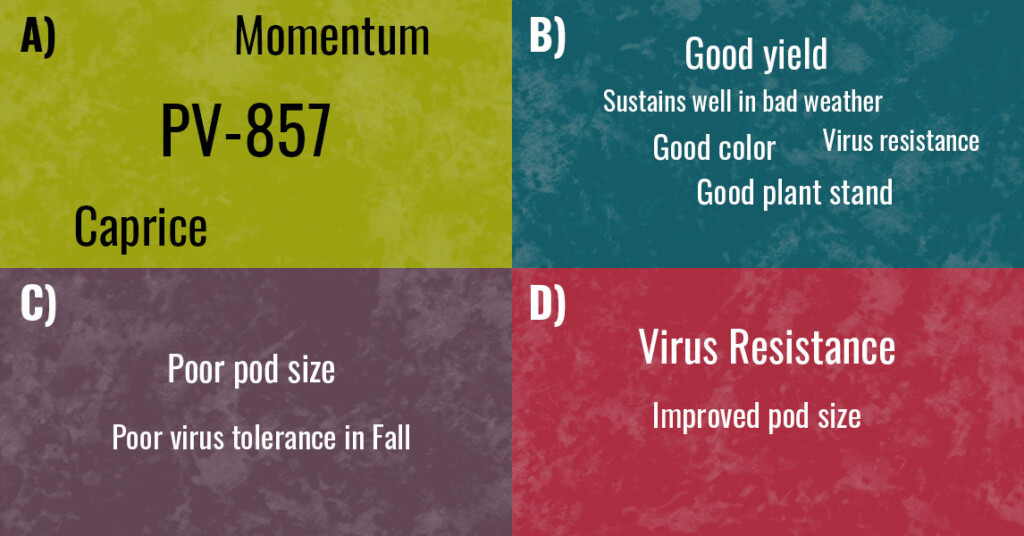
These findings indicate a clear direction for breeding priorities: improved disease and pest resistance, better pod characteristics, and adaptability to heat and labor-saving technologies. The word clouds in Figure 3 illustrate the preferred snap bean varieties and their most valued traits as reported by participating growers.

Insights from Georgia Broccoli Growers
Table 4. Traits to Prioritize in Upstream Broccoli Breeding.
| Rank | Disease resistance | Pest resistance | Fruit quality | Abiotic stresses | Production challenges |
| 1 | Alternaria leaf blight and head rot | Diamondback moth | Size | Heat | Labor |
| 2 | Downy mildew | Thrips | Shelf life | Not applicable | Hollow Stem: Boron deficiency |
| 3 | Black rot and soft rot | Not applicable | Flavor | Not applicable | Seedling Vigor: Bigger seed |
Grower-Identified Challenges
Broccoli production in Georgia presents unique challenges, driven by climate sensitivity and evolving pressures from pests and diseases. Alternaria leaf blight and head rot are the top-ranked diseases affecting crop quality, followed by downy mildew and a combination of black rot and soft rot pathogens. Diamondback moth was identified as the most impactful insect pest, with thrips also contributing to plant damage and reduced head quality.
Heat stress during early development and maturation stages was cited as the primary abiotic concern. In addition, growers highlighted physiological and early vigor challenges such as hollow stem, which is often related to boron deficiency, and a need for larger seed size to promote robust seedling establishment.
Grower-Identified Desirable Traits
Growers emphasized the importance of maintaining ideal head size and structure, with flavor and shelf life emerging as key postharvest quality traits.
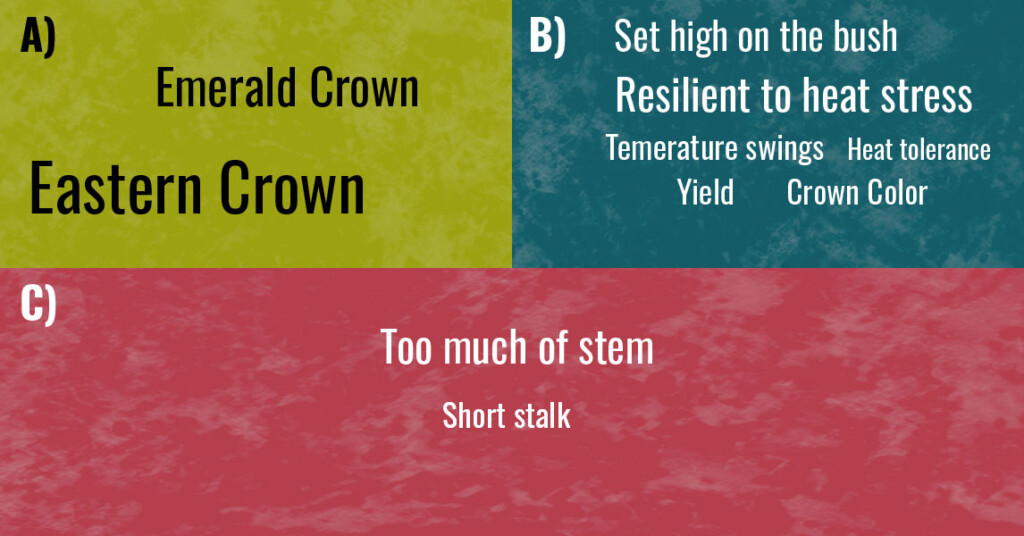
These priorities suggest a strong demand for broccoli varieties that combine heat tolerance, disease and pest resistance, and enhanced postharvest quality. The word clouds in Figure 4 illustrate preferred varieties and traits based on grower feedback.
Conclusions
This needs assessment and concept mapping initiative has generated a comprehensive understanding of the key challenges and breeding priorities for economically significant vegetable crops grown in Georgia: bell peppers, tomatoes, snap beans, and broccoli. Through structured stakeholder engagement and in-person interactions with participating growers, we identified critical production constraints, including disease and pest pressures, abiotic stresses, and labor limitations, and learned growers’ desired fruit-quality traits and cultivation preferences.
These findings highlight the urgency for vegetable breeding programs to prioritize efforts in developing varieties that possess improved disease resistance, stress tolerance, and market-desirable characteristics tailored to Georgia’s unique environments. The concept mapping and variety-specific feedback serve as strategic tools to align breeding efforts with grower expectations and industry needs.
Looking forward, this initiative provides a model for integrating stakeholder input into upstream breeding decisions. The input will help UGA’s vegetable breeding program prioritize research that develops potential breeding lines with desired characteristics and ultimately release improved cultivars. Continued collaboration with growers, county Extension agents, and peer vegetable researchers will be essential to sustaining innovation and supporting the profitability and resilience of Georgia’s vegetable industry.
References
Bridges, S. (2019, May 19). Concept mapping: What is it and why do it? [Video]. Center for Teaching and Learning, University of Georgia. https://kaltura.uga.edu/media/t/1_y9oiinde
Coolong, T., Sparks, A., & Dutta, B. (2025). Fresh market broccoli production for Georgia (Publication No. B 1460). University of Georgia Cooperative Extension. https://fieldreport.caes.uga.edu/publications/B1460/
Department of Agricultural and Applied Economics. (2022). Georgia farm gate value report 2021 (Publication No. AR-22-01). University of Georgia, Center for Agribusiness and Economic Development. https://caed.uga.edu/content/dam/caes-subsite/caed/publications/annual-reports-farm-gate-value-reports/2021_GeorgiaFGVReportDec2022%20%281%29.pdf
Department of Agricultural and Applied Economics. (2025). Georgia farm gate value report 2023 (Publication No. AR-25-01). University of Georgia, Center for Agribusiness and Economic Development. https://caed.uga.edu/content/dam/caes-subsite/caed/publications/annual-reports-farm-gate-value-reports/2023%20Georgia%20Farm%20Gate%20Value%20Report.pdf
Kane, S. P. (2023). 2023 ag snapshots. University of Georgia Center for Agribusiness and Economic Development. Retrieved January 14, 2025, from https://fieldreport.caes.uga.edu/publications/AP129-1/