
Growing cover crops is one of the most important cultural practices that farmers can use to improve soil quality and the sustainability of their production system. This is true for row crop and vegetable production, regardless of whether the farms are certified organic or conventional. Cover crops provide many benefits, including reducing erosion, fixing nitrogen (if legumes are included), and providing habitat for pollinators and beneficial insects.
To maximize the benefits of cover crops, farmers need to maximize biomass (i.e., the amount of plant material above and below the ground). This can be done through timely planting, managing for an optimum stand, and terminating the cover crops as late as is practical.
The amount of biomass that different cover crops produce ranges widely. Some species produce more biomass than others. Fertile soils with some clay tend to produce higher biomass than infertile or very sandy soils. Biomass will also vary with weather. Table 1 gives some values for biomass for commonly used winter cover crops in the southeastern United States based on a review of research studies. Table 2 gives similar information for summer cover crops.
Knowing how much biomass there is in a field is a critical piece of information for cover crop management. For example, research has shown that at least 7,000 to 8,000 lb of biomass per acre is needed for good weed control if the cover crop is rolled down and left on the surface in a conservation tillage production system.
A farmer may want to measure biomass to develop an “eye” for when their cover crop reaches this target. Many farmers use legumes as part of their nitrogen fertilization strategy. In this case, knowing the amount of biomass is essential for determining how much nitrogen the cover crop will provide. In both these cases, a farmer may want to know how to obtain a good measurement of the amount of biomass in their field.
Part 1 of this circular provides a step-by-step guide to taking a sample that will be representative of your field. Part 2 provides additional steps for preparing a fresh cover crop sample to send to the Agricultural and Environmental Services Laboratories, so it can be analyzed to determine nitrogen availability to the following crop.
Table 1. The average and maximum dry biomass reported for some commonly used winter cover crops in the Southeastern U.S.
| Winter Cover Crop | Average Biomass (lb/acre) | Maximum Biomass (lb/acre) |
|---|---|---|
| Coastal Plain | ||
| Cereal rye (Secale cereale) | 4,000 | 9,500 |
| Oat (Avena sativa) | 2,000 | 3,900 |
| Black oat (Avena strigose) | 4,000 | 9,600 |
| Wheat (Triticum spp.) | 1,500 | 3,800 |
| Crimson clover (Trifolium incarnatum) | 2,900 | 6,300 |
| Hairy vetch (Vicia villosa) | 3,300 | 5,700 |
| Austrian winter pea (Pisum sativum subsp. arvense) | 2,600 | 4,100 |
| Piedmont | ||
| Cereal rye (Secale cereale) | 6,400 | 11,200 |
| Wheat (Triticum spp.) | 6,000 | 9,400 |
| Crimson clover (Trifolium incarnatum) | 3,900 | 8,200 |
| Hairy vetch (Vicia villosa) | 4,400 | 6,300 |
| Austrian winter pea (Pisum sativum subsp. arvense) | 3,600 | 5,600 |
| Mountains, Ridge & Valley | ||
| Cereal rye (Secale cereale) | 4,400 | 6,700 |
| Wheat (Triticum spp.) | 2,900 | 8,100 |
| Crimson clover (Trifolium incarnatum) | 3,100 | 4,300 |
| Hairy vetch (Vicia villosa) | 3,200 | 5,700 |
| Austrian winter pea (Pisum sativum subsp. arvense) | 1,300 | 2,200 |
Table 2. The average and maximum dry biomass reported for some commonly used summer cover crops in the Southeastern U.S.
| Summer Cover Crop | Average Biomass (lb/acre) | Maximum Biomass (lb/acre) |
|---|---|---|
| Coastal Plain | ||
| Foxtail millet (Setaria italica) | 3,400 | 4,100 |
| Sorghum-sudangrass (Sorghum bicolor x Sorghum sudanense) | 7,800 | NA |
| Sunn hemp (Crotalaria juncea) | 6,500 | 11,600 |
| Cowpea (Vigna unguiculata) | 4,300 | 5,400 |
| Buckwheat (Fagopyrum esculentum) | 3,200 | NA |
| Piedmont | ||
| Sorghum (Sorghum bicolor) | 6,500 | 10,800 |
| Sunn hemp (Crotalaria juncea) | 5,100 | 11,500 |
| Cowpea (Vigna unguiculata) | 5,000 | 8,500 |
| NA – Not available. Average based on one study. | ||
Part 1: Taking a Representative Biomass Sample
Materials Required
- a 2 x 2.5 ft U-shaped quadrat. Mark the long end of the quadrat at 2 ft, so you will be sampling a 2 x 2 ft square.
- a pair of scissors, clippers, sharp knife, and/or machete
- a clean tarp/cloth sheet with a recorded empty weight, OR a clean plastic bucket (e.g., 5-gallon bucket) with a recorded empty weight
- a scale that weighs 0 to 10 lb (0–4.5 kg) and weighs to the nearest 0.01 lb (4.5 g)
- data sheet to record biomass wet weight (see Appendix)
- pen
Biomass Sample Procedure
Step 1
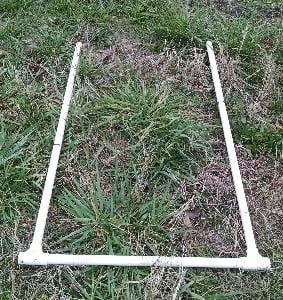
Prepare a 2 x 2.5 ft quadrat like the open U-shaped one pictured here. Mark the 2 ft length on the quadrat legs. You should only sample within the 2 x 2 ft square.
Step 2
Weigh the bucket or tarp in which you will be placing the cover crop sample and record the weight on the data sheet.
Step 3
Determine the size of the field to be sampled.

For fields less than 1 acre:
- Divide the field into four zones (similar to Figure 1).
- Within each of these zones, select an area for subsampling that is representative of that zone in terms of biomass, weeds, topography, and soil conditions. Avoid edges of the field.
- Take one subsample in each zone as outlined in step 4.
For fields between 1 and 15 acres:
- Divide the field into four zones (similar to Figure 1).
- Within each of these zones, select the places from which to take subsamples. Ideally, one would take up to five random samples in each zone, especially if the field is highly variable. At minimum, take one subsample in each zone. Subsample locations should be randomly selected, but make sure they are from areas that are relatively uniform and representative of the field as a whole. These areas should look similar to the whole field in respect to biomass, weeds, topography, and weather conditions. Avoid areas on the edges of the field.

For fields greater than 15 acres (see Figure 2):
- Divide the field into 15 acre sections based on management zones (these are usually based on soil type or topography).
- Divide each management zone into four subzones.
- Within each of these subzones, select the places from which to take subsamples. Ideally, one would take up to five random places in each zone, especially if the field is highly variable. At minimum, take one subsample in each zone. Subsample locations should be randomly selected, but make sure they are from areas that are relatively uniform and representative of the field as a whole. These areas should look similar to the whole field in respect to biomass, weeds, topography, and weather conditions. Avoid areas on the edges of the field.
Step 4
Take a subsample using the following procedures.
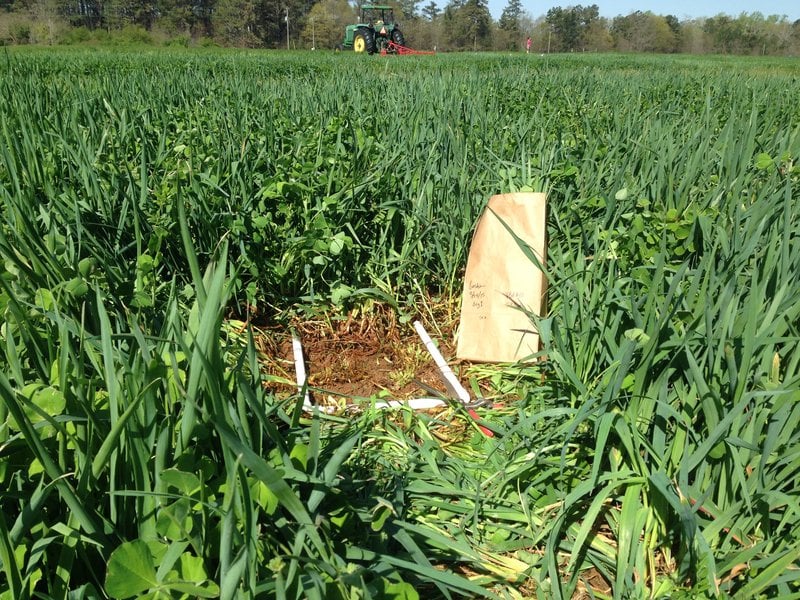
- Randomly put down the U-shaped quadrat of known size: 2 ft x 2 ft = 4 sq ft
- Slide the quadrat into the cover crop at ground level.
- Make sure all plant material within the quadrat is rooted within the quadrat. Gently pull cover crop that is rooted outside of the quadrat (see Figure 3).
- Clip all plant matter inside the quadrat to 1 in. above ground level and place it in the clean plastic bucket or on a clean tarp if there is a great amount of biomass. Try not to include soil on the base of the cover crop.
Step 5
Weigh the cover crop subsample in pounds (lb) or grams (g).
- Record fresh weight of the cover crop biomass in the bucket or tarp on the data sheet in Appendix A.
- Repeat for each of the subsamples.
- Calculate the fresh cover crop weight using the data sheet in Appendix A.
- Check your wet weight biomass numbers. For grains or mixtures, if the wet weight biomass is greater than 50,000 lb/acre, recheck your calculations or resample. For legumes, if your wet weight biomass is greater than 30,000 lb/acre, recheck your calculations or resample. Common mistakes are forgetting to divide by the number of samples collected and writing down the wrong units—e.g. writing pounds when weighing grams.
Step 6
Determine the dry weight biomass. NOTE: This is only for samples NOT being submitted to the laboratory for analysis. If you are sending a fresh sample to the laboratory, skip to Part 2.
- Sun dry method
- Find a sunny spot protected from the wind.
- Spread all of the cover crop sampled out in a thin layer on a clean tarp or cloth sheet.
- Dry the cover crop until it is crunchy, turning it over if necessary to make sure all of the biomass is dried. This will take several days.
- Place the dried cover crop on the pre-weighed tarp. Be sure to keep all the leaves with the sample.
- Weigh the dried cover crop and record weight on data sheet in Appendix B.
- Calculate the pounds per acre of cover crop using the data sheet in Appendix B.
- Microwave method
- Use the subsampling method in Part 2 to obtain a representative subsample.
- Chop the cover crop subsample into small inch pieces.
- Record weight of empty microwave safe plate on the data sheet in Appendix C.
- Weigh out 3.5 oz (100 g) of chopped cover crop, then spread cover crop subsample on the plate in a thin layer.
- Place a small cup of water in the microwave with the sample to prevent the sample from igniting once dry. Heat for 1–2 min and reweigh. If sample is not completely dry, heat for 30 sec or smaller intervals until the weight is consistent (does not change more than 5%). If sample chars, use the previous weight. Microwaves vary considerably. Use small intervals to avoid burning and damaging the oven.
- Calculate the moisture content using the formula on the data sheet in Appendix C.
- Calculate the cover crop dry matter using the fresh weight from your data sheet in Appendix C.
Part 2: Taking a Representative Subsample for Quality Analysis
Materials Required
- a pair of scissors, clippers, sharp knife, and/or machete
- a clean plastic sheet or tarp with a recorded empty weight
- gallon-size sealable plastic bag
- permanent marker
- blue ice and a shipping container
Subsampling Procedure
- Take the subsamples collected from each of the zones within the field and combine them into one sample.
- Mix all the subsamples together thoroughly. This is most easily done on a clean tarp.
- Reduce the size of the sample.
- Clip, chop, or tear the material into smaller pieces (i.e., nothing larger than 2-3 in. pieces), if dealing with large stalks or biomass.
- Form a circular pile with the cover crop sample, and split the pile into four.
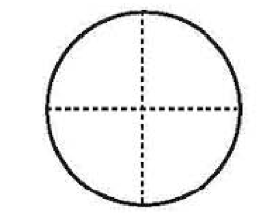
- Keep two diagonal pieces of the four, and discard the other two.
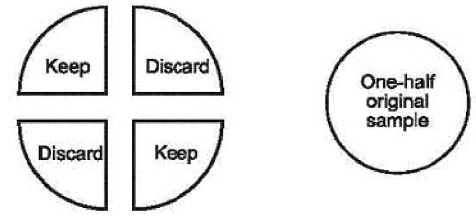
- Mix the two piles and repeat the reduction process until the remaining sample will fill a gallon-size sealable plastic bag.
- Send the sample to the Agricultural and Environmental Services Laboratories at UGA for cover crop quality analysis.
- Make sure the sample has dry ice or an ice pack in the package. Deliver to the lab the same day or send it overnight.
- Fill out appropriate sample submission form.
- The submission forms are available online at https://aesl.ces.uga.edu/forms/
- Cover crop nitrogen: enclose a Cover Crop Nitrogen (N) Availability Calculator submission form. PLEASE fill out ALL information.
- General cover crop quality: enclose the appropriate Feed and Forage Testing application form.
Additional Resources
Production information can be found in Managing Cover Crops Profitably: https://www.sare.org/resources/
Appendix A: Wet Weight Biomass for Laboratory Submission
Example
Bucket or tarp tare weight (lb): Used a 2 ft quadrat that samples 4 sq ft
| Sample | Wet Weight with Bucket or Tarp Weight (lb) | Wet Weight Minus Bucket or Tarp Weight (lb) |
|---|---|---|
| 1 | 3.4 | 1.4 |
| 2 | 3.3 | 1.3 |
| 3 | 3.2 | 1.2 |
| 4 | ||
| 5 | ||
| Sum | 3.9 |
Include Wet Cover Crop Biomass in lb/acre on submission form. Calculate using the following formula:
Wet Cover Crop Biomass Weight =
Wet Cover Crop Biomass (lb/acre) =
Wet Cover Crop Biomass (lb/acre) = 14,157 lb/acre
Data Sheet
Bucket or tarp tare weight (lb): __________
| Sample | Wet Weight with Bucket or Tarp Weight (lb) | Wet Weight Minus Bucket or Tarp Weight (lb) |
|---|---|---|
| 1 | ||
| 2 | ||
| 3 | ||
| 4 | ||
| 5 | ||
| Sum |
Include Wet Cover Crop Biomass in lb/acre on submission form. Calculate using the following formula:
Wet Cover Crop Biomass Weight =
Wet Cover Crop Biomass (lb/acre) = __________
Appendix B: Dry Cover Crop Biomass Sun Dry Method
Example
Bucket or tarp tare weight (lb): 2.5
| Sample | Dry Weight with Bucket or Tarp Weight (lb) | Dry Weight Minus Bucket or Tarp Weight (lb) |
|---|---|---|
| 1 | 5.5 | 3.0 |
Calculate the Dry Biomass in lb/acre using the following formula:
Dry Cover Crop Biomass Weight =
Dry Cover Crop Biomass (lb/acre) =
*Note: 6 was the number of subsamples taken and spread out to dry.
Dry Cover Crop Biomass (lb/acre) = 5,445 lb/acre
Data Sheet
Bucket or tarp tare weight (lb): __________
| Sample | Dry Weight with Bucket or Tarp Weight (lb) | Dry Weight Minus Bucket or Tarp Weight (lb) |
|---|---|---|
| 1 |
Calculate the Dry Biomass in lb/acre using the following formula:
Dry Cover Crop Biomass Weight =
Dry Cover Crop Biomass (lb/acre) = __________
Appendix C: Dry Cover Crop Biomass Microwave Method
Example
Wet cover crop biomass weight from Appendix A (lb): 2.6
Microwave plate tare weight (g): 14
Subsample cover crop weight before heating (g): 114
| Time Heated | Weight After Heating with Plate (g) | Weight After Heating Minus Plate (g) |
|---|---|---|
| 1 minute | 75 | |
| 30 seconds | 50 | |
| 30 seconds | 45 | |
| 15 seconds | 35 | 21 |
Calculate the moisture content for each sample using the following formula:
% Moisture Content =
% Moisture Content (in decimal form) =
Calculate the dry biomass in lb/acre using the following formula:
Dry Cover Crop Biomass Weight =
Dry Cover Crop Biomass (lb/acre) =
Data Sheet
Wet cover crop biomass weight from Appendix A (lb): __________
Microwave plate tare weight (g): __________
Subsample cover crop weight before heating (g): __________
| Time Heated | Weight After Heating with Plate (g) | Weight After Heating Minus Plate (g) |
|---|---|---|
Calculate the moisture content for each sample using the following formula:
% Moisture Content =
% Moisture Content (in decimal form) = __________
Calculate the dry biomass in lb/acre using the following formula:
Dry Cover Crop Biomass Weight =
Dry Cover Crop Biomass (lb/acre) = __________
The original manuscript was prepared by Julia W. Gaskin, former UGA Sustainable Agriculture Coordinator; Dennis Hancock, former UGA Extension Forage Specialist; Uttam Saha, AESL; and Katelyn Chatam, Agricultural Specialist, Department of Crop and Soil Sciences. Revised by Uttam Saha.