UGA College of Agricultural & Environmental Sciences Field Report
  • Stories
    Almanac

    Science in service of humanity and the environment

    Read our annual magazine here

    READ


    Dive into engaging stories that showcase our statewide, national and global impact.

    Check out our written stories here

    LOOK


    Browse curated photo galleries capturing the people, places and programs that bring CAES to life.

    Check out our photo galleries here

    WATCH


    Experience our stories through videos that highlight our people, projects and passions in action.

    Check out our video library here

    LISTEN


    Tune in to “Cultivating Curiosity,” our podcast featuring in-depth conversations with CAES experts.

    Check out our podcast here
  • Expert Resources

    Expert Resources


    Gardening
    Invasive species
    Food and food safety
    Ants, termites and other pests
    Pollinators
    Livestock
    Emergency preparedness
    Home safety and maintenance
    Health, family and finances
    Nutrition
    Water quality
    Lawn maintenance and landscaping
    Turfgrass
    View all topics

    What is an Expert Resource?


    We publish unbiased, research-backed expert advice to empower Georgians with practical, trustworthy information they can trust.

    These resources are written and reviewed by experts in the UGA College of Agricultural and Environmental Sciences and the UGA College of Family and Consumer Sciences.

    Learn how we produce science you can trust
  • Events
  • Contact
  • Read
  • Look
  • Watch
  • Listen
Subscribe
  • LinkedIn
  • Facebook
  • Instagram
  • Stories
    Almanac

    Science in service of humanity and the environment

    Read our annual magazine here

    READ


    Dive into engaging stories that showcase our statewide, national and global impact.

    Check out our written stories here

    LOOK


    Browse curated photo galleries capturing the people, places and programs that bring CAES to life.

    Check out our photo galleries here

    WATCH


    Experience our stories through videos that highlight our people, projects and passions in action.

    Check out our video library here

    LISTEN


    Tune in to “Cultivating Curiosity,” our podcast featuring in-depth conversations with CAES experts.

    Check out our podcast here
  • Expert Resources

    Expert Resources


    Gardening
    Invasive species
    Food and food safety
    Ants, termites and other pests
    Pollinators
    Livestock
    Emergency preparedness
    Home safety and maintenance
    Health, family and finances
    Nutrition
    Water quality
    Lawn maintenance and landscaping
    Turfgrass
    View all topics

    What is an Expert Resource?


    We publish unbiased, research-backed expert advice to empower Georgians with practical, trustworthy information they can trust.

    These resources are written and reviewed by experts in the UGA College of Agricultural and Environmental Sciences and the UGA College of Family and Consumer Sciences.

    Learn how we produce science you can trust
  • Events
  • Contact
  • Read
  • Look
  • Watch
  • Listen
Subscribe
  • LinkedIn
  • Facebook
  • Instagram
Subscribe
  • LinkedIn
  • Facebook
  • Instagram
  1. Home
  2. Expert Resources
  3. Expert Resources Topics
  4. Departments and Units
  5. Agricultural and Environmental Services Laboratories

Agricultural and Environmental Services Laboratories

Use the Advanced Search
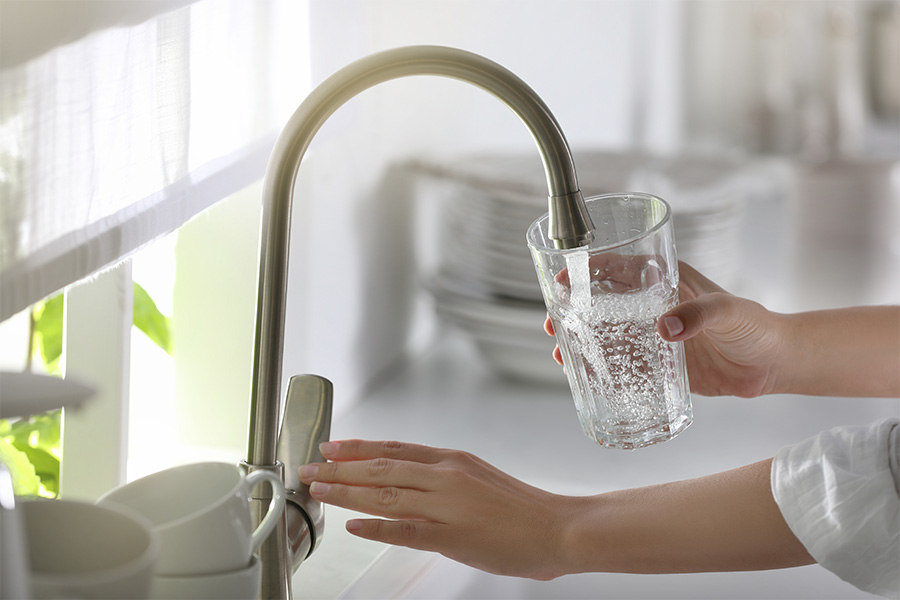
  • A woman and a young girl get water from a kitchen faucet

    C 858-16

    Radon in Your Water

    Radon is a naturally occurring, radioactive gas formed from the decay of uranium and radium found in geologic deposits. Exposure to radon gas most commonly occurs through elevated levels in home air. However, in Georgia and neighboring states there is a lesser, though still significant, risk of exposure to radon dissolved in drinking water. This circular addresses the issues on its occurrence, human exposure pathways, testing, interpretations, and remediation strategies.

    Uttam K. Saha, Pamela R. Turner, Derek Cooper, Kathryn Holland, and David Parks

    |

    Oct. 21, 2025
  • B 1581

    Microfiltration Techniques and Devices

    This publication covers microfiltration, which is used for physical removal of contaminants from water. It describes how these processes work, their situation-specific usefulness/applications, maintenance needed for their proper functioning, and guidance for the consumers to select the appropriate filter.


    Uttam K. Saha, Douglas M. Collins, Gary L. Hawkins, Pamela R. Turner, and Laurel Dunn

    |

    Aug. 11, 2025
  • B 1249

    Land Application of Pulp Mill Lime Mud

    Lime mud is a by-product produced in pulp mills as part of the process that turns wood chips into pulp for paper. The pulp mill cooks wood chips with sodium hydroxide to extract the wood fiber used to make paper from the lignin that binds the wood together. During this process, sodium hydroxide is converted to sodium carbonate. The pulp mill than adds calcium oxide, also known as quicklime, to convert the sodium carbonate back to sodium hydroxide in order to use it again. In the process, calcium carbonate is formed.

    Jason Lessl

    |

    June 27, 2025
  • B 1353

    Metal Concentration Standards for Land Application of Biosolids and Other By-Products in Georgia

    This bulletin provides the general public a quick reference for some commonly used standards for metal concentrations in biosolids and various by-products intended for land application. Most of the standards presented here are regulatory; however, we have also included information on average metal concentrations in agricultural soils.

    Jason Lessl

    |

    June 27, 2025
  • B 1577

    PFAS: Perfluoroalkyl and Polyfluoroalkyl Substances

    Perfluoroalkyl and polyfluoroalkyl substances (PFAS) are a group of more than 9,000 manmade chemicals that have been in use worldwide since 1940, primarily in industry and numerous commercial and consumer products. The widespread use of PFAS for the past several decades has raised concerns due to their persistence, bioaccumulative nature, and potential adverse health effects. This publication provides information about the background, uses, and environmental and human health consequences of PFAS chemicals, as well as the EPA’s primary drinking water regulation standards and water treatment systems for removal/reduction of these chemicals from drinking water. Testing options and PFAS monitoring efforts by the Georgia EPD are included along with references for further reading.

    Gary L. Hawkins, Pamela R. Turner, and Uttam K. Saha

    |

    Jan. 28, 2025
  • B 1466

    Predicting Nitrogen Release from Cover Crops: the Cover Crop Nitrogen Availability Calculator

    Cover crops have many benefits for farmers, including erosion control, weed suppression, and feeding the food soil web. Cover crops also play an important role in fertility, particularly for nitrogen.

    One of the challenges facing farmers who use cover crops is quantifying the available nitrogen supplies to the following cash crop by the decomposing cover crop residues and how they might change their fertilizer management to account for this. This publication is intended to educate farmers on the nitrogen cycle, cover crops, and nitrogen; how nitrogen is released from cover crops; and the new Cover Crop Nitrogen Availability Calculator, including the steps necessary to use the Calculator.

    Julia W. Gaskin and Miguel L. Cabrera

    |

    Dec. 20, 2024
  • C 1016

    Odors in Your Water

    Homeowners sometimes experience unpleasant odors in their household water. In many cases, the exact cause of the odor is difficult to determine by water testing; however, this publication provides a few general recommendations for treating some common causes of household water odors.

    Uttam K. Saha and L. Mark Risse

    |

    Oct. 7, 2024
  • B 1563

    Oxidizing Filters

    Private well waters often contain high levels of iron, manganese, and hydrogen-sulfide. While these contaminants are not considered to have any human health consequences, they can cause various issues such as staining, impaired taste, and odor problems once their concentration exceeds certain levels, and homeowners need an appropriate system to remove them—such as an oxidizing filter. Oxidizing filters operate using oxidation, which occurs when a substance comes into contact with oxygen or another oxidizing substance. Everyday examples of oxidation are rust and the brown color that develops on a cut apple. This publication discusses various aspects of oxidizing filtration technique such as applicability, types of filter media, maintenance, etc.

    Gary L. Hawkins, Brenda Jackson, Pamela R. Turner, Uttam K. Saha, Laurel Dunn, and Laura Ney

    |

    Aug. 29, 2024
  • B 1542

    Activated Carbon Water Filtration Devices

    Activated carbon, also called activated charcoal, is usually produced from charcoal in granular or powdered form. It is a form of carbon that has been processed (activated) to make it highly porous, with a very large surface area available for physical adsorption or chemical reactions. Among others, water treatment is an important application of activated carbon. Activated carbon filters treat general taste and odor problems, including chlorine residue, various organic chemicals, and the radioactive gas radon. This publication discusses various types of activated carbon water treatment systems, their usefulness and limitations, along with required maintenance.

    Gary L. Hawkins, Pamela R. Turner, Uttam K. Saha, and Joel Burnsed

    |

    July 17, 2024
1 2 3 … 5
Next Page

About CAES

CAES Home

Overview

History

Administration

Jobs

Personnel Directory

Privacy Policy

Accessibility Policy

AI Guidelines

Affiliations

UGA Cooperative Extension

Tifton Campus

Griffin Campus

University of Georgia
  • Schools and Colleges
  • Directory
  • MyUGA
  • Employment Opportunities
  • Copyright and Trademarks
  • UGA Privacy Policy
  • Submit a Student Complaint
#UGA on
© University of Georgia, Athens, GA 30602
706‑542‑3000