UGA College of Agricultural & Environmental Sciences Field Report
  • Stories
    Almanac

    Science in service of humanity and the environment

    Read our annual magazine here

    READ


    Dive into engaging stories that showcase our statewide, national and global impact.

    Check out our written stories here

    LOOK


    Browse curated photo galleries capturing the people, places and programs that bring CAES to life.

    Check out our photo galleries here

    WATCH


    Experience our stories through videos that highlight our people, projects and passions in action.

    Check out our video library here

    LISTEN


    Tune in to “Cultivating Curiosity,” our podcast featuring in-depth conversations with CAES experts.

    Check out our podcast here
  • Expert Resources

    Expert Resources


    From farms and gardens to families and finances, our expert resources empower Georgians with trustworthy, practical science.

    Gardening
    Invasive species
    Food and food safety
    Ants, termites and other pests
    Pollinators
    Livestock
    Emergency preparedness
    Home safety and maintenance
    Health, family and finances
    Nutrition
    Water quality
    Lawn maintenance and landscaping
    Turfgrass
    View all topics

    What is an Expert Resource?


    We publish unbiased, research-backed expert advice to empower Georgians with practical, trustworthy information they can trust.

    These resources are written and reviewed by experts in the UGA College of Agricultural and Environmental Sciences and the UGA College of Family and Consumer Sciences.

    Learn how we produce science you can trust
  • Events
  • Contact
  • Read
  • Look
  • Watch
  • Listen
Subscribe
  • LinkedIn
  • Facebook
  • Instagram
  • Stories
    Almanac

    Science in service of humanity and the environment

    Read our annual magazine here

    READ


    Dive into engaging stories that showcase our statewide, national and global impact.

    Check out our written stories here

    LOOK


    Browse curated photo galleries capturing the people, places and programs that bring CAES to life.

    Check out our photo galleries here

    WATCH


    Experience our stories through videos that highlight our people, projects and passions in action.

    Check out our video library here

    LISTEN


    Tune in to “Cultivating Curiosity,” our podcast featuring in-depth conversations with CAES experts.

    Check out our podcast here
  • Expert Resources

    Expert Resources


    From farms and gardens to families and finances, our expert resources empower Georgians with trustworthy, practical science.

    Gardening
    Invasive species
    Food and food safety
    Ants, termites and other pests
    Pollinators
    Livestock
    Emergency preparedness
    Home safety and maintenance
    Health, family and finances
    Nutrition
    Water quality
    Lawn maintenance and landscaping
    Turfgrass
    View all topics

    What is an Expert Resource?


    We publish unbiased, research-backed expert advice to empower Georgians with practical, trustworthy information they can trust.

    These resources are written and reviewed by experts in the UGA College of Agricultural and Environmental Sciences and the UGA College of Family and Consumer Sciences.

    Learn how we produce science you can trust
  • Events
  • Contact
  • Read
  • Look
  • Watch
  • Listen
Subscribe
  • LinkedIn
  • Facebook
  • Instagram
Subscribe
  • LinkedIn
  • Facebook
  • Instagram
  1. Home
  2. Expert Resources
  3. Topics
  4. Animal Production

Animal Production Resources

Use the Advanced Search
  • Pen-size Optimization Workbook of Experimental Research Design (POWER for Poultry)

    B 1417

    Pen-size Optimization Workbook of Experimental Research Design (POWER for Poultry)

    This publication contains an Excel spreadsheet to help researchers determine the correct poultry population size for their experiments.

    Mi Yeon Shim and Gene M. Pesti

    |

    March 31, 2013
  • Managing Mastitis in Dairy Heifers to Improve Overall Herd Health

    B 1416

    Managing Mastitis in Dairy Heifers to Improve Overall Herd Health

    Prevalence of mastitis in unbred, breeding-age and pregnant dairy heifers is higher than formerly realized. Infected
    mammary quarters, especially those with Staph. aureus IMI, exhibit reduced mammary gland secretory
    potential, marked leukocyte infiltration and the accompanying inflammation. Both nonlactating and lactating
    commercial antibiotic infusion products have been used successfully to cure existing infections and reduce SCC,
    and nonlactating therapy prevents new IMI with environmental streptococci. However, the goal is to prevent
    new infections from occurring in these young dairy animals through management strategies aimed at vaccination,
    use of teat seals, fly control and dietary supplementation. As global milk quality standards
    become more stringent, management practices based on curing existing infections and preventing new IMI
    in heifers will ensure that these young dairy animals enter the milking herd free of mastitis and with low SCC.
    Such practices should be considered for incorporation into dairy herd health programs in herds suffering from a
    high prevalence of heifer mastitis, especially mastitis caused by Staph. aureus. Not only do these practices reduce
    new infections in first-calf heifers at parturition, they also reduce the introduction of Staph. aureus to the milking
    herd.

    Steve Nickerson and Felicia Kautz

    |

    Feb. 28, 2013
  • B 1287

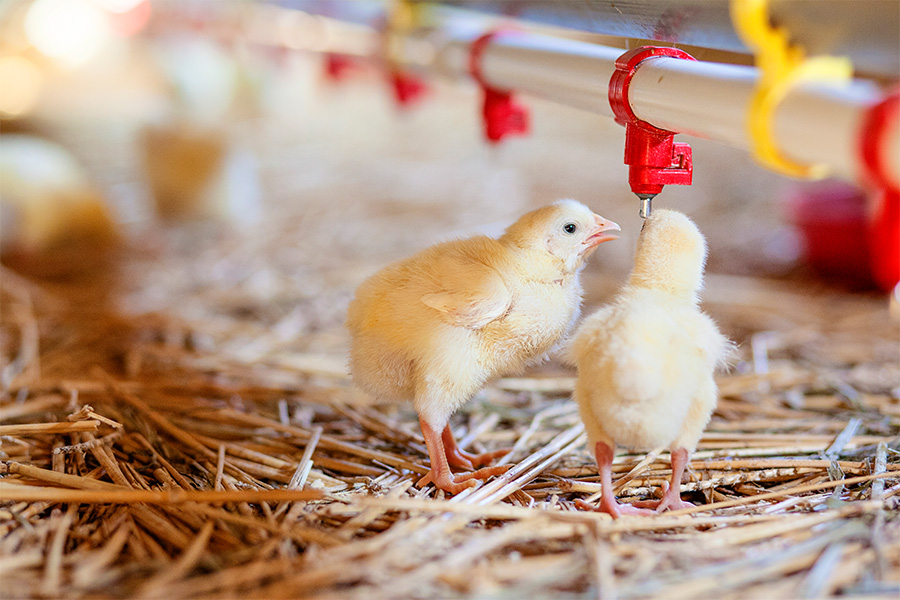
    Environmental Factors to Control when Brooding Chicks

    The main objective in brooding chicks is to efficiently and economically provide a comfortable, healthy environment for growing birds. Temperature, air quality, humidity and light are critical factors to consider. Failure to provide the adequate environment during the brooding period will reduce profitability, resulting in reduced growth and development, poorer feed conversion, and increased disease, condemnation and mortality.

    Brian D. Fairchild

    |

    March 15, 2012
  • Guidelines for Using Feeds Containing Aflatoxin in Dairy Rations

    SB 57

    Guidelines for Using Feeds Containing Aflatoxin in Dairy Rations

    Aflatoxin is formed in stressed plants by the mold Aspergillius flavus. The mycotoxin is produced by an actively growing mold. The mold can be present without mycotoxin formation or the mycotoxin may be present without the mold. The formation of the mycotoxin can occur during storage if the feed is not kept dry. Aflatoxin can be found in many grains and forages but is most commonly found in corn, cottonseed, and peanuts. Recent data indicates the above levels may not be safe for periods of prolonged feeding.

    Lane O. Ely

    |

    March 13, 2012
  • Feeding Whole Cottonseed to Dairy Cows and Replacements

    SB 59

    Feeding Whole Cottonseed to Dairy Cows and Replacements

    Whole cottonseed is an excellent feed for dairy cattle due to its high level of fiber, protein and energy (fat) in a compact package. It can be fed just as it comes from the gin without processing or may be pelleted before feeding. Whole cottonseed can also be used to stretch limited forage supply. Dairymen should capitalize on this situation as much as possible. Some limiting factors to consider when feeding whole cottonseed are gossypol, high fat content, and the potential for aflatoxin.

    Lane O. Ely

    |

    March 13, 2012
  • Dairy Genetic Benchmarks

    B 1203

    Dairy Genetic Benchmarks

    This publication provides genetic benchmarks for Holstein herds processed by Dairy Records Management Systems. Examples for using and applying benchmark values are provided; however, this publication should be viewed primarily as a comprehensive resource of genetic benchmark values. These values will be useful to dairy producers, dairy managers, consultants, veterinarians and agribusiness representatives as a first step in the evaluation of the genetic program of a herd.

    Warren D. Gilson, Lane O. Ely, Lawton Stewart, Angelica M. Chapa, and James W. Smith

    |

    March 13, 2012
  • Dairy Business Analysis Project: 1999 Summary for Florida and Georgia Dairies

    B 1205-1

    Dairy Business Analysis Project: 1999 Summary for Florida and Georgia Dairies

    The Dairy Business Analysis Project was initiated in 1996 to measure and document the financial performance of Florida dairy businesses using standardized accounting measures, so uniform comparisons could be made among participants. Formal collaboration between the Universities of Florida and Georgia began in 1998. This publication presents the results from fiscal year 1999 information.

    Lane O. Ely

    |

    March 13, 2012
  • Land Application of Livestock and Poultry Manure

    C 826

    Land Application of Livestock and Poultry Manure

    This publication provides information on (1) the nutrient content of manures available for land application, (2) how to determine manure application rates and whether supplemental fertilizer will be needed for maximum crop production and (3) how to use management techniques to maximize the fertilization potential of farm manures.

    L. Mark Risse

    |

    Feb. 20, 2012
Previous Page
1 … 20 21 22

About CAES

CAES Home

Overview

History

Administration

Jobs

Personnel Directory

Privacy Policy

Accessibility Policy

AI Guidelines

Affiliations

UGA Cooperative Extension

Tifton Campus

Griffin Campus

University of Georgia
  • Schools and Colleges
  • Directory
  • MyUGA
  • Employment Opportunities
  • Copyright and Trademarks
  • UGA Privacy Policy
  • Submit a Student Complaint
#UGA on
© University of Georgia, Athens, GA 30602
706‑542‑3000