Commercial Fruit Resources
-
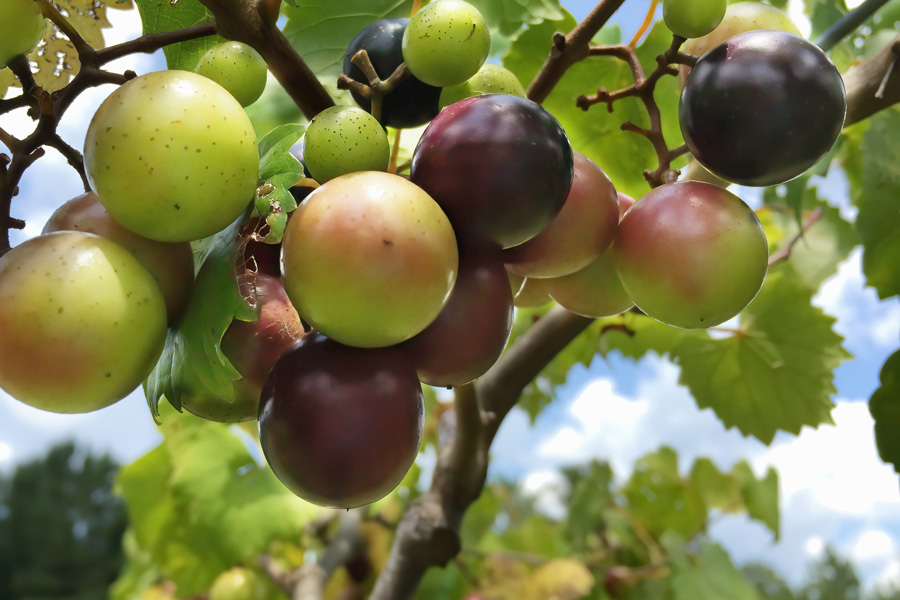
This 2023 update to the regional integrated pest management guide provides recommendations for muscadine grape production in the Southeastern U.S. Recommendations are based on information from the manufacturer’s label and performance data from research and Extension field tests. This publication is intended for use only as a guide. Specific rates and application methods are on the pesticide label, and these are subject to change at any time.
|
-
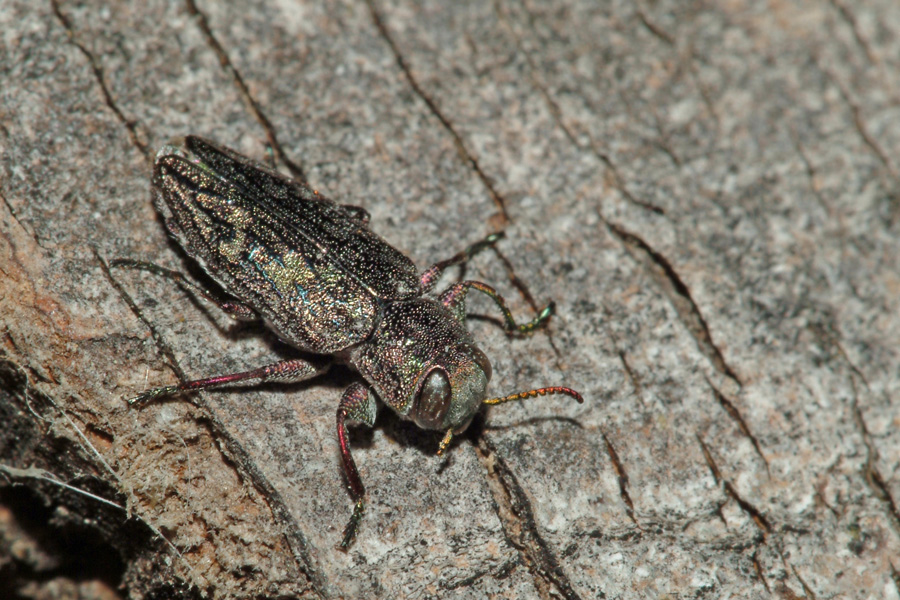
The flatheaded appletree borer is a polyphagous pest—so called because it feeds on multiple tree species—native throughout North America. Flatheaded appletree borers impact specialty crops such as fruit, nut, and ornamental trees. Nursery growers in Georgia face mild to moderate levels of infestation depending on the local beetle population size and favorable environmental conditions. Adult flatheaded appletree borers are metallic greenish-bronze and appear fattened in cross-section, which causes them to produce “D” or oval-shaped exit holes as they emerge from wood; these exit holes commonly are associated with buprestid beetles. The elytra or wing covers of flatheaded appletree borer adults have markings that appear as light-colored zigzagging bands. Larvae are cream-colored and have an enlarged, fattened thoracic segment behind the darker true head of the insect—this is what gives them the flatheaded name.
|
-

The commercial citrus industry in Georgia has only recently been established, with most groves planted after 2014. Initially,
satsuma mandarins (Citrus unshiu) on trifoliate rootstocks (Poncirus
trifoliata) were planted for their cold-hardiness, seedlessness, and
ease of peeling. Satsuma fruits begin to attain commercial maturity in
early November and usually avoid hard freezes in southern Georgia. As of
2022, approximately 75% of the 3,300 acres of citrus planted in Georgia are
satsumas, but that proportion is trending downward. To strengthen the new
Georgia citrus industry, growers recently have begun to diversify their citrus
varieties. Little is known about how these varieties will perform under Georgia
weather and soil conditions. Therefore, research is necessary to determine what
varieties can best tolerate Georgia’s winter weather and to determine cultural
norms such as maturation time, fruit quality, and insect and disease tolerance. This publication is associated with Annual Publication 127, the annual publication containing each season’s harvest data.|
-

2020 plant disease losses in Georgia, including control costs, amounted to an estimated $806 million. The value of the crops used in this estimate was approximately $6.712 billion, resulting in a 12.01% relative disease loss across all crops included in this summary. The estimated values for most crops used to compute these disease losses are summarized in the 2020 Georgia Farm Gate Value Report (AR-22-01) by the UGA Center for Agribusiness & Economic Development. Some estimates for fruits, ornamentals, and turf rely on specialists’ knowledge of the industry and industry sources for information. Losses covered include: apple, blackberry, blueberry, bunch grape, corn, cotton, muscadine grape, ornamentals, peach, peanut, pecan, soybean, strawberry, turfgrass, vegetables, and wheat.
|
-

The production, harvest, sorting and packing of fruits and vegetables produces close to a billion pounds of produce annually. These processes also result in material that is rotten, has bad spots, or is removed from packing lines. Properly dealing with discarded products can reduce the potential for environmental pollution while also protecting the individual who is responsible for the discarded materials.
|
-

C 997
Pomegranate Production
This resource helps growers understand how to grow pomegranates for commercial or home use in Georgia, as well as general production practices common in other pomegranate-producing regions. There has been increasing consumer demand for the fruit and it’s being used in many consumer products, including tea and juice blends, nut mixes, and other foods.
|
-

This new regional integrated pest management guide provides recommendations for muscadine grape production in the Southeastern U.S. Recommendations are based on information from the manufacturer’s label and performance data from research and Extension field tests. This publication is intended for use only as a guide. Specific rates and application methods are on the pesticide label, and these are subject to change at any time.
|
-

Results from this study are preliminary, as only 2 years of data have been collected. Research over longer periods of time will be more revealing about how mechanical pruning will impact the perennial crop yield and health of the vineyard. Mechanical pruning is an option for dormant pruning ‘Carlos’ in situations where labor is unreliable and/or there is a low labor-to-acreage ratio which precludes the ability to finish pruning in the dormant period (December through March).
Concerns remain regarding the inaccuracy of mechanical pruning and the resultant amount of diseased and unproductive grapevine wood that remains in the canopy. It therefore may be a good practice to manually prune blocks of the vineyard on a recurring basis in order to reduce canopy congestion and the potential for disease buildup. Mechanical pruning may not be best practice in fresh-market muscadine cultivars, particularly those that produce bronze fruit that are less tolerant of rots and defects than purple fruit.
Mechanical pruning ‘Carlos’ and ‘Noble’ vineyards is worth consideration as these popular juice muscadine cultivars are vigorous and productive and may therefore sustain perennial health under high bud densities. Because of the preliminary nature of this report, it is recommended that mechanical, or “minimal” pruning, be trialed in vineyard blocks or sections before it is widely implemented with confidence.
|
-

Many third-party audits, buyers, and standard operating procedures for produce packinghouses or other food facilities require regular adenosine triphosphate (ATP) or protein swabs to verify the effectiveness of the cleaning and sanitation protocols. This video demonstrates how to collect ATP and protein swabs, how to interpret swab results, and provides advice to help determine an acceptable baseline when implementing a new swabbing program.
|