Crop and Soil Sciences Resources
-

To schedule irrigation for most efficient use of water and to optimize production, it is desirable to frequently determine the soil water conditions throughout the root zone of the crop being grown. A number of methods for doing this have been developed and used with varying degrees of success. In comparison to investment in irrigation equipment, these scheduling methods are relatively inexpensive. When properly used and coupled with grower experience, a scheduling method can improve the irrigator’s chances of success.This publication covers the working principles of currently used methods for scheduling irrigation.
|
-

C 1015
Peanut Response to Dicamba
The objective of this publication is to provide county agents, peanut growers, crop consultants, agri-business personnel, etc. with information that can assist them in making appropriate management decisions after a suspected dicamba drift/volatilization or sprayer contamination problem has occurred.
|
-

In this report, analysis of data and results from previous studies are used to provide information concerning the peanut price support issue. This publication is provided for information purposes so that industry leaders may use it in their decision-making process.
|
-

This publication discusses tropic croton identification and control in cotton and peanut.
|
-

Most cases of groundwater contamination by agricultural chemicals have been caused by improper storage or mixing and loading chemicals. For this reason, agricultural chemical storage and handling practices have been targeted by federal and state legislation across the United States. To satisfy the proposed regulations, dealers and applicators are encouraged to construct safe chemical storage and mixing/loading facilities with secondary containment.
|
-

Research shows that drip irrigation is highly beneficial to pecan trees in Georgia, even in wet years. This resource explains the benefits that drip irrigation offers.
|
-
B 1158
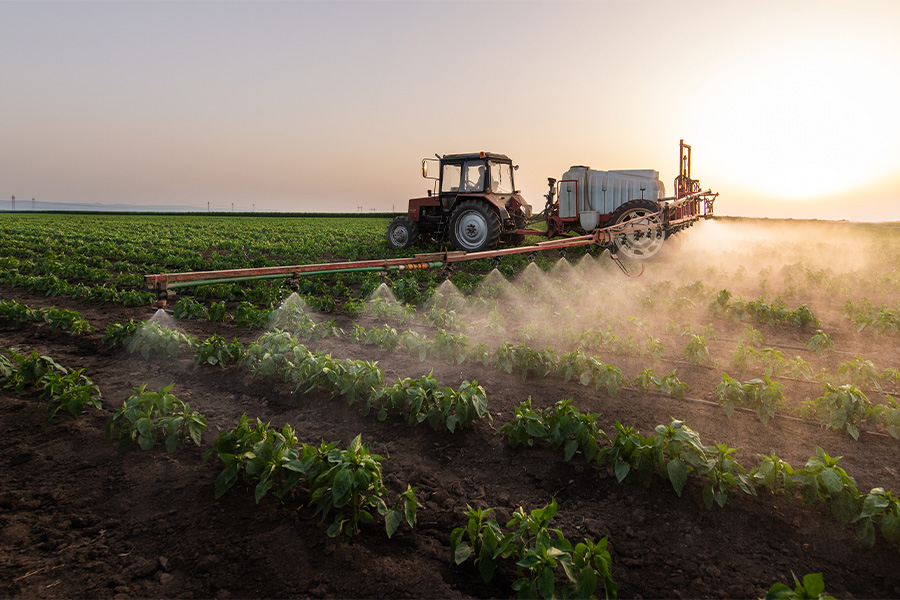
Sprayer Nozzle Selection
Nozzle selection is one of the most important decisions to be made related to pesticide applications. The type of nozzle affects not only the amount of spray applied to a particular area, but also the uniformity of the applied spray, the coverage obtained on the sprayed surfaces, and the amount of drift that can occur. Each nozzle type has specific characteristics and capabilities and is designed for use under certain application conditions. This publication describes the types that are commonly used for ground application of agricultural chemicals, including flat-fan, even flat-fan and cone nozzle.
|
-

Eclipta is considered to be one of the world’s worst weeds. This publication discusses the identification and control of eclipta in peanut.
|
-

AP 101-3
2011 Georgia Corn Performance Tests
In this research report, the results of the 2011 corn performance trials are presented. Corn performance trials were conducted at six locations throughout Georgia (see map inside back cover) in 2011. Short-season and mid-season hybrids were planted at Tifton, Plains and Midville in the Coastal Plain region, at Griffin in the Piedmont region, at Calhoun in the Limestone Valley region and at Blairsville in the Mountain region. Hybrids used for silage were evaluated at Tifton, Griffin, Calhoun and Blairsville.
|