Departments and Units Resources
-

Conflict prevention measures can be both tangible and intangible in nature. Communication skills and disseminating information may be as important as minimizing odors or pests through improved management practices. The following are practices and suggestions that can help poultry farmers maintain or improve neighbor relations. Proper manure handling practices are foremost points to consider in avoiding potential nuisance complaints or court action.
|
-

This resource provides factual information about three common myths of poultry farming: that poultry farms will ruin the environment, that they smell, and that the air exhausted from poultry houses will damage property and cause health concerns.
|
-
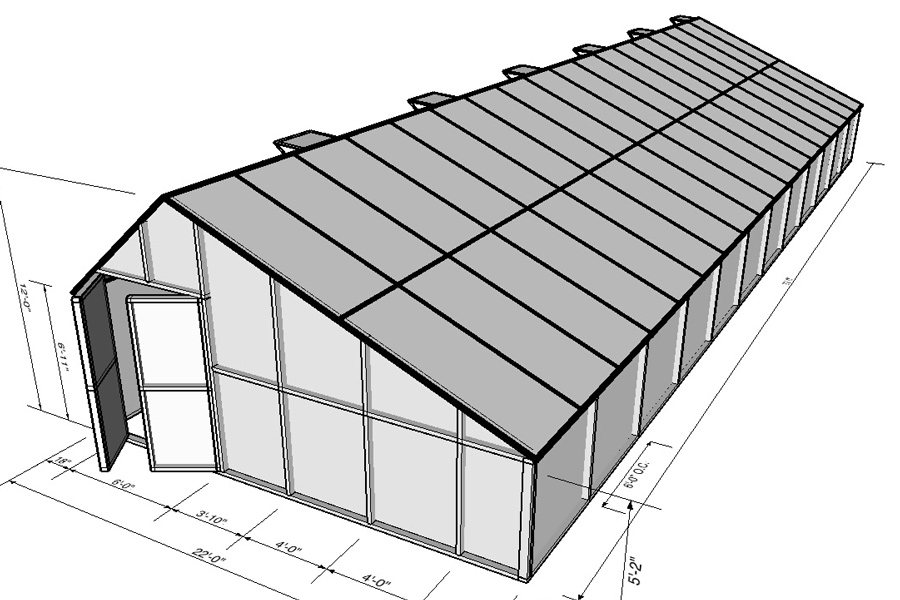
This publication describes how a passive solar greenhouse was constructed using an earthen wall and water barrels for heat retention. The benefits and potential pitfalls of such a structure are discussed. Additional authors include Alexandra Williams, Syngenta, U.S.A, and Krista Jacobsen, Department of Horticulture, University of Kentucky.
|
-
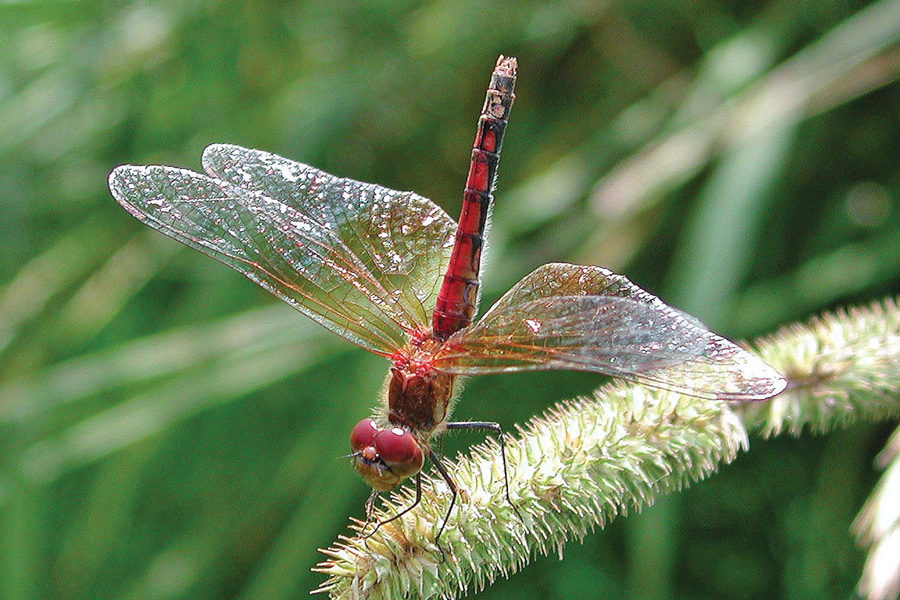
This publication contains photos and descriptions to help identify pests in Southeastern landscapes. Beneficial and pest insects are both included.
|
-

Developmentally, one of the ways adolescents explore who they are is through romantic relationships. How adolescents approach these relationships is influenced by the relationships modeled around them. While some youth may have witnessed and learned about positive couple interactions from good models, many may have witnessed only poor models of couple relationships. Educational programs on healthy relationships can help youth develop skills to make smart relationship choices and avoid risky behaviors. This publication describes why relationship education is relevant to youth, and how UGA Extension can support schools and communities in providing youth relationship education that works.
|
-
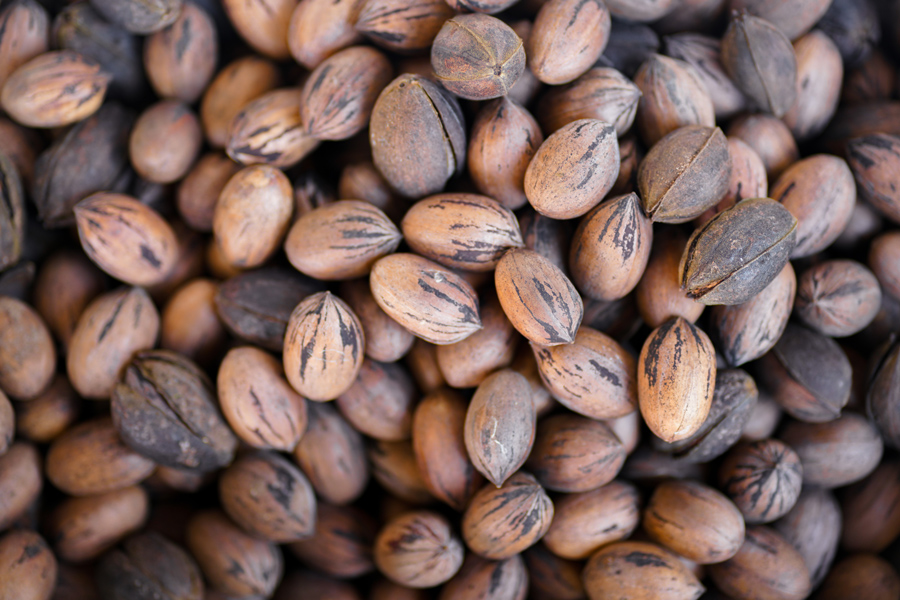
C 893
Mouse Ear of Pecan
Mouse ear of pecan is a growth abnormality resulting from a deficiency of nickel in the pecan tree. Only recently, the discovery was made that mouse ear indicates a severe nickel deficiency. The disorder occurs most frequently on newly transplanted trees in established orchards, but can also occur on sites where pecan has not previously been grown.
|
-
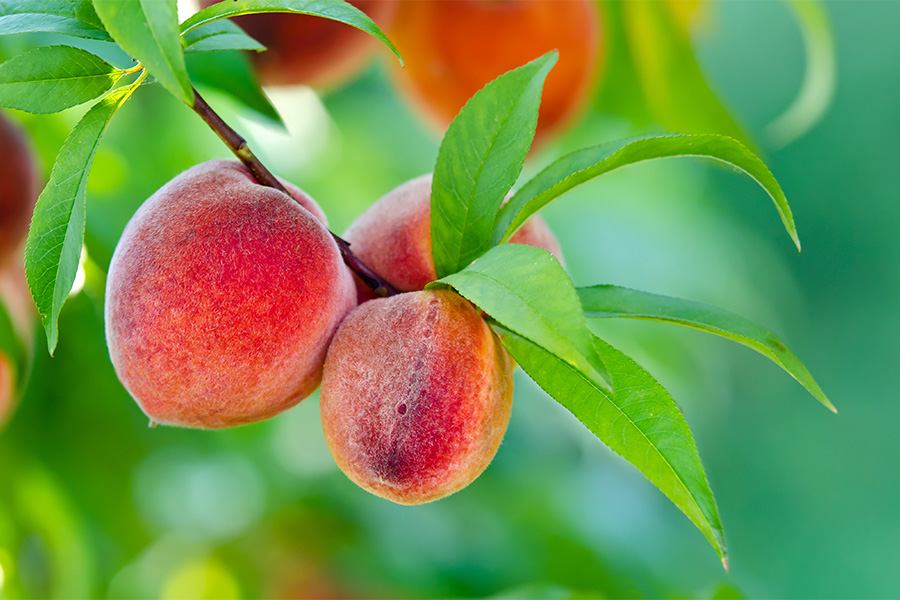
San Jose scale, Comstockaspis perniciosus (Comstock), is a pest of peaches, nectarines, plums, and other tree fruits including apples, pears, and cherries. San Jose scale is considered a secondary pest in many regions of the country, but in the Southeast U.S., it has been one of the most common and most destructive pests to the peach industry since the early 2000s.
|
-

Pecan production is considered by many who practice this endeavor to be as much an art as it is a science. Growers must integrate multiple disciplines in order to be successful. This book was created with the goal of being a comprehensive reference text for pecan growers, scientists, and county agents. It addresses pecan culture and management in the southeastern United States. For more information, visit https://pecans.uga.edu/
|
-
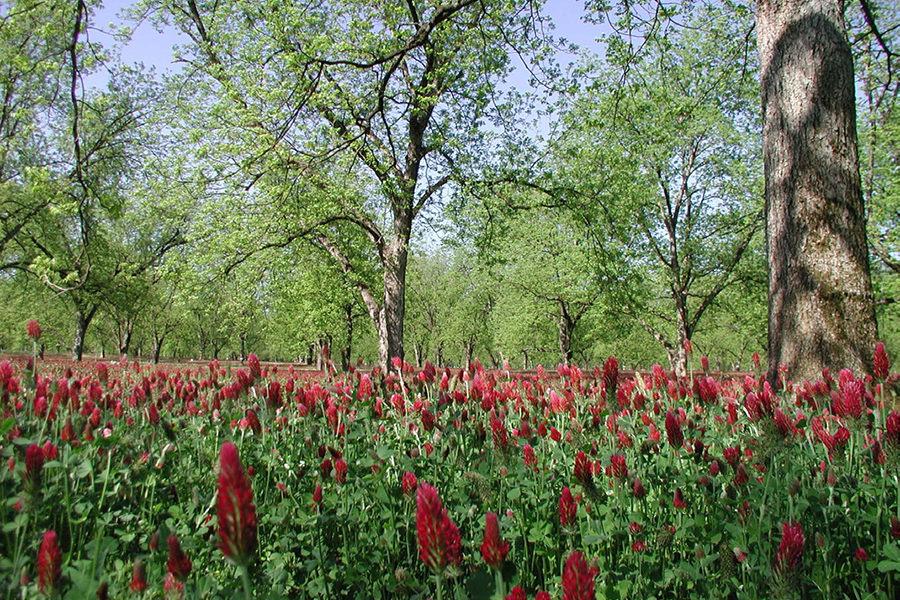
An orchard floor provides a working surface for orchard operations and influences activities in the trees, which produce the crop. An efficient orchard floor cover does not compete heavily with trees for moisture and nutrients and is compatible with orchard insect populations. While weed competition with tree roots is significant throughout the life of the tree, in a newly planted orchard, weed competition can significantly reduce young tree survival and can stunt tree growth. Weed competition can reduce tree growth and yield, as well as promote alternate bearing in mature trees.
|