UGA College of Agricultural & Environmental Sciences Field Report
  • Stories
    Almanac

    Science in service of humanity and the environment

    Read our annual magazine here

    READ


    Dive into engaging stories that showcase our statewide, national and global impact.

    Check out our written stories here

    LOOK


    Browse curated photo galleries capturing the people, places and programs that bring CAES to life.

    Check out our photo galleries here

    WATCH


    Experience our stories through videos that highlight our people, projects and passions in action.

    Check out our video library here

    LISTEN


    Tune in to “Cultivating Curiosity,” our podcast featuring in-depth conversations with CAES experts.

    Check out our podcast here
  • Expert Resources

    Expert Resources


    From farms and gardens to families and finances, our expert resources empower Georgians with trustworthy, practical science.

    Gardening
    Invasive species
    Food and food safety
    Ants, termites and other pests
    Pollinators
    Livestock
    Emergency preparedness
    Home safety and maintenance
    Health, family and finances
    Nutrition
    Water quality
    Lawn maintenance and landscaping
    Turfgrass
    View all topics

    What is an Expert Resource?


    We publish unbiased, research-backed expert advice to empower Georgians with practical, trustworthy information they can trust.

    These resources are written and reviewed by experts in the UGA College of Agricultural and Environmental Sciences and the UGA College of Family and Consumer Sciences.

    Learn how we produce science you can trust
  • Events
  • Contact
  • Read
  • Look
  • Watch
  • Listen
Subscribe
  • LinkedIn
  • Facebook
  • Instagram
  • Stories
    Almanac

    Science in service of humanity and the environment

    Read our annual magazine here

    READ


    Dive into engaging stories that showcase our statewide, national and global impact.

    Check out our written stories here

    LOOK


    Browse curated photo galleries capturing the people, places and programs that bring CAES to life.

    Check out our photo galleries here

    WATCH


    Experience our stories through videos that highlight our people, projects and passions in action.

    Check out our video library here

    LISTEN


    Tune in to “Cultivating Curiosity,” our podcast featuring in-depth conversations with CAES experts.

    Check out our podcast here
  • Expert Resources

    Expert Resources


    From farms and gardens to families and finances, our expert resources empower Georgians with trustworthy, practical science.

    Gardening
    Invasive species
    Food and food safety
    Ants, termites and other pests
    Pollinators
    Livestock
    Emergency preparedness
    Home safety and maintenance
    Health, family and finances
    Nutrition
    Water quality
    Lawn maintenance and landscaping
    Turfgrass
    View all topics

    What is an Expert Resource?


    We publish unbiased, research-backed expert advice to empower Georgians with practical, trustworthy information they can trust.

    These resources are written and reviewed by experts in the UGA College of Agricultural and Environmental Sciences and the UGA College of Family and Consumer Sciences.

    Learn how we produce science you can trust
  • Events
  • Contact
  • Read
  • Look
  • Watch
  • Listen
Subscribe
  • LinkedIn
  • Facebook
  • Instagram
Subscribe
  • LinkedIn
  • Facebook
  • Instagram
  1. Home
  2. Expert Resources
  3. Topics
  4. Food
  5. Food Safety

Food Safety Resources

Use the Advanced Search
  • Validating Antimicrobial Interventions in Poultry Processing

    C 1204

    Validating Antimicrobial Interventions in Poultry Processing

    Poultry processors have incorporated numerous antimicrobial interventions in the slaughter process to reduce the prevalence and/or concentrations of foodborne pathogens Salmonella and Campylobacter. The conventional process is to evaluate the efficacy of the incorporated antimicrobial interventions in reducing either indicator microorganisms or the foodborne pathogens immediately after the intervention step. This publication provides information on the two distinct elements of validation.

    Harshavardhan Thippareddi and Manpreet Singh

    |

    Feb. 21, 2024
  • C 1300-02

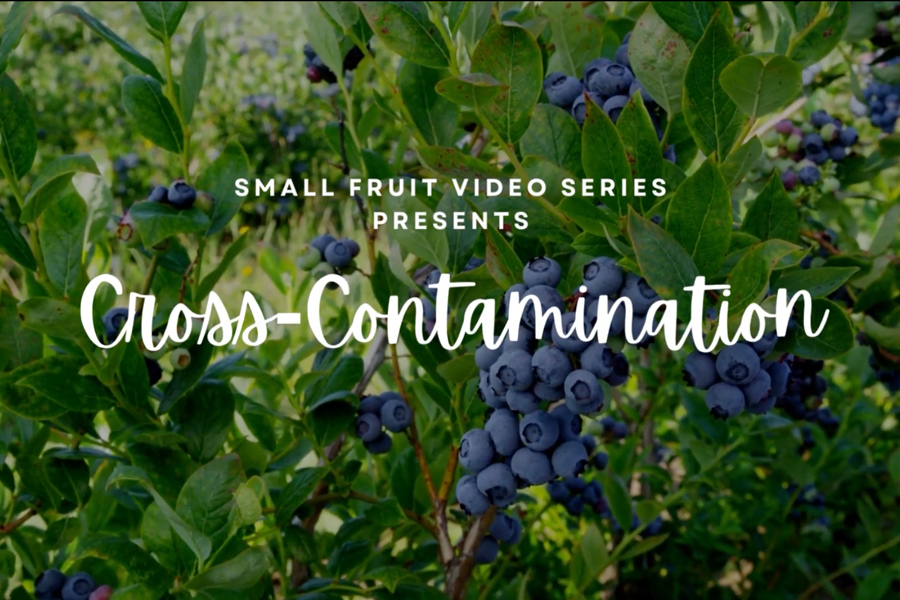
    Cross-Contamination

    Cross-contamination, resulting in foodborne pathogen contamination of small fruits, can occur at any point throughout production and post-harvest handling. This video discusses techniques and best practices for growers and packers to ensure the production of safe, high-quality small fruits. This video was produced in collaboration with the Auburn Department of Horticulture.

    Laurel Dunn and Angelos Deltsidis

    |

    Jan. 29, 2024
  • C 1300-01

    Foodborne Illnesses

    Foodborne illnesses sicken approximately 48 million Americans a year and result in significant financial losses for the food industry. Outbreaks of foodborne illness have been linked to consumption of small fruit products, but growers and packers can take precautions to reduce food safety risks on their operations. This video discusses what foodborne illnesses are, what causes them, and basic steps that can be taken to ensure the production of safe fruit. This video was produced in collaboration with the Auburn Department of Horticulture.

    Laurel Dunn and Angelos Deltsidis

    |

    Nov. 10, 2023
  • C 1153

    Service Animals on U-Pick Farms

    Many produce farms choose to exclude domesticated animals to prevent the spread of fecal contamination to produce crops. However, when farms allow members of the general public access to U-pick fields, on-farm restaurants, or roadside markets, the Americans for Disabilities Act (ADA) protects the rights of individuals who may require the assistance of a service animal. This publication explains what steps a farm must take to ensure an individual requiring a service animal is not excluded from on-farm activities, while also protecting food safety.

    Laurel Dunn

    |

    Nov. 7, 2023
  • white tail deer stand in a field of crops

    C 1170

    Best Practices: Animal Intrusion in Specialty Crops

    This video shows producers what to do about wildlife intrusion into produce fields, a common problem for fruit and vegetable growers that presents a food safety risk when fecal contamination occurs. It discusses best practices regarding no-harvest buffer zones (used when feces is present in the field), removal of in-field contamination, and worker training in several different scenarios.

    Laurel Dunn, Andre Luiz Biscaia Ribeiro da Silva, and Govindaraj Dev Kumar

    |

    Nov. 6, 2023
  • A person collects a water sample from the tap in a packinghouse

    C 1192

    Best Practices: Postharvest Water Sample Collection

    This brief video describes how, when, and where to collect a postharvest water sample intended for generic E. coli testing, as required by the Produce Safety Rule for produce wash water.

    Laurel Dunn, Andre Luiz Biscaia Ribeiro da Silva, and Govindaraj Dev Kumar

    |

    Oct. 27, 2023
  • Laurel Dunn shows how to collect a surface water sample from a pond for testing

    C 1191

    Best Practices: Preharvest Water Sample Collection

    This brief video demonstrates the best practices for collecting a water sample from a pond or other irrigation source, including the sample type needed by a produce grower for their microbial water quality profile for the Produce Safety Rule. The authors describe when a sample may be needed, where to collect the sample, and proper sample handling during and after collection.

    Laurel Dunn, Andre Luiz Biscaia Ribeiro da Silva, and Govindaraj Dev Kumar

    |

    Oct. 27, 2023
  • Packinghouse Environmental Monitoring Programs: Identifying Packinghouse Zones

    B 1524-1

    Packinghouse Environmental Monitoring Programs: Identifying Packinghouse Zones

    Produce buyers are increasingly requiring their suppliers to establish environmental monitoring programs in their packinghouses to verify the sanitary conditions of handling facilities and equipment. The first step of a successful monitoring program requires accurate zone designation, whereby surfaces are identified according to their proximity to and likelihood of contaminating a food product. This first publication in the “Packinghouse Environmental Monitoring Programs” series guides food safety managers as they determine how to prioritize food-contact and non-contact surfaces as they develop their monitoring programs.

    Laurel Dunn

    |

    May 8, 2023
  • Using ATP, Protein, and Allergen Swabs

    B 1524-3

    Using ATP, Protein, and Allergen Swabs

    As a part of a packinghouse environmental monitoring program, adenosine triphosphate (ATP), protein, and allergen swabbing is used to ensure that packinghouse equipment and surfaces have been properly cleaned and prepared for sanitation. ATP, protein, and allergen swabbing is frequently incorporated to complement microbial swabbing practices or as an independent program. These swab types indicate the presence of soils and residues on equipment, determining the effectiveness of the cleaning portion of a sanitation program. Sample results can be read in minutes, unlike microbial swabs, which take days. For this reason, ATP, protein, and allergen swabs are used immediately after cleaning to rapidly confirm that cleaning procedures were thorough. Operations then sanitize and collect microbial swabs to verify the effectiveness of the sanitation process.

    Laurel Dunn

    |

    May 8, 2023
Previous Page
1 2 3 4
Next Page

About CAES

CAES Home

Overview

History

Administration

Jobs

Personnel Directory

Privacy Policy

Accessibility Policy

AI Guidelines

Affiliations

UGA Cooperative Extension

Tifton Campus

Griffin Campus

University of Georgia
  • Schools and Colleges
  • Directory
  • MyUGA
  • Employment Opportunities
  • Copyright and Trademarks
  • UGA Privacy Policy
  • Report an Accessibility Barrier
  • Submit a Student Complaint
#UGA on
© University of Georgia, Athens, GA 30602
706‑542‑3000