Fungicide Resources
-

This report provides research and extension results for trials conducted by the University of Georgia Vegetable Team and its collaborators in the 2024-2025 growing season. The objective of this study was to compare multiple spraying systems (drone, tractor, etc.) and platforms for vegetable production. Contributing authors include county and regional faculty as well as specialists from UGA’s horticulture, plant pathology, crop and soil sciences, and entomology departments. All research has been supported by the Georgia Commodity Commission for Vegetables.
|
-
This report provides research and extension results for trials conducted by the University of Georgia Vegetable Team and its collaborators in the 2024-2025 growing season. Alternaria leaf blight and head rot causes lesions with concentric rings that gradually fall off as the disease progresses, giving a shot-hole appearance. This disease can cause significant yield losses in commercial broccoli production fields. Contributing authors include county and regional faculty as well as specialists from UGA’s horticulture, plant pathology, crop and soil sciences, and entomology departments. All research has been supported by the Georgia Commodity Commission for Vegetables.
|
-
SB 48-06
Home Fungicide Guide
This section of the Home & Garden Edition covers fungicides for use in and around your home. Beginning in 2022, the Home & Garden Edition has been updated biennially. When purchasing a product based on a first-year recommendation of the Handbook, check the current product label before purchase to be sure it is still labeled for the use for which you are buying it. For pesticide products you have on hand from earlier purchases, you are allowed to use them until they are depleted without penalty under the law. Always follow label instructions before use. Contact the product’s manufacturer for the most up-to-date label.
|
-
This section of the Home & Garden Edition covers organic gardening practices. The USDA National Organic Program has established rules for commercial organic production. These rules do not apply to home gardeners, but they are a useful guide for choosing organic pest management alternatives. Beginning in 2022, the Home & Garden Edition has been updated biennially. When purchasing a product based on a first-year recommendation of the Handbook, check the current product label before purchase to be sure it is still labeled for the use for which you are buying it. For pesticide products you have on hand from earlier purchases, you are allowed to use them until they are depleted without penalty under the law. Always follow label instructions before use. Contact the product’s manufacturer for the most up-to-date label.
|
-
SB 48-10
Ornamentals Pest Management
This section of the Home & Garden Edition covers pest control in ornamentals, such as indoor plants, flowers, shrubs, and ground covers. Beginning in 2022, the Home & Garden Edition has been updated biennially. When purchasing a product based on a first-year recommendation of the Handbook, check the current product label before purchase to be sure it is still labeled for the use for which you are buying it. For pesticide products you have on hand from earlier purchases, you are allowed to use them until they are depleted without penalty under the law. Always follow label instructions before use. Contact the product’s manufacturer for the most up-to-date label.
|
-
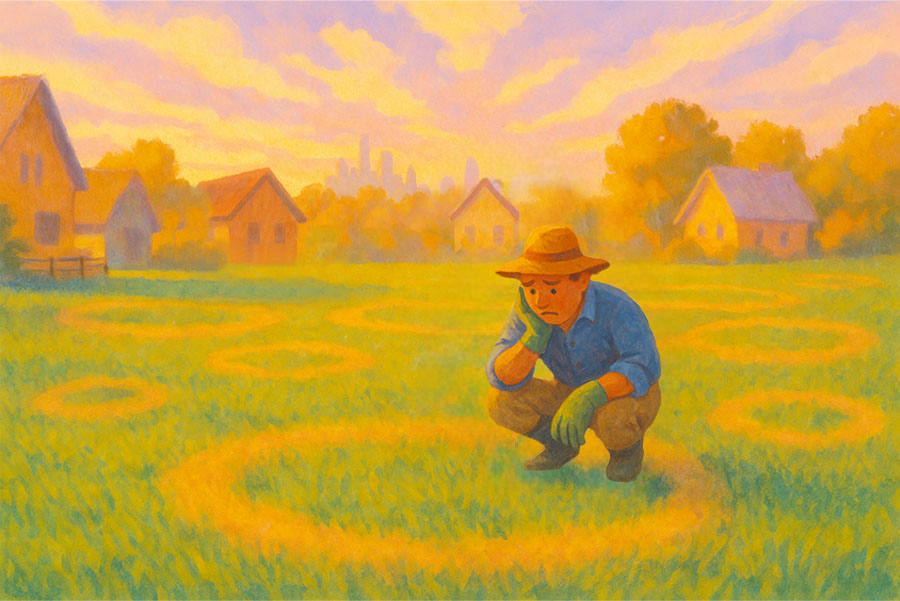
Fairy ring is an umbrella term for a disease that can be caused by more than 60 different species of basidiomycete fungi. It is particularly damaging on golf greens, but can affect all turf species in Georgia. Infection leads to localized dry spots and nutrient imbalances. No single strategy guarantees complete control, but integrating thatch reduction, water management, fertility optimization, and targeted fungicide applications can significantly mitigate disease impact.
|
-

This publication discusses the proper calibration methods sprayers and other liquid applicators.
|
-
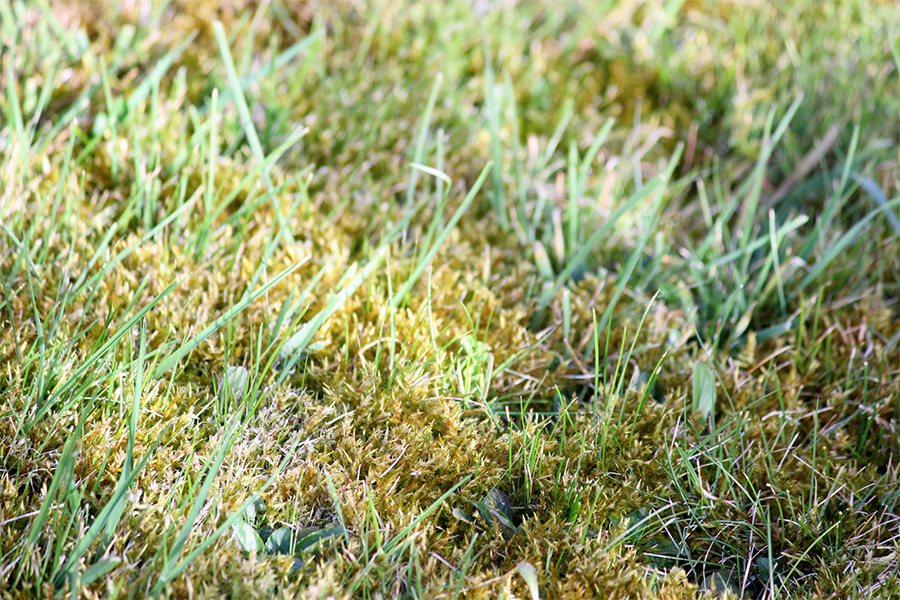
Occasionally, turfgrass areas begin to thin out and moss and algae start to form. These primitive plants develop because conditions for growing dense, healthy turf have declined. This publication gives you preventive practices and chemical suppression tips for controlling moss and algae in turf.
|
-

Powdery mildew, caused by Blumeria graminis f. sp. tritici (syn. Erysiphe graminis) is an obligate, host specific fungus that attacks wheat exclusively. The pathogen reduces photosynthesis and increases respiration and transpiration rates in host leaves. Colonized plants lose vigor, impairing heading and grain filling. Heavily colonized leaves can be killed prematurely. This circular provides information on symptoms and control of powdery mildew for wheat growers in Georgia.
|