UGA College of Agricultural & Environmental Sciences Field Report
  • Stories
    Almanac

    Science in service of humanity and the environment

    Read our annual magazine here

    READ


    Dive into engaging stories that showcase our statewide, national and global impact.

    Check out our written stories here

    LOOK


    Browse curated photo galleries capturing the people, places and programs that bring CAES to life.

    Check out our photo galleries here

    WATCH


    Experience our stories through videos that highlight our people, projects and passions in action.

    Check out our video library here

    LISTEN


    Tune in to “Cultivating Curiosity,” our podcast featuring in-depth conversations with CAES experts.

    Check out our podcast here
  • Expert Resources

    Expert Resources


    From farms and gardens to families and finances, our expert resources empower Georgians with trustworthy, practical science.

    Gardening
    Invasive species
    Food and food safety
    Ants, termites and other pests
    Pollinators
    Livestock
    Emergency preparedness
    Home safety and maintenance
    Health, family and finances
    Nutrition
    Water quality
    Lawn maintenance and landscaping
    Turfgrass
    View all topics

    What is an Expert Resource?


    We publish unbiased, research-backed expert advice to empower Georgians with practical, trustworthy information they can trust.

    These resources are written and reviewed by experts in the UGA College of Agricultural and Environmental Sciences and the UGA College of Family and Consumer Sciences.

    Learn how we produce science you can trust
  • Events
  • Contact
  • Read
  • Look
  • Watch
  • Listen
Subscribe
  • LinkedIn
  • Facebook
  • Instagram
  • Stories
    Almanac

    Science in service of humanity and the environment

    Read our annual magazine here

    READ


    Dive into engaging stories that showcase our statewide, national and global impact.

    Check out our written stories here

    LOOK


    Browse curated photo galleries capturing the people, places and programs that bring CAES to life.

    Check out our photo galleries here

    WATCH


    Experience our stories through videos that highlight our people, projects and passions in action.

    Check out our video library here

    LISTEN


    Tune in to “Cultivating Curiosity,” our podcast featuring in-depth conversations with CAES experts.

    Check out our podcast here
  • Expert Resources

    Expert Resources


    From farms and gardens to families and finances, our expert resources empower Georgians with trustworthy, practical science.

    Gardening
    Invasive species
    Food and food safety
    Ants, termites and other pests
    Pollinators
    Livestock
    Emergency preparedness
    Home safety and maintenance
    Health, family and finances
    Nutrition
    Water quality
    Lawn maintenance and landscaping
    Turfgrass
    View all topics

    What is an Expert Resource?


    We publish unbiased, research-backed expert advice to empower Georgians with practical, trustworthy information they can trust.

    These resources are written and reviewed by experts in the UGA College of Agricultural and Environmental Sciences and the UGA College of Family and Consumer Sciences.

    Learn how we produce science you can trust
  • Events
  • Contact
  • Read
  • Look
  • Watch
  • Listen
Subscribe
  • LinkedIn
  • Facebook
  • Instagram
Subscribe
  • LinkedIn
  • Facebook
  • Instagram
  1. Home
  2. Expert Resources
  3. Topics
  4. Home

Home Resources

Use the Advanced Search
  • SB 48-13

    Vertebrate Pest Control

    This section of the Home & Garden Edition covers control of vertebrate pests such as beavers, chipmunks, deer, and bats, as well as repellents and how to manage reptiles, amphibians and birds. Note that prior to killing protected animals in Georgia, it is necessary to obtain a permit from the Wildlife Resources Office of the Georgia Department of Natural Resources. A permit is also required to take furbearing animals or game animals out of season. A current hunting or trapping license is required to take game or furbearing animals in season. Beginning in 2022, the Home & Garden Edition has been updated biennially. When purchasing a product based on a first-year recommendation of the Handbook, check the current product label before purchase to be sure it is still labeled for the use for which you are buying it. For pesticide products you have on hand from earlier purchases, you are allowed to use them until they are depleted without penalty under the law. Always follow label instructions before use. Contact the product’s manufacturer for the most up-to-date label.

    Carsen Dean

    |

    March 18, 2026
  • SB 48-07

    Household and Stored Products

    This section of the Home & Garden Edition covers household and structural insect control, tips for hiring a professional pest control company, and management of excess moisture that attracts and sustains pest problems. Beginning in 2022, the Home & Garden Edition has been updated biennially. When purchasing a product based on a first-year recommendation of the Handbook, check the current product label before purchase to be sure it is still labeled for the use for which you are buying it. For pesticide products you have on hand from earlier purchases, you are allowed to use them until they are depleted without penalty under the law. Always follow label instructions before use. Contact the product’s manufacturer for the most up-to-date label.

    Dan Suiter

    |

    March 18, 2026
  • SB 48

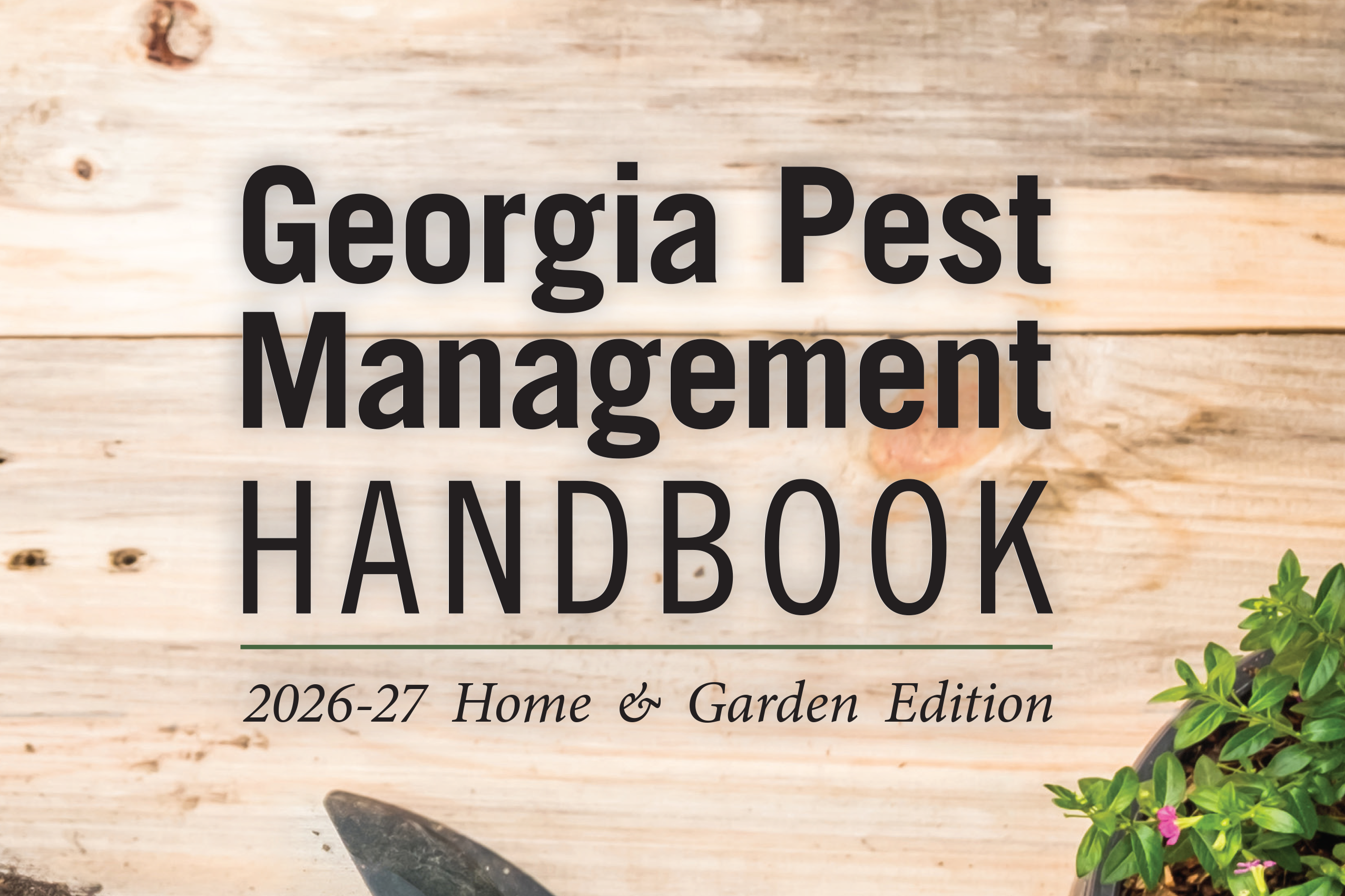
    Georgia Pest Management Handbook — Home and Garden Edition

    The Georgia Pest Management Handbook gives current information on selection, application and safe use of pest control chemicals. The handbook has recommendations for pest control on farms, around homes, urban areas, recreational areas, and other environments in which pests may occur. Cultural, biological, physical, and other types of control are recommended where appropriate.

    Allison Faye Johnson and Victoria McCurley

    |

    March 18, 2026
  • Japanese honeysuckle flowers against green foliage

    C 957

    Poisonous Plants in the Landscape

    While most of us are familiar with common poisonous plants that cause skin irritations, such as poison ivy or poison oak, we often don’t recognize common ornamental plants in the landscape that may cause internal poisoning when ingested. Although most adults would not intentionally eat the leaves or fruit of such plants, young children or pets sometimes do. This resource provides readers with information on some of the common landscape plants known to have poisonous properties when ingested. You may be surprised to learn just how many of our common plants, such as azaleas, hydrangeas, boxwood, and English ivy, are known to have poisonous properties.

    Bob Westerfield

    |

    March 11, 2026
  • C 1083-SP

    Lista de Verificación para Moho y Humedad

    Las esporas del moho solo necesitan un ambiente favorable, alimentos (madera, papel, alfombra, etc.) y humedad para crecer. Si no se detecta o se trata, el moho puede provocar efectos negativos para la salud, como reacciones alérgicas, infecciones respiratorias y más. Use esta lista de verificación como una guía básica para inspeccionar su hogar en busca de señales de exceso de humedad y crecimiento de moho.

    PRECAUCIÓN: Al investigar posibles problemas con el moho, puede alterar las áreas contaminadas al hacerlo, extenderá la contaminación al resto de la casa. Esto representa un grave riesgo para la salud de las personas con sistemas inmunes débiles, asma o alergias; por lo tanto, antes de realizar una investigación exhaustiva del moho, es mejor consultar a su médico o contratar a un profesional. Si decide realizar esta búsqueda por sí mismo, utilice el equipo de seguridad adecuado según lo recomendado por la Agencia de Protección del Medio Ambiente (EPA por sus siglas en inglés; www.epa.gov/mold).

    Ines Beltran and Pamela R. Turner

    |

    Jan. 5, 2026
  • C 1047-2-SP

    Hogares Saludables: Cómo Eliminar el Moho en su Hugar

    El moho crece a partir de las esporas, que se encuentran naturalmente en el aire y no se pueden ver a simple vista. Las esporas de moho actúan como semillas, haciendo que el moho crezca si las condiciones son adecuadas. El moho suele ser fácil de detectar. Aunque es posible utilizar pruebas para determinar la presencia de moho, por lo general no es necesario o recomendado hacerlo, usted puede detectar el moho rápidamente usando su vista y olfato.

    Tenga en cuenta que las primeras señales de moho pueden ser el desarrollo de síntomas similares a los de una alergia. Si detecta un exceso de humedad o un olor a humedad, pero no ve moho, asegúrese de revisar detrás de los gabinetes y el papel tapiz, y debajo de las alfombras. Estos son escondites comunes para el moho. Realice una inspección completa de su hogar utilizando la Lista de Verificación de Humedad y Moho de UGA.

    La clave para controlar el moho es eliminar la fuente del problema de la humedad.

    (Translation provided by Ines Beltran)

    Pamela R. Turner

    |

    Jan. 5, 2026
  • a set of keys attached to a house-shaped keyring, placed on a wood and pink background

    C 1217

    The Essential Checklist for the Smart Renter

    This publication offers guidance on shopping for rental housing, leasing, moving in, documenting the need for repairs and maintenance, paying rent, and moving out. For more information about renting, visit dca.ga.gov to see the Georgia Department of Community Affairs Landlord-Tenant Handbook, which provides valuable information about the responsibilities and rights of landlords and tenants in Georgia.

    Pamela R. Turner, Carrie Vanderver, Ida Jackson, and Tracey Saxton

    |

    Dec. 23, 2025
  • a family puts toys and clothes they don't need into boxes for donation

    C 1067

    Household Clutter Control

    Clutter is a collection of things lying around in an untidy mess, usually because we don’t have a designated place for it. Household clutter has a big impact on your health and quality of life. This publication will help you asses if you have too much household clutter and then recommends ways to take charge, clear the clutter, and maintain a clutter-free home.

    Pamela R. Turner, Charles Okpala, Von Baker, Laura T. Smith, Sylvia Davis, Olivia Handley, Michelle Quick, Janette Burkes, Kimberly Howell, and Diane W Bales

    |

    Dec. 5, 2025
  • red high top sneakers next to a doormat at an entry doorway

    C 1070

    Reduce Indoor Contaminants: Leave Your Shoes at the Door

    There may be insect fragments, lead dust, pesticides, pollen, dust mites, animal dander, hair, human skin flakes, fungal spores, or cigarette ash in household dust. Around 30% to 40% of the contaminants inside your home are brought in from outdoors. By taking a few simple steps described in this resource, you can improve the health of your home and reduce the time spent cleaning.

    Pamela R. Turner, Laura T. Smith, and Stephanie Benton

    |

    Dec. 4, 2025
Previous Page
1 2 3 4 5 … 12
Next Page

About CAES

CAES Home

Overview

History

Administration

Jobs

Personnel Directory

Privacy Policy

Accessibility Policy

AI Guidelines

Affiliations

UGA Cooperative Extension

Tifton Campus

Griffin Campus

University of Georgia
  • Schools and Colleges
  • Directory
  • MyUGA
  • Employment Opportunities
  • Copyright and Trademarks
  • UGA Privacy Policy
  • Submit a Student Complaint
#UGA on
© University of Georgia, Athens, GA 30602
706‑542‑3000