Landscaping Resources
-

Planting ornamental plants correctly increases their survivability and performance in the landscape, and it helps them develop a vigorous, healthy root system that increases their drought tolerance during periods of limited rainfall. This pubication provides research-based guidelines for proper planting.
|
-

Water-wise landscapes not only save water, they save time by requiring less routine care than most traditional landscapes. This publication offers guidelines to help you achieve these goals and conserve water when managing your landscape.
|
-

In order to maintain a lush, green lawn and productive garden, supplemental water in the form of irrigation is often needed during peak water use periods. Two basic types of irrigation are suitable for the home landscape: sprinkler irrigation and drip (or trickle) irrigation. This publication contains comprehensive information about irrigating lawns and gardens.
|
-

This publication includes three parts. Part 1 discusses stormwater as a pollution source for streams and water bodies, and provides a background on why rain gardens in our landscapes have great environmental value. Part 2 includes a thorough definition of rain gardens and their purpose, and gives step-by-step instructions on how to design a rain garden for a specific site. Part 3 discusses appropriate plants to use in rain gardens.
|
-

New ornamentals have long been considered the lifeblood of the green industry. This publication contains recommendations for best-performing new annuals based on research conducted at the Trial Gardens at the University of Georgia, showcasing the plants that were awarded the Classic City Award in 2016.
|
-

HORT Management is an allied program for estimating landscape management costs. This program assists the user in estimating labor, material and equipment costs on a particular job, a break-even price, and bid price on a job. Industry average data and time/task data is used throughout the program, such as the time it takes to mow 1,000 sq. ft. with a certain size mower and equipment cost per hour of operation. The user is encouraged to modify and tailor the program with his own data and costs. For more information, see https://www.hort.uga.edu/extension/programs/hortmanage.html
|
-

A regular fertilization program is important to maintain healthy, attractive turf and should include applying the correct analysis of fertilizer, using the correct amount, and fertilizing at the proper time. Turfgrasses require a number of nutrients for growth. Three of these—carbon, hydrogen, and oxygen—are rarely lacking because grasses get these elements from carbon dioxide in the atmosphere and water from the soil. Understanding fertilizer terminology and the different types of nitrogen sources is important when establishing a lawn management plant. Nontraditional or “organic” fertilizers are also an option.
|
-
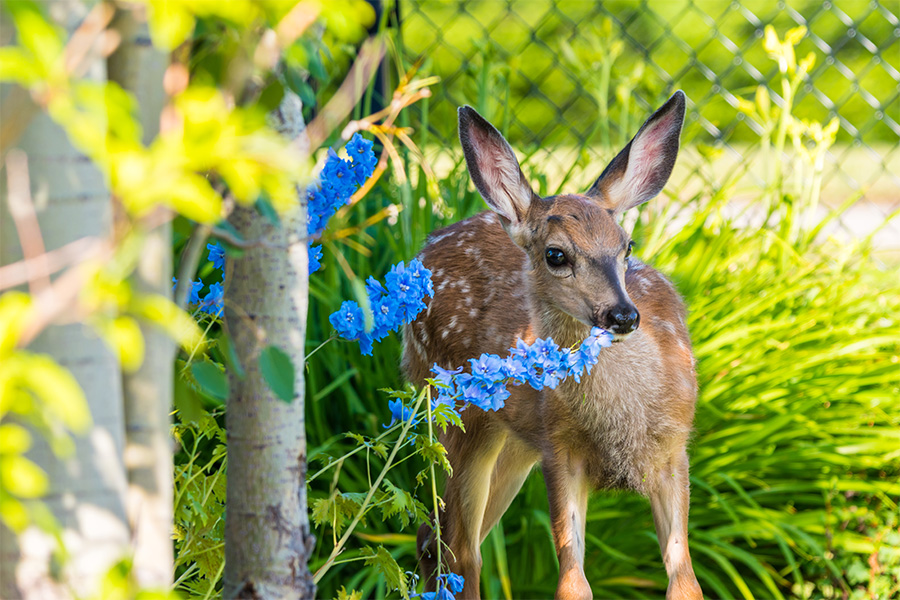
This resource lists several varieties of plants for your landscape that deer prefer to eat less.
|
-

B 1031
Shade and Street Tree Care
With proper care, trees can be valuable commodities around our homes, communities and urban landscapes. Providing care requires understanding tree biology, or how and why trees function. Trees constantly interact with the environment, including changes in soil, light, temperature, moisture, competitors and pests. Humans can produce additional stress by altering environments, but with proper care and maintenance trees can survive and thrive in your landscape.
|