Research Resources
-

Researchers have investigated the issue of mislaid eggs in cage-free housing and the possibility of reducing the incidence of floor eggs through management of lighting, litter and bedding, and nesting space, and the use of robotics. Methods with potential for managing mislaid or floor eggs in cage-free layer houses can be summarized as follows: 1. House-lighting time management: In cage-free aviary systems, lighting management is used to help control floor-access time. According to observations in commercial cage-free layer houses, most floor eggs are laid at first light. Delaying floor access time in the morning may help reduce floor eggs by keeping the birds near the nests for the first few hours of light. 2. Light intensity and distribution: Make sure to provide sufficient light intensity evenly across the litter floor. Increasing the light intensity under the aviary system has been tested to be effective at reducing over 80% of floor eggs. 3. Bedding depth: Scratch areas covered with litter help reduce the risk of feather pecking and cannibalism, and minimize flightiness, for hens living in large flocks. However, deep litter attracts birds to lay eggs on the litter itself. According to research conducted at Iowa State University, reducing litter depth discourages hens from laying eggs on floor of commercial cage-free houses. 4. Nesting space: Nesting behavior is a key priority and important welfare indicator for egg production, so providing hens with safe and secure locations to lay eggs is critical. A good nesting design in cage-free systems facilitates egg collection, minimizes the risk of cloacal cannibalism, and assists food safety and sanitation.
Casey W. Ritz, Claudia Dunkley, and Lilong Chai
|
-

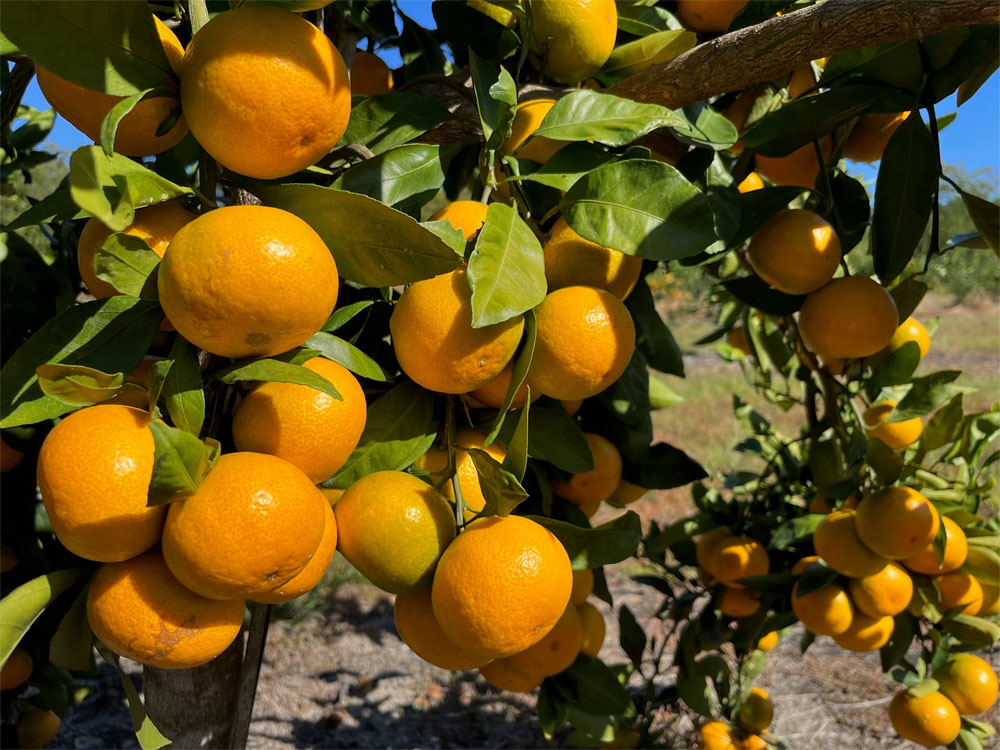
The commercial citrus industry in Georgia has only recently been established, with most groves planted after 2014. Initially,
satsuma mandarins (Citrus unshiu) on trifoliate rootstocks (Poncirus
trifoliata) were planted for their cold-hardiness, seedlessness, and
ease of peeling. Satsuma fruits begin to attain commercial maturity in
early November and usually avoid hard freezes in southern Georgia. As of
2022, approximately 75% of the 3,300 acres of citrus planted in Georgia are
satsumas, but that proportion is trending downward. To strengthen the new
Georgia citrus industry, growers recently have begun to diversify their citrus
varieties. Little is known about how these varieties will perform under Georgia
weather and soil conditions. Therefore, research is necessary to determine what
varieties can best tolerate Georgia’s winter weather and to determine cultural
norms such as maturation time, fruit quality, and insect and disease tolerance. This publication is associated with Annual Publication 127, the annual publication containing each season’s harvest data.Jake Price
|
-

A study was conducted in order to investigate the incorporation of dehumidification into the curing cycle of flue-cured tobacco. Tobacco from the same source and stalk position was cured in a barn coupled to a heat-pump-dehumidifier and, for comparison, in a conventional barn heated with an open flame propane furnace. A procedure for curing with dehumidification was developed. Dehumidification was found to automatically raise temperature and reduce humidity, causing a set in lamina color. Tobacco cured in the heat-pump barn was found to have at least comparable quality with that cured in the conventional barn as determined by standard chemical analyses and USDA grade.
J.Michael Moore, Paul E. Sumner, Michael G. Stephenson, and Bryan W. Maw
|
-

This report provides research and extension results for trials conducted by the University of Georgia Vegetable Team and its collaborators in 2022. Contributing authors include county and regional faculty as well as specialists from UGA’s horticulture, plant pathology, crop and soil sciences, and entomology departments. All research has been supported by the Georgia Commodity Commission for Vegetables.
Timothy Coolong and Ted McAvoy
|
-

The Joro spider is native to East Asia and was first detected in Georgia in 2014. Adult females become sexually mature in September and early October. The female’s body is bright yellow with broad, horizontal bluish-green bands on the top side of the abdomen, and large red markings on the bottom side of the abdomen. She also has long, black legs with yellow-orange bands or—rarely—all black legs. Adult males mature by late August. The male’s cephalothorax is light brown with two dark brown long bands on both sides. His abdomen is elongate-oval with a greenish-brown topside that has two yellowish long stripes on both sides of the dark brown middle line.
Rebekah Danielle Wallace, William G. Hudson, Jason Schmidt, and Richard Hoebeke
|
-

In commercial poultry houses, bird density and distribution in drinking, feeding, and
resting zones are critical factors for evaluating flock productivity, bird health, and well-being. Proper distribution of chickens in the house greatly influences animal well-being and house environmental management. Currently, routine daily inspection of broiler flock distribution in commercial grow-out houses is done manually, which is labor-intensive and time-consuming. UGA poultry science researchers currently are developing an automated imaging system for monitoring floor distribution of chickens.Ongoing studies are focusing on detection of individual chickens with different gait scores in the research facility. It’s challenging to track individual birds with early health or welfare concerns using a computer vison-based method, but it is necessary and critical for producers to identify birds with well-being concerns and address those issues quickly.
Lilong Chai, Yangyang Guo, Sammy E. Aggrey, Adelumola Oladeinde, Casey W. Ritz, and Todd Applegate
|
-

This biennial publication contains the proceedings of the turfgrass field day carried out at the UGA Griffin campus every other year; 2022 was the first field day since the 2018 field day because of the COVID-19 pandemic. The guide provides professionals with continuous, real-time access to the latest up-to-date information about turfgrass research studies, products, and turfgrass Extension activities, programs, and outreach. Topics will include, but are not limited to: crop and soil science, agronomy, weed science, plant pathology, entomology, economics, tissue culture, urban agriculture, irrigation, and student posters.
Clint Waltz, Shimat V. Joseph, David Jespersen, and Bochra Amina Bahri
|
-

Variety selection is one of the biggest decisions and investments cotton growers make each year. In 2010, the UGA Extension Cotton Agronomists implemented the UGA On-Farm Cotton Variety Evaluation Program to assist in this decision. Varieties are evaluated across a wide range of environments in the cotton producing regions of Georgia in cooperation with county agents and industry partners. The implementation of this program has made a tremendous impact on variety selection from year to year, and it will continue to have the same impact in the future.
R. Anthony Black, Eric Elsner, Scott Rogers, Camp Hand, and Chandler Pope Rowe
|
-

The peanut production guide includes varieties, agronomic practices, pest management, irrigation management, equipment maintenance, maturity, and harvest practices.
Walter Scott Monfort, Timothy Branner Brenneman, Pam Knox, Ronald Scott Tubbs, Cristiane Pilon, and Glendon H. Harris
|