Research Resources
-

Variety selection is one of the biggest decisions and investments cotton growers make each year. In 2010, the UGA Extension Cotton Agronomists implemented the UGA On-Farm Cotton Variety Evaluation Program to assist in this decision. In this annual publication, varieties were evaluated in 2020 across a wide range of environments in the cotton producing regions of Georgia in cooperation with county agents and industry partners. The implementation of this program has made a tremendous impact on variety selection from year to year, and it will continue to have the same impact in the future.
|
-
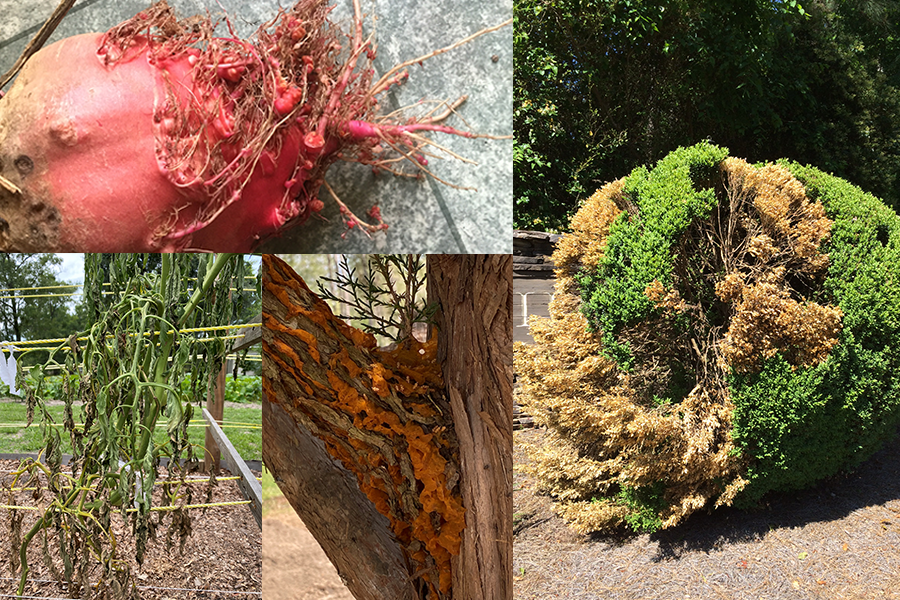
2021 plant disease losses, including control costs, amounted to an estimated $889 million. The value of the crops used in this estimate was approximately $7690 million, resulting in a 11.6% relative disease loss across all crops included in this summary. For most crops, the estimated values used to compute these disease losses are summarized in the UGA Center for Agribusiness & Economic Development’s “2021 Georgia Farm Gate Value Report” (AR-22-01). Some estimates for fruits, ornamentals, and turf rely on specialists’ knowledge of the industry and industry sources for information.
|
-

This is an annual report highlighting research conducted during 2021 and 2022 for Vidalia onions. Research topics include: variety trials, irrigation and fertilizer strategies, sulfur content in soils, effect of fertilizers on yield, thrips, factors affecting postharvest incidence of bacterial bulb rot, and Botrytis leaf blight.
|
-
C 1274
Blanc du Bois
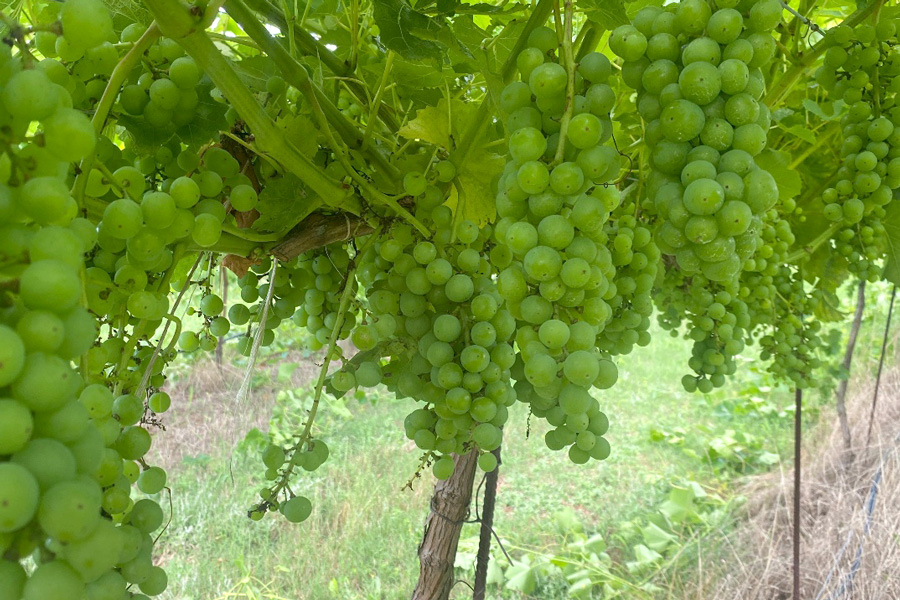
‘Blanc du Bois’ has made a significant contribution to wine production in southeastern regions where Pierce’s disease is prevalent. Though possessing resistance or tolerance to Pierce’s disease, Phylloxera, and powdery mildew, this cultivar is not without fault, and it does require an intensive integrated pest management (IPM) program. We cover here the major issues observed with this cultivar.
|
-

Note: This publication contains data from an average of the 2020-21 and 2021-22 orange harvest seasons (exceptions noted in the chart). The commercial citrus industry in Georgia has only recently been established, with most groves planted after 2014. As of 2022, approximately 75% of the 3,300 acres of citrus planted in Georgia are satsumas, but that proportion is trending downward. To strengthen the new Georgia citrus industry, growers recently have begun to diversify their citrus varieties. Research is being conducted to determine how these varieties will perform under Georgia weather and soil conditions: which varieties can best tolerate Georgia’s winter weather, and what are the cultural norms such as maturation time, fruit quality, and insect and disease tolerance. This publication is associated with Circular 1275, the initial publication containing reference photos for the varieties tested.
|
-

The commercial citrus industry in Georgia has only recently been established, with most groves planted after 2014. Initially, satsuma mandarins (Citrus unshiu) on trifoliate rootstocks (Poncirus trifoliata) were planted for their cold-hardiness, seedlessness, and ease of peeling. Satsuma fruits begin to attain commercial maturity in early November and usually avoid hard freezes in southern Georgia. As of 2022, approximately 75% of the 3,300 acres of citrus planted in Georgia are satsumas, but that proportion is trending downward. To strengthen the new Georgia citrus industry, growers recently have begun to diversify their citrus varieties. Little is known about how these varieties will perform under Georgia weather and soil conditions. Therefore, research is necessary to determine what varieties can best tolerate Georgia’s winter weather and to determine cultural norms such as maturation time, fruit quality, and insect and disease tolerance. This publication is associated with Circular 1275, the initial publication containing reference photos for the varieties tested.
|
-
AP 124-3
2023 Georgia Cotton Production Guide
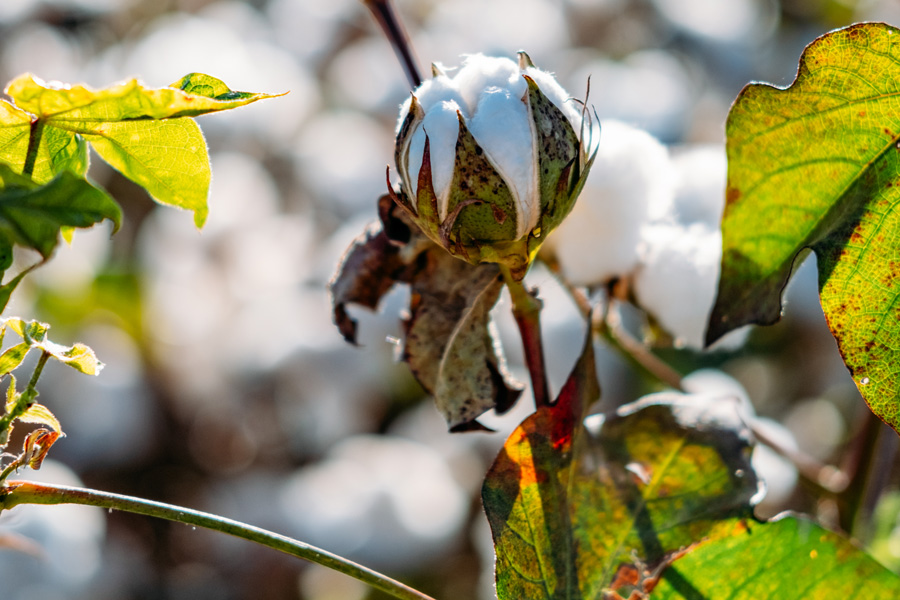
The 2023 edition of the cotton production guide provides an in-depth look at cotton production in Georgia and the Southeastern U.S. Issues discussed include economic outlook, fertility, weed management, insect management, disease and nematode management, irrigation decisions, precision ag technology, and general agronomics of the cotton crop (varieties, PGR applications, defoliation, etc.).
|
-
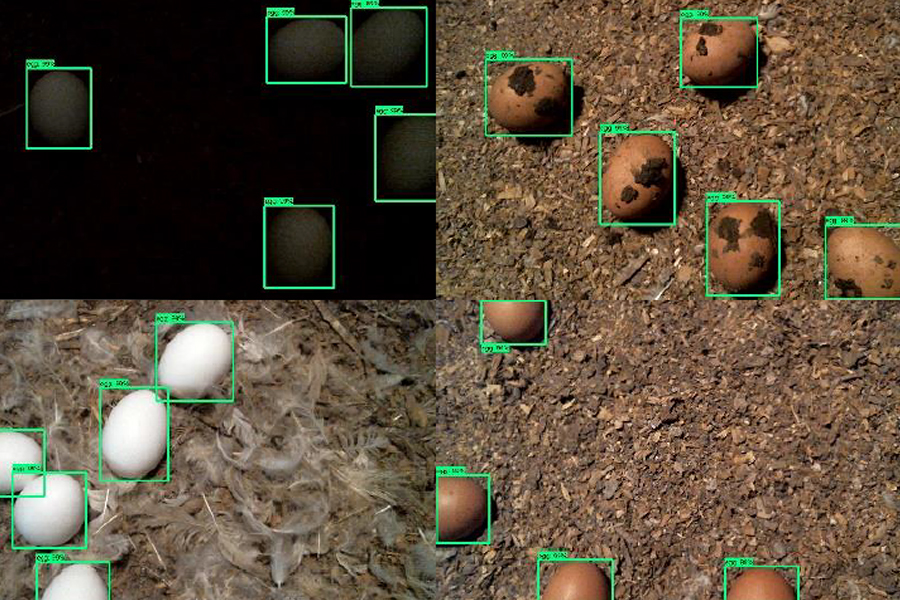
Researchers have investigated the issue of mislaid eggs in cage-free housing and the possibility of reducing the incidence of floor eggs through management of lighting, litter and bedding, and nesting space, and the use of robotics. Methods with potential for managing mislaid or floor eggs in cage-free layer houses can be summarized as follows: 1. House-lighting time management: In cage-free aviary systems, lighting management is used to help control floor-access time. According to observations in commercial cage-free layer houses, most floor eggs are laid at first light. Delaying floor access time in the morning may help reduce floor eggs by keeping the birds near the nests for the first few hours of light. 2. Light intensity and distribution: Make sure to provide sufficient light intensity evenly across the litter floor. Increasing the light intensity under the aviary system has been tested to be effective at reducing over 80% of floor eggs. 3. Bedding depth: Scratch areas covered with litter help reduce the risk of feather pecking and cannibalism, and minimize flightiness, for hens living in large flocks. However, deep litter attracts birds to lay eggs on the litter itself. According to research conducted at Iowa State University, reducing litter depth discourages hens from laying eggs on floor of commercial cage-free houses. 4. Nesting space: Nesting behavior is a key priority and important welfare indicator for egg production, so providing hens with safe and secure locations to lay eggs is critical. A good nesting design in cage-free systems facilitates egg collection, minimizes the risk of cloacal cannibalism, and assists food safety and sanitation.
|
-

The commercial citrus industry in Georgia has only recently been established, with most groves planted after 2014. Initially,
satsuma mandarins (Citrus unshiu) on trifoliate rootstocks (Poncirus
trifoliata) were planted for their cold-hardiness, seedlessness, and
ease of peeling. Satsuma fruits begin to attain commercial maturity in
early November and usually avoid hard freezes in southern Georgia. As of
2022, approximately 75% of the 3,300 acres of citrus planted in Georgia are
satsumas, but that proportion is trending downward. To strengthen the new
Georgia citrus industry, growers recently have begun to diversify their citrus
varieties. Little is known about how these varieties will perform under Georgia
weather and soil conditions. Therefore, research is necessary to determine what
varieties can best tolerate Georgia’s winter weather and to determine cultural
norms such as maturation time, fruit quality, and insect and disease tolerance. This publication is associated with Annual Publication 127, the annual publication containing each season’s harvest data.|