Skip to content
UGA College of Agricultural & Environmental Sciences Field Report
  • Stories
    Almanac

    Science in service of humanity and the environment

    Read our annual magazine here

    READ


    Dive into engaging stories that showcase our statewide, national and global impact.

    Check out our written stories here

    LOOK


    Browse curated photo galleries capturing the people, places and programs that bring CAES to life.

    Check out our photo galleries here

    WATCH


    Experience our stories through videos that highlight our people, projects and passions in action.

    Check out our video library here

    LISTEN


    Tune in to “Cultivating Curiosity,” our podcast featuring in-depth conversations with CAES experts.

    Check out our podcast here
  • Expert Resources

    Expert Resources


    From farms and gardens to families and finances, our expert resources empower Georgians with trustworthy, practical science.

    Gardening
    Invasive species
    Food and food safety
    Ants, termites and other pests
    Pollinators
    Livestock
    Emergency preparedness
    Home safety and maintenance
    Health, family and finances
    Nutrition
    Water quality
    Lawn maintenance and landscaping
    Turfgrass
    View all topics

    What is an Expert Resource?


    We publish unbiased, research-backed expert advice to empower Georgians with practical, trustworthy information they can trust.

    These resources are written and reviewed by experts in the UGA College of Agricultural and Environmental Sciences and the UGA College of Family and Consumer Sciences.

    Learn how we produce science you can trust
  • People
  • Events
  • Contact
  • Read
  • Look
  • Watch
  • Listen
Subscribe
  • LinkedIn
  • Facebook
  • Instagram
Subscribe
  • LinkedIn
  • Facebook
  • Instagram
  1. Home
  2. Expert Resources
  3. Topics
  4. General Agriculture
  5. Research

Research Resources

Use the Advanced Search
  • Heat Pump Dehumidification During the Curing of Flue-Cured Tobacco

    RB 439

    Heat Pump Dehumidification During the Curing of Flue-Cured Tobacco

    A study was conducted in order to investigate the incorporation of dehumidification into the curing cycle of flue-cured tobacco. Tobacco from the same source and stalk position was cured in a barn coupled to a heat-pump-dehumidifier and, for comparison, in a conventional barn heated with an open flame propane furnace. A procedure for curing with dehumidification was developed. Dehumidification was found to automatically raise temperature and reduce humidity, causing a set in lamina color. Tobacco cured in the heat-pump barn was found to have at least comparable quality with that cured in the conventional barn as determined by standard chemical analyses and USDA grade.

    J.Michael Moore, Paul E. Sumner, Michael G. Stephenson, and Bryan W. Maw

    |

    Dec. 16, 2022
  • 2022 Vegetable Extension and Research Report

    AP 113-4

    2022 Vegetable Extension and Research Report

    This report provides research and extension results for trials conducted by the University of Georgia Vegetable Team and its collaborators in 2022. Contributing authors include county and regional faculty as well as specialists from UGA’s horticulture, plant pathology, crop and soil sciences, and entomology departments. All research has been supported by the Georgia Commodity Commission for Vegetables.

    Timothy Coolong and Ted McAvoy

    |

    Dec. 9, 2022
  • C 1256

    Application of Imaging Systems for Monitoring Poultry Well-being

    In commercial poultry houses, bird density and distribution in drinking, feeding, and
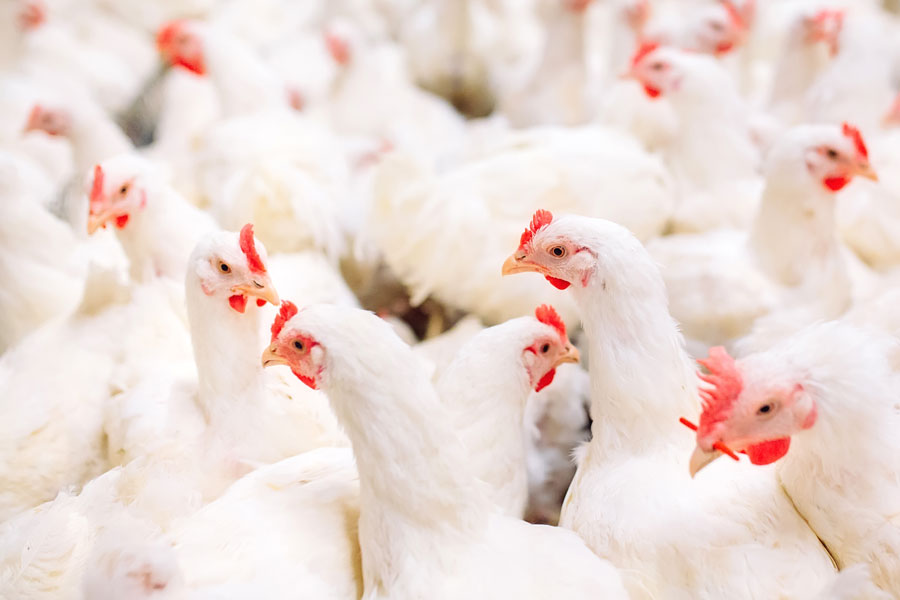
    resting zones are critical factors for evaluating flock productivity, bird health, and well-being. Proper distribution of chickens in the house greatly influences animal well-being and house environmental management. Currently, routine daily inspection of broiler flock distribution in commercial grow-out houses is done manually, which is labor-intensive and time-consuming. UGA poultry science researchers currently are developing an automated imaging system for monitoring floor distribution of chickens.

    Ongoing studies are focusing on detection of individual chickens with different gait scores in the research facility. It’s challenging to track individual birds with early health or welfare concerns using a computer vison-based method, but it is necessary and critical for producers to identify birds with well-being concerns and address those issues quickly.

    Lilong Chai, Yangyang Guo, Sammy E. Aggrey, Adelumola Oladeinde, Casey W. Ritz, and Todd Applegate

    |

    Oct. 21, 2022
  • 2022 Turfgrass Research Field Day Guide

    AP 117-3

    2022 Turfgrass Research Field Day Guide

    This biennial publication contains the proceedings of the turfgrass field day carried out at the UGA Griffin campus every other year; 2022 was the first field day since the 2018 field day because of the COVID-19 pandemic. The guide provides professionals with continuous, real-time access to the latest up-to-date information about turfgrass research studies, products, and turfgrass Extension activities, programs, and outreach. Topics will include, but are not limited to: crop and soil science, agronomy, weed science, plant pathology, entomology, economics, tissue culture, urban agriculture, irrigation, and student posters.

    Clint Waltz, Shimat V. Joseph, David Jespersen, and Bochra Amina Bahri

    |

    Oct. 18, 2022
  • 2021 UGA On-Farm Cotton Variety Evaluation Program

    AP 110-6

    2021 UGA On-Farm Cotton Variety Evaluation Program

    Variety selection is one of the biggest decisions and investments cotton growers make each year. In 2010, the UGA Extension Cotton Agronomists implemented the UGA On-Farm Cotton Variety Evaluation Program to assist in this decision. Varieties are evaluated across a wide range of environments in the cotton producing regions of Georgia in cooperation with county agents and industry partners. The implementation of this program has made a tremendous impact on variety selection from year to year, and it will continue to have the same impact in the future.

    R. Anthony Black, Eric Elsner, Scott Rogers, Camp Hand, and Chandler Pope Rowe

    |

    Aug. 29, 2022
  • B 1146

    Peanut Production Field Guide

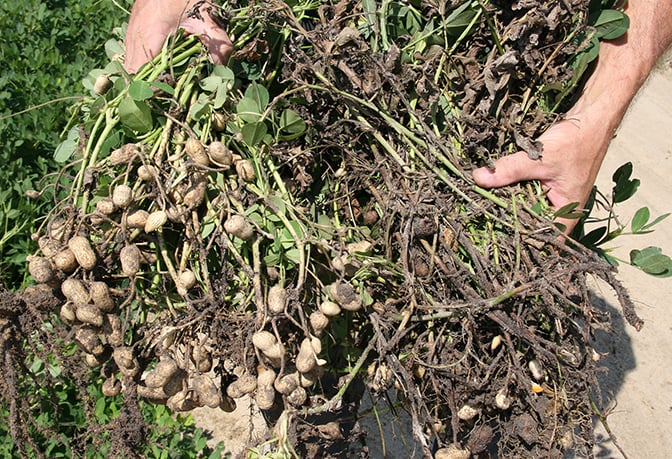
    The peanut production guide includes varieties, agronomic practices, pest management, irrigation management, equipment maintenance, maturity, and harvest practices.

    Walter Scott Monfort, Timothy Branner Brenneman, Pam Knox, Ronald Scott Tubbs, Cristiane Pilon, and Glendon H. Harris

    |

    March 1, 2022
  • 2021 Vegetable Extension and Research Report

    AP 113-3

    2021 Vegetable Extension and Research Report

    This report provides research and extension results for trials conducted by the University of Georgia Vegetable Team and its collaborators in 2021. Contributing authors include county and regional faculty as well as specialists from UGA’s horticulture, plant pathology, crop and soil sciences, and entomology departments. All research has been supported by the Georgia Vegetable Commodity Commission.

    Timothy Coolong

    |

    Nov. 18, 2021
  • Sweet Corn Variety Evaluation Report: Spring 2020

    AP 120-1

    Sweet Corn Variety Evaluation Report: Spring 2020

    To increase productivity, it’s important that growers select sweet corn cultivars adapted to particular growing conditions. The goal of this report is to provide growers, crop advisers, county educators, Extension agents, and specialists with a broad evaluation of different commercial sweet corn hybrids and their performance in different locations of the Southeast U.S.

    D. Scott Carlson, Christopher Todd Tyson, Brian Hayes, Andre Luiz Biscaia Ribeiro da Silva, and Jessica Paranhos

    |

    Jan. 29, 2021
  • Rapport de recherches sur l’arachide en Haïti

    B 1499-FR

    Rapport de recherches sur l’arachide en Haïti

    L’arachide est cultivée en Haïti depuis au moins 500 ans et remonte très probablement à la préhistoire. Selon Bartolomé de las Casas, un prêtre qui a accompagné Christophe Colomb lors de son expédition dans le Nouveau Monde et qui est accrédité avec la première description écrite de l’arachide, les Amérindiens indigènes ont cultivé l’arachide comme culture vivrière sur l’île d’Hispaniola avant l’arrivée des Européens. La production d’arachides en Haïti a continué jusqu’à nos jours. C’est une culture populaire parce qu’elle a un prix élevé sur le marché et qu’elle constitue une source de nourriture importante et agréable pour de nombreux Haïtiens. Les arachides séchées se trouvent toute l’année dans la plupart des marchés en plein air, et des produits à base d’arachides fabriqués localement, tels que le beurre d’arachide (y compris les formes sucrée, épicée et non aromatisée) sont couramment vendus dans les magasins et les supermarchés.

    Timothy Branner Brenneman, Robert C Kemerait Jr, and Jamie Rhoads

    |

    March 26, 2020
Previous Page
1 … 6 7 8 9 10 … 14
Next Page

About CAES

CAES Home

Overview

History

Administration

Jobs

Personnel Directory

Privacy Policy

Accessibility Policy

AI Guidelines

Affiliations

UGA Cooperative Extension

Tifton Campus

Griffin Campus

University of Georgia
  • Schools and Colleges
  • Directory
  • MyUGA
  • Employment Opportunities
  • Copyright and Trademarks
  • UGA Privacy Policy
  • Report an Accessibility Barrier
  • Submit a Student Complaint
#UGA on
© University of Georgia, Athens, GA 30602
706‑542‑3000