UGA College of Agricultural & Environmental Sciences Field Report
  • Stories
    Almanac

    Science in service of humanity and the environment

    Read our annual magazine here

    READ


    Dive into engaging stories that showcase our statewide, national and global impact.

    Check out our written stories here

    LOOK


    Browse curated photo galleries capturing the people, places and programs that bring CAES to life.

    Check out our photo galleries here

    WATCH


    Experience our stories through videos that highlight our people, projects and passions in action.

    Check out our video library here

    LISTEN


    Tune in to “Cultivating Curiosity,” our podcast featuring in-depth conversations with CAES experts.

    Check out our podcast here
  • Expert Resources

    Expert Resources


    From farms and gardens to families and finances, our expert resources empower Georgians with trustworthy, practical science.

    Gardening
    Invasive species
    Food and food safety
    Ants, termites and other pests
    Pollinators
    Livestock
    Emergency preparedness
    Home safety and maintenance
    Health, family and finances
    Nutrition
    Water quality
    Lawn maintenance and landscaping
    Turfgrass
    View all topics

    What is an Expert Resource?


    We publish unbiased, research-backed expert advice to empower Georgians with practical, trustworthy information they can trust.

    These resources are written and reviewed by experts in the UGA College of Agricultural and Environmental Sciences and the UGA College of Family and Consumer Sciences.

    Learn how we produce science you can trust
  • People
  • Events
  • Contact
  • Read
  • Look
  • Watch
  • Listen
Subscribe
  • LinkedIn
  • Facebook
  • Instagram
  • Stories
    Almanac

    Science in service of humanity and the environment

    Read our annual magazine here

    READ


    Dive into engaging stories that showcase our statewide, national and global impact.

    Check out our written stories here

    LOOK


    Browse curated photo galleries capturing the people, places and programs that bring CAES to life.

    Check out our photo galleries here

    WATCH


    Experience our stories through videos that highlight our people, projects and passions in action.

    Check out our video library here

    LISTEN


    Tune in to “Cultivating Curiosity,” our podcast featuring in-depth conversations with CAES experts.

    Check out our podcast here
  • Expert Resources

    Expert Resources


    From farms and gardens to families and finances, our expert resources empower Georgians with trustworthy, practical science.

    Gardening
    Invasive species
    Food and food safety
    Ants, termites and other pests
    Pollinators
    Livestock
    Emergency preparedness
    Home safety and maintenance
    Health, family and finances
    Nutrition
    Water quality
    Lawn maintenance and landscaping
    Turfgrass
    View all topics

    What is an Expert Resource?


    We publish unbiased, research-backed expert advice to empower Georgians with practical, trustworthy information they can trust.

    These resources are written and reviewed by experts in the UGA College of Agricultural and Environmental Sciences and the UGA College of Family and Consumer Sciences.

    Learn how we produce science you can trust
  • People
  • Events
  • Contact
  • Read
  • Look
  • Watch
  • Listen
Subscribe
  • LinkedIn
  • Facebook
  • Instagram
Subscribe
  • LinkedIn
  • Facebook
  • Instagram
  1. Home
  2. Expert Resources
  3. Topics
  4. Environment
  5. Water

Water Resources

Use the Advanced Search
  • Understanding Wastewater Treatment Systems

    EB 100

    Understanding Wastewater Treatment Systems

    Many Georgia communities are wrestling with wastewater disposal issues. The choices a community makes may affect its growth and environmental quality. This PowerPoint presentation presents the basics of wastewater treatment systems so that community leaders can make better-informed choices. This presentation can be downloaded and revised to reflect local conditions. If you are not an employee of University of Georgia Cooperative Extension, proper credit must be given to the original authors and UGA Extension.

    Julia W. Gaskin, Larry T. West, and Vaughn Berkheiser

    |

    Nov. 30, 2017
  • Xeriscape—Seven Steps to a Water-Wise Landscape

    C 895-1

    Xeriscape—Seven Steps to a Water-Wise Landscape

    A landscape designed, installed and managed according to Xeriscaping’s seven steps uses up to 50% less water than a traditional landscape. And, a well-designed water-wise is just as attractive as a traditional landscape.

    Sheri Dorn and Rose Mary Seymour

    |

    Aug. 7, 2017
  • Proper Planting Results in Healthy, Water-Efficient Plants

    C 895-3

    Proper Planting Results in Healthy, Water-Efficient Plants

    Planting ornamental plants correctly increases their survivability and performance in the landscape, and it helps them develop a vigorous, healthy root system that increases their drought tolerance during periods of limited rainfall. This pubication provides research-based guidelines for proper planting.

    Sheri Dorn, Bob Westerfield, and Gary L. Wade

    |

    Aug. 7, 2017
  • Make Every Drop Count: Managing a Water-Wise Landscape

    C 895-4

    Make Every Drop Count: Managing a Water-Wise Landscape

    Water-wise landscapes not only save water, they save time by requiring less routine care than most traditional landscapes. This publication offers guidelines to help you achieve these goals and conserve water when managing your landscape.

    Sheri Dorn

    |

    Aug. 7, 2017
  • Rain Gardens in Home Landscapes

    EB 101

    Rain Gardens in Home Landscapes

    This publication includes three parts. Part 1 discusses stormwater as a pollution source for streams and water bodies, and provides a background on why rain gardens in our landscapes have great environmental value. Part 2 includes a thorough definition of rain gardens and their purpose, and gives step-by-step instructions on how to design a rain garden for a specific site. Part 3 discusses appropriate plants to use in rain gardens.

    Bodie V. Pennisi and Rose Mary Seymour

    |

    March 28, 2017
  • Water Meters as a Water Management Tool on Georgia Farms

    B 1296

    Water Meters as a Water Management Tool on Georgia Farms

    In 2004, the Georgia General Assembly passed and the governor signed House Bill 579, which required all permitted irrigation withdrawals in Georgia to be metered by 2009, depending on available funds. Farmers are continually trying to manage their irrigation systems to increase yields and improve the quality of food and fiber. Some management examples include end gun shut-offs (repaired or installed), uniformity tests, installing new sprinkler packages and improved irrigation methods. Each of these methods help improve the system, reduce costs and distribute more of the pumped water to the growing crop. The agricultural water meter also can be used for improved yields while conserving water.

    Kerry A. Harrison and Gary L. Hawkins

    |

    April 7, 2015
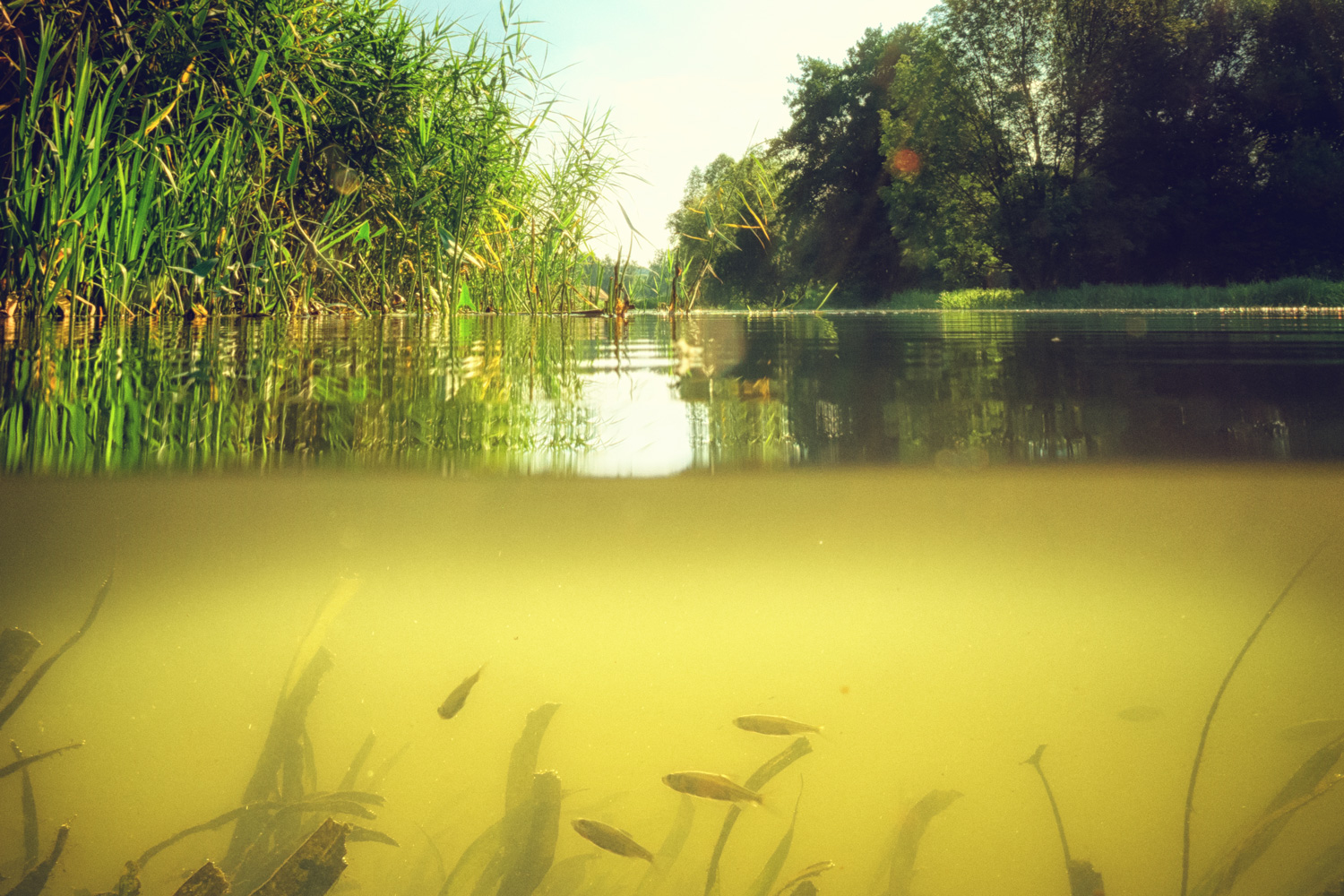
  • View of a pond split between below water, with fish, and above water with vegetation

    SB 49

    Managing Fish Ponds During Drought

    Dry weather tests pond design limits for water retention, watershed area and depth. Without adequate rainfall, ponds and the property around them lose value and the pond owner can lose the fish or have to spend substantial amounts of money for weed control or pond renovation. Over the past decade, drought conditions have been the normal weather pattern across the southeastern United States. Pond design and water management options should be considered each year to plan ahead for drought effects.

    Gary J. Burtle

    |

    Jan. 27, 2014
  • Rainwater Harvesting for System Designers and Contractors

    B 1372

    Rainwater Harvesting for System Designers and Contractors

    With recent droughts and increased emphasis on water conservation, rainwater harvesting (RWH) has become an important alternative source for outdoor irrigation. RWH is the collection of runoff from roofs during a rainfall event. The water is conveyed through a gutter system, filtered and stored in a tank for later use. In Georgia, non-potable harvested rainwater can be an alternative water supply for uses such as washing vehicles, landscape irrigation, livestock and wildlife watering, cooling towers and toilet flushing.

    Gary L. Hawkins, Ellen M. Bauske, Frank P. Henning, and Sheryl Wells

    |

    Aug. 31, 2013
  • Understanding Your Water Bill

    C 972

    Understanding Your Water Bill

    Educating yourself on the basics of your utility’s rates and rate structure, you can determine how your water bill is calculated, double check to make sure you are being charged the correct amount, and make the most cost-effective decisions for reducing your bill through water conservation.

    Brian H Kiepper

    |

    June 22, 2012
Previous Page
1 … 4 5 6 7
Next Page

About CAES

CAES Home

Overview

History

Administration

Jobs

Personnel Directory

Privacy Policy

Accessibility Policy

AI Guidelines

Affiliations

UGA Cooperative Extension

Tifton Campus

Griffin Campus

University of Georgia
  • Schools and Colleges
  • Directory
  • MyUGA
  • Employment Opportunities
  • Copyright and Trademarks
  • UGA Privacy Policy
  • Report an Accessibility Barrier
  • Submit a Student Complaint
#UGA on
© University of Georgia, Athens, GA 30602
706‑542‑3000