

Annuals are the mainstay color plant of many home gardens. They are also used in increasingly large numbers in commercial and municipal landscapes because they provide landscape color in a very short time with minimal investment.
Properly cared for, many annuals will brighten the landscape continuously from spring until frost kills them in the fall.

Terminology
Annuals are, by the strictest sense of the definition, plants that complete their entire life cycle in a single growing season. (Biennials normally complete their life cycle in two growing seasons while perennials grow year after year, often taking many years to mature.)
In practice, however, the term “annual” is often used to refer to plants that can be flowered in a single season, and hence are often treated as annuals in the landscape. These include some hardy perennials, which flower the first year from seed, and many tender perennials (such as begonias, impatiens, and geraniums), which are killed by frost when left outdoors.
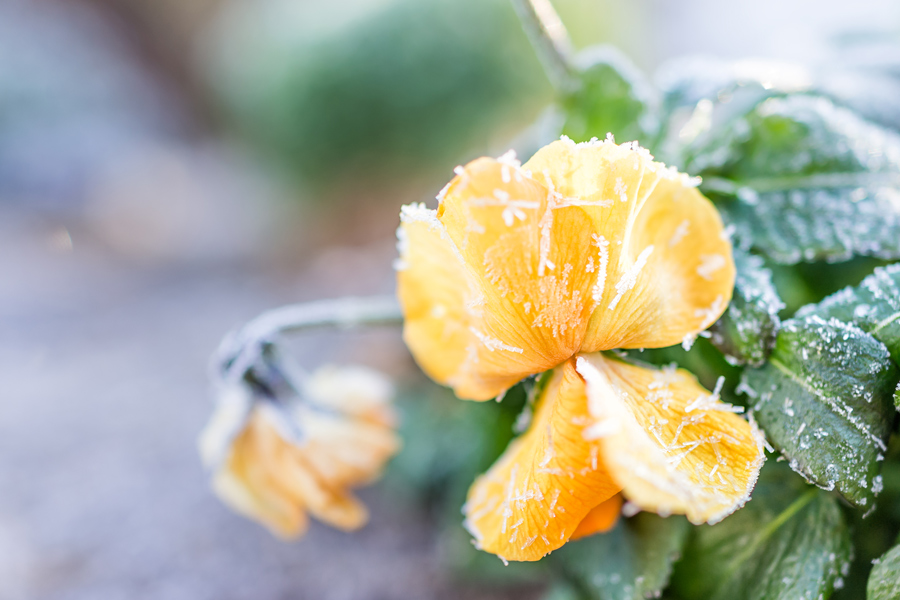
The terms “hardy,” “half-hardy,” and “tender” are frequently applied to annuals. Hardy annuals are those that withstand freezing temperatures. The most popular hardy annual grown in Georgia is the pansy, which, planted in the fall, provides fall, winter and spring color. Most hardy annuals, including pansies, are not very heat tolerant and usually die with the onset of hot summer temperatures.
Half-hardy (sometimes called “cool-season”) annuals are those that grow best under cool temperatures and may withstand light frost. Examples include annual phlox and calendula. They usually decline in the midsummer heat but may bloom again strongly in the late summer or fall. Tender (sometimes called “summer”) annuals such as vinca, zinnias, and impatiens, are not frost-tolerant and, in fact, usually grow poorly at low temperatures. Most of the popular annuals grown in Georgia are tender annuals.
The term “bedding plant” refers to commercially produced plants grown in flats or small containers for eventual transplant in the landscape. A wide assortment of varieties are produced in Georgia.
Use of Flowering Annuals
Flowering annuals have many uses in the landscape. They are most commonly used in beds and mixed borders. Tall annuals provide good backgrounds and quick screens. Annual vines can be used to cover trellises, provide shade and soften harsh fencing. Some can be used as temporary ground covers. Many produce flowers good for cutting and drying. Several are also well adapted for use in containers such as porch boxes, window boxes, hanging baskets and pots.
Annuals can even be used around foundations, providing color and mass prior to the installation of permanent shrubs and ground covers. Few plants offer as much diversity in landscape use as annuals do.
Annual Selection
Annuals vary considerably with respect to their environmental and cultural requirements. Some perform best in full sun while others do best in shade. Drought tolerance varies and planting times differ.
In addition to considering environmental and cultural requirements, carefully select annuals with respect to their intended use in the landscape. Height, spread, color range, time and length of color display vary considerably among annuals, sometimes even within a species. Certainly not all annuals can be expected to perform well under all conditions and for all uses.
The tables listed in the back of this bulletin will aid in selection. Commercial catalogs are also good sources of information that provide detailed information on the many varieties, colors and sizes available.
Bed Preparation for Annuals
Good bed preparation is essential for good performance of annuals. Because annuals have a relatively short time to grow and perform in the landscape, some preparations must be made for fast and sustained growth.
Beds should be deeply spaded, to a depth of 8 to 10 inches if possible. Most annuals grow well in a variety of soil types as long as the soil is capable of holding a sufficient amount of water and the soil is well drained. Heavy soils should be amended with sand, perlite or coarse bark to improve drainage. To test for drainage, dig a hole about 10 inches deep and fill it with water. The next day fill the hole again and see how long the water remains in it; if it drains away in 8 to 10 hours or less, drainage is satisfactory for most annuals. In some situations, it may be necessary to install underground drainage lines or construct raised beds. Most of the annuals you see in commercial landscapes are in raised beds to ensure adequate drainage.
Have the soil tested. A pH of 6.0 to 6.8 is satisfactory for most annuals. Most Georgia soils are acid and require the addition of lime to correct pH. In the absence of a soil test, add a complete fertilizer such as 10-10-10 at the rate of 1 lb per 100 square feet. A single application of such fertilizers will rarely provide season-long nutritional requirements; supplemental applications may be necessary (see “Care and Maintenance”). Incorporate the fertilizer and lime when tilling in the soil amendments, and rake the soil surface smooth.
Annuals in Containers
Many annuals grow well in a variety of containers such as window boxes, porch boxes, hanging baskets and pots. Containers should be chosen based not only on aesthetics, but should be proportional to the type and number of plants to be grown. The prerequisite for any container is that it have an adequate drainage hole(s).
Artificial soils (soilless media) are usually much easier to use and often give superior results. A variety of ready-to-use products are available commercially. Those with approximately 50% peat and 50% perlite or vermiculite work well. Avoid heavy muck soils that are sometimes sold as potting soils. Watering and fertility requirements will differ among containers. Generally annuals in containers will require more water and fertilizer than similar annuals grown in beds (See “Care and Maintenance”).
Propagation and Planting Annuals
With few exceptions, annuals are seed-propagated. Three options are available: (1) direct seeding in prepared beds, (2) seeding early indoors with subsequent transplant to the landscape, and (3) purchase of commercially grown plants.
Many annuals can be direct seeded in their final locations. Species with small seeds are more difficult. Carefully prepare the bed and pay close attention during germination and initial growth of the seedlings. Thinning is usually required. The recommended seeding date, depth and spacing are usually included with other information on the seed packet.
Many home gardeners prefer to sow seeds indoors. There are two distinct advantages to sowing seeds indoors—the environmental conditions for germination and growth can be more closely controlled, and sowing can take place earlier than conditions permit outdoors. Many people are unable to provide sufficiently high light levels indoors for the growth of seedlings. Insufficient light will result in weak, spindly seedlings. Fluorescent plant stands can be used, but seedlings must be located close to the light source (usually within 6 in.). Provide at least 16 hours of light daily.
Timing is also important. Seeds sown too early may produce seedlings ready for transplant before conditions permit outdoors. As a rule, most annuals can be seeded indoors six to eight weeks before the last frost. Seeds should be sown according to label directions in clean, sterile media (soilless mixes are ideal). Always use fresh, high-quality seeds.
A variety of seedling flats can be used. Many commercial products are available or homemade ones can be improvised. In all cases, good drainage should be provided. It may be desirable to direct seed into individual containers or small pots, thus eliminating the need to transplant. A variety of small plastic and peat pots and formed pot/media combinations are available or may be improvised.
Many home gardeners and commercial landscapers do not have the facilities or inclination to bother with seeds and seedlings and opt instead to purchase transplants (bedding plants). Many varieties in many sizes and containers are produced by Georgia growers and marketed through a number of retail outlets including greenhouses, garden centers, discount stores and grocery stores.
Tender annuals should not be planted outdoors until the danger of frost has passed. Georgia is divided by three USDA climatic zones; the last frost date varies by several weeks from coastal and southern Georgia to the mountains. There is always the urge to plant too soon. Many annuals, even if not injured by low temperatures, will not grow well until the soil warms sufficiently. When young plants are growing slowly or not at all, they are usually more susceptible to diseases such as root rot.
When transplanting into beds or containers, annuals should be set at approximately the same depth they were growing in the seedling flat or pot—avoid planting too deep or too shallow. Spacing will vary according to the size of the mature plant and according to the desired landscape effect. Most annuals look best in the landscape when used in groups rather than as individual specimens.
Once transplanting is complete, water the plants thoroughly. Pay close attention the first few weeks since young plants can dry out quickly until they develop a more extensive root system.
Care and Maintenance of Annuals
Many gardeners spend a great deal of time in the selection and planting of annuals only to be disappointed in their performance. Inadequate care and maintenance is probably the single most important reason for failure.
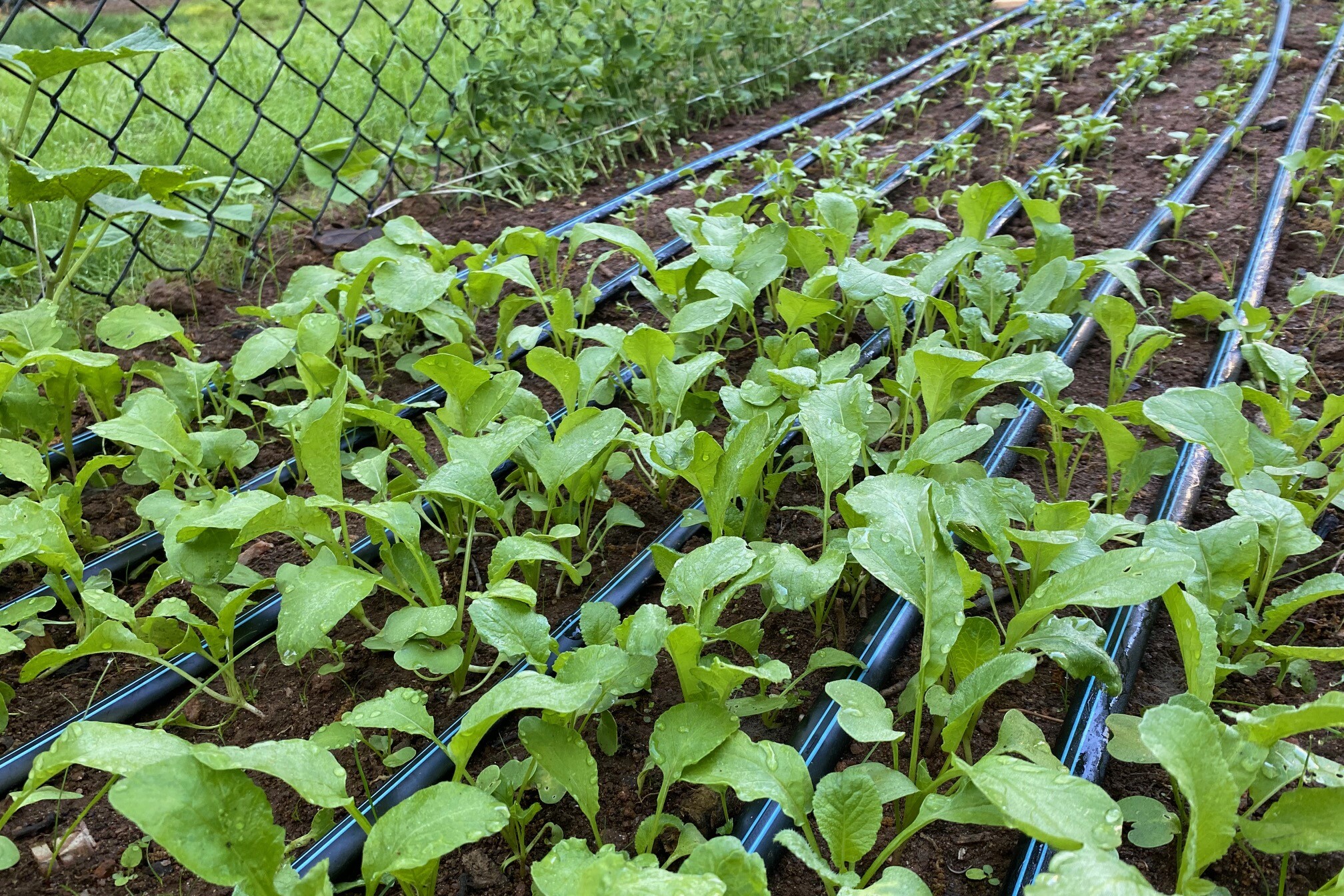
Adequate moisture is essential to the growth of flowering annuals. Natural rainfall is sufficient at times of the year, but cannot be relied upon as the sole source. Supplemental irrigation is often necessary, particularly during the summer months. Annuals vary in their drought tolerance, but as a rule most require at least 1 to 1 1/2 in. of water per week. More may be required during periods of extreme heat. Overhead sprinklers provide the least satisfactory method of watering; they must run for long periods in order to attain deep watering of the soil. Occasional sprinkling that only wets the upper inch or so of soil is undesirable. Wet foliage may also worsen foliar disease problems and compound problems with control. Drip or trickle irrigation is preferable.
Mulches help prevent water loss and also aid in weed control. Many materials have been used satisfactorily including pine bark, grass clippings and sawdust. A 1/2- to 1-in. layer is sufficient. Do not use fresh grass clippings and sawdust as soil amendments because their use often leads to nitrogen deficiencies. A clean weed-free bed mulched properly should eliminate the need for cultivation. Occasional hand weeding should keep the weeds in check. If cultivation is necessary, it should be shallow since most annuals are shallow rooted. Some herbicides are approved for use in annuals, but use them with extreme caution.
Plant breeders have developed varieties of most species that are compact, sturdy and require no support. Certain varieties and species may, however, require support. Thin bamboo stakes work well; wire hoops and cages are also available. Vines can be supported by wires or strings.
The removal of old flowers is also necessary in some species and varieties. Many modern varieties are “self-cleaning”—spent flowers quickly disappear. Some varieties are sterile and produce no seeds. A few must, however, be “deadheaded” to remove the old flowers. This not only prevents the formation of seeds but stimulates additional flowering. Some species can be invigorated by heavy pruning. Petunias are a good example. They can be cut back in midsummer to within a few inches of the ground, fertilized and watered heavily, and will be full and attractive again in just a few weeks.
Poor performance of annuals can often be traced to inadequate nutrition. General purpose granular fertilizers applied at planting will not last the entire season. When using fertilizers like 8-8-8 or 10-10-10, reapply approximately every 6 weeks throughout the growing season at the rate of 1 lb per 100 sq. ft.
Slow-release and controlled-release fertilizers are often used with annuals in the commercial landscape. While more expensive than conventional fertilizers, they do reduce the need for supplemental applications of fertilizer and reduce the likelihood of fertilizer burn. Preliminary research indicates that a single application of some controlled-release fertilizers at planting can supply season-long nutritional needs of annuals.
Water-soluble fertilizers, like those used in commercial greenhouse production and on houseplants, are generally too expensive to use outdoors in beds. They are, however, an excellent source of fertilizer for container annuals, which usually have higher water and fertility requirements. Container annuals must often be watered once or more per day in the heat of summer; for this reason, much of the fertilizer applied at planting may be lost through leaching.
Insects and Diseases
Annuals vary in their insect and disease susceptibility. Some are virtually trouble-free in the landscape while others require considerable care to look their best.
Many disease problems can be prevented. Good soil drainage is crucial in the prevention and control of many soil diseases that cause root and stem rot. Keeping the foliage dry and providing good air circulation helps control foliar diseases. Bed rotation is also important in the control of certain diseases. It is generally inadvisable to plant the same species in the same bed year after year.
A variety of insect pests attack annuals. The most common are aphids, spider mites, white flies and caterpillars. Infestations are more easily controlled early, before the population has a chance to swell.
A number of pesticides are available for controlling insects and diseases of annuals. Accurate identification of the insect or disease is the first step. Then select an appropriate pesticide, one that is labeled for control of the pest and approved for use on the given plant. Misuse of pesticides can not only fail to control the problem, but may cause injury to desirable plants. Always read the label carefully. Consult your county Extension agent for current pesticide recommendations.
Recommended Annuals
The following is a list of commonly grown annuals satisfactory for most areas of Georgia. It is by no means complete as many lesser-known annuals also grow well. The plants are listed alphabetically by common name with additional common name(s) in parentheses.
Amaranthus. Amaranthus caudatus (love-lies-bleeding, purple-tassel flower, summer poinsettia). A. tricolor (Joseph’s coat). Amaranthus is grown for its highly colored foliage. A. caudatus varieties range in height from 3 to 5 ft, terminating in vividly colored foliage and long tassels. A. tricolor varieties are more highly branched and range in height from 1 to 4 ft.
Ageratum. Ageratum houstonianum (floss flower). Most varieties now offered in the trade are compact and range in height from 6 to 12 in. Blues predominate, but white and magenta varieties are available. Tall cutting varieties are also available.
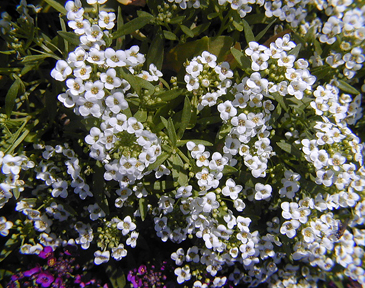
Alyssum. Lobularia maritima (sweet alyssum). A low-growing (4 to 8 in.), spreading plant, alyssum blooms from late spring until frost. Colors range from white to rose to purple. Alyssum may decline in midsummer due to extreme heat.
Aster. Callistephus chinensis (China aster, annual aster). Plants range in height from 6 in. to 3 ft. Taller varieties require staking. An excellent cut flower, almost all colors are available. Aster is subject to many insect and disease problems. Do not confuse Callistephus with the true asters (many are dependable perennials).
Baby’s Breath. Gypsophilia elegans. White, rose, and purple varieties are available. Plants form round clumps 1 to 2 ft high. Plants bloom only about 6 weeks; successive plantings are necessary to ensure season-long flowers. Do not confuse with G. paniculata (perennial baby’s breath).
Balloon Vine. Cardiospermum halicacabum. Balloon vine is a woody perennial vine usually grown as an annual for its showy fruit. It is useful for quick cover on fences and trellises.
Balsam. See Impatiens.
Balsam Apple. Momordica balsamina. A member of the cucumber family, balsam apple is a fast-growing vine. The orange fruit, up to 3 in. long, is edible.
Basil. Ocimum basilicum (sweet basil, common basil). Grown principally as a culinary herb, several varieties have been developed for ornamental use. Most produce plants 1 to 2 ft high and some have purple foliage.

Begonia. Begonia Xsemperflorens-cultorum (wax begonia, fibrous-rooted begonia). One of the most popular bedding plants grown, begonias flower from spring until frost. Colors range from white to pink to vivid red. Some varieties have bronze foliage and some green variegated with white. Some varieties are more sun tolerant than others. B. X tuberhybrida (tuberous begonia) is also grown but is not as well-suited for landscape use in the South.
Bells of Ireland. Molucella laevis. Grown for its shell-like green calyx, the true flower is actually rather inconspicuous. Erect plants are 2 to 3 ft high. The plant is grown primarily as a cut flower for fresh or dried use, but is also used in mixed borders.
Browallia. Browallia speciosa (amethyst flower, sapphire flower). Plants range in height from about 6 to 18 in. depending on variety. Colors range from white through a variety of pale to dark blues. Browallia grows best in partial shade.
Canary Bird Vine. See Nasturtium.
Candytuft. Iberis umbellata. Several colors are available in addition to the familiar white. Plants form a mat-like habit. Annual candytuft is not as commonly used as I. sempervirens (perennial candytuft).
Calendula. Calendula officinalis (pot marigold). Varieties range in height from 1 to 2 ft. Yellow and gold predominate in the color range. A half-hardy annual, calendula performs poorly under hot conditions, but is good for early- and late-season color.
Calliopsis. Coreopsis basalis. Calliopsis is an easy-to-grow annual about 18 in. high with numerous yellow flowers. This species is not as commonly grown as are the perennials C. lanceolate and C. verticillata.
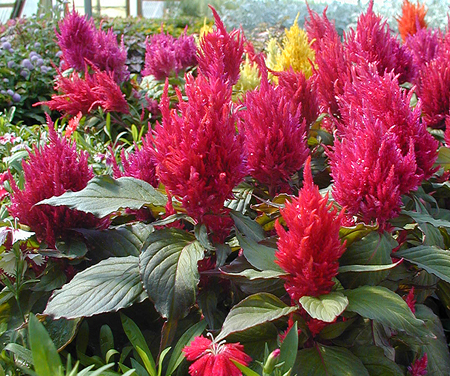
Celosia. Celosia cristata (cockscomb). Many new varieties of celosia have been developed in recent years that far extend the use of the plant. Heights range from 1/2 to 2-1/2 ft. Colors range from cream to yellow, gold, pink, and red. Flower types vary from fasciated convoluted combs to feathery spikes. Some varieties also have bronze foliage.
Chinese Lantern. Physalis alkekengi (Japanese lantern). Chinese lantern is grown primarily for its 2-in. orange-red calyx, which is useful in dried arrangements.
Chrysanthemum. Chrysanthemum X morifolium. Chrysanthemum is usually thought of as a perennial and is often grown for fall color; all colors are available except blue. Many varieties, however, are not reliably winter-hardy and are treated as annuals. Some seed-propagated varieties flower the first year.
Cleome. Cleome hasslerana (spider plant). The plant is useful for background and screening. Varieties range in height from 3 to 5 ft, and in color from white to pink to lilac. Plants grow under poor conditions but require ample moisture and fertility for vigorous growth. Cleome reseeds prolifically.
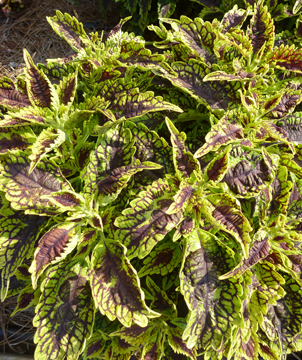
Coleus. Coleus X hyhridus. An excellent choice for shady locations, although some varieties are sun-tolerant. Heights range from 1 to 3 ft depending on variety and conditions. Coleus is grown for its colorful foliage; many varieties also have deeply lobed or cut margins. Flower spikes should be removed as they appear.
Cup-and-Saucer Vine. Cobaea scandens. A strong climbing vine, it flowers on 10-in.-long peduncles (flower stalks); the flowers are violet to greenish-purple. A white variety is also available.
Dahlia. Dahlia pinnata. Most seed-grown varieties for landscape use are dwarf types ranging in height from 1-1/2 to 2 ft. The taller, exhibition types are usually grown from tubers, require staking, and should generally be relegated to the cut-flower garden. Although often listed as D. pinnata, many of the varieties available are actually hybrids.
Dianthus. Dianthus chinensis (pinks). D. chinensis is a half-hardy annual that will sometimes overwinter. Most varieties range in height from 6 to 12 in. They grow best under cool conditions and may slump in midsummer. White, pink, and red predominate in the color range. Do not confuse this species with D. caryophyllus (carnation), D. barbatus (sweet William) and D. plumarius, which are perennials.
Dusty Miller. Senecio cineraria. Dusty miller is grown principally for its whitish-silver, wooly leaves. Varieties range in height from 6 to 12 in. Daisylike cream or yellow flowers are produced in late summer.
Forget-Me-Not. Myosotis sylvatica. Cynoglossum amabile (Chinese forget-me-not). The familiar tiny sky-blue flowers combine nicely with a variety of other plants, particularly spring bulbs. More correctly termed a biennial, it seeds freely. White and rose-colored varieties are also available.
Four-o’clock. Mirabilis jalapa. Plants form a bushy, shrub-like mass 1-1/2 to 3 ft high. The flowers, which open in late afternoon, are fragrant and white, red, yellow, pink, or striped.
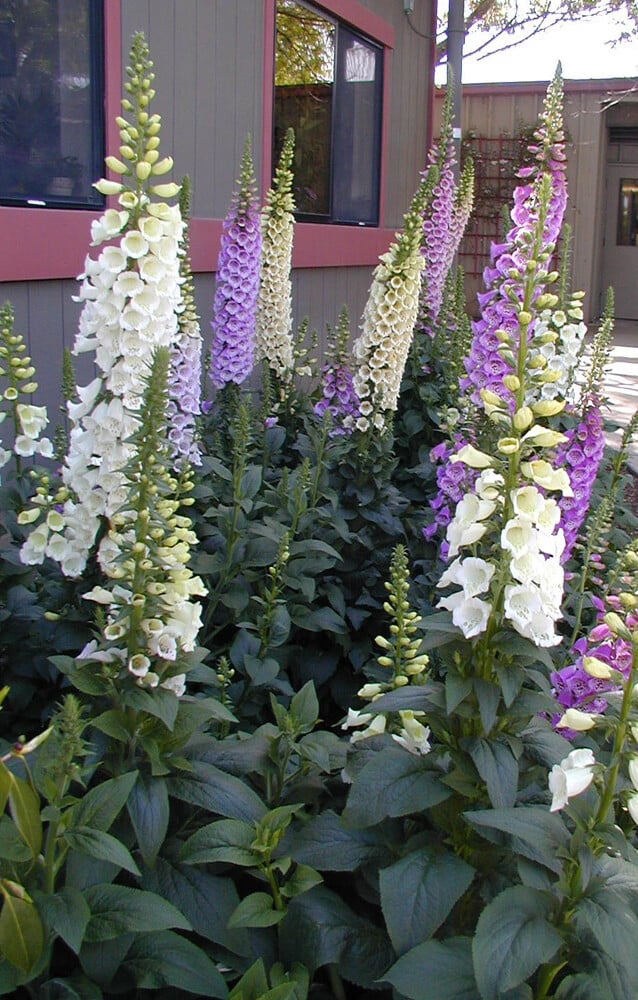
Foxglove. Digitalis purpurea. Most Digitalis are biennials and a few are true perennials. Some varieties will flower the first year from seed. Height ranges from 2 to 5 ft depending on variety. A wide variety of colors is available mostly in pastel shades.
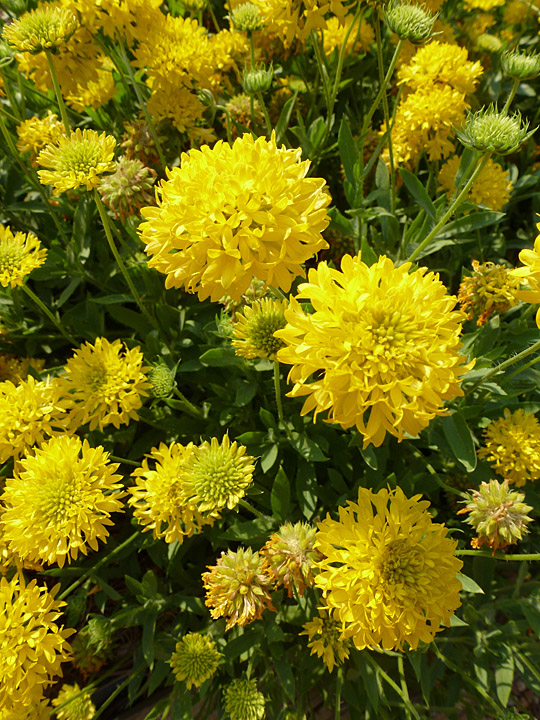
Gaillardia. Gaillardia pulchella (Blanket Flower). Gaillardia is considerably more heat and drought tolerant than most annuals. A number of varieties are available ranging in color from yellow to red. Height ranges from 1 to 2-1/2 ft.
Gazania. Gazania rigens. A perennial often treated as an annual, Gazania is a good choice for hot, dry locations. Plants range from 6 to 12 in. in height with daisy-like yellow, gold, orange, pink, or red flowers. Very tolerant to wet soils.

Geranium. Pelargonium X hortorum. Pelargonium peltatum (Ivy-Leaved Geranium). Geraniums have become very popular bedding plants, particularly now that many seed-propagated varieties are available. Colors range from white to pink, salmon, and red. Ivy-leaved geraniums are popular for hanging baskets and window boxes. Do not confuse Pelargonium with the true geraniums, many of which are also cultivated.
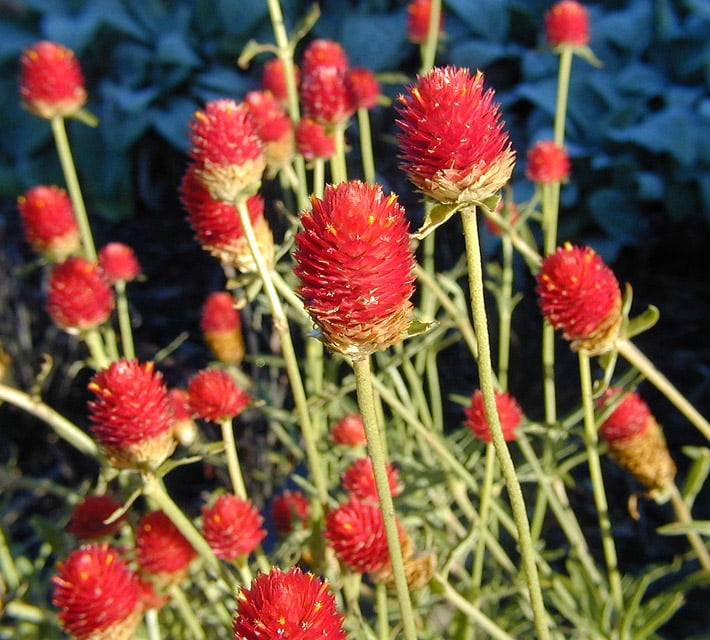
Gomphrena. Gomphrena globosa (Globe Amaranth). Gomphrena is a little-used annual that deserves more widespread use. It is drought- and weather-resistant. Plants range in height from 8 to 24 in. Colors range from white to rose to purple.
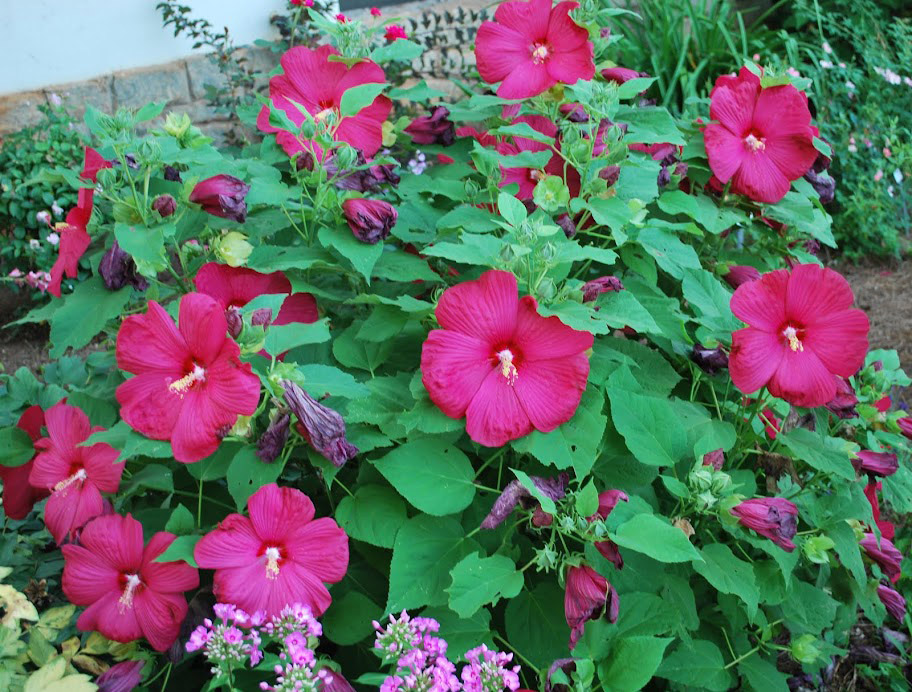
Hibiscus. Hibiscus moscheutos (rose mallow, mallow rose, swamp mallow). Grown primarily for its large flowers (6 to 12 in. wide), the plant forms a large (3- to 8-ft) shrub. White, pink, and red hibiscus are available. The plant is actually a herbaceous perennial and will overwinter in Georgia. Do not confuse this hibiscus with H. syriacus (althea), a woody deciduous shrub common in the landscape, or with H. rosa-sinensis (Chinese hibiscus), a tropical hibiscus that is not hardy in Georgia.
Hollyhock. Alcea rosea. Most hollyhocks are biennials useful in the background or border where a tall, upright habit is desired. Nearly all colors are available. Several varieties are available that flower the first year from seed.

Impatiens. Impatiens wallerana (sultana). Impatiens balsamina (balsam, touch-me-not). Impatiens are one of the most popular bedding plants in America. They provide continuous flowering from spring until fall. Almost all colors except blue are available in varieties ranging in height from 6 in. to 2 or 3 ft. Impatiens generally do best in shade, but many varieties are sun-tolerant if given adequate moisture. Balsam is erect in growth habit, ranging in height from 1 to 3 ft. When ripe, the seed pods burst upon touching, hence the common name, touch-me-not.
Larkspur. Delphinium and Consolida species and hybrids. Larkspur is an old garden favorite for providing tall, spiky effects in the garden. They are frequently used as cut flowers. The tall hybrid perennial Delphiniums usually perform poorly in the Southeast, but the larkspur types do well.
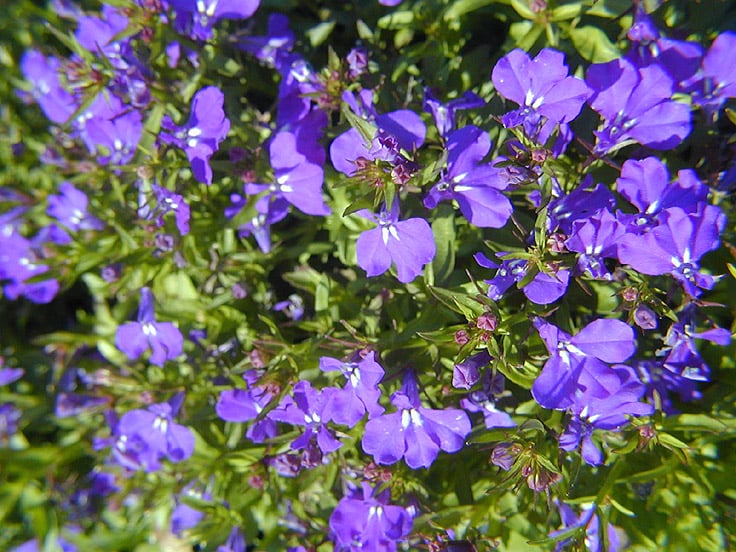
Lobelia. Lobelia erinus. Many lobelias are cultivated including many perennial species. The most popular annual is L. erinus. In sunny locations, it is dense and compact; in shady locations it tends to spread. Bedding types and pendula types are available that also influence growth habit. Available in a variety of blues and purple-reds, annual lobelia flowers best under cooler conditions.
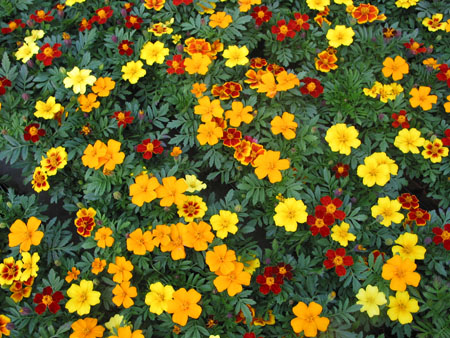
Marigold. Tagetes erecta (African marigold). T. patula (French marigold). T. species and hybrids. Marigolds are a staple annual in Georgia gardens. Many varieties are available primarily in shades of yellow, gold, orange, and mahogany red. The African marigolds have larger flowers than do the French marigolds. Triploid marigolds are hybrids between the two species. Heights range from 6 to 36 in.
Money Plant. Lunaria annua (dollar plant). Actually a biennial, money plant is grown primarily for use in dried floral arrangements. It also provides early spring color—white, pink, and purple. It reseeds readily and can become weedy.
Monkey Flower. Mimulus X hybridus. Monkey flower is a less common half-hardy annual that probably deserves more widespread use. Its cultural requirements are similar to that of the pansy. It is not heat-tolerant and may not survive the summer but is valuable for early-season color.
Nasturtium. Tropaeolum majus. T. peregrium (Canary Bird Vine). Nasturtium is an old garden favorite with a reputation of thriving in poor sites where other annuals fail. Bush and trailing types are available ranging in height from 1 to 6 ft. Colors range from white to yellow, orange, and red. The flowers and leaves are edible. Canary bird vine is a fast-growing vine suitable for fast coverage.
Nicotiana. Nicotiana alata (flowering tobacco, ornamental tobacco). In addition to a rich variety of colors—white, lavender, crimson, maroon, green, pink, lime, and yellow—the flowers are fragrant. Varieties range in height from 1 to 3 ft.
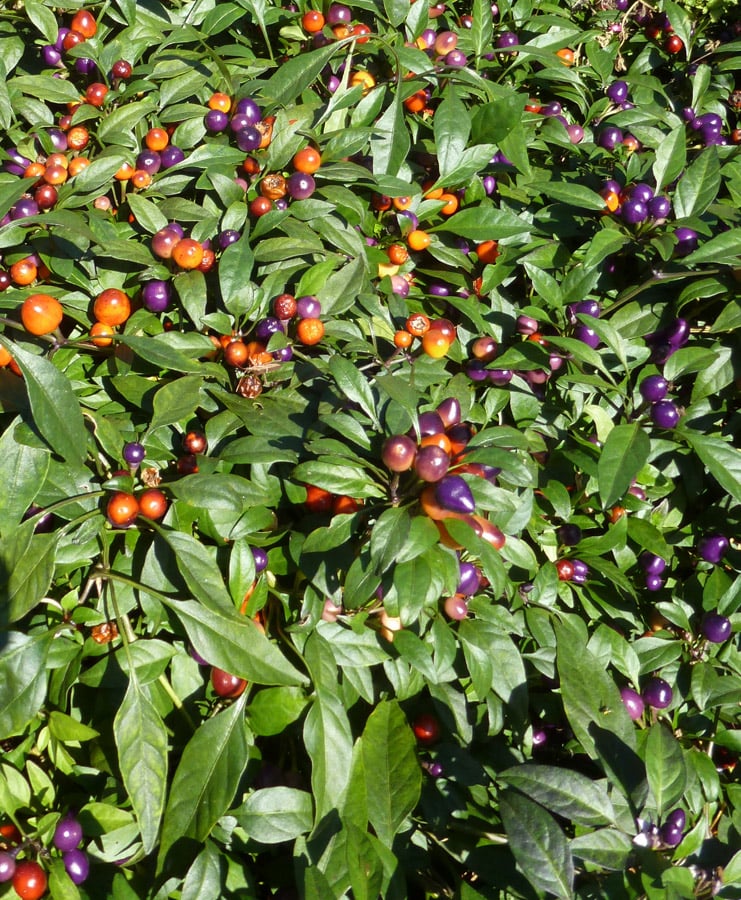
Ornamental Pepper. Capsicum annuum. Solanum pseudocapsicum (Jerusalem cherry). Ornamental peppers are grown for their highly colored elongated fruit pods, which range in color from yellow to orange, red, and purple to near black. Multiple colors are often present on the same plant. The fruit are extremely hot and should be used with caution around children. Jerusalem cherry is very similar in appearance except the fruit is round and poisonous if eaten.
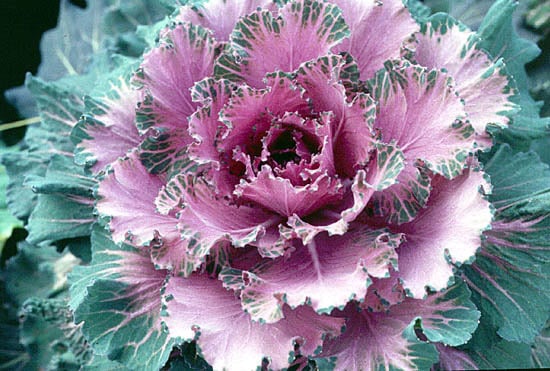
Ornamental Kale (Cabbage). Brassica oleracea. Plants form nearly perfect circular rosettes of leaves with centers tinged with pink, red or purple. It is grown for its foliage. Plants are usually set in fall but are not reliably winter-hardy in all parts of the state.
Pansy. Viola X wittrockiana. Pansies are the most popular hardy annual grown in Georgia. Most are planted in the fall and produce some flowers in fall and winter followed by peak flowering in spring; established plants can be planted in early spring. Nearly all colors are available. The smaller flowered multiflora types are generally more satisfactory for landscape use than the giant flowered types.

Petunia. Petunia X hydrida. Petunias remain a popular flowering annual. They are heat-tolerant but require ample moisture and fertility to thrive. Virtually all colors are available. Several flower forms are also available, including fully double types. The single multiflora varieties are generally best for landscape use. A half-hardy annual, it performs particularly well along the coast.
Phlox. Phlox drummondii (annual phlox, Drummond phlox). Many species of phlox are cultivated, and many of these are perennials. Annual phlox is a half-hardy annual useful for early-season color. It typically slumps in midsummer, but may reflower strongly in fall. Many colors are available.
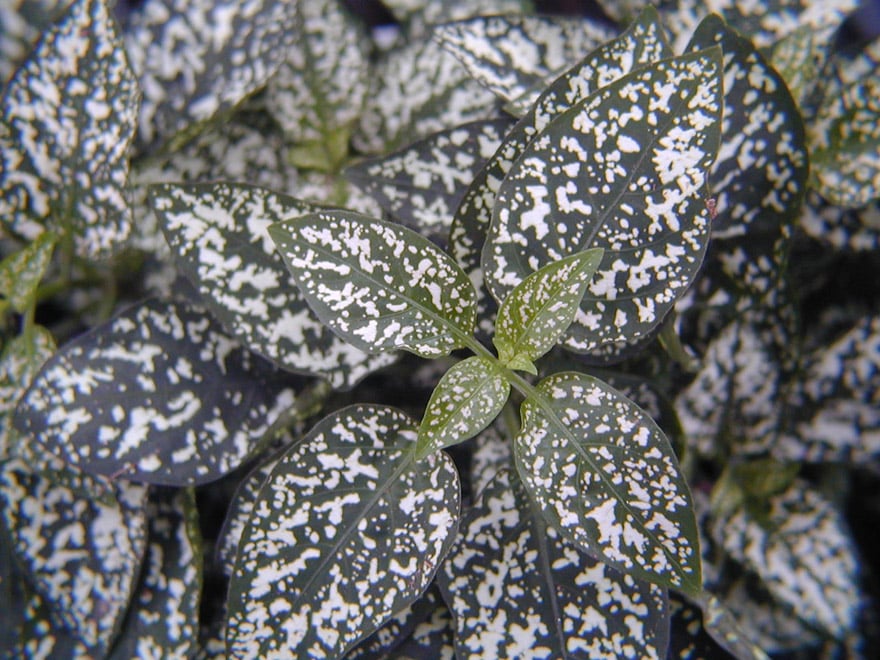
Polka Dot Plant. Hypoestes phyllostachya (pink polka dot plant, freckle face). Polka dot plant is grown principally for its unique speckled foliage.
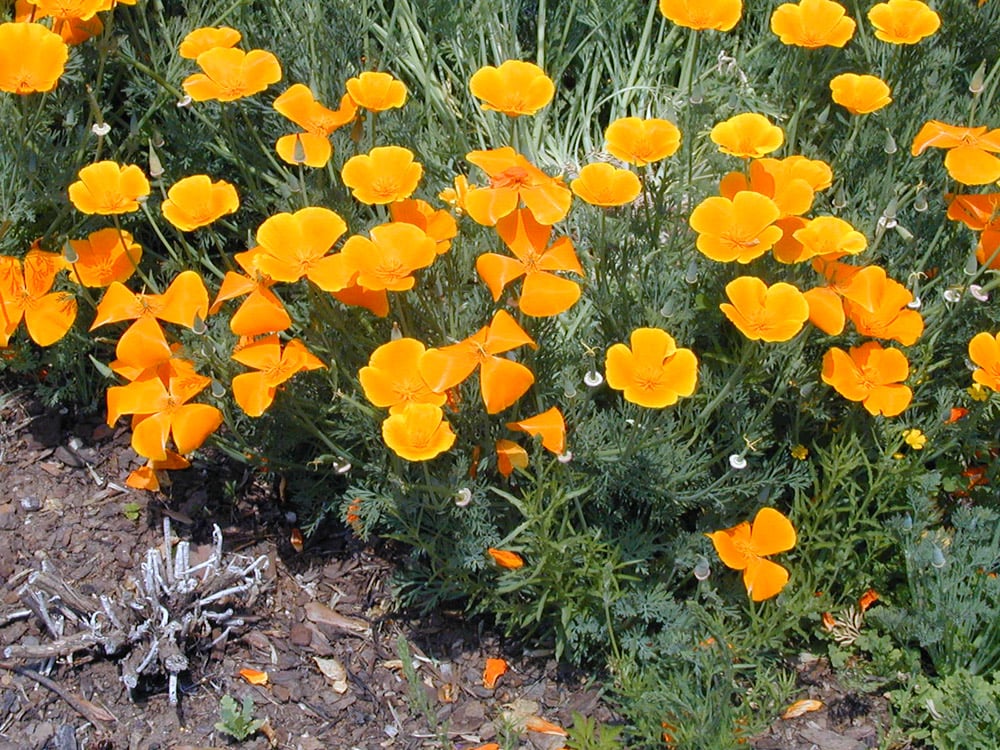
Poppy. Eschsholzia californica (California poppy) Papaver nudicale (Iceland poppy). P. rhoeas (Shirley poppy). These poppies are excellent annuals for naturalizing. Seeds are usually sown in late fall or early spring for early blooms. Many colors are available.

Portulaca. Portulaca grandiflora (moss rose, rose moss). Few annuals can match the performance of this low-growing, spreading plant in hot, dry locations. A wide variety of colors are available in single and double flowers. P. oleracea, a close relative, is often grown in hanging baskets.
Purple Fountain Grass. Pennissetum setaceum is a striking ornamental grass that does well in Georgia landscapes. The plants’ foliage is tinted with a rose or purple-bronze cast when grown in full sun and provides wonderful fall and winter color to otherwise barren landscapes. Commonly propagated by division or seed, this grass will not overwinter when soil temperatures reach freezing. Can be grown from seed also.

Salvia. Salvia splendens (scarlet sage, red salvia). S. farinacea (blue salvia, mealy-cup salvia). Salvia is a garden staple. In addition to the familiar red, numerous other colors including cream, pink, and violet purple are available, ranging in height from 10 to 30 in. Blue salvia, a perennial, is often used as an annual.
Scarlet Runner Bean. Phaselolus coccineus. Scarlet runner bean is an edible bean also grown as an ornamental for its bright red flowers.
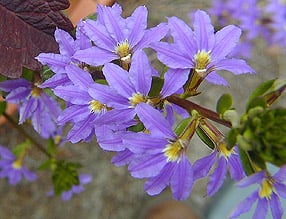
Scaveola. Scaveola aemula. Scaveola is a blue-flowering, semi-succulent leafed plant that does well in hanging baskets or as a fast-growing ground cover. The blue and white flowers are prolific from spring until frost. The cultivar ‘Blue Wonder’ is patented and can be found at garden centers. The species is very well adapted to Georgia. Very few pest or disease problems are seen with this plant.
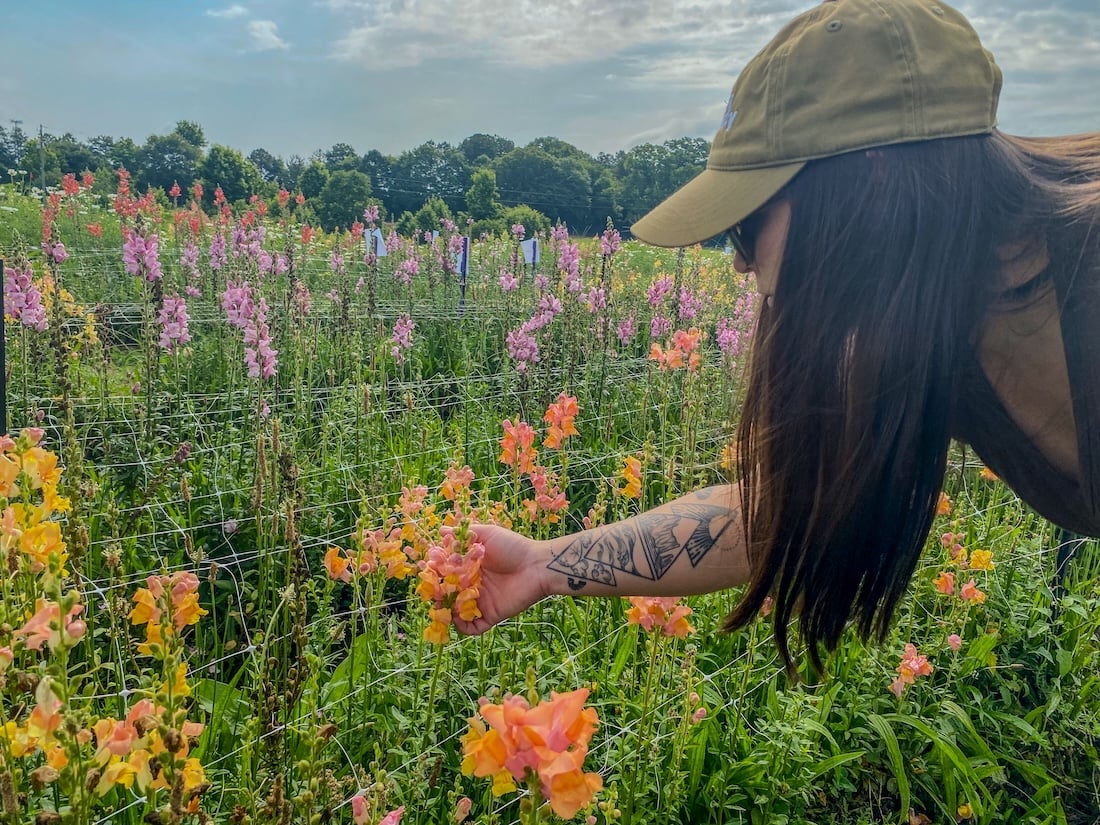
Snapdragon. Anthirrhinum majus. Many varieties and colors are available ranging in height from 6 to 36 in. The taller varieties require staking and are grown principally as cut flowers.

Snow-on-the-Mountain. Euphorbia marginata (Ghostweed). Snow-on-the-mountain is an erect annual ranging in height from 2 to 4 ft. It is tolerant of hot, dry locations. The milky sap may cause dermatitis.
Statice. Limonium sinuatum. Annual statice is grown primarily as a cut flower. The flowers also dry easily. Many colors are available. Several perennial statice species are also cultivated.
Stock. Matthiola incana. Widely grown as a cut flower and for early color, a wide range of colors is available. Varieties range in height from 1 to 2-1/2 ft. Stock is not particularly heat-tolerant.
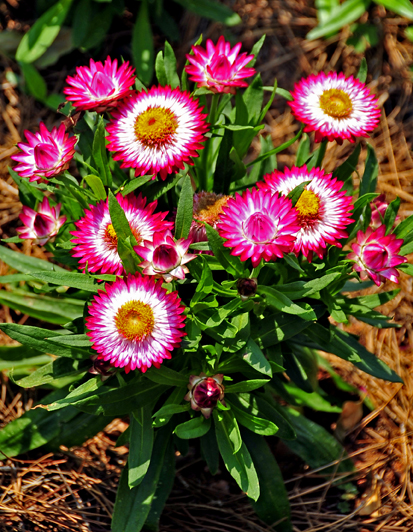
Strawflower. Helichrysum bracteatum. Strawflower is grown primarily as a fresh cut or dried flower. Flowers dry easily by hanging upside down in a dry, shady place. Varieties range in height from 1 to 3 ft with flowers 1 to 2 in. in diameter.
Sunflower. Helianthus annus. Dwarf varieties are available, but the taller (up to 10 ft) varieties are more common. Blossoms and seed heads may be more than a foot across. Soils must drain well and be moist and rich for maximum growth. Sunflower is an important commercial seed and oil crop.
Sweetpea. Lathyrus odoratus. Sweetpea is grown primarily for its fragrant, colorful flowers, which make good cut flowers. Bush and climbing types are available. The climbing types can be used on fences and trellises. Sweetpea grows best under cool conditions.
Tithonia. Tithonia rotundifolia (Mexican sunflower). Tithonia is a rugged annual suitable for hot and sunny locations. Ranging in height from 4 to 6 ft, it is used principally for backgrounds and screens. The flowers, orange-red in color, are zinnia-like in appearance. It attracts swallowtail butterflies.
Torenia. Torenia fournieri (wishbone flower, bluewings). Torenia grows best in light shade, but will tolerate sun and higher temperatures given adequate moisture. It is a compact plant 6 to 12 in. high, and its flower color ranges from white to blue.
Thunbergia. Thunbergia alata (Black-eyed-Susan vine). Thunbergia is a vigorous, climbing vine suitable for fast coverage. Flower color ranges from white to yellow and orange.
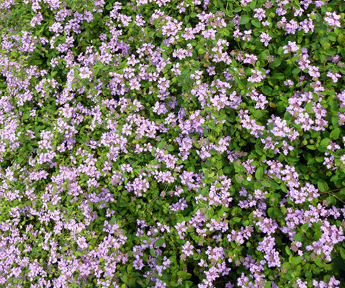
Verbena. Verbena X hybrida. Verbena is a dependable summer annual available in a wide variety of colors. Bush and spreading types are available. Flowering may cease under hot, dry conditions but continues when conditions moderate. Some perennial species are also cultivated.
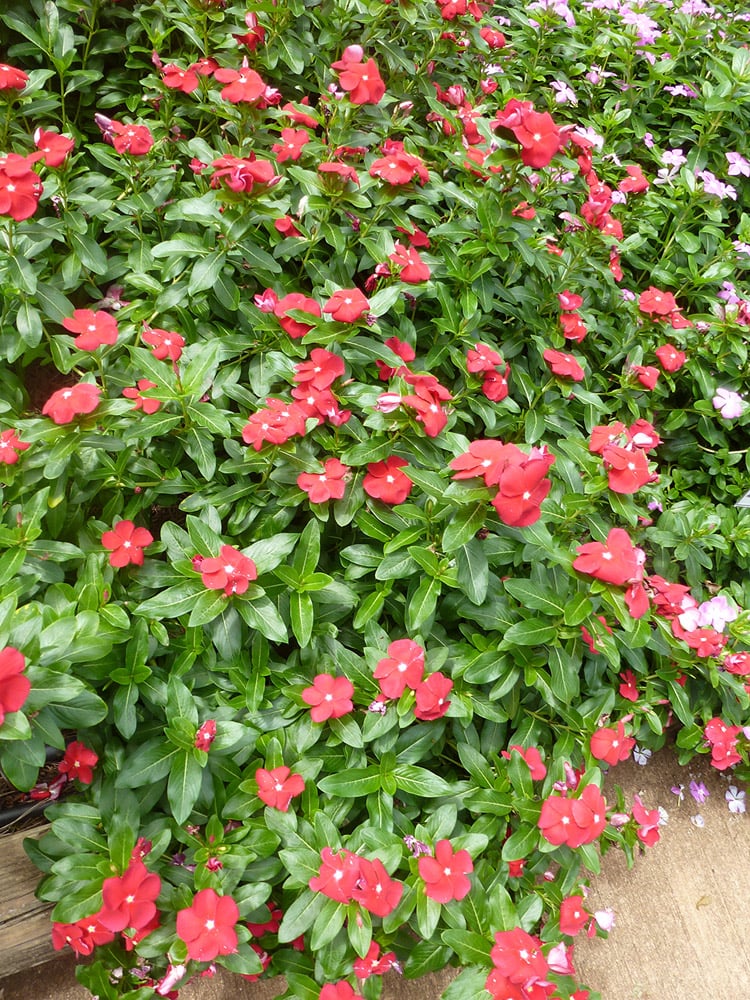
Vinca. Catharanthus roseus (Madagascar periwinkle). With improved varieties and additional colors, vinca has become a very popular annual in the South. It is heat- and drought-tolerant, and grows well on poor soils. Do not confuse Catharanthus with the true vincas, V. minor and V. major, which are evergreen perennial ground covers.
Wallflower. Erysimum asperum (cheiranthus). Colors range from cream to yellow and pink to maroon. Wallflower is usually planted in the fall for spring flowering. Technically a perennial, modern strains are short-lived under Southern conditions and are usually treated as biennials or hardy annuals.
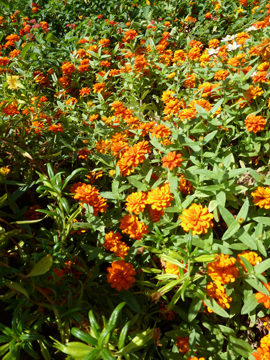
Zinnia. Zinnia elegans. The zinnia is a versatile annual. Zinnias range in height from 6 to 36 in. and are available in many different colors and flowers. Zinnias grow well under hot, sunny conditions but need ample moisture to thrive. Creeping zinnia is a reliable annual for hot, dry areas. The yellow flowers resemble small zinnias. Plants have a spreading habit of growth and are useful annual groundcovers.
Annuals for Specific Uses
Easy-to-Grow Annuals
- ageratum
- California poppy
- celosia
- cleome
- coleus
- dahlia
- four-o’clock
- marigold
- nasturtium
- petunia
- portulaca
- purple fountain grass
- sunflower
- verbena
- vinca
- zinnia
Annuals for Shade or Semi-Shade*
- ageratum*
- alyssum*
- balsam
- begonia
- browallia
- candytuft*
- coleus
- forget-me-not*
- impatiens
- lobelia*
- monkey flower*
- nicotiana*
- pansy*
- salvia*
- snapdragon*
- torenia
- verbena*
- viola*
Annuals for Hot, Dry Locations
- cosmos
- creeping zinnia
- four-o’clock
- portulaca
- snow-on-the-mountain
- sunflower
- tithonia
- verbena
- vinca
Annuals for Poor Soils
- amaranthus
- California poppy
- candytuft
- celosia
- cleome
- four-o’clock
- Iceland poppy
- nasturtium
- portulaca
- purple fountain grass
- tithonia
- verbena
- vinca
Hardy and Half-Hardy** Annuals
- alyssum**
- baby’s breath
- California poppy
- candytuft
- calendula**
- dianthus**
- foxglove
- gazania
- hollyhock
- Iceland poppy
- larkspur
- monkey flower**
- ornamental kale**
- pansy
- petunia
- phlox**
- snapdragon**
- sweetpea**
- verbena**
- wallflower
Annuals to Sow in Fall
- alyssum
- baby’s breath
- California poppy
- calendula
- candytuft
- Iceland poppy
- larkspur
- pansy
- Shirley poppy
- snapdragon
- sweetpea
Annuals that May Self-Seed Year after Year
- alyssum
- baby’s breath
- browallia
- calendula
- California poppy
- cleome
- forget-me-not
- impatiens
- larkspur
- nicotiana
- pansy
- portulaca
- snow-on-the-mountain
- verbena
- zinnia
Annuals to Direct-Seed
- Amaranthus
- baby’s breath
- California poppy
- castor bean
- gomphrena
- Iceland poppy
- larkspur
- marigold
- Nasturtium
- Shirley poppy
- sunflower
- sweetpea
- zinnia
Annuals for Use as Cut Flowers
- aster
- baby’s breath
- calendula
- celosia
- chrysanthemum
- dahlia
- dianthus
- larkspur
- marigold
- nasturtium
- phlox
- salvia
- snapdragon
- statice
- stock
- sweetpea
- verbena
- zinnia
Annuals Suitable for Drying
- baby’s breath
- celosia
- gomphrena
- money plant
- statice
- strawflower
Annuals Grown for Fragrance
- alyssum
- dianthus
- nasturtium
- nicotiana
- petunia
- phlox
- stock
- sweetpea
Annual Vines
- balloon vine
- balsam apple
- canary bird vine
- cup-and-saucer vine
- moonflower
- nasturtium
- scarlet runner bean
- sweetpea
- thunbergia
Annuals Grown for Colorful Foliage
- Amaranthus
- basil
- coleus
- dusty miller
- ornamental kale
- polka dot plant
- purple fountain grass
- snow-on-the-mountain
Annuals Used for Edging
- ageratum
- alyssum
- begonia
- candytuft
- coleus
- dianthus
- dusty miller
- lobelia
- marigold (dwarf varieties)
- pansy
- petunia
- phlox
- portulaca
- snapdragon (dwarf varieties)
- torenia
- verbena
- zinnia (dwarf varieties)
Annuals Suitable for Containers
- ageratum
- alyssum
- balsam
- begonia
- browallia
- coleus
- geranium
- impatiens
- lobelia
- marigold
- nasturtium
- pansy
- petunia
- phlox
- portulaca
- torenia
- thunbergia
- verbena
- vinca
Annuals Suitable for Backgrounds and Screens
- Amaranthus
- castor bean
- celosia (tall varieties)
- cleome
- coleus
- hibiscus
- hollyhock
- marigold (tall varieties)
- purple fountain grass
- sunflower
- tithonia
- zinnia (tall varieties)
Annuals Suitable for Use as Groundcovers
- alyssum
- candytuft
- creeping zinnia
- portulaca
- verbena
- vinca
Annuals that Should Generally Be Deadheaded
- aster
- calendula
- dahlia
- foxglove
- geranium
- hollyhock
- marigold
- purple fountain grass
- salvia
- snapdragon
- tithonia
- zinnia
Annuals that Attract Birds
- California poppy
- calliopsis
- petunia
- portulaca
- salvia
- sunflower
- zinnia
Annuals that Attract Hummingbirds and Butterflies
- lobelia
- phlox
- salvia
- tithonia
- verbena
- zinnia
Quick Reference to Common Annuals
| Name | Height1 (in.) | Spacing2 (in.) | Color3 | Hardiness4 | Exposure5 |
|---|---|---|---|---|---|
| Amaranthus | 12-6 | 12–24 | F | Tender | Semi-shade |
| ageratum | 6-24 | 12 | WB | Tender | Sun to Semi-shade |
| alyssum | 4-8 | 12 | WPL | Half-hardy | Sun to Semi-shade |
| aster | 6-36 | 12–18 | All | Tender | Sun |
| baby’s breath | 12-24 | 12–24 | WPL | Hardy | Sun to Semi-shade |
| balloon vine | Vine | — | F | Tender | Sun to Semi-shade |
| balsam | 12-36 | 12 | – B | Tender | Semi-shade to Shade |
| balsam apple | Vine | — | F | Tender | Sun to Semi-shade |
| basil | 12-24 | 12–24 | F | Tender | Sun |
| begonia | 6-12 | 12 | WPR | Tender | Semi-shade to Shade |
| bells of Ireland | 24-36 | 12–18 | F | Tender | Sun |
| browallia | 6-18 | 12 | WB | Tender | Semi-shade to Shade |
| canary bird vine | Vine | — | Y | Tender | Sun |
| candytuft | 8-12 | 12 | WPRL | Hardy | Sun to Semi-shade |
| calendula | 12-24 | 12 | YGO | Half-hardy | Sun |
| calliopsis | 18 | 12 | Y | Tender | Sun |
| castor bean | 60-120 | 24–36 | F | Tender | Sun |
| celosia | 6-30 | 12 | – B | Tender | Sun |
| Chinese lantern | 18-24 | 12 | F | Tender | Sun |
| chrysanthemum | 12-24 | 12–24 | – B | Tender | Sun |
| cleome | 36-60 | 12–24 | WPL | Tender | Sun |
| coleus | 12-36 | 12 | F | Tender | Semi-shade to Shade |
| cup-and-saucer vine | Vine | — | LW | Tender | Sun to Semi-shade |
| dahlia | 8-72 | 12–36 | All | Tender | Sun |
| dianthus | 6-12 | 12 | – B | Half-hardy | Sun |
| dusty miller | 6-12 | 12 | F | Half-hardy | Sun |
| forget-me-not | 6-12 | 12 | BWP | Tender | Sun to Semi-shade |
| four-o’clock | 18-36 | 12–24 | WRYP | Tender | Sun |
| foxglove | 12-60 | 12–24 | – B | Hardy | Sun to Semi-shade |
| gaillardia | 12-30 | 12 | YGR | Tender | Sun |
| gazania | 6-12 | 12 | YGPRO | Hardy | Sun |
| geranium | 12-24 | 12 | – B, –Y | Tender | Sun to Semi-shade |
| gomphrena | 8-24 | 12 | WPL | Tender | Sun |
| hibiscus | 36-96 | 24–36 | – B, –Y | Hardy | Sun |
| hollyhock | 12-48 | 12–24 | All | Hardy | Sun to Semi-shade |
| impatiens | 6-36 | 12 | – B | Tender | Semi-shade to Shade |
| larkspur | 24-36 | 12 | BPWL | Hardy | Sun |
| lobelia | 3–6 | 6–12 | BW | Tender | Sun to Semi-shade |
| marigold | 3–36 | 12–24 | YGRO | Tender | Sun |
| moonflower | Vine | — | W | Tender | Sun |
| money plant | 12–36 | 12 | F | Hardy | Sun |
| monkey flower | 6 | 6–12 | YR | Half-hardy | Sun to Semi-shade |
| nasturtium | 12–72 | 12–24 | YGRW | Tender | Sun to Semi-shade |
| nicotiana | 12–36 | 12–24 | – B | Tender | Sun |
| ornamental pepper | 6–12 | 6–18 | F | Tender | Sun |
| ornamental kale | 6 | 18 | F | Half-hardy | Sun |
| pansy | 6 | 6–12 | All | Hardy | Sun to Semi-shade |
| petunia | 6–12 | 12 | All | Tender | Sun |
| phlox | 6–12 | 12 | All | Half-hardy | Sun to Semi-shade |
| polka dot plant | 12–18 | 12 | F | Tender | Sun to Semi-shade |
| poppy | 12–24 | 12 | All | Hardy | Sun to Semi-shade |
| portulaca | 1–3 | 12 | – B | Tender | Sun |
| salvia | 10–30 | 12–18 | RWB | Tender | Sun to Semi-shade |
| scarlet runner bean | Vine | — | R | Tender | Sun |
| snapdragon | 6–36 | 12 | – B | Half-hardy | Sun to Semi-shade |
| snow-on-the-mountain | 24–48 | 12–24 | F | Tender | Sun |
| statice | 18–24 | 12–24 | – R | Tender | Sun |
| stock | 12–30 | 12–24 | All | Tender | Sun |
| strawflower | 12–36 | 12–24 | YG | Tender | Sun |
| sunflower | 24–120 | 24–36 | YG | Tender | Sun |
| sweetpea | 12–96 | 12 | All | Half-hardy | Sun |
| torenia | 6–12 | 6–12 | WB | Tender | Semi-shade to Shade |
| thunbergia | Vine | — | WYGO | Tender | Sun |
| tithonia | 48–72 | 24–36 | R | Tender | Sun |
| verbena | 6–12 | 12 | All | Half-hardy | Sun to Semi-shade |
| vinca | 6–18 | 12 | WPL | Tender | Sun to Semi-shade |
| wallflower | 6–12 | 12 | WPLY | Half-hardy | Sun |
| zinnia | 6–36 | 12–24 | – B | Tender | Sun |
| zinnia linearis | 12–18 | 12–18 | O | Tender | Sun |
| 1 Height may vary considerably among varieties. 2 Spacing depends on ultimate size of plant and effect desired. 3 G = gold, W = white, P = pink, Y = yellow, R = red, B = blue, L = lavender, O = orange, All = all colors; – indicates absence of a single color, all others represented; F = grown for foliage or fruit. 4 Hardiness varies among varieties and locations throughout the state. 5 Sun = full sun; semi-shade = filtered light or protection from midday and afternoon sun; shade = full shade. | |||||
The original manuscript was prepared by Paul A. Thomas, Extension Horticulturist. Reviewed by Bodie Pennisi.