

When Are Predators Likely to Be in My Field?
| Predator | January | February | March | April | May | June | July | August | September | October | November | December |
|---|---|---|---|---|---|---|---|---|---|---|---|---|
| Big-Eyed Bug | Low presence | Low presence | Low presence | High presence | High presence | Med presence | Med presence | Med presence | Low presence | Low presence | Low presence | Low presence |
| Assassin Bug | Low presence | Low presence | Low presence | Med presence | Med presence | High presence | Med presence | Med presence | Low presence | Low presence | Low presence | Low presence |
| Damsel Bug | Low presence | Low presence | Low presence | Low presence | Med presence | Med presence | Med presence | High presence | Med presence | Low presence | Low presence | Low presence |
| Minute Pirate Bug | Low presence | Low presence | Low presence | Low presence | Low presence | Med presence | Med presence | High presence | High presence | Med presence | Low presence | Low presence |
| Ground Beetle | Low presence | Low presence | Low presence | High presence | High presence | High presence | Med presence | Med presence | Med presence | Low presence | Low presence | Low presence |
| Lady Beetle | Low presence | Low presence | Low presence | Low presence | Med presence | Med presence | High presence | High presence | Med presence | Low presence | Low presence | Low presence |
| Lacewing | Low presence | Low presence | Low presence | Low presence | Low presence | Med presence | Med presence | High presence | High presence | Med presence | Low presence | Low presence |
| Spiders | Low presence | Low presence | Med presence | High presence | High presence | High presence | High presence | High presence | Med presence | Med presence | Low presence | Low presence |
Legend: “High” = high presence in field. “Med” = medium presence in field. A blank cell = low presence in field.
Data partially from fields with cover crop residue. All predators can be observed and collected during the day.
Pests
Scouting for key pests and beneficials is critical for informed and cost effective management decisions.
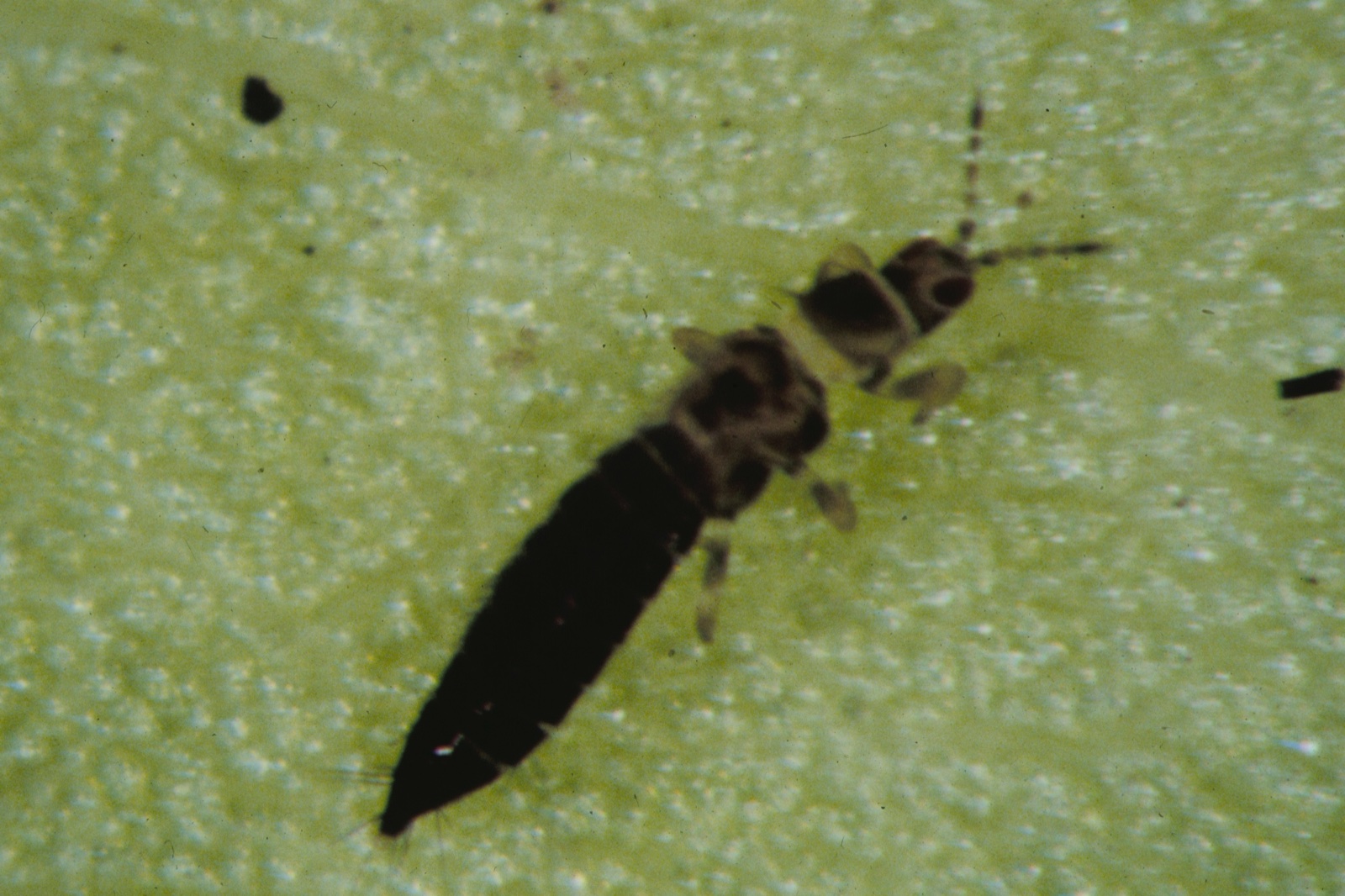
Thrips
Consistent early-season pest of seedling cotton
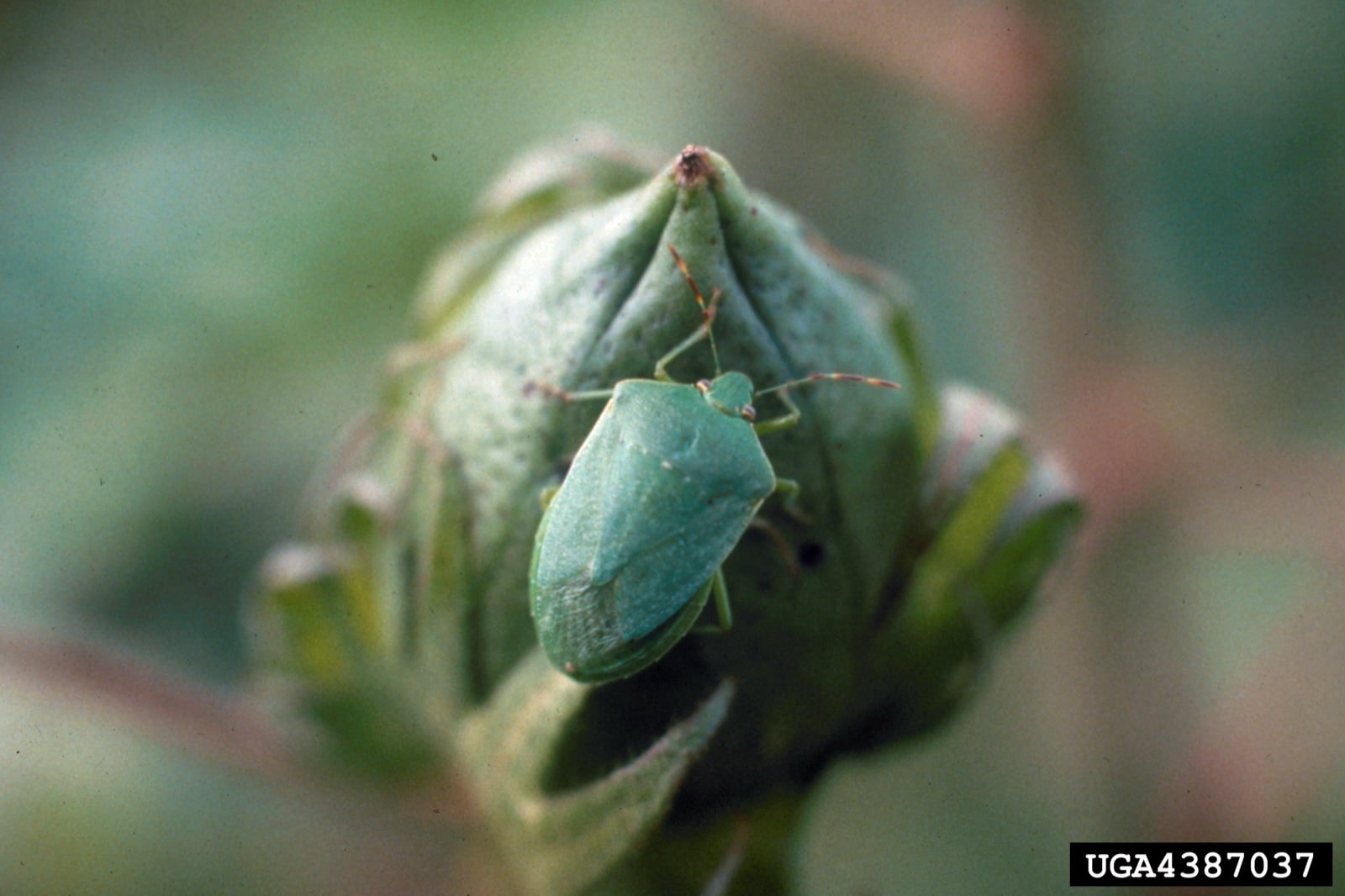
Southern green stinkbug
Potentially serious late-season pest of cotton
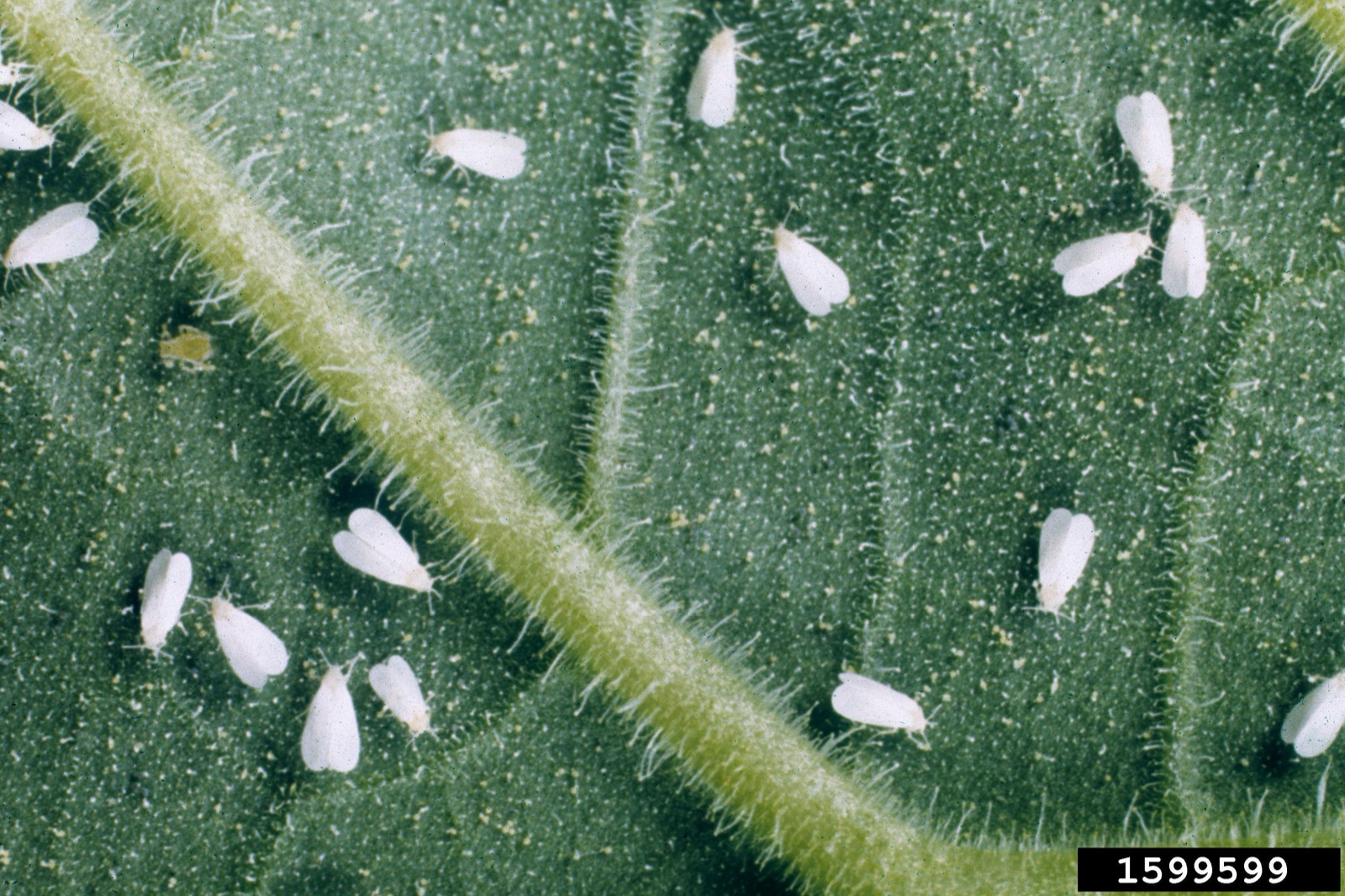
Whitefly
Potentially serious mid- to late-season pest of cotton
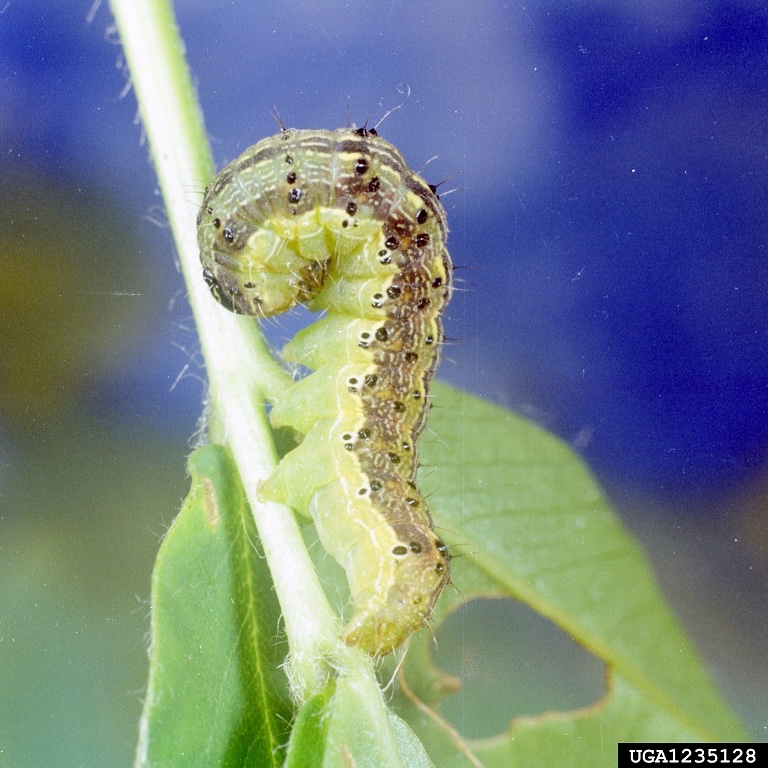
Corn earworm
Pest of cotton bolls
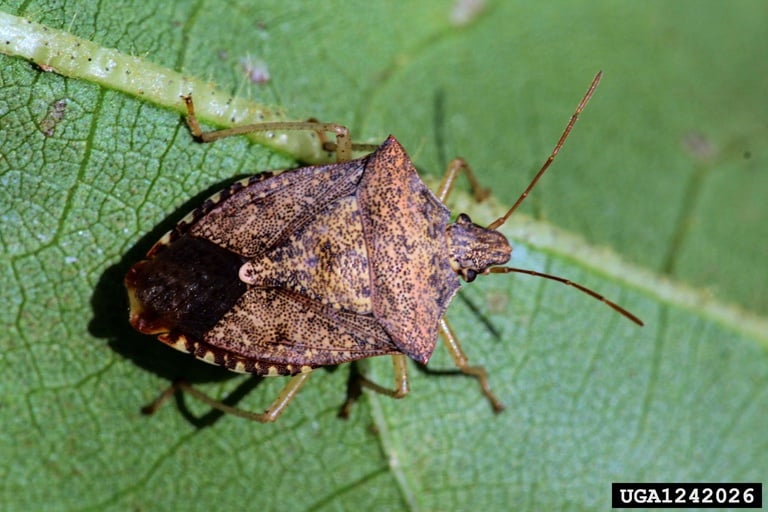
Brown stinkbug
Late-season pest of cotton balls
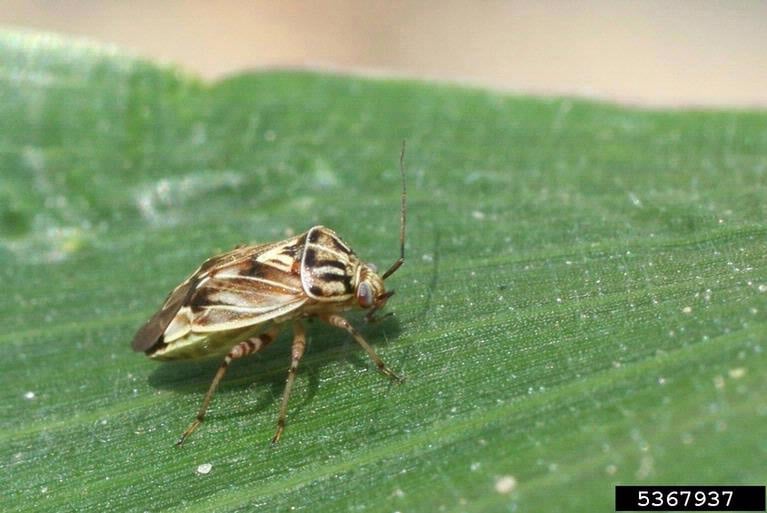
Tarnished plant bug
Occasional mid- to late-season pest of cotton
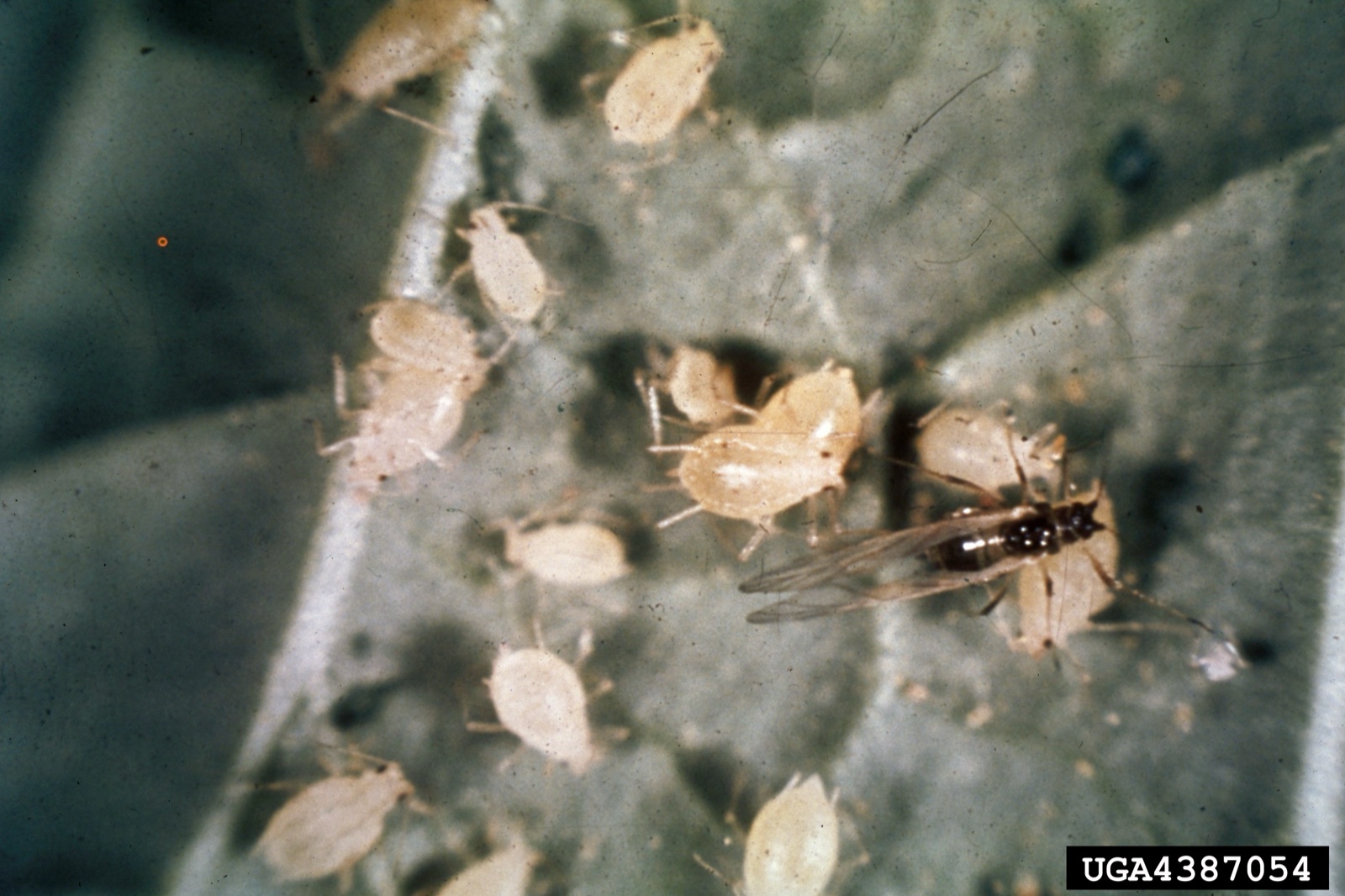
Aphid
Potential early- to late-season pest of cotton
Key to Symbols for Predator Habitat Preferences
- A: All: found in all or almost all habitat types
- C: Canopy: found in the cotton canopy or among cotton flowers
- G: Ground: found primarily on the soil or leaf litter
- Gm: Grass margins: found in grassy field margins or cover crop residue
Grasshoppers
Tettigoniidae:Orthoptera
Long-horned grasshoppers
Feed on: aphids, thrips, lepidopteran eggs and larvae
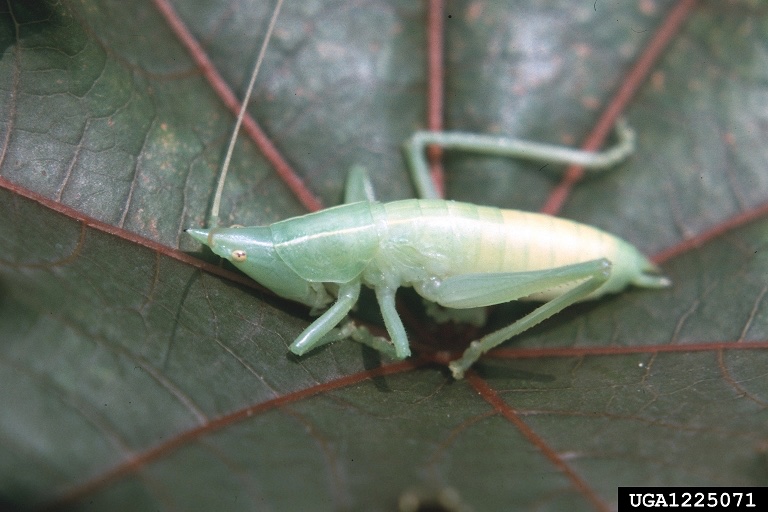
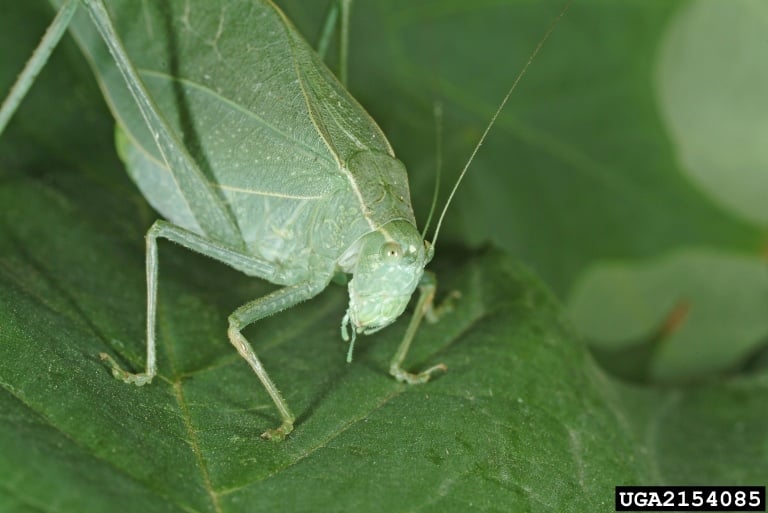
Habitat: found in grassy field margins or cover crop residue; found in the cotton canopy or among cotton flowers.
Ants
Hymenoptera
Fire ants
Feed on: lepidopteran larvae and eggs, aphids, soil insects, stink bug eggs, whitefly larvae, spider mites, beetle larvae, most soft-bodied insects, nectar
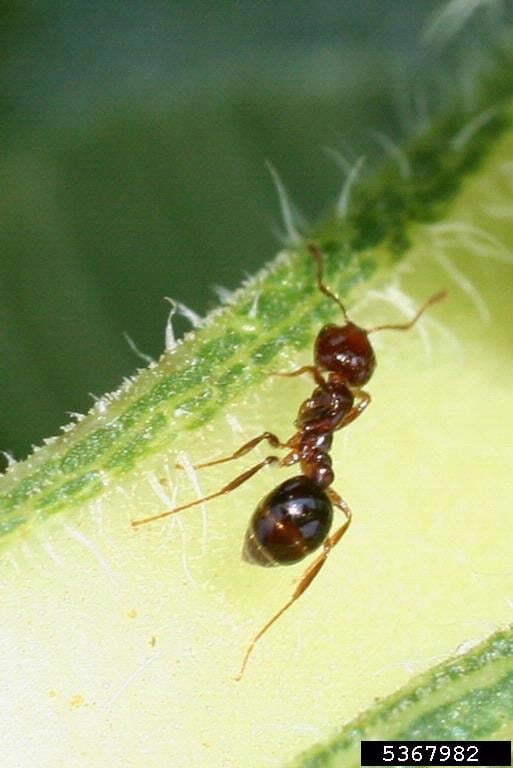
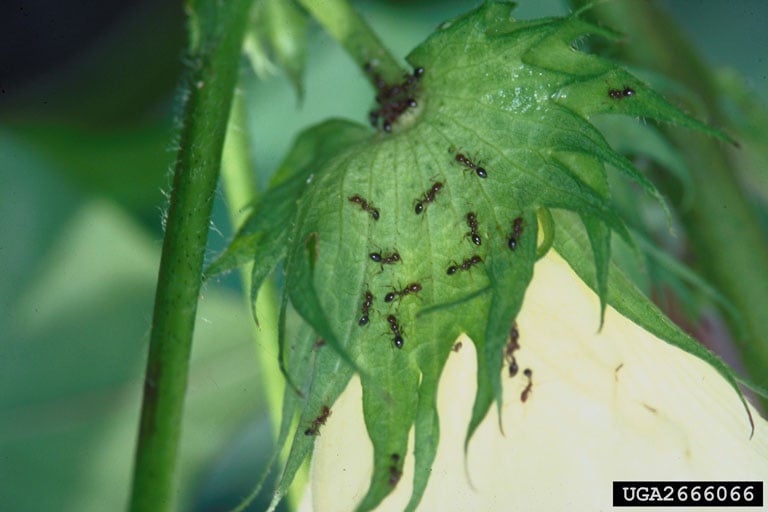
Habitat: found in all or almost all habitat types.
Lacewings
Neuroptera
Brown and green lacewings
Larvae feed on: aphids, spider mites, other small insects
Brown lacewing adults are predatory while green lacewing adults feed on pollen and nectar.
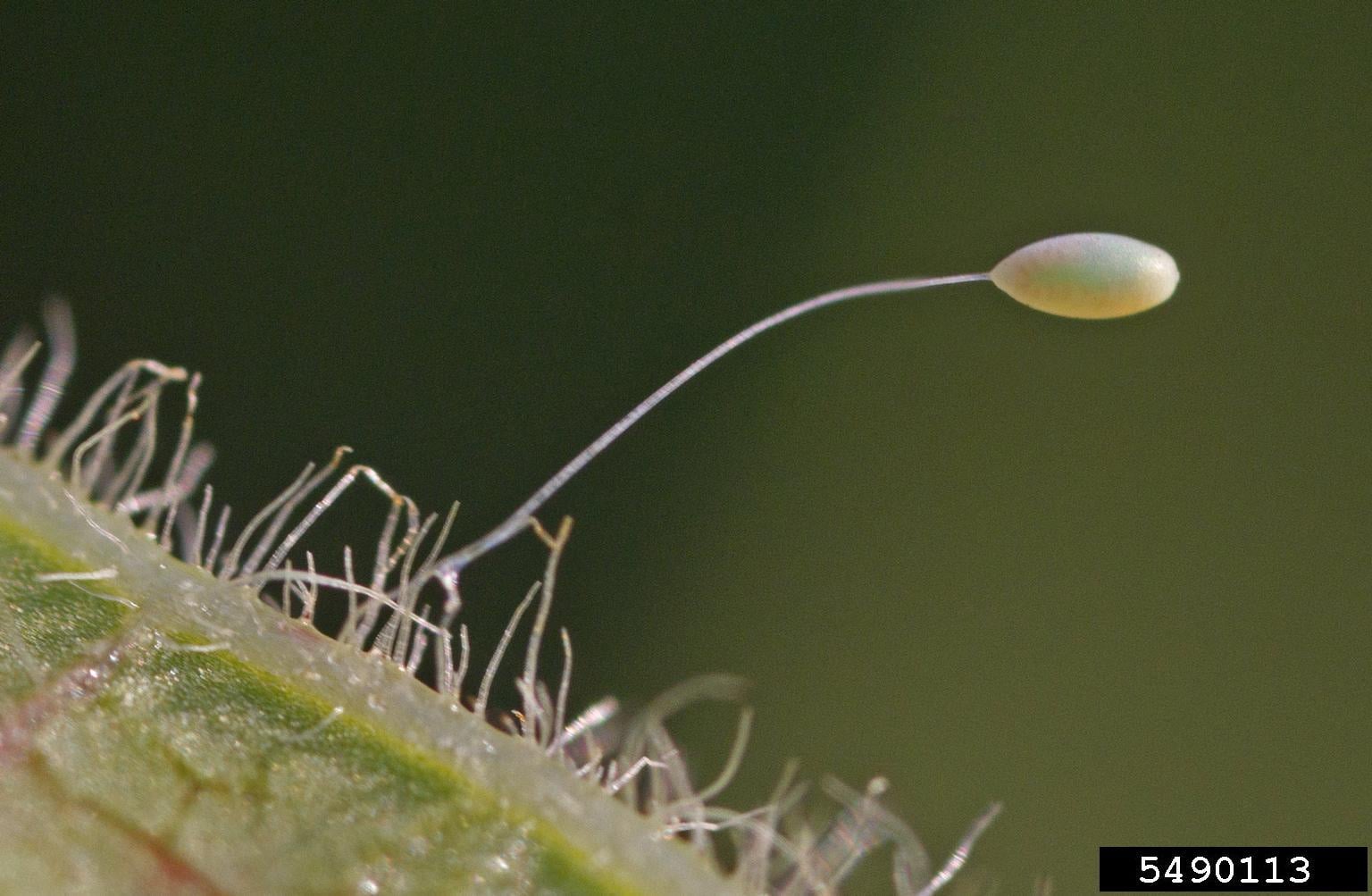
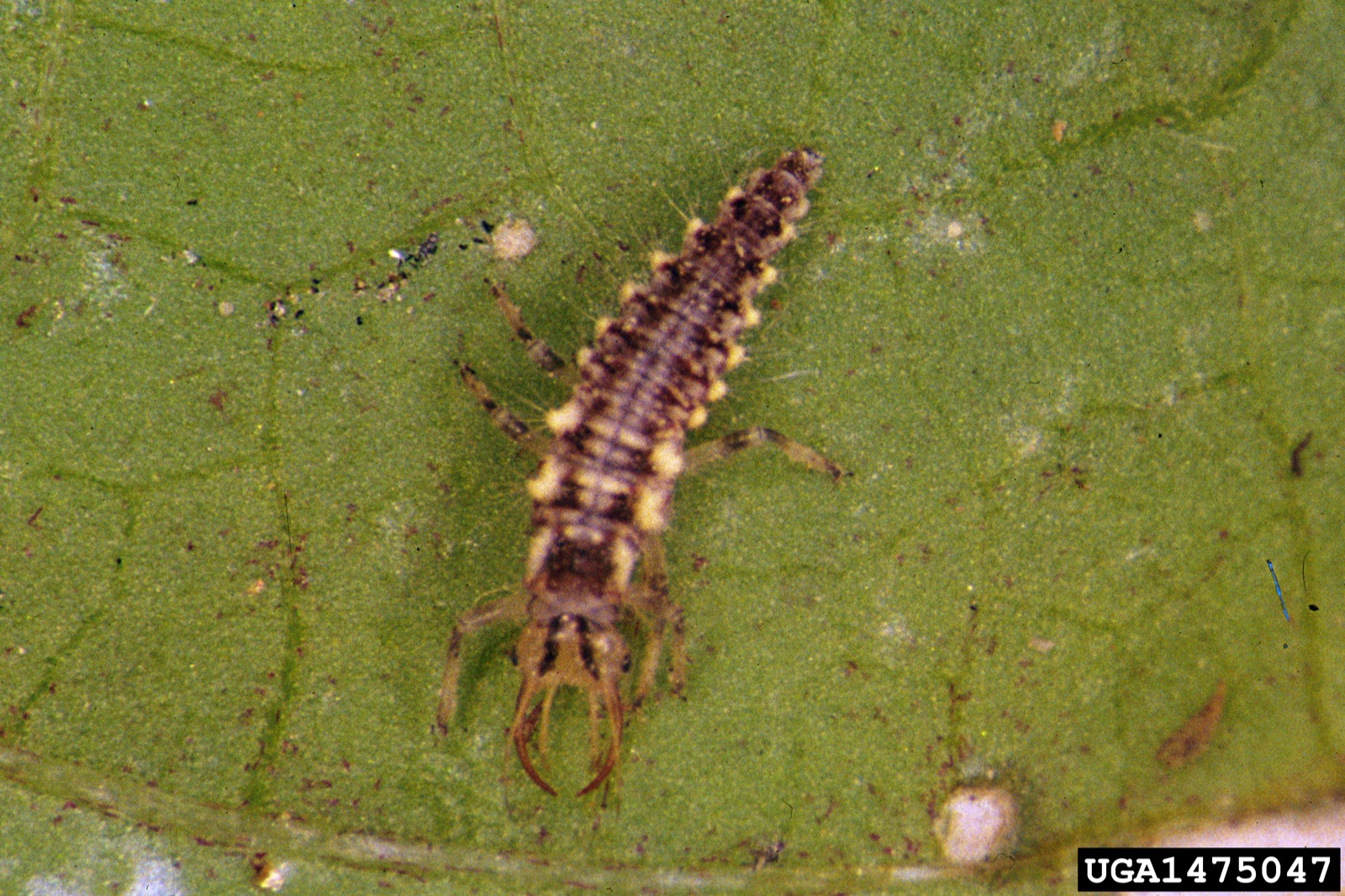

Habitat: found in the cotton canopy or among cotton flowers.
Beetles
Coleoptera
Ground and tiger beetles
Feed on: lepidopteran larvae, aphids, soil insects, weed seeds
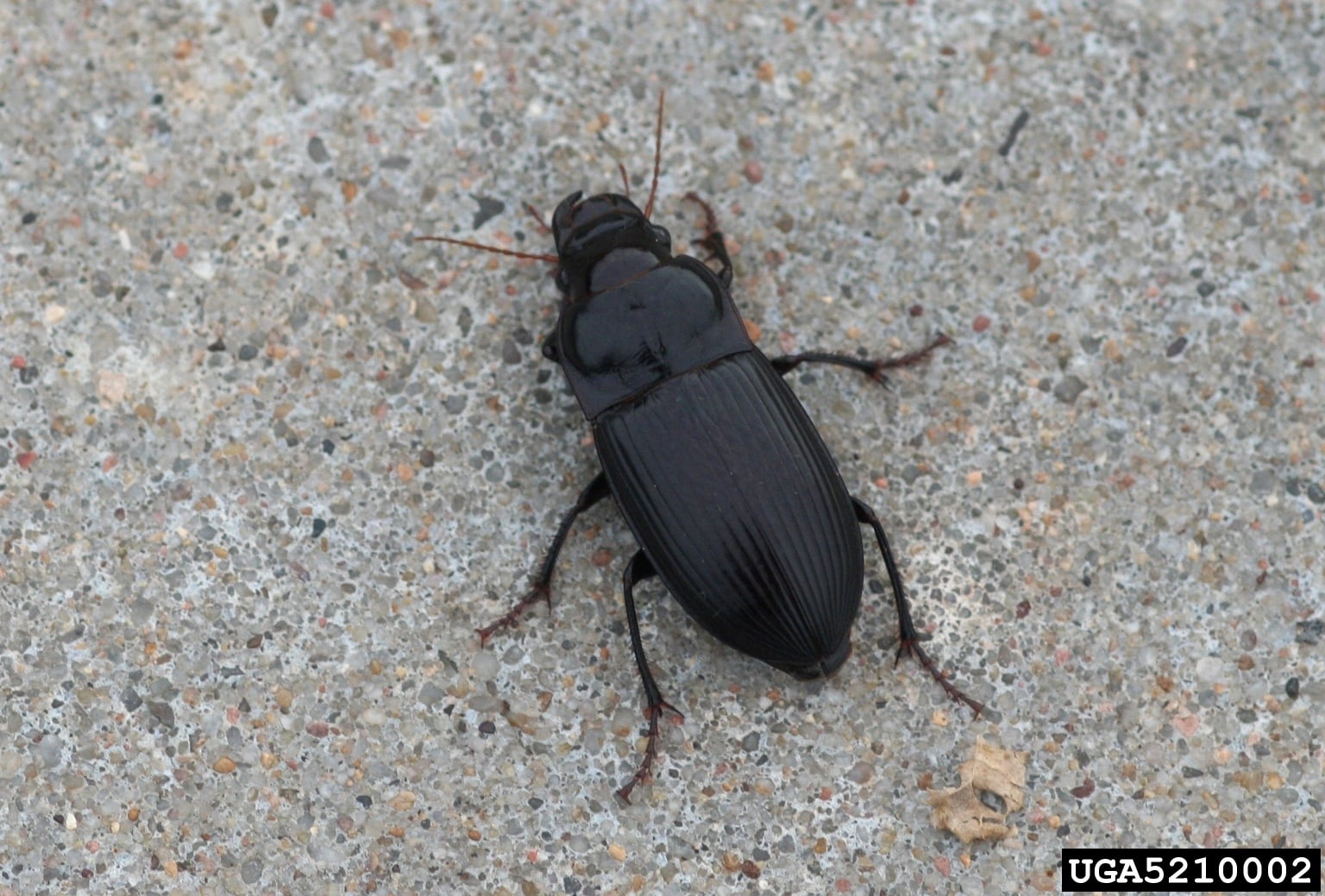
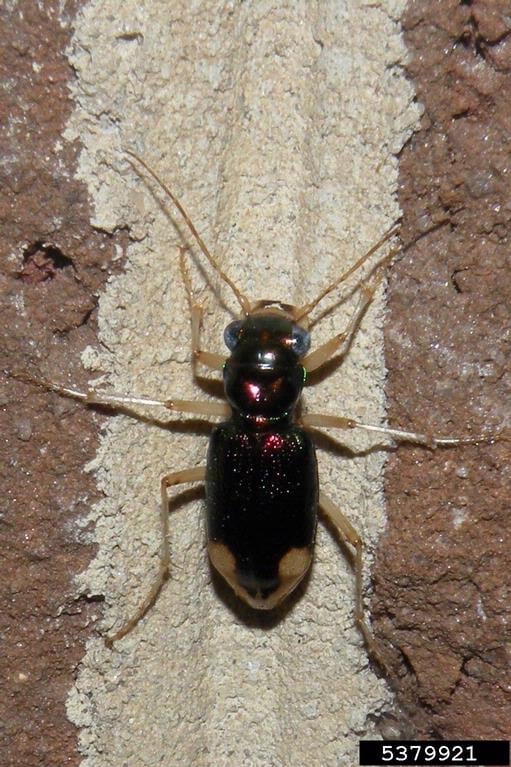
Habitat: found primarily on the soil or leaf litter.
Lady beetles
Feed on: aphids, lepidopteran eggs and larvae, spider mites, cotton nectar, pollen

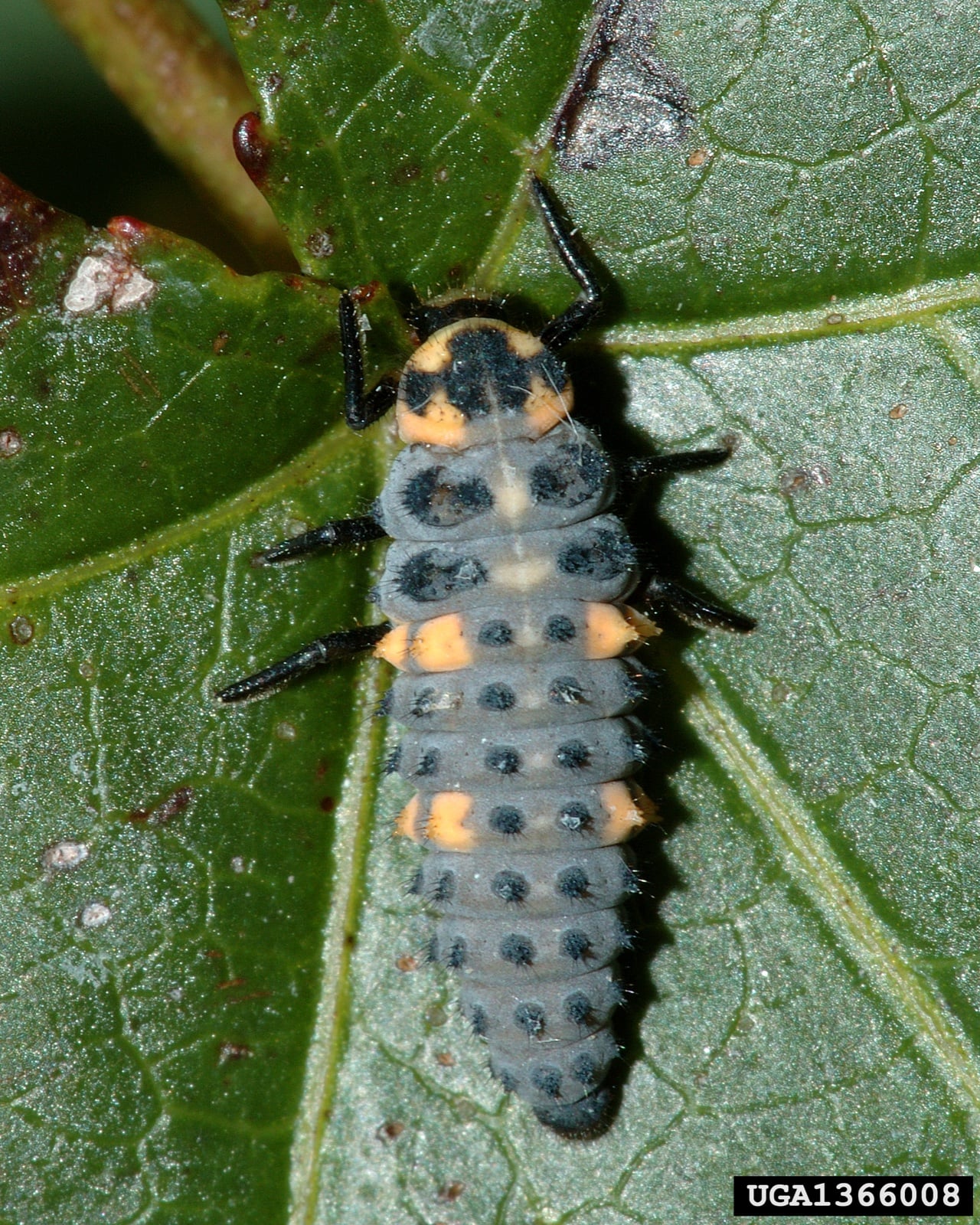

Habitat: found in the cotton canopy or among cotton flowers.
Rove beetles
Feed on: aphids, spiders, other small insects
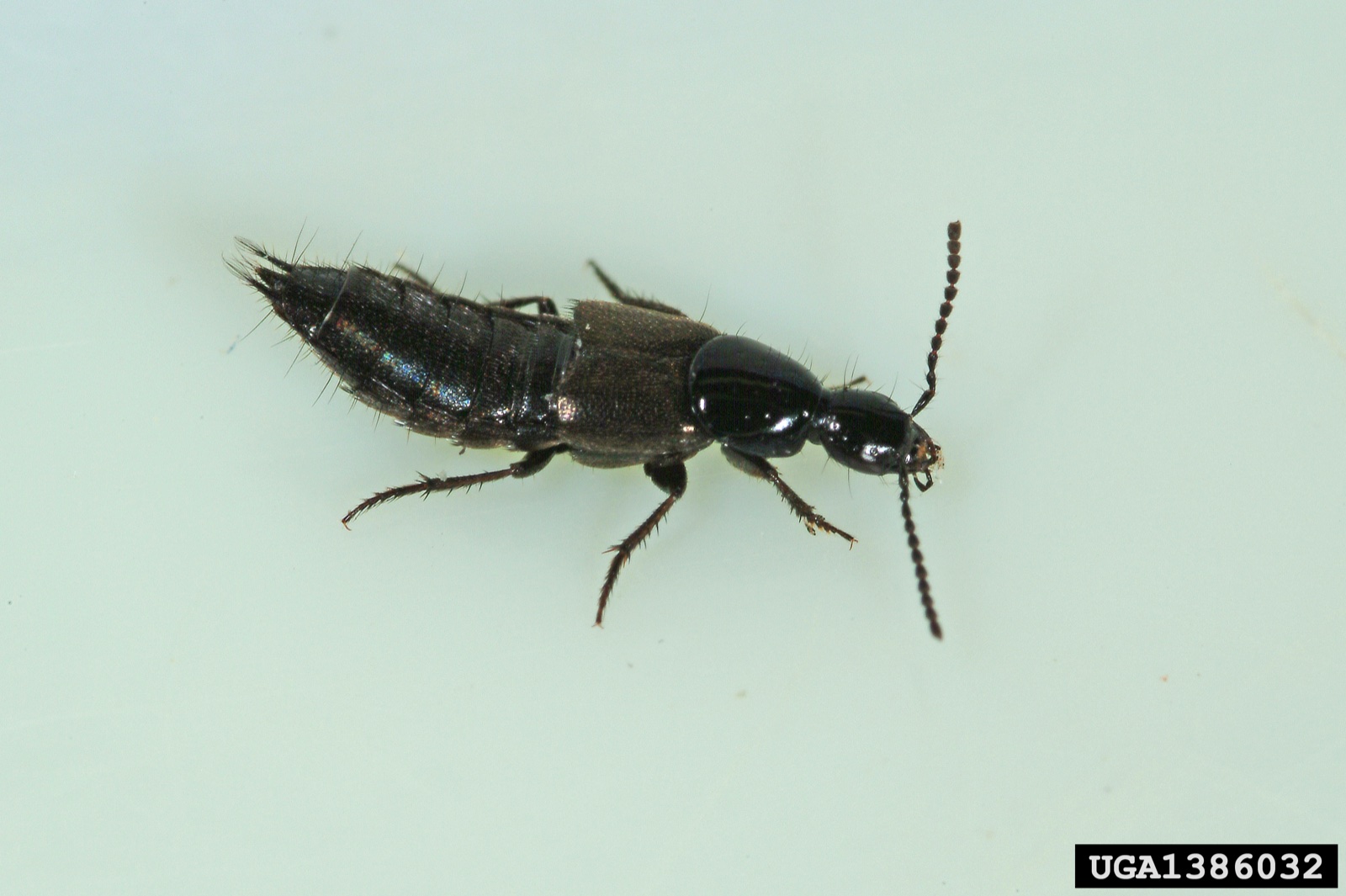
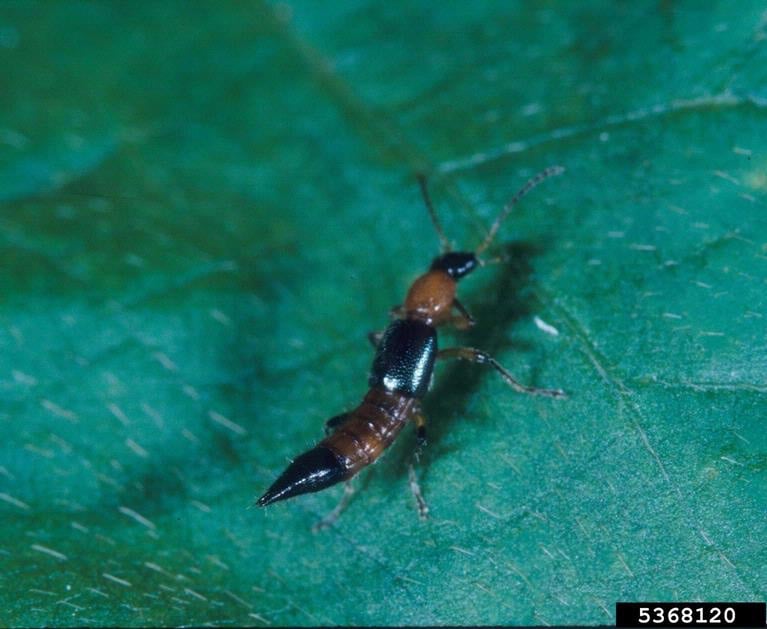
Habitat: found in all or almost all habitat types.
Spiders
Araneae
Ground hunters
Wolf spider
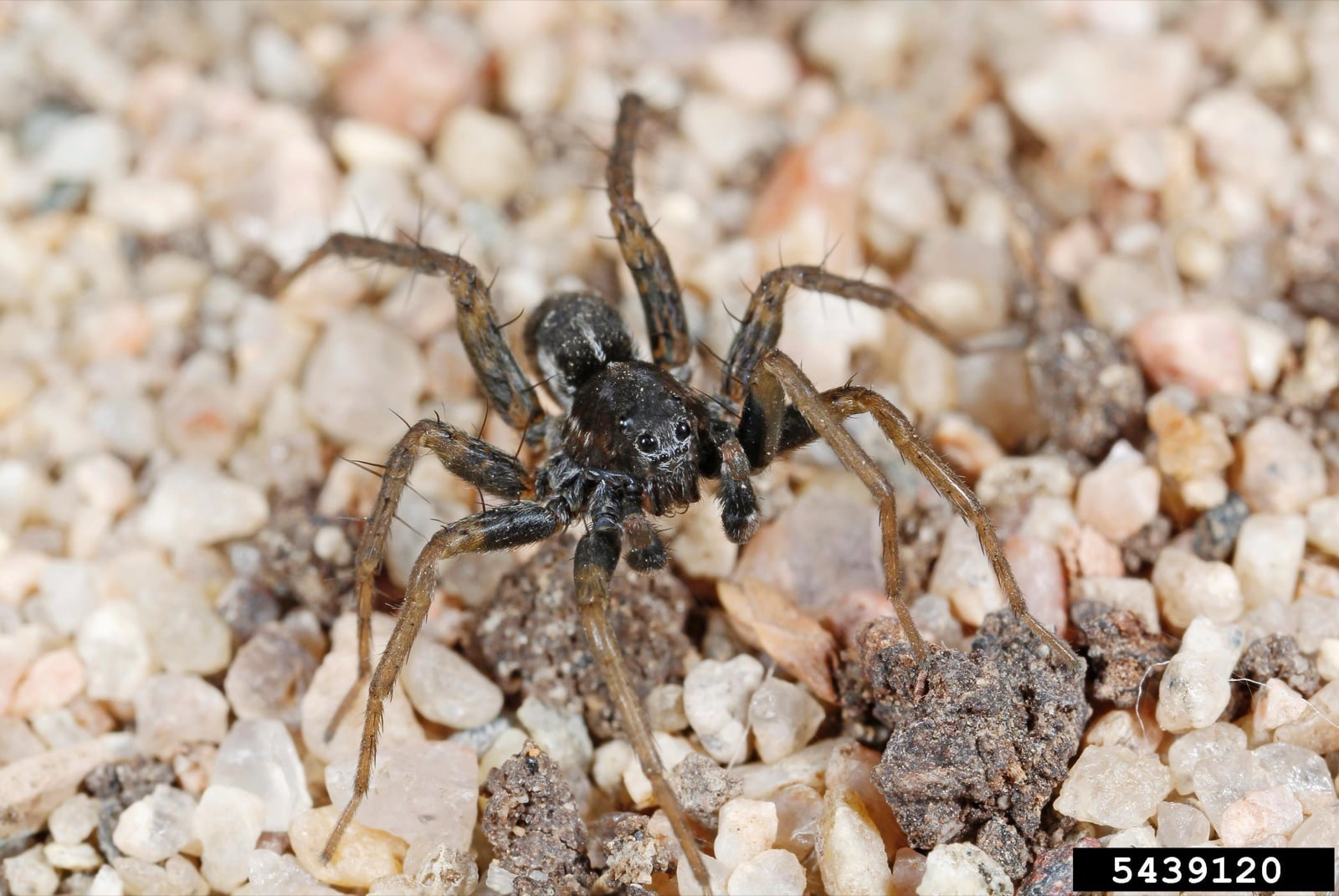
Canopy web builders
Cobweb weaver
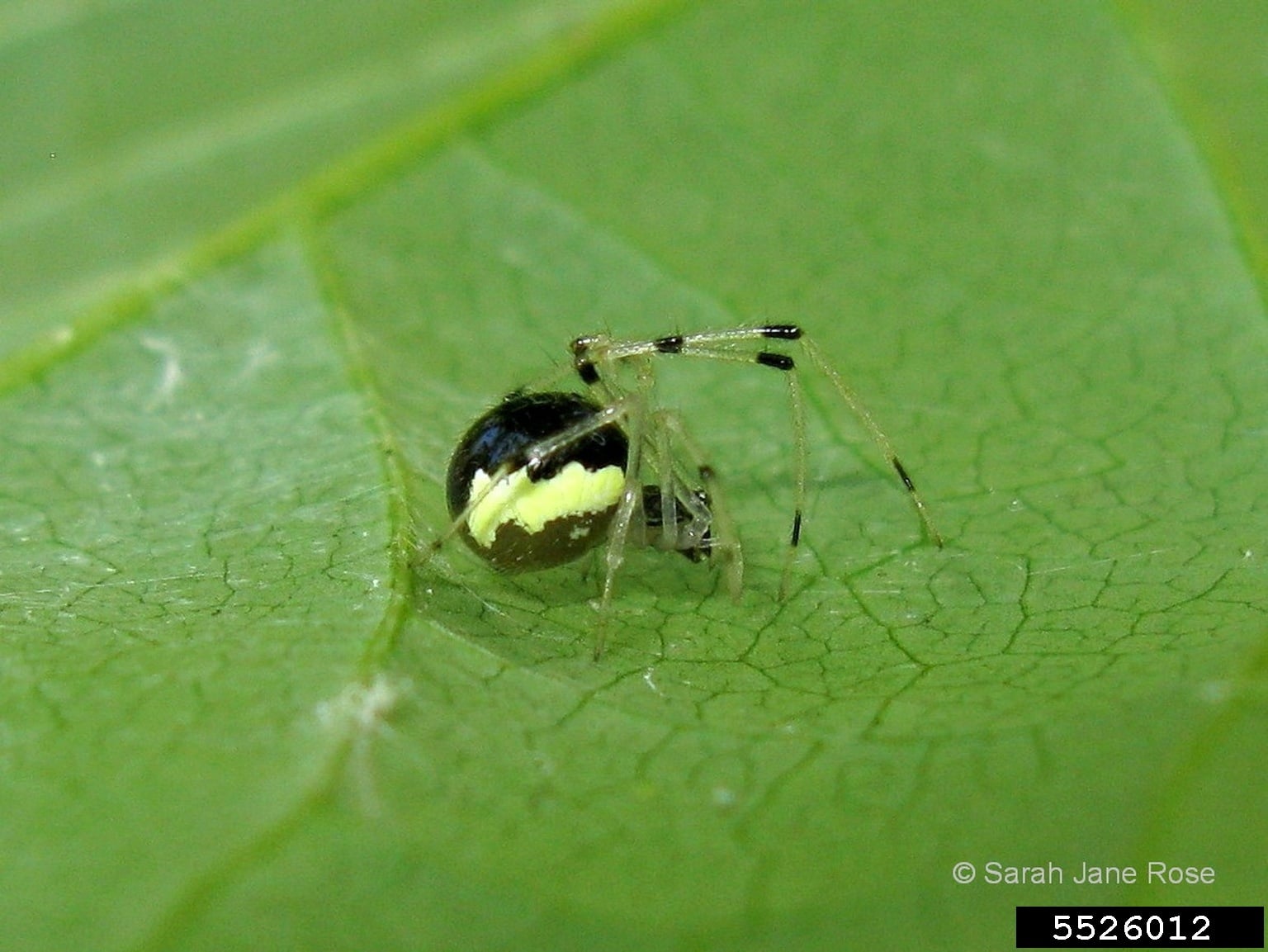
Ambushers/stalkers
Lynx spider
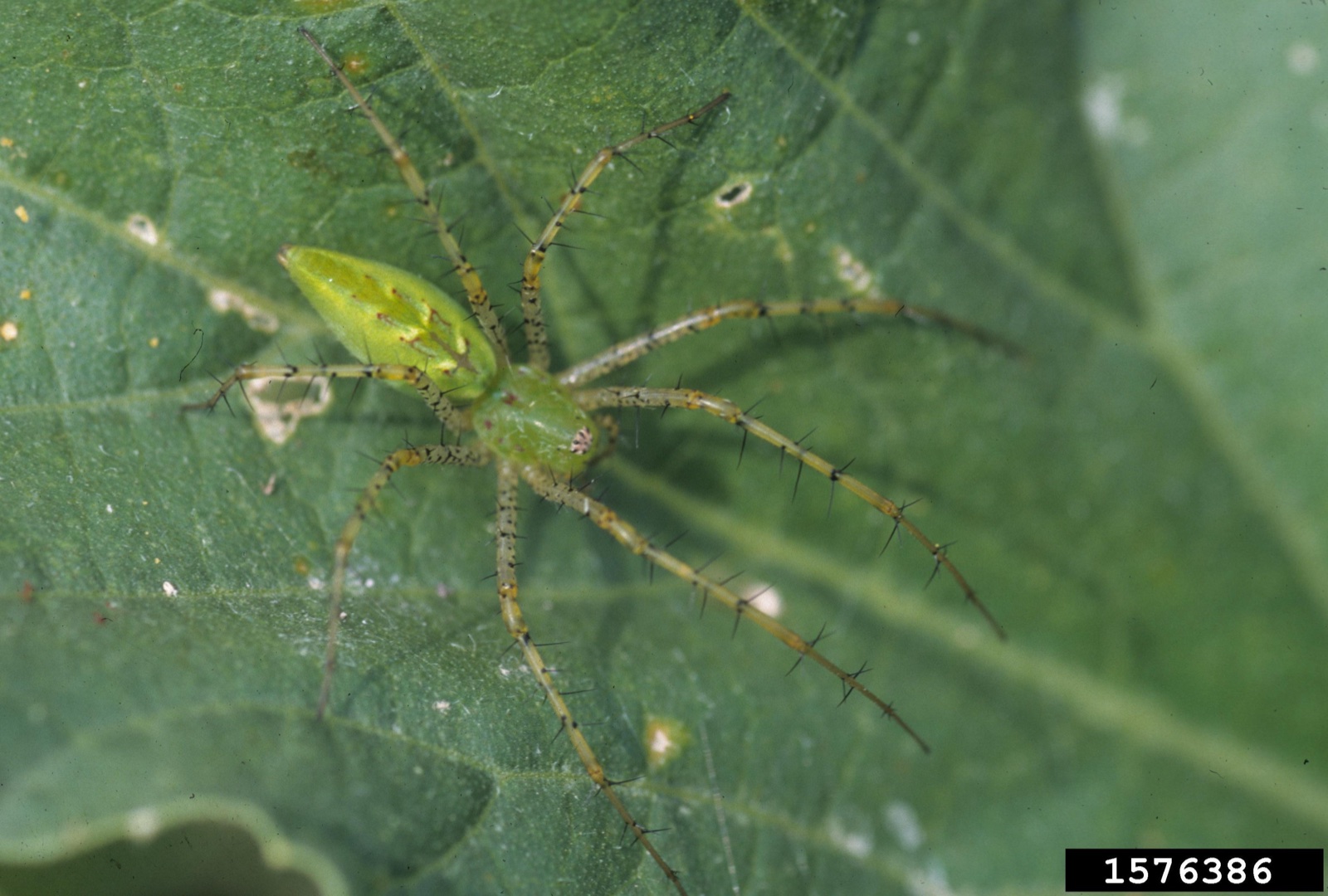
Feed on: lepidopteran eggs and larvae, whiteflies, plant bugs and hoppers, aphids, thrips
These spiders are just a few examples of this diverse group of predators found in cotton.
Habitat: found in grassy field margins or cover crop residue; found primarily on the soil or leaf litter; found in the cotton canopy or among cotton flowers.
True Bugs
Hemiptera
Big-eyed bugs
Feed on: lepidopteran eggs and larvae, aphids, mites, whiteflies, plant bugs, cotton nectar, plant sap

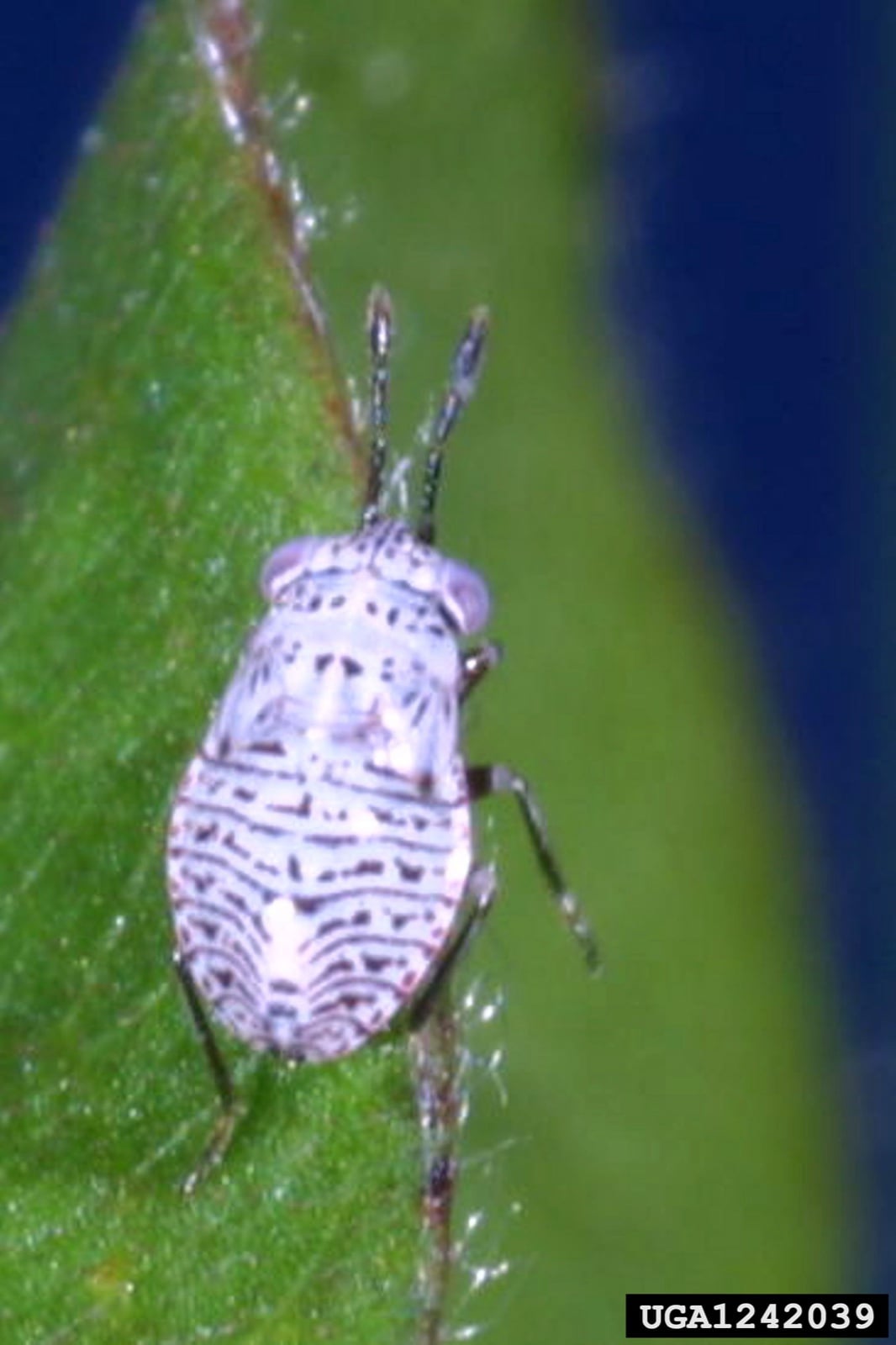
Habitat: found in grassy field margins or cover crop residue; found in the cotton canopy or among cotton flowers.
Assassin bugs
Feed on: lepidopteran eggs and larvae, aphids, thrips
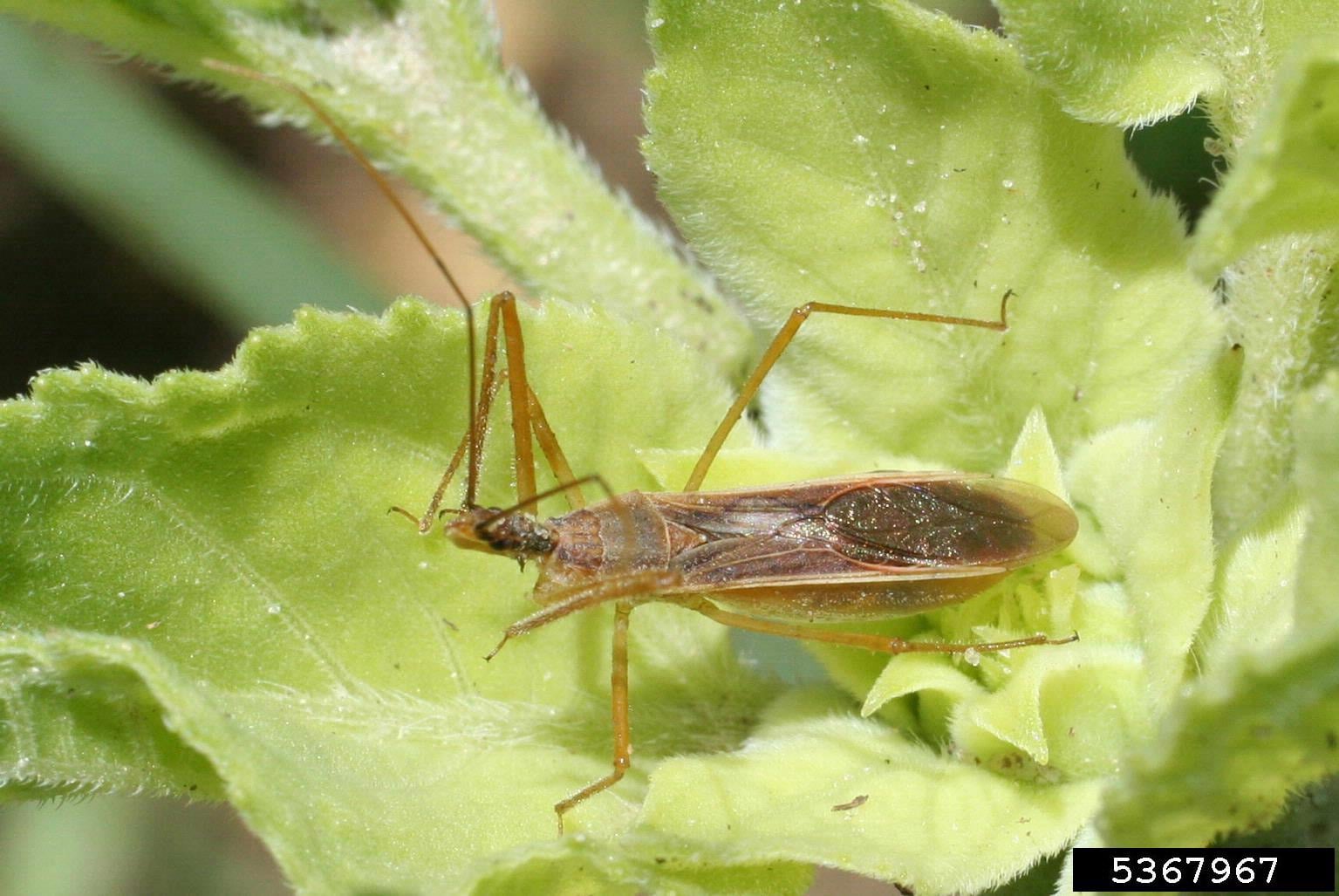
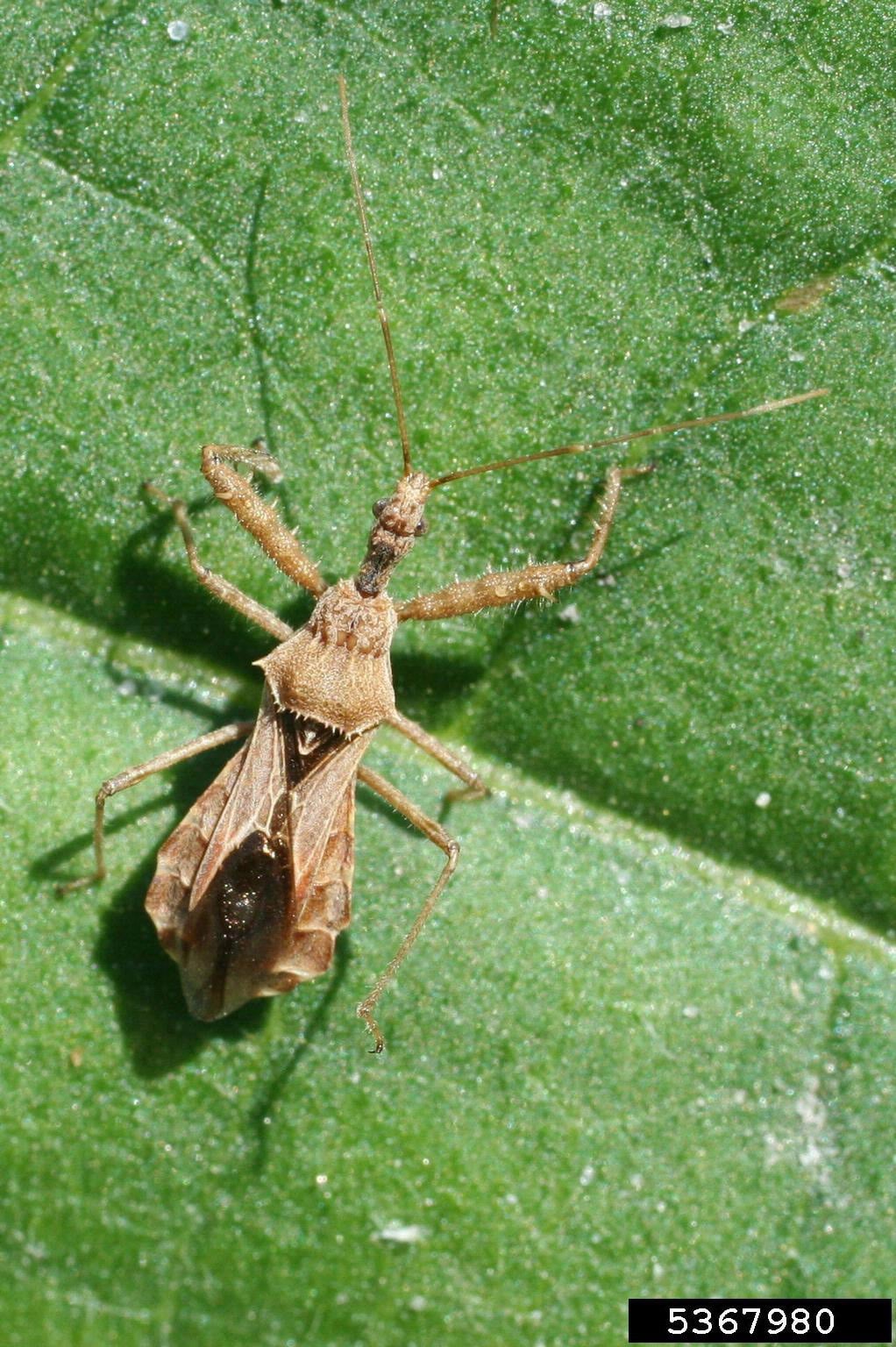
Habitat: found in grassy field margins or cover crop residue; found in the cotton canopy or among cotton flowers.
Damsel bugs
Feed on: lepidopteran eggs and larvae, aphids, mites, whiteflies, plant bugs, fleahoppers, beneficials

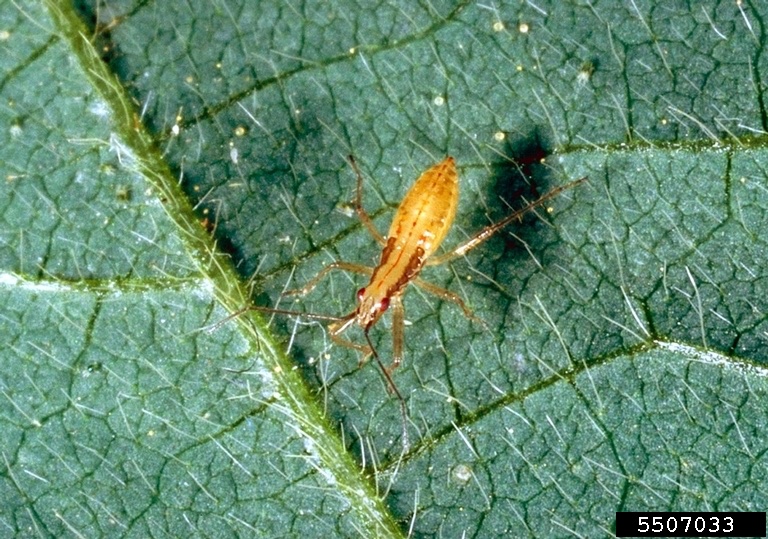
Habitat: found in grassy field margins or cover crop residue; found in the cotton canopy or among cotton flowers.
Minute pirate bugs
Feed on: lepidopteran eggs and larvae, aphids, mites, whiteflies, thrips, pollen

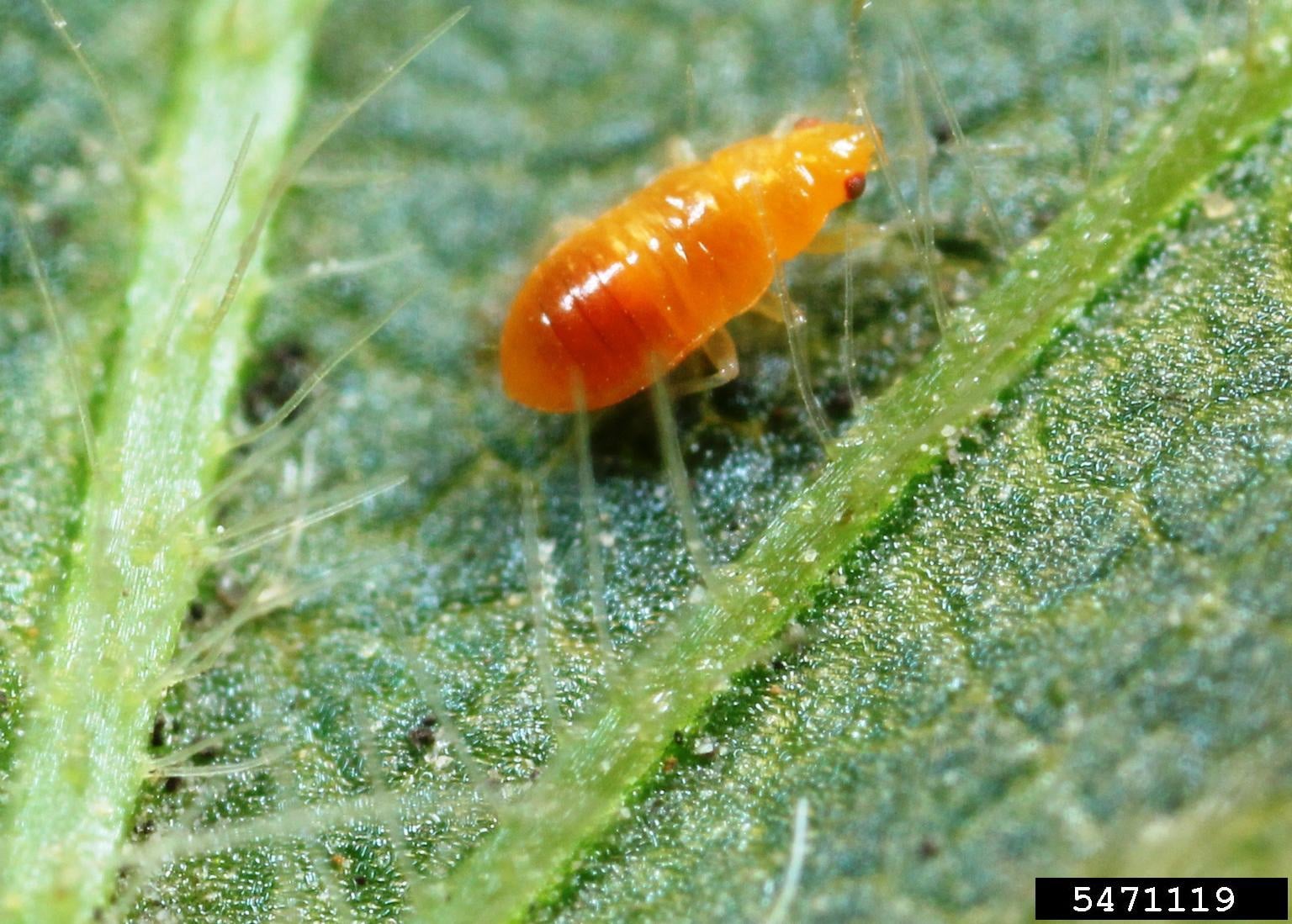
Habitat: found in the cotton canopy or among cotton flowers.
Spined soldier bugs
Feed on: caterpillars, beetle larvae

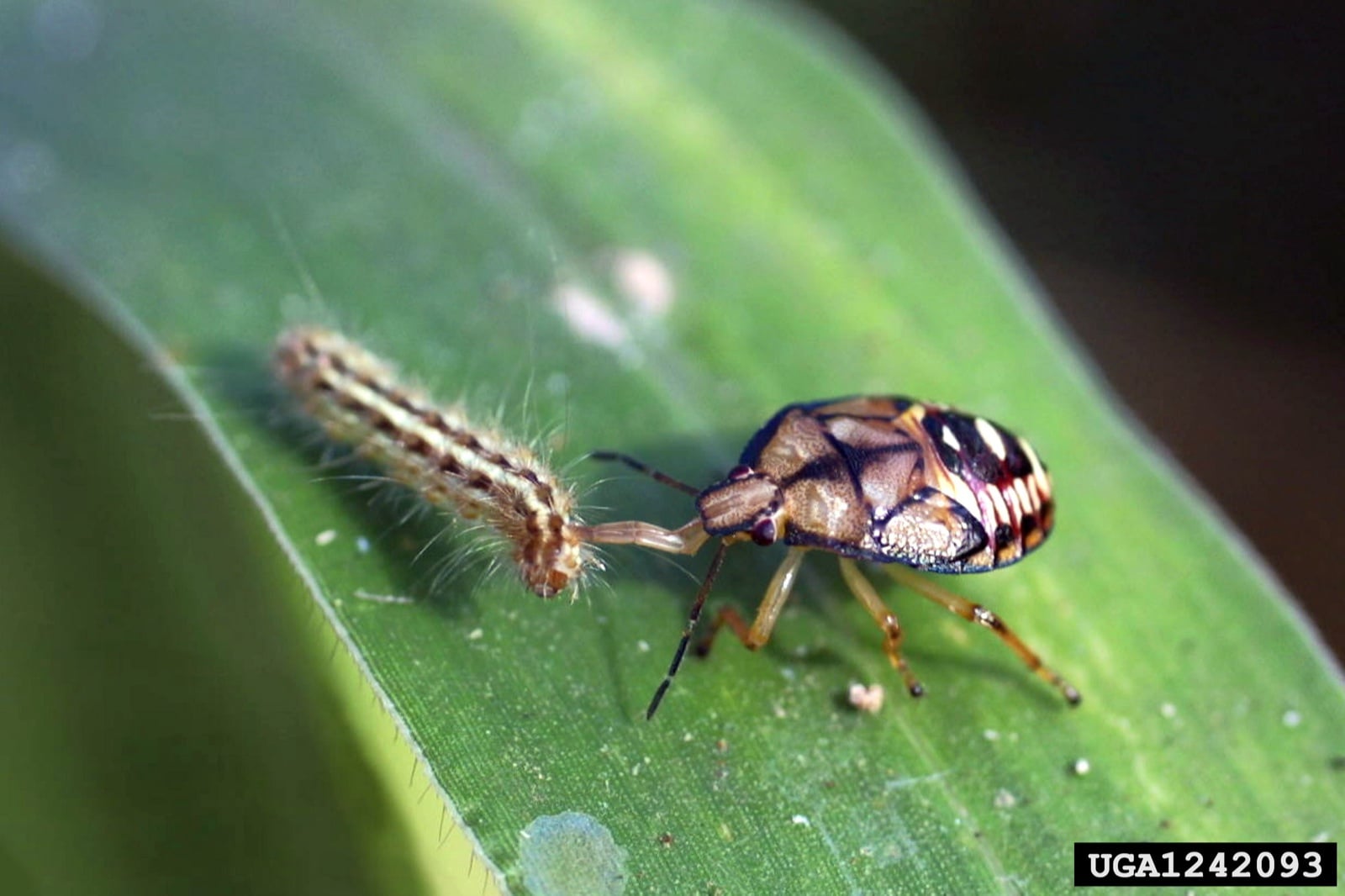
Habitat: found in the cotton canopy or among cotton flowers.
Acknowledgments
Special thanks to:
Georgia Cotton Commission and Cotton Incorporated
Field Guide to Predators, Parasites and Pathogens Attacking Insect and Mite Pests of Cotton by Allen Knutson and John Ruberson
“Insect Management in Cotton: An Initiative of the Australian Cotton Cooperative Research Centre”
Photos:
Aphids (4387054), Mississippi State University, Bugwood.org
Assassin bug (5367967, 5367980), big-eyed bug nymph (1242039), big-eyed bug (5367925), brown stinkbug (1242026), fire ant close-up (5367982), spined soldier bug nymph (1242093), and tarnished plant bug (5367937), Russ Ottens, University of Georgia, Bugwood.org
Brown lacewing (5351009) and lacewing eggs (5490113), David Cappaert, Bugwood.org
Cobweb weaver (5526012), Sarah Jane Rose, The Ohio State University, Bugwood.org
Corn earworm (1235128), Clemson University – USDA Cooperative Extension Slide Series, Bugwood.org
Damsel bug nymph (5507033) and damsel bug (5507032), Phil Sloderbeck, Kansas State University, Bugwood.org
Fire ant group (2666066) and minute pirate bug (2666062), John Ruberson, Kansas State University, Bugwood.org
Ground beetle (5210002) and lacewing larvae (1475047), Whitney Cranshaw, Colorado State University, Bugwood.org
Lady beetle larvae (1366008), Susan Ellis, Bugwood.org
Lady beetle (5526787), Jim Jasinski, Ohio State University Extension, Bugwood.org
Long-horned grasshopper (1225071), Edward L. Manigault, Clemson University Donated Collection, Bugwood.org
Long-horned grasshopper close-up (2154085), rove beetle (1386032), and wolf spider (5439120), Joseph Berger, Bugwood.org
Lynx spider (1576386), Gerald Holmes, California Polytechnic State University at San Luis Obispo, Bugwood.org
Minute pirate bug nymph (5471119), Adam Sisson, Iowa State University, Bugwood.org
Rove beetle (5368120), Merle Shepard, Gerald R. Carner, and P.A.C Ooi, Insects and their Natural Enemies Associated with Vegetables and Soybean in Southeast Asia, Bugwood.org
Spined soldier bug (1472044), Frank French, Georgia Southern University, Bugwood.org
Southern green stink bug (4387037), Phillip Roberts, University of Georgia, Bugwood.org
Tiger beetle (5379921), Jessica Louque, Smithers Viscient, Bugwood.org
Thrips and pupating convergent lady beetle, Schmidt lab
Whiteflies (1599599), John C. French Sr., Retired, Auburn University, University of Georgia, Clemson University, and University of Missouri, Bugwood.org
Drawings:
Spined soldier bug scale drawing by Clercq (2004), with permission from Springer
Cover art and scale drawings for minute pirate bug, ground beetle, and big-eyed bug by Megan McCoy