Crop and Soil Sciences Resources
-

Cation exchange capacity (CEC) is a measure of the total negative charges within the soil that adsorb plant nutrient cations such as calcium (Ca2+), magnesium (Mg2+) and potassium (K+). As such, the CEC is a property of a soil that describes its capacity to supply nutrient cations to the soil solution for plant uptake.
|
-

Variety selection is one of the biggest decisions and investments cotton growers make each year. In 2010, the UGA Extension Cotton Agronomists implemented the UGA On-Farm Cotton Variety Evaluation Program to assist in this decision. Varieties are evaluated across a wide range of environments in the cotton producing regions of Georgia in cooperation with county agents and industry partners. The implementation of this program has made a tremendous impact on variety selection from year to year, and it will continue to have the same impact in the future.
|
-
C 1003
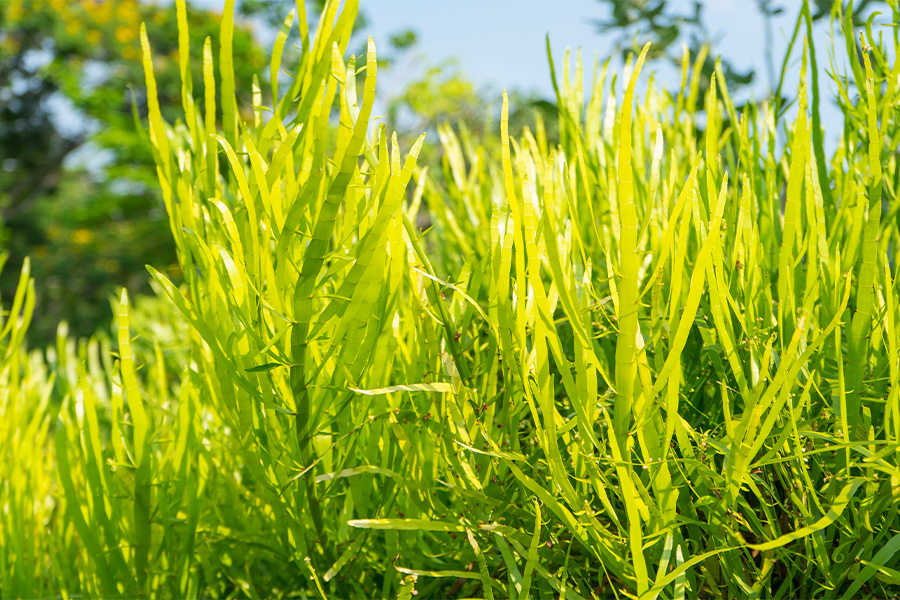
Centipedegrass Decline
Centipedegrass is ideal for the homeowner who wants a lawn that needs little care. It can be established by either seed or vegetative parts and does not require much fertilizer. Compared to other lawn grasses, it is moderately resistant to insects and diseases. Although centipedegrass is a relatively low maintenance grass, proper management is still required.
|
-

Spring dead spot (SDS) is a persistent and destructive disease of bermudagrass (Cynodon sp.) in Georgia. The disease can be problematic on lawns, landscapes, golf courses (bermudagrass greens, tees and fairways) and sports fields. The disease is particularly prevalent and damaging in north Georgia, especially in the Piedmont region. However, SDS can be observed throughout the state after harsh winters and in areas where bermudagrass has been exposed to freezing temperatures for extended periods of time. The disease has also been observed in zoysiagrass, although less frequently. This publication explains how to identify and control Spring Dead Spot in lawns in Georgia.
|
-

Some of the most widely adopted precision agriculture technologies include guidance systems that utilize a Global Positioning System (GPS). Although these technologies are most commonly utilized in row-crop agricultural systems, they also have many potential benefits in forage-based production systems. With so many different options to choose from, it can be a daunting task to determine which technologies are the best fit for a specific farming application and budget. When coupled with a differential GPS system (which are available in various levels of correction accuracy), the accuracy of these guidance systems can be greatly improved. The main goal of this bulletin is to cover the currently available GPS guidance options for forage production systems.
|
-

Properly maintaining, calibrating, and adjusting a seed drill before planting is an important part of ensuring the successful establishment of forage or cover crops. Seed may be placed at a depth that is too deep or too shallow if the equipment is not properly prepared and set. Too much or too little seed may be planted if the equipment is not properly calibrated. These planting mistakes may result in a poor stand, greater weed competition, lower yields, and/or reductions in forage quality. Conversely, planting more seed than required can unnecessarily increase establishment costs and can sometimes result in reduced yields. After investing in the seed and committing the time to plant a field, taking a few extra steps to ensure that investment bears fruit is well worth maintaining, calibrating, and adjusting the drill.
|
-

Boom sprayer calibration using conventional methods (catching flow for certain time or distance) for large (60-90 ft; 54-72 nozzles) boom sprayers can be a time-consuming process. This short publication outlines steps to take to verify nozzle output and calibrate a boom sprayer, including tables with useful information on flow rates at multiple speeds for two common nozzle spacings and an equation for calculating rates if needed.
|
-
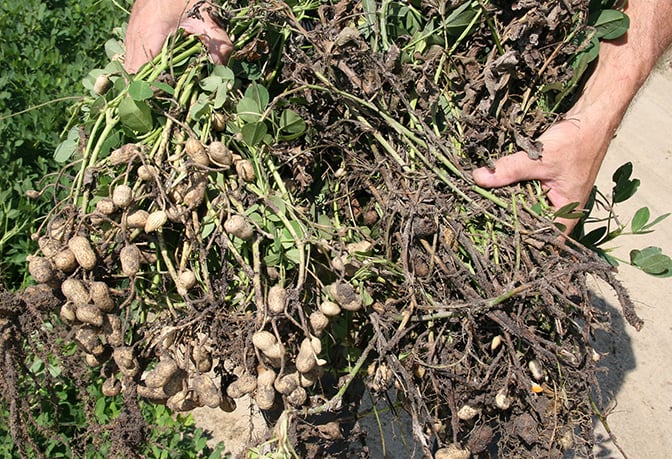
The peanut production guide includes varieties, agronomic practices, pest management, irrigation management, equipment maintenance, maturity, and harvest practices.
|
-

AP 124-1
2021 Georgia Cotton Production Guide
The 2021 cotton production guide provides an in-depth look at cotton production in Georgia and the southeastern United States. Issues discussed include economic outlook, fertility, weed management, insect management, disease and nematode management, irrigation decisions, precision ag technology, and general agronomics of the cotton crop (varieties, PGR applications, defoliation, etc.).
|