Departments and Units Resources
-

The diamondback moth is a common pest of crops including cabbage, collards, turnip greens, mustard greens, broccoli, cauliflower and other leafy greens.
This insect has a long history of becoming resistant to insecticides beginning with DDT in 1953. Since then, DBM has become resistant to each new class of insecticide arriving to the market whenever those insecticides were used intensively and repeatedly to control a DBM population.
Prevention is critical. To delay the onset of resistance follow the practices listed in this circular. Even if resistance is detected in an area, these tips can inhibit its spread and preserve insecticide effectiveness.
|
-

Water-wise landscapes not only save water, they save time by requiring less routine care than most traditional landscapes. This publication offers guidelines to help you achieve these goals and conserve water when managing your landscape.
|
-

Planting ornamental plants correctly increases their survivability and performance in the landscape, and it helps them develop a vigorous, healthy root system that increases their drought tolerance during periods of limited rainfall. This pubication provides research-based guidelines for proper planting.
|
-

The orange felt (also known as orange cane blotch) disease of blackberry is prevalent in the south. Where ideal environmental conditions occur, this disease may girdle canes or exacerbate other cane diseases, causing subsequent decline and death.
|
-

Agente causal, céspedes susceptibles,condiciones que promueven la enfermedad, síntomas y control de mancha parda, mancha dólar, quemazón por Pythium, mancha foliar por Helminthosporium, marchitamiento por Curvularia, mancha foliar gris, anillo de hada, enfermedad toma-todo o pudrición radicular por Gaeumannomyces, roya, hongos gelatinosos y nematodos.
|
-

A landscape designed, installed and managed according to Xeriscaping’s seven steps uses up to 50% less water than a traditional landscape. And, a well-designed water-wise is just as attractive as a traditional landscape.
|
-

Bermudagrass leafspot is a disease that decreases yields, nutritive value and palatability. This publication discusses leafspot diagnosis and management in bermudagrass.
|
-

This publication outlines the information needed to develop a Comprehensive Nutrient Management Plan (CNMP) for dry poultry litter operations.
|
-
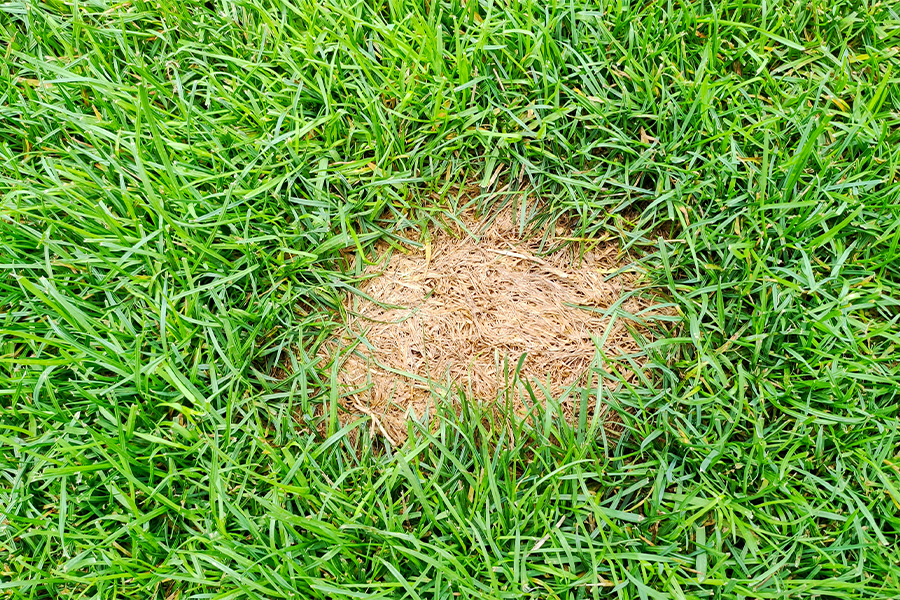
A handy reference for the causal agents, susceptible turfgrasses, conditions promoting disease, symptoms, and control of: brown patch, dollar spot, Pythium, Helminthosporium leaf spot, fading out, gray leaf spot, fairy ring, take-all root rot, rust, slime mold, and nematodes.
|