General Agriculture Resources
-
Additional author: Mengmeng Gu, Professor, Colorado State University Department of Horticulture and Landscape Architecture.
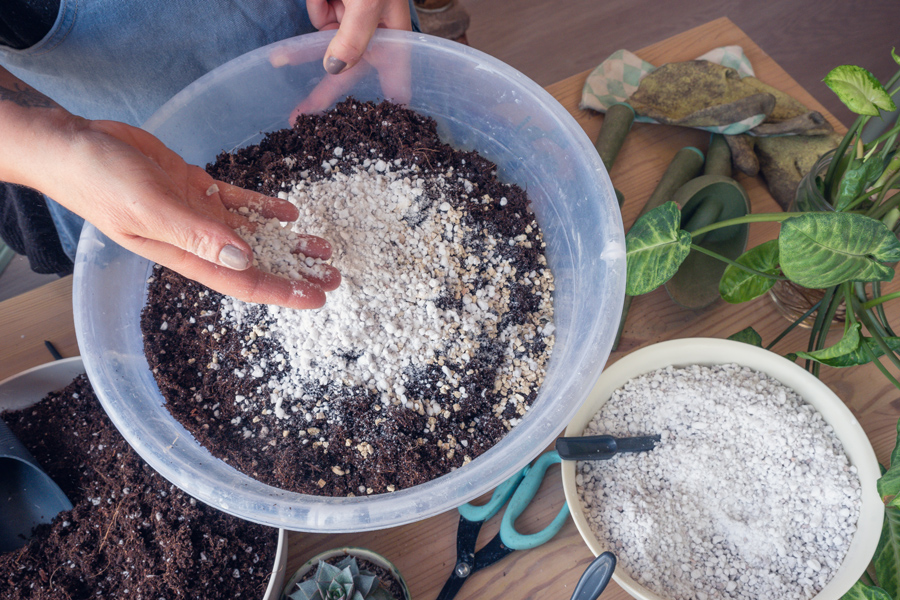
Container substrates must fulfill several functions for plant growth: create a suitable environment for root growth, physically support them, hold nutrients and water, and enable gas exchange between the roots and the atmosphere. Suitable physical and chemical container substrates’ properties facilitate these functions.
The physical properties of container substrates include air space (%), container capacity (%), total porosity (%), bulk density (g/cm3), and water holding capacity. Air space measures the proportion of air-filled large pores (macrospores) after drainage. Air space influences gas exchange and water holding capacity. Container capacity measures the maximum percentage volume of water a substrate can hold after drainage. Total porosity equals container capacity plus air space, and it measures the substrate volume that holds water and air. Bulk density measures how much one unit of the substrate weighs. Water holding capacity measures the container substrate’s ability to physically hold water against gravity; its maximum value equals container capacity.
Biochar can be derived from various feedstocks, processed under different pyrolysis temperatures, and subjected to various pre- or posttreatments, which can lead to dissimilar physical properties that affect the container substrate’s physical properties. Adding biochar may affect air space, container capacity, total porosity, and bulk density with variable effects. For instance, substituting peat moss with 50% green waste biochar (by volume) did not affect total porosity and container capacity, but significantly decreased air space, which was still in the optimal range (15%–30%) for container substrates. Similarly, a peat-moss-based substrate’s total porosity decreased with the increased addition of pelleted biochar. However, adding deinking sludge biochar increased the total porosity and air space of the container substrate.|
-
Additional author: Mengmeng Gu, Professor, Colorado State University Department of Horticulture and Landscape Architecture.
Biochar has been proposed to be beneficial to the environment and plants. However, many people do not know what biochar is, what can biochar do, or how biochar can be used. In Part 1 of this publication, we provide introductory information on biochar used to partially replace peat moss as a container substrate component.
The International Biochar Initiative defines biochar as a solid material obtained from the carbonization of biomass, which may be added to soil to improve soil functions and reduce emissions from biomass that would otherwise naturally degrade to a greenhouse gas. Other researchers define biochar as a multifunctional material related to carbon sequestration, greenhouse gas reduction, soil contaminant immobilization, soil fertilization, and water filtration.
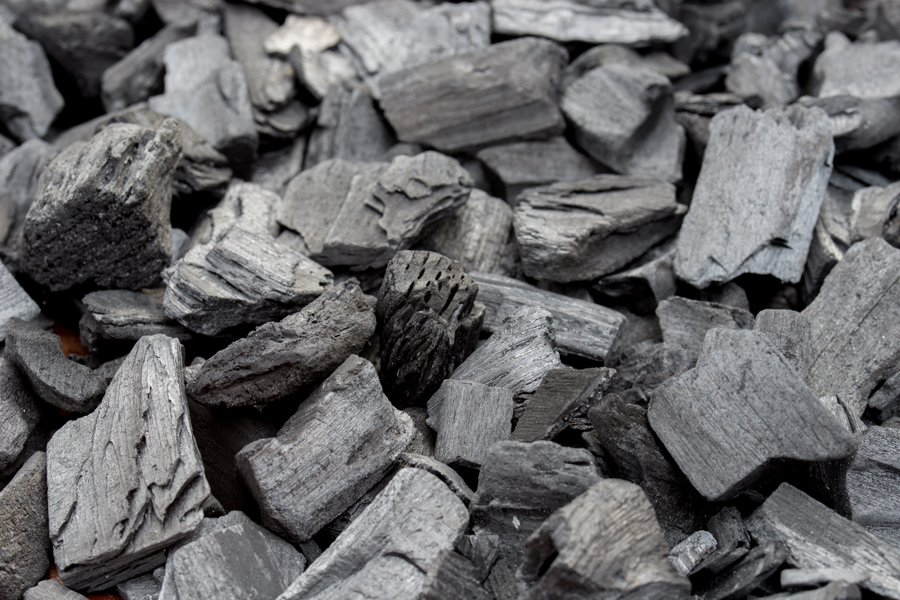
To simplify things, we’ll adopt the most popular definition: biochar is a black, carbon-enriched solid with a porous structure, mainly used in agriculture and environmental industries. Biochar is normally made from the thermal decomposition of biomass materials at high temperatures (570–2200 °F) in a low-oxygen or no-oxygen environment (this process is also known as pyrolysis). Biochar can be produced from pyrolysis of different materials such as pine bark, sugarcane bagasse, rice hull, and straw.|
-

AP 129-2
2024 Ag Snapshots
Ag Snapshots is a brief focus on Georgia’s agricultural industry and are based on the Georgia Farm Gate Value Report from the previous year with helpful infographics and maps. Years prior to 2023 can be accessed on the Agribusiness and Economic Development publications site: https://caed.uga.edu/publications/georgia-agricultural-statistics.html
|
-

AP 130-2-01
2024 Overall U.S. and Georgia Economic Outlook
Each year, UGA’s agricultural economists develop a comprehensive overview to help various sectors of the agriculture industry navigate the year ahead. As Georgia’s land-grant university, the University of Georgia conducts cutting-edge research on critical and emerging issues that are important to the agriculture industry. From this research, UGA provides the best information and education available to producers and constituents to equip them with knowledge and decision-making tools for their businesses. Forecast by Jeffrey M. Humphreys, UGA, Director of the Selig Center for Economic Growth. The overall U.S. outlook projections include: 1. The 2024 economic forecast for Georgia calls for an economic slowdown but not a recession. We estimate the probability of recession at 33% for Georgia compared to just under 50% for the United States. 2. Georgia’s lower risk of recession reflects recent economic development success and stronger demographics. 3. The resilient labor market and the strong financial position of households are two reasons why we expect continued economic expansion. 4. Inflation will continue to ease but will not fall to levels experienced before the pandemic. 5. The main downside risks to growth are missteps by the Federal Reserve, a financial crisis, and an energy-price shock. Each of these risks alone could trigger a recession.
|
-

AP 130-2-02
2024 Georgia Agriculture Outlook
1. Food and commodity prices are expected to return to prepandemic levels.
2. Coupled with increasing costs, the nation’s farm income is expected to decline by 17% between 2022 and 2023.
3. Georgia’s 2023 net farm income is likely to return to the 10-year average of about $3 billion.
4. Potential upsides for Georgia are the possibility of higher demand for poultry, cotton, and peanuts from domestic and overseas markets.
5. Risks to this forecast are higher input costs, geopolitical risks, cheaper imports of some commodities, and a global economic slowdown.|
-

AP 130-2-03
2024 Inputs and Production Expenditures Forecast
1. Farm input expenses continued to increase in 2023; when adjusted for inflation, they remained below 2014’s record highs.
2. Notable changes in 2023 included reductions in farm interest and fertilizer expenses.
3. Total production expenses are forecast to decline slightly with the largest changes in interest, fertilizer, and pesticide categories.|
-

AP 130-2-05
Peanut 2024 Outlook
1. Peanut yields were down in 2023, but demand continues to remain strong and stocks remain steady. Prices are expected to hold strong.
2. The increased cost of production in recent years has remained elevated, with the Farm Bill safety net providing no support.
3. Contracting, controlling costs, and careful evaluation of crop insurance are primary risk-management strategies for producers.
Forecast by Wendiam Sawadgo, Auburn University and Alabama Cooperative Extension System, Assistant Professor and Extension Economist; and Adam N. Rabinowitz, Auburn University and Alabama Cooperative Extension System, Associate Professor and Extension Economist.|
-

AP 130-2-04
2024 Cotton Outlook
1. U.S. cotton acreage and production are likely to decline in 2024 because of lower relative price expectations with competing crops.
2. The cotton production profit margin is likely to be lower in 2024 with high input costs and low cotton prices.|
-

AP 130-2-10
2024 Fruits and Tree Nuts Outlook
1. High prices for peach producers helped a strong producer price index in the 2022–2023 crop season. The PPI is expected to stay strong in 2024.
2. Favorable prices came from production shortages, caused by bad weather in Q1 of 2023 that devasted the Georgia and South Carolina peach industries.
3. Citrus experienced the lowest production recorded in 50 years, and growers now prefer fresh market citrus instead of processed.
4. For blueberries, the newly signed memorandum to export 800 tons to the EU market will help maintain strong prices in the 2024 crop season.|