General Agriculture Resources
-
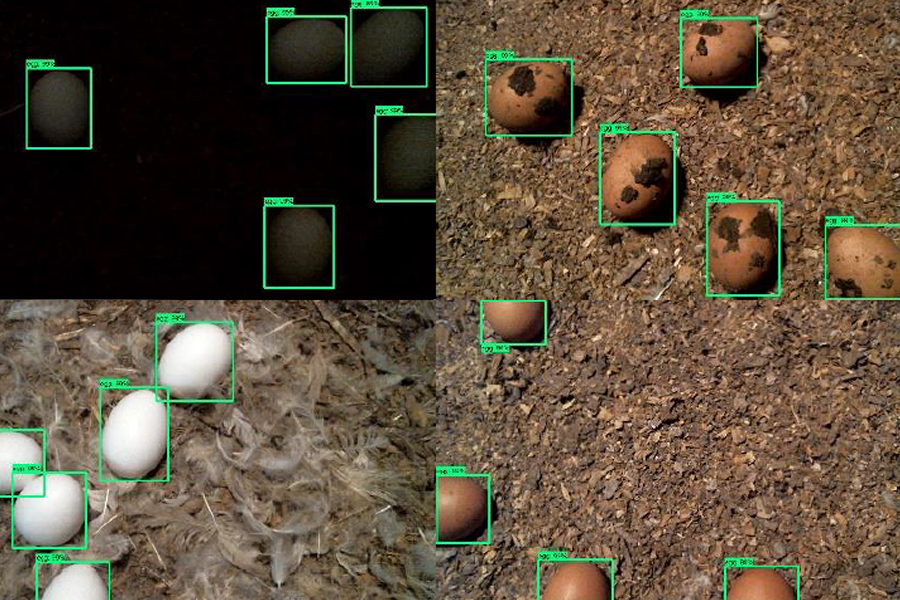
Researchers have investigated the issue of mislaid eggs in cage-free housing and the possibility of reducing the incidence of floor eggs through management of lighting, litter and bedding, and nesting space, and the use of robotics. Methods with potential for managing mislaid or floor eggs in cage-free layer houses can be summarized as follows: 1. House-lighting time management: In cage-free aviary systems, lighting management is used to help control floor-access time. According to observations in commercial cage-free layer houses, most floor eggs are laid at first light. Delaying floor access time in the morning may help reduce floor eggs by keeping the birds near the nests for the first few hours of light. 2. Light intensity and distribution: Make sure to provide sufficient light intensity evenly across the litter floor. Increasing the light intensity under the aviary system has been tested to be effective at reducing over 80% of floor eggs. 3. Bedding depth: Scratch areas covered with litter help reduce the risk of feather pecking and cannibalism, and minimize flightiness, for hens living in large flocks. However, deep litter attracts birds to lay eggs on the litter itself. According to research conducted at Iowa State University, reducing litter depth discourages hens from laying eggs on floor of commercial cage-free houses. 4. Nesting space: Nesting behavior is a key priority and important welfare indicator for egg production, so providing hens with safe and secure locations to lay eggs is critical. A good nesting design in cage-free systems facilitates egg collection, minimizes the risk of cloacal cannibalism, and assists food safety and sanitation.
|
-
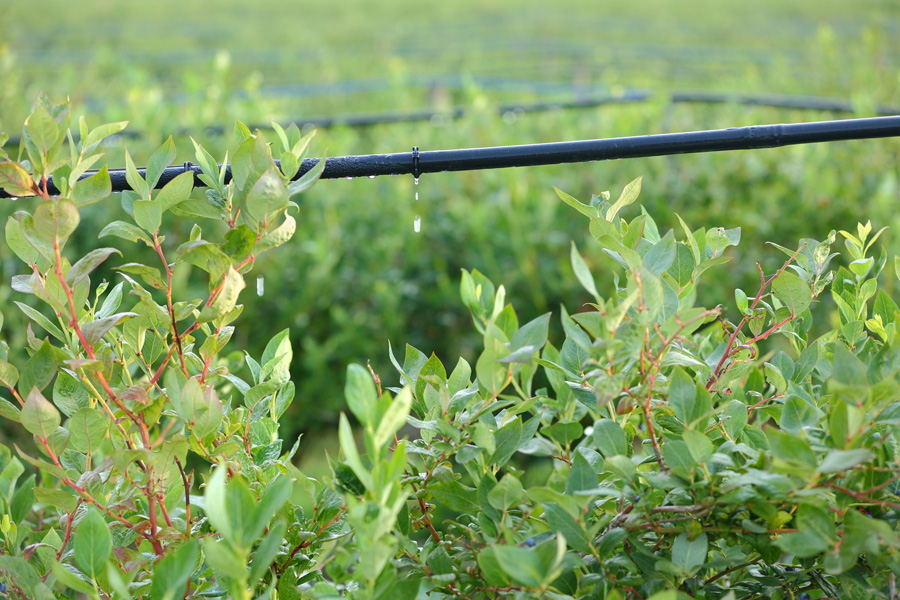
This circular is a review of water quality standards, calculations, and recommendations for water that will be used for irrigation of blueberries.
|
-
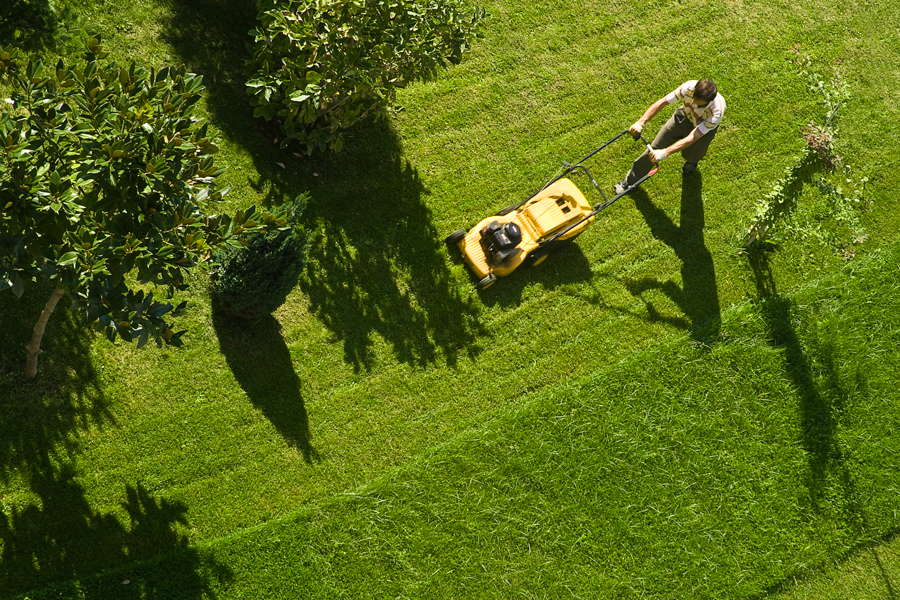
This publication covers routine maintenance and troubleshooting for common motorized equipment (small engine) that is used by small farmers and gardeners. Gardening and landscape equipment can be an expensive investment for both consumers and professionals. However, quality equipment can last a lifetime when cared for properly. Typically, you get what you pay for when it comes to equipment. Higher quality equipment certainly costs more upfront, but usually has fewer problems and will tend to outlast bargain-type tools. With name-brand equipment, parts also tend to be
more readily available. We recommend that you purchase the best equipment you can afford and learn how to take proper care of your equipment to protect your investment. For the garden and landscape, motorized equipment can include everything from a string trimmer to a full-size garden tractor. Most garden equipment is powered by either a two-cycle or four-cycle engine. Two-cycle motors mostly are found on smaller handheld equipment, such as chainsaws, tillers, and trimmers. Four-cycle motors typically are found on larger equipment such as lawnmowers, tillers, and garden tractors, which have separate reservoirs for their gas and engine oil. When properly maintained, both types of motors are quite reliable. Sometimes, very basic issues may keep motors from functioning well. All motors require three basic things to run properly: fuel, fire, and air. If any one or more of these three elements is lacking, the engine will either run poorly or not run at all.|
-

AP 130-1
2023 Georgia Ag Forecast
The entire publication is viewable using the “View PDF” button above. Each year, UGA’s agricultural economists develop a comprehensive overview to help various sectors of the agriculture industry navigate the year ahead. As Georgia’s land-grant university, the University of Georgia conducts cutting-edge research on critical and emerging issues that are important to the agriculture industry. From this research, UGA provides the best information and education available to producers and constituents to equip them with knowledge and decision-making tools for their businesses. The overall U.S. outlook projections include: 1. In 2023, the postpandemic expansion will end, and a mild recession will begin. 2. The 2023 recession will be mild and short. 3. Tight monetary policy because of high inflation is the main reason to expect a recession. Energy price shocks are a second reason to expect a recession. 4. Georgia’s economy will do better than the U.S. economy as a whole. 5. Economic development projects will provide a solid push to Georgia’s economy.
|
-

AP 130-1-01
2023 Overall Georgia and U.S. Economic Outlook
Each year, UGA’s agricultural economists develop a comprehensive overview to help various sectors of the agriculture industry navigate the year ahead. As Georgia’s land-grant university, the University of Georgia conducts cutting-edge research on critical and emerging issues that are important to the agriculture industry. From this research, UGA provides the best information and education available to producers and constituents to equip them with knowledge and decision-making tools for their businesses. The overall U.S. outlook projections include: 1. In 2023, the postpandemic expansion will end, and a mild recession will begin. 2. The 2023 recession will be mild and short. 3. Tight monetary policy because of high inflation is the main reason to expect a recession. Energy price shocks are a second reason to expect a recession. 4. Georgia’s economy will do better than the U.S. economy as a whole. 5. Economic development projects will provide a solid push to Georgia’s economy.
|
-

AP 130-1-02
Peanut Situation and 2023 Outlook
1. Planted acres are expected to increase in 2023 in the United States and Georgia, a reversal of the 2-year decline in planted acres.
2. Georgia forward contract prices are expected to be down with an estimated season average price of $475 per ton (ranging $450–$500 per ton).
3. Peanut disappearance of the 2022–2023 crop is projected to remain strong at 3 million tons; this is supported by forecasted increases in food use and exports over last year.
|
-

AP 129-1
2023 Ag Snapshots
Ag Snapshots is a brief focus on Georgia’s agricultural industry and are based on the Georgia Farm Gate Value Report from the previous year with helpful infographics and maps. Years prior to 2023 can be accessed on the Agribusiness and Economic Development publications site: https://caed.uga.edu/publications/georgia-agricultural-statistics.html
|
-

The commercial citrus industry in Georgia has only recently been established, with most groves planted after 2014. Initially,
satsuma mandarins (Citrus unshiu) on trifoliate rootstocks (Poncirus
trifoliata) were planted for their cold-hardiness, seedlessness, and
ease of peeling. Satsuma fruits begin to attain commercial maturity in
early November and usually avoid hard freezes in southern Georgia. As of
2022, approximately 75% of the 3,300 acres of citrus planted in Georgia are
satsumas, but that proportion is trending downward. To strengthen the new
Georgia citrus industry, growers recently have begun to diversify their citrus
varieties. Little is known about how these varieties will perform under Georgia
weather and soil conditions. Therefore, research is necessary to determine what
varieties can best tolerate Georgia’s winter weather and to determine cultural
norms such as maturation time, fruit quality, and insect and disease tolerance. This publication is associated with Annual Publication 127, the annual publication containing each season’s harvest data.|
-

A study was conducted in order to investigate the incorporation of dehumidification into the curing cycle of flue-cured tobacco. Tobacco from the same source and stalk position was cured in a barn coupled to a heat-pump-dehumidifier and, for comparison, in a conventional barn heated with an open flame propane furnace. A procedure for curing with dehumidification was developed. Dehumidification was found to automatically raise temperature and reduce humidity, causing a set in lamina color. Tobacco cured in the heat-pump barn was found to have at least comparable quality with that cured in the conventional barn as determined by standard chemical analyses and USDA grade.
|