UGA College of Agricultural & Environmental Sciences Field Report
  • Stories
    Almanac

    Science in service of humanity and the environment

    Read our annual magazine here

    READ


    Dive into engaging stories that showcase our statewide, national and global impact.

    Check out our written stories here

    LOOK


    Browse curated photo galleries capturing the people, places and programs that bring CAES to life.

    Check out our photo galleries here

    WATCH


    Experience our stories through videos that highlight our people, projects and passions in action.

    Check out our video library here

    LISTEN


    Tune in to “Cultivating Curiosity,” our podcast featuring in-depth conversations with CAES experts.

    Check out our podcast here
  • Expert Resources

    Expert Resources


    From farms and gardens to families and finances, our expert resources empower Georgians with trustworthy, practical science.

    Gardening
    Invasive species
    Food and food safety
    Ants, termites and other pests
    Pollinators
    Livestock
    Emergency preparedness
    Home safety and maintenance
    Health, family and finances
    Nutrition
    Water quality
    Lawn maintenance and landscaping
    Turfgrass
    View all topics

    What is an Expert Resource?


    We publish unbiased, research-backed expert advice to empower Georgians with practical, trustworthy information they can trust.

    These resources are written and reviewed by experts in the UGA College of Agricultural and Environmental Sciences and the UGA College of Family and Consumer Sciences.

    Learn how we produce science you can trust
  • Events
  • Contact
  • Read
  • Look
  • Watch
  • Listen
Subscribe
  • LinkedIn
  • Facebook
  • Instagram
  • Stories
    Almanac

    Science in service of humanity and the environment

    Read our annual magazine here

    READ


    Dive into engaging stories that showcase our statewide, national and global impact.

    Check out our written stories here

    LOOK


    Browse curated photo galleries capturing the people, places and programs that bring CAES to life.

    Check out our photo galleries here

    WATCH


    Experience our stories through videos that highlight our people, projects and passions in action.

    Check out our video library here

    LISTEN


    Tune in to “Cultivating Curiosity,” our podcast featuring in-depth conversations with CAES experts.

    Check out our podcast here
  • Expert Resources

    Expert Resources


    From farms and gardens to families and finances, our expert resources empower Georgians with trustworthy, practical science.

    Gardening
    Invasive species
    Food and food safety
    Ants, termites and other pests
    Pollinators
    Livestock
    Emergency preparedness
    Home safety and maintenance
    Health, family and finances
    Nutrition
    Water quality
    Lawn maintenance and landscaping
    Turfgrass
    View all topics

    What is an Expert Resource?


    We publish unbiased, research-backed expert advice to empower Georgians with practical, trustworthy information they can trust.

    These resources are written and reviewed by experts in the UGA College of Agricultural and Environmental Sciences and the UGA College of Family and Consumer Sciences.

    Learn how we produce science you can trust
  • Events
  • Contact
  • Read
  • Look
  • Watch
  • Listen
Subscribe
  • LinkedIn
  • Facebook
  • Instagram
Subscribe
  • LinkedIn
  • Facebook
  • Instagram
  1. Home
  2. Expert Resources
  3. Topics
  4. Home

Home Resources

Use the Advanced Search
  • C 1245

    Keep Your Pets Safe Around Plants

    House and garden plants may be toxic to cats and dogs. This visual guide will help pet owners learn which plants are safe, as even common plants can be deadly.

    Brenda Jackson and Ellen M. Bauske

    |

    Feb. 23, 2022
  • a swarm of mosquitoes is visible in a sunbeam

    C 1154

    Best Practices of Integrated Mosquito Management

    This circular provides a basic summary of the best management practices of integrated mosquito management. These practices begin with education and communication and progress through surveillance, source reduction, larviciding, and adulticiding. The circular presents guidelines that communities can use to help develop the most effective mosquito management program possible with the resources available. Using these practices will help to minimize pesticide exposure to pollinators and other non-target pests.

    Elmer Gray

    |

    Feb. 21, 2022
  • two mosquitoes are on the underside of a bright green leaf

    C 1155

    Mosquito Biology and Behavior

    This circular provides concise and accurate information describing mosquito biology and behavior. The publication describes the history of mosquitoes in Georgia and ways to prevent mosquito-borne diseases. Mosquitoes affect a large segment of the public, and mosquito control is most efficiently conducted in an integrated manner. This information will help homeowners address mosquito problems on their own property and provide insight into the intricacies of larger, community-based control programs.

    Elmer Gray

    |

    Feb. 21, 2022
  • C 1234

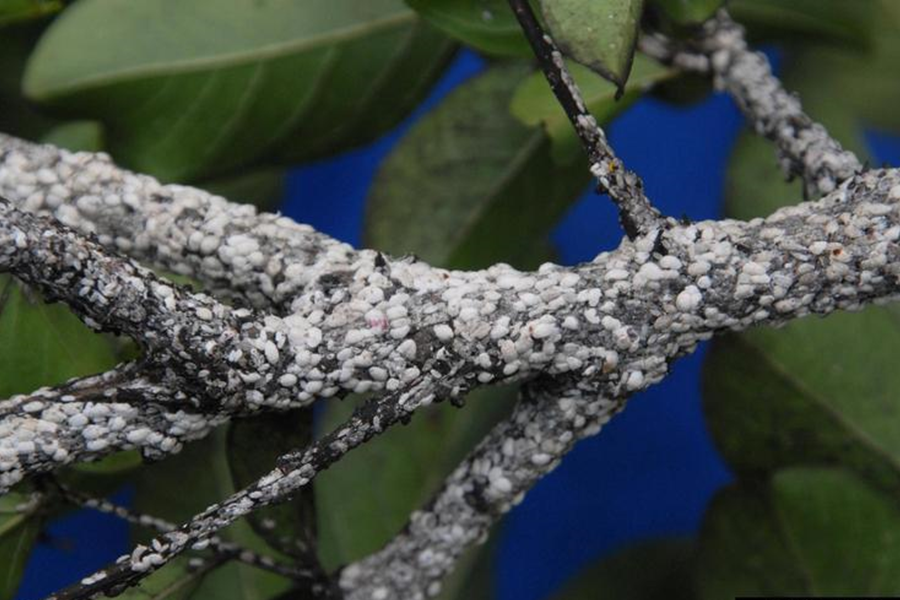
    Crape Myrtle Bark Scale: An Emerging Invasive Pest in the Nursery and Landscape

    The crape myrtle bark scale (CMBS) is an emerging threat to crape myrtle (Lagerstroemia spp.) in Georgia. As the name indicates, this scale pest attacks the bark of crape myrtle, the only known scale insect that infests crape myrtle bark. A native of Asia, CMBS was first confirmed in Dallas, Texas, in 2004. Since then, the pest has gradually expanded its range to the southeastern states. In Georgia, it was first confirmed in Coweta County in 2014. In 2019, CMBS were found infesting crape myrtles in an ornamental nursery in south Georgia. They can potentially spread in zones 6 to 9.

    William G. Hudson and Shimat V. Joseph

    |

    Jan. 21, 2022
  • C 1233

    Larger Canna Leafroller: A Major Insect Pest of Canna Lily

    An introduction to the larger canna leafroller, plus information on biology and management.

    William G. Hudson and Shimat V. Joseph

    |

    Jan. 21, 2022
  • A basket of cleaning tools like natural sponges and a scrub brush sit on a butcher block countertop

    C 1114

    Cleaning Healthy, Cleaning Green

    People spend an average of 90 percent of their time indoors. Studies conducted by the Environmental Protection Agency (EPA) show levels of several common organic pollutants to be two to five times higher inside homes than outside. Many of these pollutants come from the volatile organic compounds (VOCs) released from household cleaning products. Indoor pollutants can be reduced by limiting the number of chemicals used indoors. By following three basic guidelines you can improve your indoor environment, save money, and help conserve natural resources.

    Pamela R. Turner

    |

    April 25, 2017
  • Accident Extrication Procedures for Farm Families and Employees

    C 860

    Accident Extrication Procedures for Farm Families and Employees

    This publication is designed to help people with average first-aid knowledge improve their ability to make decisions when they are the first person at the scene of a farm accident.

    Glen C. Rains, Michael D Toews, and Bobby L. Tyson

    |

    April 11, 2017
  • a stack of gypsum wallboard scraps

    B 1223

    On-Site Beneficial Use of Scrap Wallboard in Georgia Residential Construction

    As tipping fees have risen, interest has increased in finding alternative uses for construction wastes. Many homebuyers are also looking for environmentally sensitive building practices. This includes the recycling and reuse of construction debris rather than disposal. One of the largest waste components in residential construction is gypsum wallboard. In many cases, scrap wallboard can be ground and beneficially applied on the construction site, rather than transported to the landfill.

    Julia W. Gaskin and Clint Waltz

    |

    Jan. 30, 2017
  • A woman sitting at a table drinks a glass of water with a laptop open and papers on the table in front of her

    B 1441

    Drinking Water: Interpretation and Recommendations

    An estimated 1.7 million people in Georgia rely on 640,000 private wells for their drinking water supply, and private well water users are responsible for ensuring the quality and safety of their water supplies for domestic, livestock, and irrigation use. This online tool provides interpretations and recommendations for drinking water quality.

    Uttam K. Saha

    |

    April 3, 2015
Previous Page
1 … 9 10 11 12
Next Page

About CAES

CAES Home

Overview

History

Administration

Jobs

Personnel Directory

Privacy Policy

Accessibility Policy

AI Guidelines

Affiliations

UGA Cooperative Extension

Tifton Campus

Griffin Campus

University of Georgia
  • Schools and Colleges
  • Directory
  • MyUGA
  • Employment Opportunities
  • Copyright and Trademarks
  • UGA Privacy Policy
  • Submit a Student Complaint
#UGA on
© University of Georgia, Athens, GA 30602
706‑542‑3000