

Introduction
Traditionally, vegetable growers have used potassium sulfate-based (K2SO4, sulfate of potash) fertilizers with a low salt index (46) to avoid the negative effects associated with muriate of potash (potassium chloride, KCl), which has a relatively high salt index (116). However, as fertilizer costs have risen, there is significant interest in using more muriate of potash as a preplant potassium (K) source, given its lower cost per unit of K.
There is relatively little research comparing sulfate of potash to muriate of potash in vegetable production systems. This research aims to compare sulfate of potash and muriate of potash in a plasticulture system.
Material and Methods
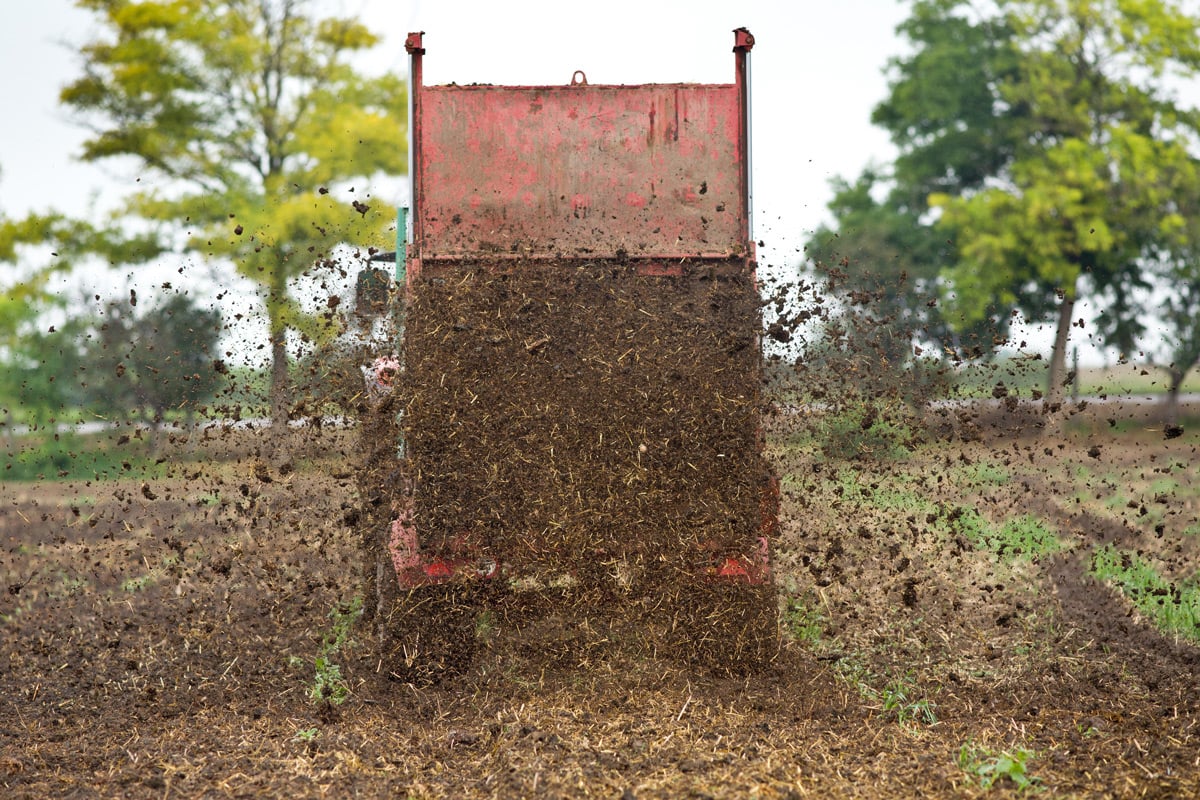
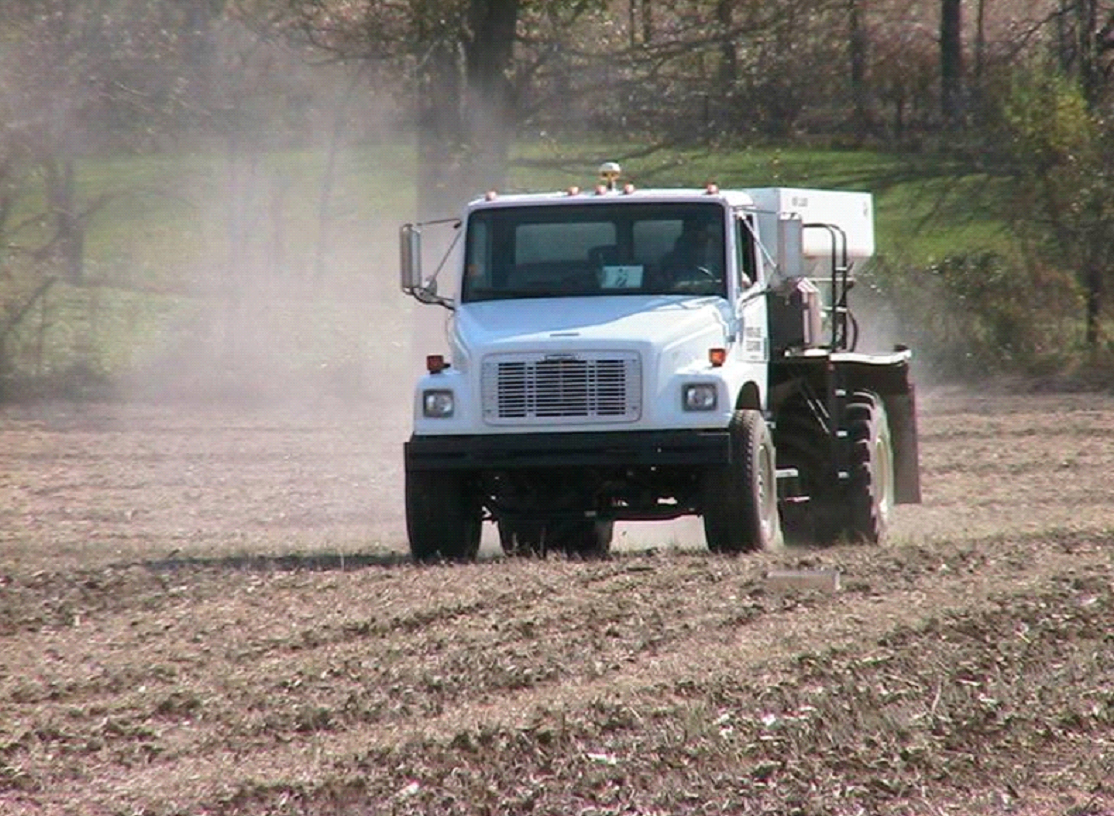
This trial was conducted in Georgia during the summer of 2023 and repeated in 2024 in Tifton (loamy sand) and Athens (clay loam) locations. Preplant applications of potassium at six preplant application rates (and a zero control; rates were 0, 50, 100, 200, 300, 400, 500 lb/acre K) were made by hand before laying plastic. Approximately 50 lb/acre of nitrogen was applied preplant using 34-0-0. The bell pepper variety ‘Antebellum’ was used. Plots were 20 ft long (40 plants).
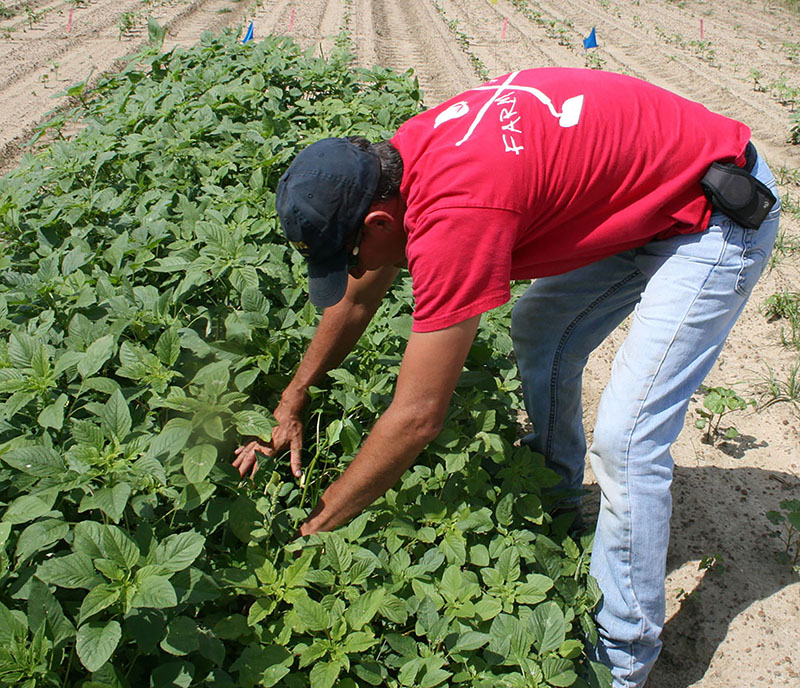
Soil samples were taken at planting and were transplanted in each plot approximately 1 month after planting, and leaf tissue samples were taken at fruit set. Plants were fertigated with 7-0-7 liquid fertilizer to supply approximately 175 lb of nitrogen in Athens. Peppers were harvested four times in Athens and graded according to USDA and industry standards for size. The results from the 2024 trial conducted in Athens are presented here.
Results
There was no difference between potassium sulfate and potassium chloride on soil electrical conductivity (EC; the ability of soil water to carry electrical current) at planting or during fruiting. The control plots with no additional potassium added at planting had a significantly lower soil EC compared to either potassium source.

However, as the potassium rate increased, soil EC increased at planting (Figure 2). At the highest potassium application rates (400 and 500 lb/acre), EC levels in the Athens planting were near the threshold that they could potentially impact plants (0.8–1.0 mmhos/cm). By the mid-season (fruit set) soil sampling, the EC level had dropped significantly.

As expected, soil K levels increased linearly with application rate (Figure 3). Interestingly, by mid-season, soils in the plant beds lost a considerable amount of potassium (Figure 3), dropping from nearly 650 lb/acre K to approximately 200 lb/acre K by the time fruit was being set. This suggests that routine irrigation during the season has the potential to leach large amounts of K, even on the heavier (clay) soils found in Athens.

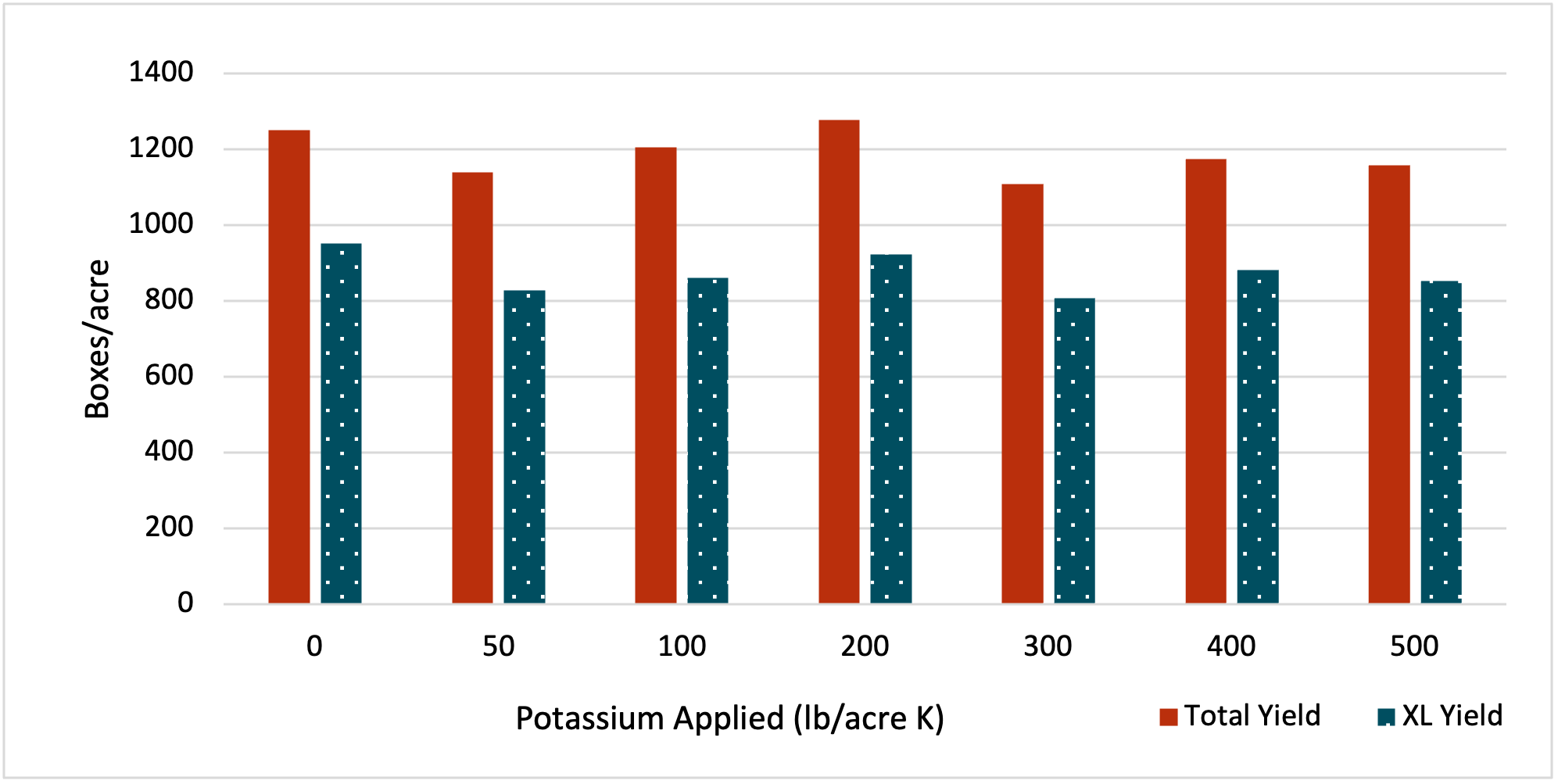
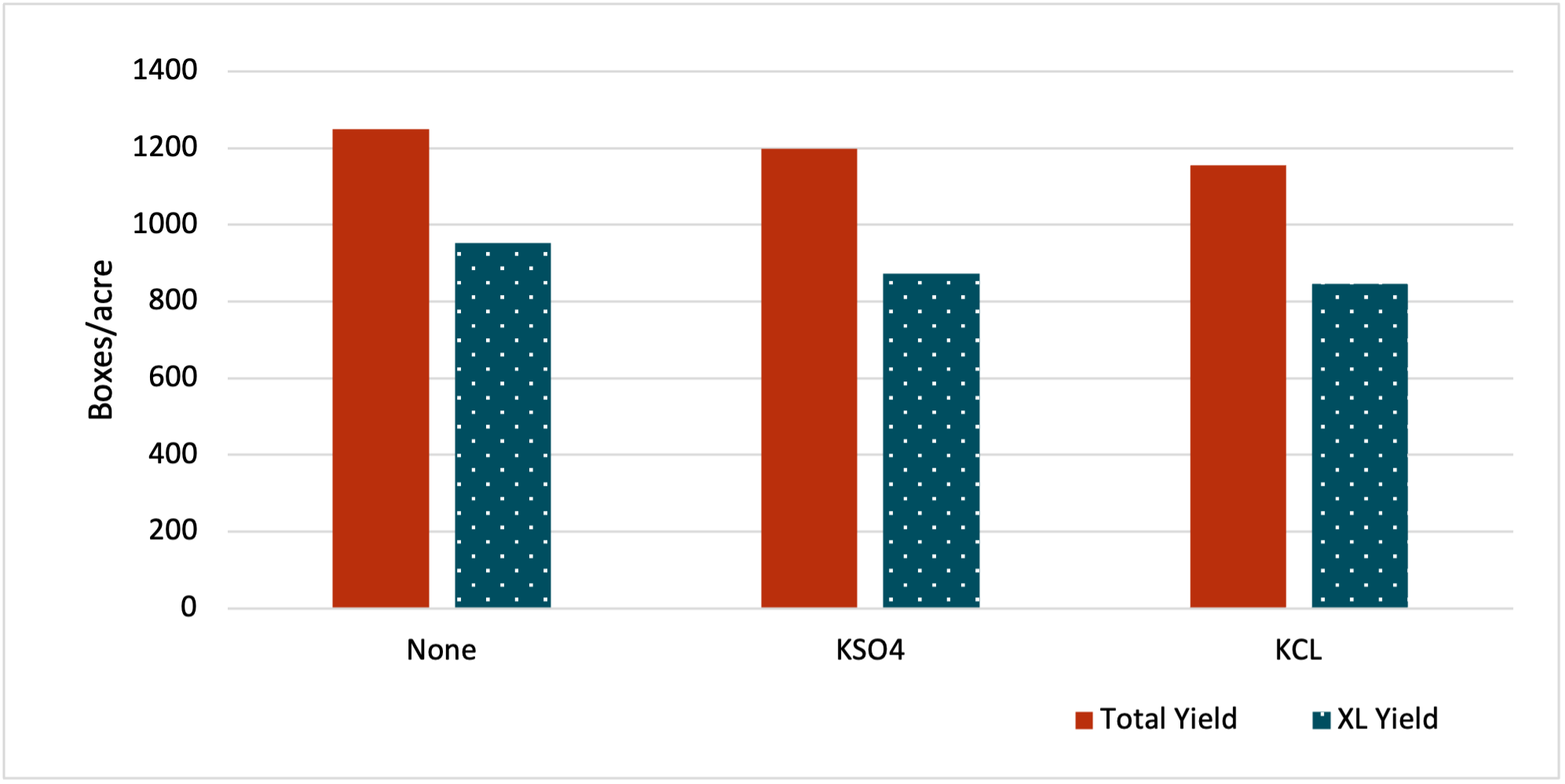
Total yields were not affected by potassium rate (Figure 4) or source (Figure 5). Further, there was no impact of potassium source on yield. However it should be noted that although total yields were not affected by potassium rate or source, in the Athens location, the yield of Jumbo size peppers (the largest fruit graded) decreased at potassium levels above 300 lb/acre, while the yields of extra-large peppers increased. This suggests that the EC values encountered at the highest potassium application rates in Athens may not have affected total yield, but could have negatively affected the size of fruit.
Conclusion
In 2023, we had slightly higher yields in Athens, as well as slightly greater EC values at planting. We also observed a negative impact of the highest rates of potassium on the number of jumbo fruit compared to extra-large fruit. The relative percentage of jumbo fruit harvested in 2024 was lower compared to 2023, with the vast majority of harvested fruit being extra-large. Plants were harvested earlier in 2024, because of significantly higher temperatures and growing degree days at harvest (data not shown).
Our data suggests that the potassium source has not had an impact on yield or EC value, but at the highest application rates of potassium (> 400 lb/acre potassium), EC values on clay soils may exceed recommended levels. Keep in mind that 400 lb/acre of actual potassium would correspond to rates of 667 lb/acre for muriate of potash and 800 lb/acre of sulfate of potash, which are higher than typically applied. Our results are similar to those found in Florida in tomatoes (Santos, 2013).
Reference
Santos, B. M. (2013). Effects of preplant potassium sources and rates for tomato production. HortTechnology, 23(40), 449–452. https://doi.org/10.21273/HORTTECH.23.4.449