


Simply stated, pest management is problem solving. It involves the collection of information, analysis of the data and development of a strategy to resolve the pest problem.
Richard D. Kramer, Ph.D., Handbook of Pest Control, 9th ed.
Decisions concerning the management and prevention of pest infestations in the urban environment should always be knowledge-based. Integrated Pest Management (IPM) is a decision-making process driven by information collected during an inspection. Pest management professionals (PMPs) committed to an IPM mindset make decisions about pest management that are logical reactions to the information gathered during the inspection process. An IPM mindset, therefore, demands that all options—including a sensible use of pesticides—be considered when developing a pest management action plan. For this reason, PMPs should be skilled in the proper handling and use of pesticides because they will continue to play a role in urban and structural pest management programs for the near future.
The intent of this bulletin is to educate the PMP about pesticides and to instill vigilance in their handling and use. When used responsibly, pesticide-based controls can reduce or eliminate a pest population while maintaining a stable, sound environment. However, because many pesticides are broad-spectrum, they must be used with great care to prevent undesirable effects. In order to understand how to use chemical pest control products responsibly, PMPs must have a basic understanding of the various definitions associated with pesticides, be able to interpret labels and material safety data sheets (including principles of toxicity), be aware of their own safety, understand the mode of action (i.e., how pesticides work) of the various active ingredients they use, and be aware of differences in formulation types. The remainder of this bulletin addresses these various topics.
Definitions
The U.S. Environmental Protection Agency (EPA) defines a pesticide as “any substance or mixture of substances intended for preventing, destroying, repelling, or mitigating any pest.” For the purpose of this bulletin, we subscribe to a more stringent definition of a pesticide as “any chemical or mixture of chemicals intended to destroy any pest.” The focus of this bulletin is insecticides—chemical pesticides designed specifically to suppress populations of pest insects and related invertebrates.
Insecticide-based pest control products are composed of a mixture of chemicals classified as either “active ingredients” or “inert ingredients.” The specific chemical(s) in the mixture responsible for affecting the pest organism is referred to as the active ingredient. The active ingredient in its raw form is referred to as technical grade and is often 95 to 100 percent pure. Although there are a few exceptions, insecticides used by the pest management industry are rarely applied as technical grade active ingredients. Most commonly, the active ingredient is formulated with other chemicals, called inert ingredients. While inert ingredients enhance product efficacy and make end-use products easier to use and safer to handle, they have little toxicity toward target pests. Because inert ingredients have great influence on an end-use product’s characteristics and properties (especially performance), their identities are often trade secrets not revealed by the product’s manufacturer.
An active ingredient’s chemical name is based on a strict set of internationally adopted rules of nomenclature established by the International Union of Pure and Applied Chemistry (IUPAC) or the CAS (Chemical Abstracts Systematic name). These rules are considered the language of chemistry. Embedded within every chemical name are pieces of information that describe the exact arrangement of every atom and chemical bond in the molecule (Figure 1).
Active ingredients are also known by their common name. According to established rules, common names for pesticides are normally issued by the chemical’s original manufacturer and then submitted to the International Organization for Standardization (ISO) for approval. Common names reduce confusion caused by multiple trade or brand names (discussed below) and are less cumbersome than chemical names during oral and written communication. For example, the chemical name 5-amino-1-(2,6 dichloro-4-(trifluoromethyl) phenyl)-4-((1,R,S)-(trifluoromethyl) sulfinyl)-1-H-pyrazole-3-carbonitrile has been given the common name fipronil. Fipronil is also the common name of the active ingredient. Each time fipronil is written or spoken, it is an understood reference to 5-amino-1-(2,6 dichloro-4-(trifluoromethyl) phenyl)-4-((1,R,S)-(trifluoromethyl) sulfinyl)-1-H-pyrazole-3-carbonitrile. Common names are usually one word and, when communicated, always reference a specific chemical name (Figure 1).
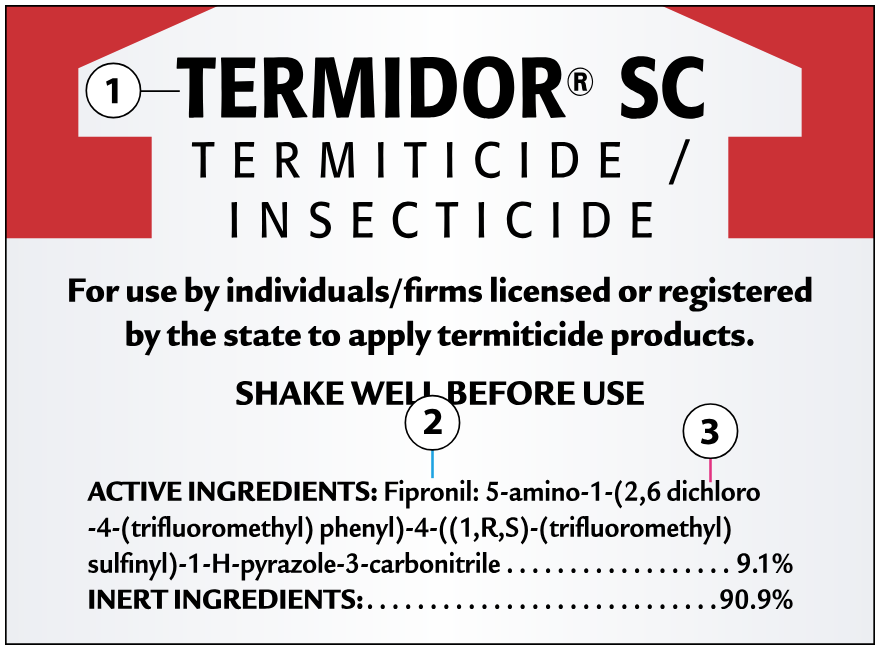
Trade or Brand Names describe end-use products and are issued by the product’s manufacturer. It is common for multiple products to have the same active ingredient. For example, Termidor SC is a termiticide. Termidor SC is the product trade name given by the manufacturer (Figure 1). The common name of the active ingredient in Termidor SC is fipronil. Fipronil is the active ingredient in a number of other products with different trade names, including TopChoice granular and MaxForce FC Professional Insect Control Ant Killer Bait Gel.
More Definitions
- Active ingredient. The chemical substance(s) responsible for achieving a product’s desired effect.
- Technical grade active ingredient. The chemical substance(s) (pesticide) in its pure, raw form (usually 95% to 100% active ingredient) prior to being formulated into a product.
- Inert ingredient. Inert ingredients are biologically inactive chemicals (i.e., they typically have no pesticidal properties) that are mixed with active ingredients to produce an end-use, for-sale product. Some commonly used types of inert ingredients and their functions include:
- Emulsifiers allow petroleum-soluble (but water insoluble) active ingredients to evenly disperse in water.
- Diluents and carriers are meant to dilute the amount of active ingredient in a formulation (described later) and to carry it to its intended target. Often the same material serves as both diluent and carrier. For example, talc is an inert ingredient in many dust formulations. Only a small part of the dust formulation is insecticidal. The remainder is inert talc that not only dilutes the active ingredient but also carries it to its intended target. In liquid spray formulations, water is both a diluent and carrier. In granular formulations, the inert granule on which the pesticide is absorbed is the carrier.
- Stickers allow active ingredients to stick or adhere to the treated surface.
- Wetting agents (e.g., spreaders, dispersants, penetrants) are inert chemicals that are added to water to increase spreading and/or penetration by eliminating or reducing surface tension. For example, a drop of water will “bead” on wax paper, but when a spreader/dispersant is added the water droplet spreads evenly over the wax paper. Wetting agents are used in wettable powder formulations to allow the powder to evenly mix with water.
- Solutions are liquids and all the chemicals that are dissolved in the liquid. For example, sugar or salt dissolve completely when placed in water to make a “sugar solution” or “salt solution.” In this example, water is called the solvent and the sugar/salt called the solute. When a chemical is soluble in a liquid, it forms a solution and cannot separate.
- A suspension is a liquid that contains solid particles that are not dissolved. Over time, the solid particles will settle to the bottom of the container. Many liquid spray formulations (wettable powders, suspendable concentrates, and microencapsulates) are suspensions in water, and will settle to the bottom of the sprayer if not agitated. Suspensions should be shaken, or agitated, often to resuspend the product in the water.
- Contact toxicants are chemicals that penetrate the target organism on contact. For example, liquid sprays are usually effective only after an insect crawls on the treated surface and contacts the residual deposit.
- Oral toxicants are chemicals that act after having been ingested by the target organism. For example, bait products kill only after an insect consumes the bait containing the active ingredient.
- Fumigants are chemical gasses. They act after an insect breathes them.
The Label and Material Safety Data Sheet
The Product Label.
Most pesticide products used by the pest management industry must be registered with and granted a label by the EPA. A product label is the manufacturer’s written directions on how to use (and not use) the product and is based on extensive testing, specific knowledge, supportive data, and product experience. To be granted a label, a product manufacturer must provide the EPA supportive data as well as other documentation to convince the EPA that the product may be used without unreasonable risk to non-target organisms or the environment. Additionally, supportive data is required to be submitted to EPA for pesticides labeled for control of some structural and public health pests. Efficacy data must support label claims for control of these pests when used according to label instructions. Much of the information needed and how it is to be collected is mandated by EPA regulation and policy.
Labels are specific about how a product can and cannot be used. Because the label is a legal document, it is a requirement that pesticide users comply with the directions for use on the label. Users should always heed a manufacturer’s recommendations and mandates, and never do more than what is permitted by a product’s label. Use of a product in a manner that is not permitted by the label is a violation of federal law and can carry state- and/or federally-imposed penalties. All EPA-granted labels contain the statement “It is a violation of Federal law to use this product in a manner inconsistent with its labeling.” In other words, the label is the law. It is important that PMPs be familiar with a product’s label—not only to ensure that the product is being used in the most efficacious manner possible, but to ensure that its use is safe, legal, and environmentally responsible.
Important information on a product’s label includes: first aid measures in the case of an accidental poisoning (including emergency phone numbers); precautions when mixing, handling, applying, and storing the product (including the use of personal protective equipment); recommendations for disposal of used containers and contaminated rinsate (washwater); and potential hazards that can result from misuse of the product (for example, the product’s impact on various non-target organisms, such as fish, bees, and other wildlife).
The majority of a product’s label is directions for use. The directions for use section commonly includes pests that can be treated with the product, where the product can and cannot be used, and how to mix the product to achieve the desired concentration. The directions for use section also provides information on product concentrations, application volumes, and suggestions on how (spot, general spray, crack and crevice) and where (specific sites) to apply the product to best achieve control of the pests listed.
The directions for use on labels often contain a mixture of language that is both binding and non-binding. Non-binding language leaves room for professional interpretation, within reason, and will often be accompanied by key words such as sometimes, should, may, usually, and may be. Binding statements not open to interpretation will often be accompanied by key words such as do, do not, shall, must, always, never, and only. For example, in food handling establishments some pesticide products may be applied only as crack and crevice.
The Material Safety Data Sheet (MSDS).
The MSDS is a sister document to the label. It contains important technical information on product toxicity, potential hazards when using the product (to the applicator and non-target organisms), safety (use of personal protective equipment to reduce exposure), product handling, storage, and disposal, handling spills and accidental releases, and first aid and fire fighting measures. Some of the information contained on the MSDS is the same as that found on the product’s label. The primary difference between the two is that the label provides specific directions on product use, while the MSDS contains mostly technical details about the product.
The LD50: A Measure of Product Toxicity.
The MSDS provides specific information about a product’s toxicity and is expressed as an LD50. LD is an abbreviation for lethal dose, and 50 refers to 50 percent of the test animal’s population. An LD50, therefore, is a specific dose (or quantity) of a product known to be lethal to half (50 percent) of the test animals (typically lab rats) exposed individually to the reported dose. Because of the calculations involved in determining lethal doses, the LD50 is the most commonly reported value because it represents the most accurate average based on responses of test subjects (see below). For example, LD50 is generally more accurate than LD25, LD75, or LD99 (the doses that are lethal to 25, 75, and 99 percent of the test population).
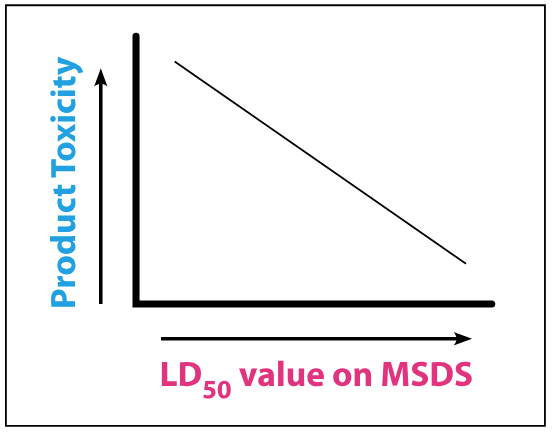
There is an inverse relationship between product toxicity and LD50 value. Products with lower LD50 values are more hazardous and pose a greater risk than products with higher LD50 values (Figure 2). For example, product A with an LD50 = 400 mg/kg is more toxic than product B with an LD50 = 600 mg/kg. In other words, to kill 50 percent of a group of test animals would require less of the more toxic product A (LD50 = 400 mg/kg) than the less toxic product B (LD50 = 600 mg/kg).
For liquid concentrates, the LD50 reported on the product’s MSDS is for the product in its concentrated form (i.e., before it’s mixed in water). For most ready-to-use products, such as most granulars, baits, and dusts, the MSDS-reported LD50 is for the product in its useable form because these products can be used when purchased (i.e., they do not require further dilution or mixing).
For products that must be diluted in water, the resulting LD50 increases considerably upon dilution. The diluted product becomes much less hazardous, where hazard is a function of a product’s concentration and the amount of exposure to it. Consider the insecticide Premise 0.5 SC. In its concentrated form, it is 5.65 percent imidacloprid. When diluted in water to the useable concentration of 0.05 percent imidacloprid, the active ingredient has undergone a 113-fold reduction in concentration. As a consequence of dilution, the product’s potential hazard is reduced considerably.
How is a Product’s LD50 Determined?
LD50s are most commonly determined by testing the product’s acute (single dose), oral toxicity against laboratory rats. To obtain the data necessary to calculate an LD50, a single dose (quantity) of the candidate product is force-fed to each one of a known number of healthy rats. The procedure is repeated for multiple doses of the product. At some pre-determined time after exposure, mortality is tallied. From these mortality data, statistical tests are then used to compute the product’s LD50. Because the LD50 of all products is determined by the same methodology and in the same manner (acute, oral toxicity to laboratory rats), we are able to compare LD50 values among and between all products to determine the relative risk associated with these products.
In some cases, a product’s LD50 cannot be calculated as a single value because not enough of it can be force-fed to the test animals to induce sufficient mortality to enable the toxicologist (scientists who study how pesticides work at the molecular level) to calculate an LD50. In cases where test animals cannot be killed by force-feeding, the LD50 is often reported as >2,500, >5,000, or typically another large, even, round number. The number is usually preceded by a greater than sign (>), indicating that the product is not very toxic to laboratory rats. In such cases, toxicologists are essentially making the statement, “We cannot calculate the LD50 because we cannot give the test animals enough product to kill enough of them to allow us to calculate an LD50. Therefore, we believe that the true LD50 is larger than the highest dose we have tested.”
In addition to determining a product’s acute, oral toxicity to rats, scientists may also determine the product’s toxicity when it is absorbed through the skin (called dermal toxicity) or breathed (called inhalation toxicity). Other animals on which oral, dermal, and inhalation toxicities may be determined include mice, quail, rabbits, and mallard ducks. These additional pieces of toxicological information, and associated ecological considerations, can be found on the MSDS in a section on environmental considerations.
| Signal Word on Label | Toxicity Category | Acute-Oral LD50 for Rats | Amount Needed to Kill an Average-Sized Adult | Notes |
|---|---|---|---|---|
| Danger – Poison | Highly Toxic | 50 or less | Taste to a teaspoon | Skull and crossbones; Keep out of reach of children |
| Warning | Moderately Toxic | 50–500 | One to six teaspoons | Keep out of reach of children |
| Caution | Slightly Toxic | 500–5,000 | One ounce to a pint | Keep out of reach of children |
| Caution | Relatively Nontoxic | > 5,000 | More than a pint | Keep out of reach of children |
Signal Words.
The signal word found on every product’s label is based on test results from various oral, dermal, and inhalation toxicity tests, as well skin and eye corrosion assays in some cases. Signal words are placed on labels to convey a level of care that should be taken (especially personal protection) when handling and using a product, from purchase to disposal of the empty container (Table 1).
Safety
Pesticide Exposure and the Pest Management Professional.
Pesticides enter living organisms by penetrating the skin (dermal exposures), being swallowed (oral exposures), or by being breathed (inhalation exposures). Moreover, exposure can be acute or chronic. Acute refers to a single-event exposure, while chronic refers to on-going, repeated exposures that occur commonly over a lengthy period.
Chronic, dermal exposures to dilute, end-use products may pose a greater hazard to PMPs than acute exposures to undiluted product concentrates. For PMPs, exposures to pesticides are usually to small quantities of low/dilute concentration; however, these exposures are often common and recurring (i.e., chronic). For example, during product application, exposed skin (hands, arms, neck, and face) is susceptible to exposure from mists, drips, spillage, and residues on application equipment. The application of liquid sprays, aerosols, and dusts, especially under high pressure, windy conditions, or overhead treatments, can result in backsplash and/or off-target drift as a result of the production of microscopic, airborne droplets that can settle on exposed skin or be breathed.
The National Pesticide Information Center (NPIC)
phone: 1-800-858-7378
web site: www.npic.orst.edu • email: npic@ace.orst.edu
The National Pesticide Information Center (NPIC) is a cooperative effort between Oregon State University and the U.S. Environmental Protection Agency. The center provides, free of charge, information related to pesticides, including a Web site containing numerous product labels and material safety data sheets and other valuable resources. Center personnel can be reached by phone (800-858-7378) seven days a week (not open on holidays) from 6:30 a.m. to 4:30 p.m. Pacific Time to answer any pesticide-related question. The center can also be reached by email at npic@ace.orst.edu. Poison Centers in your state can be reached at 800-222-1222.


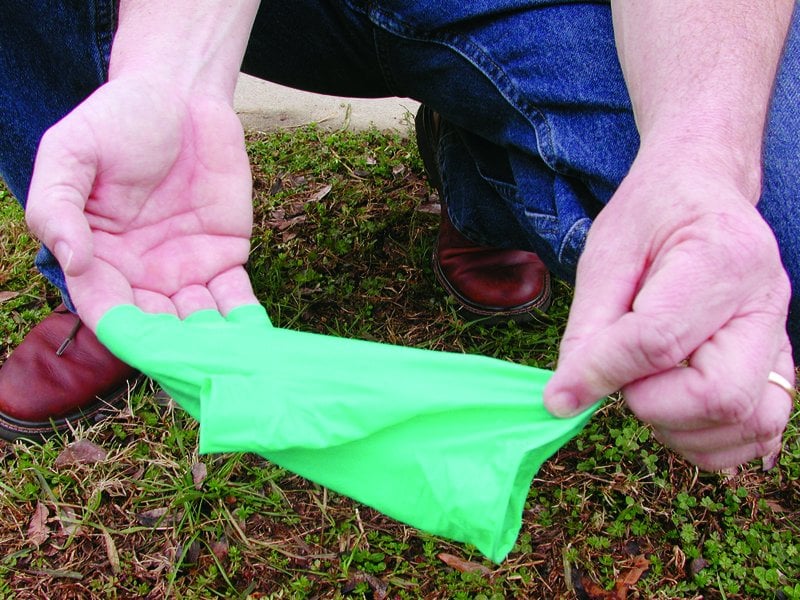
The hands are perhaps most susceptible to chronic exposure because they must be exposed to nearly every product during nearly every application. Chemically resistant, disposable gloves (surgeon’s gloves) can protect the hands from chronic exposure. They have an advantage over re-usable gloves in that they can be used in a manner that greatly reduces exposure (Figure 3). Re-usable gloves do not eliminate exposure because, at some point, unprotected hands must touch the pesticide-contaminated surface of the gloves when they are taken off after applying pesticides or put on again at a later time. Re-useable gloves can also be difficult to clean or decontaminate. Some labels contain specific language regarding the use of gloves.
In addition to the use of disposable gloves, technicians should wash exposed skin during the workday, and never smoke, eat, drink, or use the restroom without first washing thoroughly. Regular skin cleansing with soap and water can help protect skin. Because the key to personal protection is to prevent exposure, always follow the manufacturer’s label recommendations regarding safety and protection against unnecessary exposure.
Insecticide Mode of Action
Insecticides have chemical structures that allow them to be classified based on the commonality of the active ingredient’s chemistry. Thus, all members of an insecticide class have similar characteristics. The chemical structure of an insecticide generally defines its target site and its mode of action at that target site. Target site is defined as the physical location within an organism where the insecticide acts. Mode of action, alternatively, is defined as the action of an insecticide at its target site. In other words, an insecticide’s mode of action is the way in which it causes physiological disruption at its target site. Therefore, insecticide class, target site, and mode of action are highly inter-connected concepts.
Insecticides That Target the Insect Nervous System
Most of the insecticides commonly used by PMPs can be technically classified as neurotoxins (i.e., the target site within the target organism is some aspect of the nervous system). Only a few of the commonly used insecticides, such as the insect growth regulators (juvenile hormone analogs and chitin synthesis inhibitors) and a few miscellaneous active ingredients (borates, energy inhibitors, and dehydrating dusts), do not target the nervous system.
To understand the mode of action of insecticides that target the insect nervous system, it is important to have a basic understanding of how the nervous system operates. In insects, the nervous system is composed of a series of highly specialized, interconnected cells along which travel electrical charges called impulses (Figure 4). Impulses are driven by the movement of electrically charged sodium, potassium, and chloride ions into and out of nerve cells. The uninterrupted transmission of impulses along this series of cells is required for a nervous system to function properly. In insects, prolonged or irreversible disruption of a normal-functioning nervous system will result in death.
The area, or gap, between the end of one nerve cell and the beginning of the next nerve cell is referred to as the synapse (Figure 4 & Figure 5A). When a nerve impulse terminates at the end of its nerve cell (the pre-synapse region), it must be transmitted across the synapse to the beginning of the next nerve cell (the post-synapse region). The transmission of impulses across the synapse is achieved by any one of a number of specific chemical messengers called neurotransmitters—“neuro” meaning nerve, and “transmitter” meaning to transmit, or carry. Important neurotransmitters discussed later include acetylcholine (Ach), gamma amino butyric acid (GABA), and glutamate. Neurotransmitters are released from the pre-synapse region, migrate across the synapse, and are received by the post-synapse region at neurotransmitter-specific sites called receptor sites (Figure 4). When the neurotransmitter successfully binds to its receptor site at the post-synapse region, this triggers an impulse in the next nerve cell. In order to achieve the uninterrupted movement of impulses through the entire nervous system, this alternating system of electrical impulse to chemical transmitter and back to electrical impulse must function perfectly.

Insecticides that target the insect nervous system can be subdivided based on their specific target site within the nervous system. Specific neurological target sites include sodium and chloride channels and various components of the acetylcholine system. Insecticides that do not target the nervous system can also be subdivided by target site and mode of action, and include: muscular calcium channel disruptors, insect growth regulators, inhibitors of energy production and non-specific cellular disruptors, and insecticides that act via desiccation (exoskeleton). Based on these subdivisions, in the following sections we present the mode of action of important insecticides used in urban and structural pest management.

| Chemical Class / Group | Mode of Action | Target Site | Primary Use / Route of Entry |
|---|---|---|---|
| Insecticides That Target the Insect Nervous System | |||
| Pyrethrins / Pyrethroids | Sodium Channel Modulation | Axon of Nerve | Contact |
| Oxadiazines | Sodium Channel Blockage | Axon of Nerve | Oral |
| Semicarbazones | Sodium Channel Blockage | Axon of Nerve | Contact & Oral |
| OPs / Carbamates | Acetylcholinesterase Inhibition | Nerve Synapse | Contact |
| Neonicotinoids | Acetylcholine Receptor Stimulation | Nerve Post-synapse | Contact & Oral |
| Spinosyns | Acetylcholine Receptor Stimulation | Nerve Post-synapse | Oral |
| Phenylpyrazoles | GABA Receptor Blockage | Nerve Post-synapse | Contact & Oral |
| Avermectins | Glutamate Receptor Stimulation | Nerve Post-synapse | Oral |
| Insecticides That Do Not Target the Insect Nervous System | |||
| Diamides | Muscle Stimulation | Muscular Calcium Channel | Oral |
| Juvenile Hormone Analogs | Mimic Juvenile Hormone Action | JH Degradative Enzymes / Receptor | Contact & Oral |
| Chitin Synthesis Inhibitors | Block Chitin Formation | Exoskeleton | Oral |
| Amidinohydrazones | Inhibit Energy Production | Mitochondria within Cells | Oral |
| Pyrroles | Inhibit Energy Production | Mitochondria within Cells | Contact |
| Fumigant (sulfuryl fluoride) | Inhibit Energy Production | Citric Acid / Glycolysis Cycles in Cells | Inhalation |
| Borates | Non-Specific Metabolic Disruption | Cells | Oral |
| Dehydrating Dusts | Adsorption of Cuticular Wax Layer | Exoskeleton | Contact |
I. Neurological Target Site: Sodium Channels
Chemical Class: Pyrethrins and Pyrethroids (active ingredients = pyrethrins, bifenthrin, permethrin, cyfluthrin, beta-cyfluthrin, deltamethrin, cypermethrin, and lambda-cyhalothrin). Pyrethrins, known for more than 100 years to have insecticidal properties, are the individual insecticidal components of pyrethrum, an extract of chrysanthemum flowers. Pyrethrins are fast acting, contact toxicants commonly found in products where quick knockdown is an important consideration. Pyrethrins alone are not very stable. They decompose rapidly at high temperatures and when exposed directly to sunlight or ultraviolet light. As a result, pyrethrins lose their insecticidal properties quickly.
The insecticidal activity of pyrethrins can be enhanced by applying them in the presence of an otherwise non-toxic chemical called a synergist. Within the insect body, pyrethrin molecules are inactivated by several types of enzymes, thus reducing the quantity of pyrethrin molecules available to affect nerve cells. This phenomenon, called detoxification, reduces the insecticide’s effectiveness at the target site because less is available. To alleviate this problem and allow more of the pyrethrin molecules to act against insect nerve cells, pyrethrins are often applied along with a synergist. Synergists block the pyrethrin-inactivating enzymes, allowing more of the insecticide to reach its target site. Synergists, including MGK-264 and piperonyl butoxide (PBO), are often formulated with pyrethrin-based products.
Because pyrethrins have such limited residual activity, manufacturers modified their original molecular structure and synthesized an entire new class of more stable, pyrethrin-like insecticides called pyrethroids—pyrethr, which refers to the pyrethrins, and -oid meaning like. Examples of pyrethroid insecticides commonly used by the pest management industry include bifenthrin, permethrin, cyfluthrin, beta-cyfluthrin, deltamethrin, cypermethrin, and lambda-cyhalothrin.
Both pyrethrins and pyrethroids disrupt normal nerve function in a region of the nerve cell known as the axon (i.e., the target site). Their mode of action is to inhibit the on/off switch of nerve cells, called sodium channels, by delaying the rate at which they close, or turn off (Figure 5A,B). This mode of action results in uncontrolled, uninterrupted nerve firing, which results in a convulsing insect that exhibits tremors and shaking and quickly dies.
Pyrethroids are toxic to many Hymenoptera (ants, bees, and wasps) and most aquatic animals, especially fish. Generally, pyrethroids are easily hydrolyzed (broken down in the presence of moisture) and thus are not very persistent. They are not very water soluble, a trait considered beneficial because it limits their movement in water (runoff) and soil. Although more photo-stable than pyrethrins, pyrethroids still have limited stability in sunlight. Interestingly, pyrethrins and some of the first pyrethroids have a negative temperature coefficient of toxicity (i.e., unlike most other insecticides, they exhibit greater toxicity at low temperatures). Newer pyrethroids exhibit a positive temperature coefficient, meaning that they exhibit greater toxicity at higher temperatures.
Chemical Class: Oxadiazines (active ingredient = indoxacarb). When indoxacarb enters the insect, it is broken down into a new molecule with insecticidal properties. This process, mediated by enzymes within the insect, is referred to as activation. After activation, the newly formed molecule (called a metabolite) targets sodium channels along the nerve axon (remember from above that sodium channels are the on-off switches of nerve cells). The active metabolite tightly binds to the sodium channel and completely blocks sodium ion flow into nerve cells (Figure 5A,B). In a manner completely opposite to pyrethrins and pyrethroids, insects poisoned with indoxacarb appear paralyzed and limp, and are incapable of movement.
Chemical Class: Semicarbazones (active ingredient = metaflumizone). The semicarbazones are a very new insecticide class about which little is known. Early indications are that metaflumizone acts similar to the indoxacarb metabolite, in that it blocks sodium channels and prevents sodium ion movement into nerve cells. The result of this blockage is a loss of neurological function that is similar to that described for indoxacarb.
II. Neurological Target Site: Acetylcholine System
Chemical Class: Organophosphates (OPs) and Carbamates. These active ingredients are no longer widely used by the pest management industry. Their relatively high degree of mammalian toxicity, as well as human safety and health concerns, led to cancellation of many registrations in the U.S. However, because there are a few registrations remaining, we describe their mode of action here.
OPs and carbamates act by inhibiting the acetylcholinesterase (AchE) enzyme in the nervous system (Figure 5A,B). AchE performs a critical job in the nervous system by removing the neurotransmitter acetylcholine (Ach) from its receptor on the post-synapse nerve. Under natural conditions, AchE prevents overstimulation of the nervous system because it removes Ach. Without AchE, a stimulated nerve cannot return to its resting state. OPs and carbamates tie-up (inhibit) AchE, preventing it from removing Ach from its receptor site. The result is overstimulation of the nerve cell and death of the insect. Because the insect and mammalian AchE enzyme is very similar, the OPs and carbamates are not very selective.
The OPs were initially developed in the 1930s and 40s by Germany as part of their war effort. Thereafter, the class evolved into a number of newer chemistries designed to control agricultural and urban pests. At the height of their use in the 1960s and 70s, there were more than 50 OP insecticides in use worldwide. Examples of OPs commonly used by PMPs included chlorpyrifos (Dursban), dichlorvos (DDVP), malathion, diazinon, acephate (Orthene), propetamphos (Safrotin), and naled (Dibrom for mosquitoes). Some of these active ingredients have retained some of their use patterns.
Developed in the U.S. in the 1950s, carbamates are synthetic insecticides modeled after a natural plant toxin (called physostigmine) from the Calabar bean. At their height of usage, there were about 20 to 25 carbamates in use. Examples of carbamates once widely used by PMPs include carbaryl (Sevin), bendiocarb (Ficam), and propoxur (Baygon). Like the OPs, some carbamate registrations still exist, but their allowable use patterns have been greatly diminished.
Chemical Class: Neonicotinoids (active ingredients = imidacloprid, dinotefuran, thiamethoxam, clothianidin, acetamiprid). Neonicotinoids are synthetic materials modeled after the natural, plant-produced insecticide nicotine. They target the insect nervous system by binding to the Ach receptor on the post-synapse nerve cell (Figure 5A,B). Under normal conditions, Ach binds to this receptor for only milliseconds (1/1,000 of a second) at a time, resulting in short and controlled nerve stimulation. The neonicotinoids bind to the Ach receptor for very long periods of minutes or more. This mode of action results in nerve hyper-stimulation. Insects poisoned with a neonicotinoid insecticide exhibit symptoms of tremors and hyperactivity, much like pyrethrins, pyrethroids, and fipronil.
Chemical Class: Spinosyns (active ingredient = spinosad). Spinosyns (also known as Naturalytes) are chemicals produced by the soil bacterium Saccharopolyspora spinosa. Spinosyns are acquired by fermentation of S. spinosa cultures, then by purification and modification of the active chemical components produced by the microbe. Spinosyns bind to and stimulate the Ach receptor on the post-synapse nerve in a manner similar to but slightly different from neonicotinoids (Figure 5A,B). Spinosad intoxication is characterized by excitation of the nervous system, leading to involuntary muscle contractions, tremors, and paralysis. Other modes of action for spinosyns have been determined, such as blockage of the GABA receptor (Figure 5A,B). GABA (gamma amino butyric acid) is an important neurotransmitter that stimulates chloride channels located in the central nervous system.
III. Neurological Target Site: Chloride Channels
Chemical Class: Phenylpyrazole (active ingredient = fipronil). Fipronil was discovered in 1987. It received its first registration by the early 1990s for the control of agricultural pests in Europe. One of the first fipronil registrations in the U.S. urban pest management market was for termite control. Fipronil acts on the insect nervous system by binding to and blocking the GABA receptor on the post-synapse nerve cell (Figure 5A,B). This blockage prevents GABA from binding to the receptor site, which then prevents the influx of chloride ions into the post-synapse nerve cell. Because chloride ions limit and balance the electrical activity within nerve cells, blocking chloride influx leads to rapid, uncontrolled nerve firing throughout the nervous system. Fipronil-treated insects exhibit tremors and shaking similar to that seen in pyrethrin- and pyrethroid-treated insects.
Chemical Class: Avermectins (active ingredients = abamectin, emamectin benzoate, ivermectin). The avermectins were originally isolated from soil bacteria from the genus Streptomyces. Older avermectins, such as abamectin, are used in their natural form; however, newer materials, such as emamectin benzoate, are partially natural and synthetic. Ivermectin is another natural avermectin. It has uses for endoparasite control in pets and companion animals. These materials are similar to phenylpyrazoles in that they bind the chloride channels that are regulated by the neurotransmitter glutamate (Figure 5A,B). While phenylpyrazoles block chloride channels, the avermectins stimulate them, resulting in constant and unimpeded chloride ion flow into nerve cells. This results in complete inactivation of nerve cells and a loss of neurological function. Poisoning symptoms in insects are similar to those caused by indoxacarb and metaflumizone (limp paralysis).
Insecticides That Don’t Target the Insect Nervous System
I. Muscular Calcium Channel Toxins
Chemical Class: Diamide (active ingredient = chlorantraniliprole). The diamide insecticides are technically not neurotoxins; however, they act on muscular calcium channels that are under direct control of the nervous system. Diamides bind to and stimulate muscular calcium channels, causing uncontrolled calcium release and resultant muscle contractions (Figure 5A,B). Insects with early stages of diamide poisoning appear rigid or have “contractile” paralysis. In later stages of poisoning, symptoms are very similar to those of inhibitory neurotoxins like oxadiazines, semicarbazones, and avermectins.
II. Insect Growth Regulators
Insect growth regulators (IGRs) used by the pest management industry include juvenile hormone analogs and chitin synthesis inhibitors. IGRs do not act on the nervous system. They are insecticides that disrupt critical physiological functions associated with normal insect growth, development, and reproduction (egg production). IGRs are typically not acutely toxic to adult insects. Adult insects exposed to IGRs usually suffer no adverse consequences, and typically live a normal lifespan. Because they target unique biochemical pathways found only in insects and related arthropods, IGR-containing products generally have low mammalian toxicity (i.e., large LD50 values). However, like all pesticides, IGRs should be handled safely and applied with a great deal of care and consideration for non-target organisms. For example, the developmental physiology of many aquatic invertebrates is similar to that of insects. Because of this, aquatic arthropods are susceptible to some IGRs.
Chemical Class: Juvenile Hormone Analogs (JHAs) (active ingredients = hydroprene, methoprene, pyriproxyfen, fenoxycarb). The first category of insect growth regulators important in managing urban and structural pests are the JHAs, which mimic a naturally occurring chemical in immature insects called juvenile hormone. Juvenile hormone is an important regulator of insect growth and development, including the normal maturation process. The presence of juvenile hormone in immature insects keeps them from becoming adults, thus the name. During the life of an immature insect, the quantity of juvenile hormone in the insect’s blood is relatively high. Immature insects are prevented from maturing because juvenile hormone prevents them from developing toward adulthood. As immature insects progress through their life cycle, however, the level of juvenile hormone in the blood is reduced through a decrease in its production and by juvenile hormone-degrading enzymes. With less juvenile hormone present, the insect can then proceed naturally toward adulthood.
In adult insects, juvenile hormone plays various roles in directing reproductive maturation, such as sperm production in adult males and egg production in adult females. In social insects such as termites, juvenile hormone plays an important role in caste differentiation; for example, high juvenile hormone levels in worker termites cause them to develop into soldiers.
Although the exact mechanism is unclear, experimental evidence suggests that JHAs may bind to juvenile hormone-degrading enzymes, the juvenile hormone receptor itself, or a combination of both factors. Whatever the mechanism, JHAs maintain unnaturally high levels of juvenile hormone within the insect body at a time when it should not naturally be present. This abnormality has dire consequences on insect survival and reproduction, severely disrupting the insect’s development and/or altering its reproductive physiology. Death or sterilization often result from exposure to JHAs. For example, fire ant queens exposed to JHA-based baits stop producing eggs and colonies experience a shift in caste composition. The developmental physiology of immature mosquitoes and fleas exposed to methoprene is severely altered, resulting in death or severe developmental abnormalities that eventually lead to death.
German cockroaches exposed to JHAs during the last-instar molt into either adult males that are physically incapable of mating or adult females with deformed ovaries. The result is that adult cockroaches in the population are sterile. As reproduction ceases, the population slowly declines as sterilized adults die of natural causes and are not replaced by nymphal cockroaches. Interestingly, sterile adults have twisted, curled or crinkled wings, which is the only visual sign of JHA exposure (Figure 6). Twisted-wing adults may also be darker in color than normal adult cockroaches and are sometimes slightly larger than unexposed cockroaches. As is typical of IGRs, exposure of adult cockroaches to JHAs has no impact on adult survival.

Chemical Class: Chitin Synthesis Inhibitors (CSIs) (active ingredients = diflubenzuron, hexaflumuron, noviflumuron, lufenuron). The second category of insect growth regulators are the chitin synthesis inhibitors (CSIs). Like the juvenile hormone analogs, chitin synthesis inhibitors do not act on the insect’s nervous system. They disrupt an important biochemical pathway responsible for the synthesis of chitin. Chitin is a critical chemical component found in arthropod exoskeleton. As part of the process of molting, chitin is synthesized and incorporated into the insect’s new exoskeleton. Scientific evidence suggests that the mode of action for chitin synthesis inhibitors is to block an important enzyme, called chitin synthase, which is directly responsible for the conversion of certain chemicals into chitin. In the absence of this enzyme, chitin cannot be synthesized. The prevention of chitin synthesis is fatal for the affected insect.
Chitin synthesis inhibitors used by the structural pest management industry include diflubenzuron, developed decades ago for the control of agricultural pests and now used in several baits for termite control, and hexaflumuron and noviflumuron, developed specifically for the control of termites in a baiting system. The subterranean termite worker caste is a continually molting immature form that makes up the majority of the social group. Workers cooperate to help maintain group stability and to keep social groups alive and viable. Termite baits that contain chitin synthesis inhibiting insecticides block chitin formation in molting termites exposed to the active ingredient.
Lufenuron is a chitin synthesis inhibitor used for flea control. It is sold directly to consumers by veterinarians for the control of fleas on companion animals. It is delivered orally and absorbed directly into the animal’s bloodstream. Because fleas are obligate blood feeders (i.e., blood proteins are required for fleas to produce eggs), consumption of lufenuron-tainted animal blood by adult female fleas results in the production of eggs that fail to hatch (or first instar larvae that die soon after hatch) since insect eggs contain chitin. In addition, flea larvae are also killed by lufenuron. Adult fleas excrete large quantities of partially digested host blood. This high protein excrement is a primary food source of flea larvae during their development. Consumption of this lufenuron-tainted, dried blood is lethal to larval fleas when they molt (Figure 7).

III. Inhibitors of Energy Production and Non-Specific Cellular Disruptors
Chemical Class: Amidinohydrazone (active ingredient = hydramethylnon). Hydramethylnon is a cellular poison. It prevents the mitochondria within cells from doing their job—producing energy for the cell and the organism to conduct its normal activities. Insects exposed to hydramethylnon die slowly as energy is depleted and not restored. Affected insects essentially are depleted of the energy needed to sustain normal bodily functions, causing them to die. Insects poisoned by hydramethylnon, as well as the diamide insecticide chlorantraniloprole, display limp paralysis much as the inhibitory neurotoxins noted previously.
Chemical Class: Pyrrole (active ingredient = chlorfenapyr). Like indoxacarb, clorfenapyr must be converted by enzymes within the insect to an active form by a process known as activation. Once inside the insect, chlorfenapyr is converted to a new molecule (called a metabolite) that is insecticidal. Interestingly, the metabolite is toxic to mammals as well; however, mammals lack the necessary enzymes to make the conversion from inactive to active insecticide. The mode of action of chlorfenapyr’s active metabolite is much like that of hydramethylnon (above)—it destroys the mitochondria’s ability to supply energy to meet the insect’s needs.
Chemical Class: Structural Fumigants (active ingredient = sulfuryl fluoride). In the structural pest control industry, sulfuryl fluoride is used to fumigate residential and commercial buildings. It is thought that sulfuryl fluoride inhibits energy production in cells but does not appear to have a specific target site (i.e., sulfuryl fluoride is considered a non-specific metabolic inhibitor that causes a deprivation of cellular energy). Fumigants can be hazardous to applicators and non-target organisms if mishandled or misapplied. Most modern fumigants do not have intrinsic warning properties such as color, repellent odor, or taste. It is for these reasons that all fumigants have strict use guidelines that require substantial applicator training. In addition, a small amount of the warning agent chloropicrin (tear gas) is applied in residential and commercial buildings prior to the introduction of sulfuryl fluoride gas.
Chemical Class: Borates (active ingredients = borax, boric acid, disodium octaborate tetrahydrate). For decades, borates have been known to have insecticidal properties. Although an essential micronutrient for both plants and animals, at higher concentrations boron can be toxic. As a micronutrient, it aids metabolism and promotes enzyme function. Boron-based active ingredients are exclusively oral toxicants—they neither exhibit contact toxicity nor act as cuticular desiccants as do silica gels and diatomaceous earth (see below). Borates must either be consumed in baits or groomed off the insect’s body after having been picked up as a dust formulation.
Although the exact mode of action of boron-based active ingredients is not fully understood, available evidence suggests that these materials are general cellular toxins or non-specific metabolic disruptors (perhaps even mitochondrial disruptors). Boric acid is used both in dry dust formulations and as a bait active ingredient for cockroaches, ants, and some other pests. Boric acid exhibits excellent water solubility and is slow acting at low concentrations—characteristics that make it a desirable active ingredient in liquid and gel baits. Disodium octaborate tetrahydrate is an active ingredient in preventative wood treatments targeted at both wood-destroying insects and fungi.
IV. Insecticides that Act Via Desiccation
Chemical Class: Dehydrating Dusts (active ingredients = silica gels, diatomaceous earth). Silica gels and diatomaceous earth are inorganic (i.e., do not contain carbon) dusts composed of silicon dioxide. Silica gels are synthetically produced, while diatomaceous earth is the fossilized, skeletal remains of minute microorganisms known as diatoms (i.e., microscopic algae) whose remains are composed of silicon dioxide. Large deposits of fossilized diatoms are unearthed, mined, and used for insect control, among a myriad of other uses. Both silica gels and diatomaceous earth adsorb the thin wax layer on insect exoskeleton. The wax layer normally prevents insects from losing water through their exoskeleton and desiccating. By adsorbing the wax layer, silica gels and diatomaceous earth increase the permeability of the exoskeleton, resulting in insect death by dehydration. Silica gels and diatomaceous earth are most effective against crawling insects in dry (low humidity) environments where free water is limited. Although the toxicity of inorganic dusts is low, care should be exercised in their use because of their ability to injure the human respiratory system if breathed.
Product Formulations
Insecticides are only rarely available to PMPs as technical grade active ingredients. Instead, the technical grade material is first combined with inert ingredients in a process known as formulation. The result of the formulation process is a product that can be purchased and used by a PMP. Inert ingredients improve the safety, handling, storage, and efficacy of the final product’s active ingredient. They can:
- enhance product safety by reducing the potential for exposure;
- make the product easier to handle, mix, and store;
- extend the product’s shelf-life and stability;
- keep the active ingredient suspended and dispersed in water (many active ingredients are not water soluble); and
- extend the longevity of treatment and improve overall product performance.
Formulation choice is an important component of pest management programs. Choosing a less-than-appropriate formulation can limit a pest management program’s effectiveness even if proper inspections are conducted and the most appropriate site(s) are selected for treatment. A pesticide molecule’s availability can be lessened by using a formulation that inadvertently prevents the active ingredient from reaching the target treatment site and/or is unavailable to the target pest even when encountered.
Product and formulation choices by pesticide applicators have a variety of justifications including cost, product reputation, customer demand and product perception, availability, manufacturer support, safety and environmental considerations, ease of handling, storage and disposal, presence/absence of a particular active ingredient, liability perceptions, etc. As important as these reasons are, product efficacy should be of paramount importance when considering and choosing one formulation type over another. Choosing the most appropriate formulation can be a complex process. The following discussion, therefore, should be referenced solely for technical reasons regarding formulation choice. All non-technical considerations are excluded.
Except in cases of pesticide resistance or sites where a particular product is prohibited, the choice of formulation is often more important than the choice of active ingredient.
Keith Story, Industry Consultant


Bait Formulations.
Baits must be eaten by the target pest—typically rodents, termites, ants, cockroaches, and other miscellaneous pests (Figure 8). Baits are comprised of an active ingredient incorporated into a palatable, if not preferred, food source. Bait products usually contain inert ingredients (e.g., preservatives, thickeners, gels, and fillers) intended to stabilize and enhance the shelf life and palatability of the bait. Logically, it is important that bait ingredients (actives and inerts) not be a deterrent to feeding.
Baits are most commonly formulated as ready-to-use liquids, gels, pastes, granules, dusts, stations, pellets, and blocks. Depending on the product’s label, baits can be used both indoors and outdoors, are generally target-specific, and are considered environmentally-friendly because only small amounts of active ingredient are delivered, usually from a point source. Because baits must be eaten, it is important to keep them away from non-target organisms.
To facilitate bait consumption, (a) neither the active ingredient nor any other part of the bait should be a feeding deterrent and (b) the food source should be palatable (perhaps even preferred) by the target pest. In addition, for social insect pests (especially ants) it is important that the active ingredient be slow acting. Ants and termites share food with their colony mates in a social behavior known as trophallaxis (Figure 9). Trophallaxis results in active ingredient distribution throughout social insect colonies. It is, therefore, important that the active ingredient be slow acting over a range of concentrations in order to provide sufficient time for toxicant distribution among nestmates. Fast-acting active ingredients or excessively high concentrations of the active ingredient may too quickly impair a social insect’s ability to engage in trophallaxis, thereby rendering the bait less effective.
Granular Formulations.
Granular products are formed by impregnating or coating a small granule of an inert carrier (such as clay) with an active ingredient and various inert ingredients designed to enhance the performance of the product. Granular products are a ready-to-use formulation typically applied around the perimeter of the structure to mulch, leaf litter, lawns, thick vegetation, etc. to control a variety of crawling pests. After application, the insecticide must be released from the granule by allowing water to dissolve it. Thus, granular products often require the presence or application of some form of moisture following application. With each successive rain, until the granule dissolves completely, insecticide is released into the treated area. Because of this requirement, granular formulations may be less effective when used during periods of drought. Like liquid sprays, granular products act by contact (direct kill) and perhaps by keeping foraging pests out of treated areas (deterrence).
It should be noted that pests do not eat granular formulations, as they do granular baits. A granular formulation is never bait, but bait can be in the form of a granule.
For example, two products widely used for fire ant control are Advion (0.045% indoxacarb) and TopChoice (0.0143% fipronil). While both are small granules, the manner in which fire ants are killed is different (Figure 10). Advion is bait, and must be eaten by the ants. TopChoice is a true granular formulation. After application, the TopChoice granules degrade, leaving behind a residue of fipronil in the treated area. As ants crawl across the residual, they acquire a lethal dose of fipronil and are killed by contact. Fire ants do not eat TopChoice granules.

The primary technical advantages of granular products are their weight and lengthy residual/slow release. The weight of granular products allows them to reach areas that liquid spray treatments normally would not. Liquid sprays do not penetrate deep into thick vegetation, mulch, leaf litter, and ground covers (such as ivy). Because granules are heavy, they fall through thick vegetation to the soil surface and thatch layer below, thereby providing treatment to those hard-to-reach areas where crawling pests live (Figure 11).

Dust Formulations.
Dust products have the consistency, look, and feel of powder, are ready-to-use when purchased, and are applied dry. Dusts are comprised of microscopic particles of active ingredient often mixed with microscopic particles of an inert carrier such as talc, clay, or volcanic ash. The carrier also serves to dilute the active ingredient. In some cases, however, dusts are applied undiluted as technical grade active ingredient (e.g., some silica gels, diatomaceous earth, boric acid).
Many users make the mistake of over-applying dust. Dust should be applied so that a very light film settles on treated surfaces. Ideally, the quantity of dust applied should be only slightly visible in comparison to areas not treated (Figure 12). In some cases, over-application can repel target pests, rendering the dust less effective or even ineffective.

Dusts should be used only in voids created by elements of construction (e.g., behind brick veneer, drywall, electrical switch-plates and sockets, synthetic stucco, and in attic soffits). Dust should never be applied where or when it might be later encountered by non-target organisms. Because dusts become airborne easily, misapplication or mishandling can result in accidental inhalation. Therefore, it is important for applicators to always wear a protective mask and eye protection when applying any dust formulation.
Aerosols are an effective means of delivering insecticides, usually contact insecticides, into cracks and crevices where pests live. They kill by contact, unlike fumigants (discussed below), which must be breathed by the target insect. Aerosols are comprised of an active ingredient(s) dissolved or suspended in a solvent that is then combined with liquefied or compressed gas. The gas serves as a propellant. The contents of aerosol cans are held under high pressure of 120 PSI or greater. When pressure is released (usually by depressing a button known as the actuator), the insecticide-solvent mixture passes through a valve and is broken into microscopic droplets. The solvent evaporates quickly, leaving the lightweight droplets suspended and floating in the air. By varying the characteristics of the nozzle design, the size of the droplet can be altered. Fine droplets stay airborne longer, while larger droplets settle more quickly. Because aerosol droplets can be made microscopic, they can be easily breathed. Caution should be used when using aerosols to avoid their accidental inhalation.
Fumigants are pesticides that are gaseous, applied undiluted as technical grade material, and used solely for the treatment of existing pest infestations. Fumigants are simple molecules with low vapor pressures that permit volatilization and subsequent vapor-phase toxicity. They must be breathed by the target pest. Fumigants penetrate anywhere air penetrates (e.g., voids where pests live and breed, agricultural commodities such as grains, cracks and crevices, and insect galleries in wood). When used properly, fumigants can eliminate an infestation of pests within a confined area. Fumigations are appropriate when the target pest is inaccessible to conventional treatments, when the infestation is so widespread that its distribution cannot be easily delineated or treated, or when nothing short of pest elimination can be tolerated.

Fumigations are often required to meet various regulatory standards regarding transport of products (commonly agricultural in nature) that might inadvertently introduce or spread a harmful pest species.
The most commonly used structural fumigant is sulfuryl fluoride (Vikane Gas Fumigant; Dow AgroSciences, Indianapolis, IN; and Zythor, Ensystex II, Fayetteville, NC). Sulfuryl fluoride has a number of attributes that make it an excellent structural fumigant. For example, it readily penetrates fumigated items and then dissipates from them when the fumigation is complete, is not flammable, explosive, or corrosive, does not penetrate human skin, is stable both in and outside the storage tank, readily volatilizes when released from the tank, has low water solubility, and produces no post-fumigation odor. Sulfuryl fluoride is sold as a liquid in large pressurized tanks containing 125 to 130 lbs. of technical grade active ingredient (>99 percent). When released from the tank, the liquid sulfuryl fluoride immediately vaporizes. Because sulfuryl fluoride is colorless and odorless, it is released into residential and commercial structures following application of chloropicrin (tear gas) as a warning agent to persons who might try to enter the fumigation site.
The required dosage of sulfuryl fluoride is pest-dependent, and can be obtained directly from the product’s label. Sulfuryl fluoride requires specific calculation equipment, which is obtained from the product’s manufacturer, to determine dosage. Dosage is dependent upon: (a) concentration of fumigant in the confined space, (b) the amount of time (hours) that the fumigant is held at that concentration, and (c) the temperature at the fumigation site. A tarpaulin must be placed over the structure or potential leak sites sealed with tape and/or a polyethylene sheet (e.g., seals around doors and windows) to achieve a desired concentration of gas within a confined space (Figure 13). The quality of the seal in large part determines the length of the fumigation process.
As the temperature increases, the required dosage needed to kill the target insect pest decreases. This requirement is not necessary for warm-blooded pests, such as rodents. Insects are cold-blooded, meaning that their activity is directly dependent upon the environmental temperature at which they are living (i.e., as the temperature increases, so too does the respiration rate of insects). Because fumigants enter the insect body by inhalation, an increased respiration rate in the target pest enhances its inhalation of fumigant, thus reducing the dosage needed to kill the pest.
Fumigants have limitations. Generally, insect eggs are less susceptible to fumigants than are adult and immature stages (larvae and pupae). However, label-required dosage rates compensate for differences in susceptibility among life stages of the target pest(s). Physical attributes of fumigated wood that may lessen the penetration of gas include excessively wet wood (e.g., sulfuryl fluoride has very low water solubility), large-diameter logs, and the presence of finishes designed to seal wood pores. Although a properly conducted fumigation can eliminate an existing insect infestation, fumigants leave no residual chemical once the building is aerated and cleared of gas. Depending upon the customer’s point of view, this can be viewed as either a negative (i.e., there is no residual chemical to protect against new infestations) or a positive (i.e., there is no chemical residue remaining on any treated surface).
The use and handling of fumigants by PMPs requires special training, licensing, and ongoing education. The University of Florida publishes an excellent resource (The Florida Fumigation Manual) for those who conduct structural fumigations. See the References section for a complete citation.
Liquid Spray Formulations.
Formulations commonly applied as liquid sprays are emulsifiable concentrates (abbreviated as EC), wettable powders (WP), microcaps (ME [microencapsulates] or CS [capsule suspensions]), and suspension concentrates (SC). These formulations must be diluted with water before they can be applied.
Emulsifiables are formulations that allow a water-insoluble insecticide to be suspended in water. Water and oil do not mix unless an emulsifying agent is added. When an emulsifier is added to a mixture of oil and water, microscopic droplets of oil are formed that disperse throughout the water. The resultant milky-white mixture is referred to as an emulsion.
Contact insecticides must be hydrophobic (insoluble in water) in order to penetrate the insect cuticle and/or interact with target sites. Although insoluble in water, most insecticides are soluble in oil or another solvent. To form an insecticide-active emulsion, the insecticide is dissolved in the solvent. When the emulsifier is then added, the resulting milky-white emulsion contains microscopic droplets of insecticide-impregnated solvent that become dispersed evenly throughout the water, as described in the previous paragraph. This resultant formulation can then be sprayed. The droplets in emulsifiable formulations do not settle like suspensions and, therefore, require minimal agitation in comparison to formulations that are suspensions (wettable powders, microencapsulates, suspension concentrates). Because emulsifiables readily absorb into skin, appropriate precautions should be used to minimize contact.
Wettable powder formulations are created by impregnating or coating a microscopic particle of an inert carrier (e.g., adsorptive clay, talc, etc.) with insecticide and various inert ingredients to enhance the wetting, spreading, and dispersing characteristics of the powder. The inert ingredients (wetting agents) allow the dry powder to evenly disperse in and mix with water without clumping or caking. Because wettable powders are true suspensions, constant agitation is required to keep the powder suspended in water. Wettable powders do not readily absorb into skin, but care should be taken when using this formulation to avoid accidental inhalation.
Suspension concentrates can be considered wettable powders that have been packaged in liquid formulation. They consist of very small crystals of technical grade insecticide mixed with an extremely fine, inert dust, a small amount of water, and various other inert ingredients. The inert ingredients enhance the dispersion and mixing characteristics of the formulation when diluted with water. Because suspension concentrates settle out of suspension, they require constant agitation (Figure 14).
Microencapsulated products are formed by encapsulating an insecticide in a microscopic, round, plastic capsule. The capsules are mixed with inert ingredients (dispersants, wetting agents, etc.) to keep them from clumping and to help the mixture flow more readily. The inert ingredients also facilitate storage and dispersion when diluted in water.
The capsule’s wall thickness determines the release-rate of the insecticide to the outside environment. The insecticide seeps through the capsule’s wall and coats the outside of the capsule. As the insecticide disappears (degradation, evaporation, etc.) additional insecticide inside the capsule continues to coat the capsule surface. This process maintains a capsule that is constantly coated with a thin film of insecticide. The manufacturer can change the characteristics of the capsule wall to slow (or accelerate) the release rate of the chemical from inside the capsule, thus altering the residual life of the treatment. Changing the characteristics of the capsule can alter the product’s odor (slower release rates result in less smell); protect the chemical from environmental degradation; influence the rate of kill by the insecticide (faster release rates mean a faster rate of kill); and reduce exposure to non-target organisms. Because microcaps settle out of suspension, constant agitation is required.


Final Comment
The United States is an urbanized nation. As of 2005, more than 80 percent of its population resided in cities and suburbs. Urbanization often leads to pest problems that threaten food supplies, property, human health, and general comfort. Insect and rodent pests consume and contaminate food anywhere that it is grown, stored, processed, prepared, or served. Some insect species destroy the wood that is used to build our structures. In the U.S. alone, subterranean termites account for several billion dollars annually in homeowner expenditures to treat infested structures and to repair the damage they cause. Pests can also be life threatening. Fire ants, yellow jackets, stinging caterpillars, mosquitoes, and ticks are responsible for an undetermined number of emergency room visits, hospitalizations, disease transmissions, and even some deaths. House dust mites and German cockroaches have been linked to the occurrence of asthma, while some vertebrate pests, such as rats, mice, raccoons, and birds, are associated with various infectious diseases and related respiratory illnesses.
Pesticides can be valuable tools to help mitigate pest problems associated with those threats to human food, property, and health mentioned above. When used sensibly and according to the product label, pesticides can alleviate or prevent pest problems while maintaining a stable, sound environment. However, because many pesticides used by PMPs are broad-spectrum, it is critically important that users be informed about their safe handling and use—not only for their own safety, but also for the safety of the surrounding environment. In this bulletin, we have presented information that we hope will help PMPs better appreciate the products they use on a daily basis.
Other Relevant References
Bennett, G. W., Corrigan, R. M., & Owens, J. M. (2003). Chapter 3: Pesticides. In Truman’s scientific guide to pest management operations (6th ed., pp. 39–62). Advanstar Communications.
Bennett, G. W., Corrigan, R. M., & Owens, J. M. (2003). Chapter 4: Safety and the environment. In Truman’s scientific guide to pest management operations (6th ed., pp. 65–90). Advanstar Communications.
Braness, G. A. (2004). Chapter 19: Insecticides and pesticide safety. In S. A. Hedges & D. Moreland (Eds.), Handbook of pest control: the behavior, life history, and control of household pests (9th ed., pp. 1098–1163). GIE Media.
Chouvenc, T., Thoms, E., Brantley, S., & Kern, W. H., Jr. (2021). Florida fumigation manual (Publication No. SP-340). University of Florida/IFAS Extension. https://flrec.ifas.ufl.edu/florida-fumigation-manual/
National Pesticide Information Center. https://www.npic.orst.edu
Purdue Pesticide Programs. https://ppp.purdue.edu/
Scharf, M. E. (2002). Neurological effects of insecticides. In D. Pimentel (Ed.), Encyclopedia of pest management. Marcel Dekker.