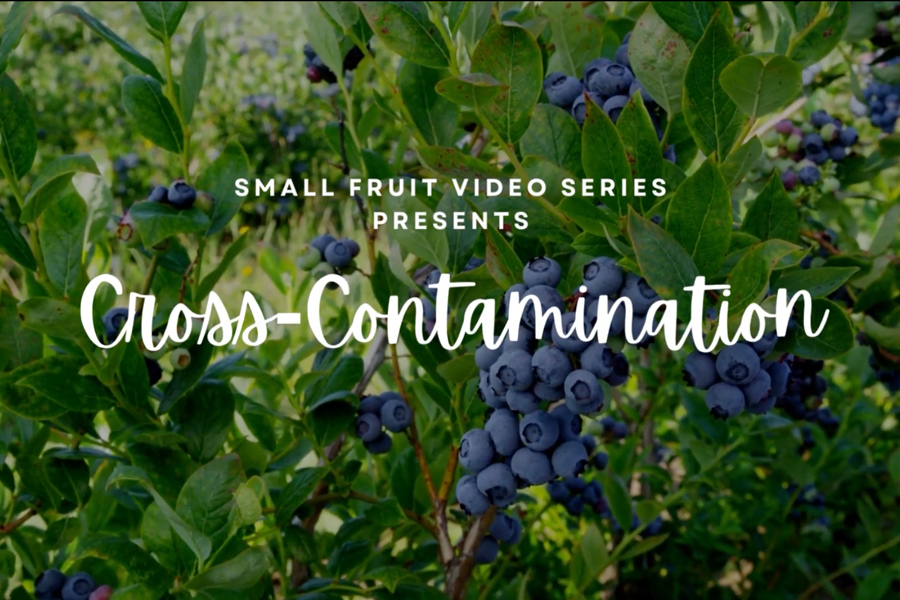

Cross-contamination can occur at any point throughout production and postharvest handling, resulting in foodborne pathogen contamination of small fruits. This video discusses techniques and best practices for growers and packers to ensure the production of safe, high-quality small fruits.
This video was produced in collaboration with the Auburn Department of Horticulture.
Video Transcript
Cross-contamination occurs when fruit contacts dirty surfaces. Pathogens can be transferred from these surfaces to the fruit and can cause illness when consumed. Because of this you should be aware of all surfaces that will come in contact with fruit, reduce the likelihood of contamination to these surfaces, and be sure to institute a robust sanitation program for soiled surfaces.
Proper hand washing and hygiene are important for all workers who may either handle fruit or handle food-contact surfaces.
Workers should be provided with clean water, soap, and single-use paper towels, and should be trained in proper hand washing techniques. This includes scrubbing with soap and water for 20 seconds before handling fruit or food-contact surfaces, and anytime hands may have become contaminated, such as after eating, drinking, smoking, breaks, or using the restroom.
Hand sanitizers should not be used in place of hand washing because they do not penetrate dirt well.
Harvesting equipment should be cleaned and sanitized daily. Mechanical harvesters are easily contaminated by dirt and debris that is dislodged from the plant as fruit is harvested. If birds, insects, or small animals have defecated on plants, feces can contaminate the harvesting equipment.
Harvest bins or baskets, clippers, or other tools used to hand-harvest should be cleaned daily and whenever they may have become contaminated. Harvest bins should never be placed on the ground, and all equipment should be stored or handled to ensure contamination does not occur during breaks.
Make sure packing areas are cleaned and surfaces sanitized before use, and on a predetermined schedule. During the packing season this schedule can be determined based on the volume of product, time intervals, or between individual lots of product. Record when cleaning and sanitation occurs.
While food-contact surfaces require the most rigorous attention, do not overlook nonfood contact surfaces. Contamination can spread to fruit or food-contact surfaces via air movement, such as from fans or HVAC systems. Splashing water from adjacent equipment or even floors and drains can also potentially spread contamination. Cleaning these areas on a regular basis minimizes the likelihood that they will spread contamination to the product.
Packaging containers, including clam shells and plastic bags, should be handled to prevent cross-contamination at all times. Because these containers come in direct contact with the fruit, they can readily spread pathogens to fruit if they become soiled. Make sure these items are covered during storage and store them in an area that’s free of rodents and pests. All employees handling packaging containers should wash their hands, and sick workers should not be allowed to handle packaging or participate in packing activities.
Another thing to consider is the use of food-grade lubricants or grease on all equipment surrounding or adjacent to food-contact surfaces. Lubricants and close proximity to fruit
may pose a chemical hazard if non-food-grade products are used. Discuss the need for food-grade products with procurement staff, and explain why you should purchase food-grade items even though they are often times more expensive.
Finally, all water that is used for small-fruit washing should contain a sanitizer that is approved by the Environmental Protection Agency (or EPA) for direct produce contact. Examples of approved sanitizers include sodium hypochlorite and peroxyacetic acid.
A sanitizer in wash water keeps the water clean so that pathogens that are rinsed off of some pieces of fruit are killed once they enter the water, rather than having an opportunity to attach to other pieces of fruit.
When sanitizer-containing water is used to wash fruits passing under a spray bar, pathogens that are rinsed off the fruit can be inactivated before they get a chance to attach to the conveyor or other equipment, where they can possibly contaminate fruit that may pass along that same equipment later.
Cross-contamination is a serious concern for produce growers because oftentimes what are initially small amounts of contamination can get worse and result in widespread contamination events and outbreaks of foodborne disease.
Growers can reduce their risks both in the field and after harvest by limiting the opportunity for pathogen spread via cross-contamination.