
Plant diseases may be a problem in the home garden, especially during warm, wet weather. Most vegetables are susceptible to at least a few diseases, but some diseases are more of a problem than others. Root rot, leaf spots and fruit rots are the more common vegetable disease problems. Fortunately, Georgia has a long cool season from fall through spring when a wide variety of cool-season crops can be grown with significantly lower disease risk.
Takeaways
- Georgia’s warm, wet summer weather can make diseases hard to manage. Regular scouting for disease and proper cultural practices can prevent problems from becoming worse. Cool-season growing offers Georgia gardeners some relief from disease pressure.
- Rotating crops each year and only growing vegetables in the same family in the same area every 3 to 5 years starves out most pathogens that cause stem and leaf diseases.
- Use disease-free seeds and transplants, and select disease-resistant varieties to prevent introducing diseases into your garden.
- Refer to the framework at the end of this resource for regular reminders of how to manage diseases in your home garden.
Four types of organisms primarily cause plant diseases: fungi, bacteria, nematodes and viruses. These organisms are often referred to as plant parasites or pathogens.
Plant diseases caused by fungi and bacteria are most common when rain showers and/or heavy dew are frequent and temperatures are warm. During these times, scout the garden regularly for disease. Viral diseases of vegetables occur mainly during the summer when the insects that carry these diseases are most active. Nematodes thrive when temperatures are warm but they can feed on plant roots all year. Although nematode damage to the root system is hidden, high numbers of the pests will reduce plant growth and yields.
Home gardeners can greatly reduce the occurrence of many diseases by following sound cultural practices as described in this publication.
Site Selection
Although few people have an ideal garden spot, site selection is important for a successful garden. A home garden site should drain well. Avoid wet and poorly drained soils. Excessive soil moisture will contribute greatly to disease, especially seedling, root and crown diseases. A sunny, open, well-ventilated site is important for growing healthy vegetables. Most vegetables need plenty of sun to thrive. Shade and dense vegetation around the site can encourage more plant disease by creating a more humid environment in which most plant pathogens thrive. Full sun speeds drying of the foliage, which can reduce the incidence of most foliar diseases.
Crop Rotation
Crop rotation is very important in reducing losses to vegetable diseases. Continuous plantings of the same plant family of vegetables in the same spot provide opportunities for pathogen buildup. Only grow the same type of vegetable or closely related vegetables in the same soil once every 3 to 5 years. This practice starves out most pathogens that cause stem and leaf diseases.
Longer crop rotations and/or other management methods may be needed for soilborne problems such as root and crown diseases caused by the fungi (and fungal-like organisms) Phytophthora, Rhizoctonia, Pythium and Sclerotium, vascular wilts caused by Ralstonia or Fusarium, and root-knot nematodes. These organisms are long-lived and affect many plant families.
Table 1 lists common vegetables by families or groups. Rotate vegetables with others outside of that group to minimize soil-borne diseases.
| Plant family | Vegetables |
|---|---|
| Alliaceae | Chives Garlic Leeks Onions |
| Brassicaceae | Broccoli Brussels sprouts Cabbage Cauliflower Collards Lettuce Mustard Radish Rutabaga Spinach Turnip |
| Cucurbitacae | Cantaloupe Cucumbers Honeydew melons Pumpkins Squash Watermelon |
| Fabaceae | All beans English peas Southern peas |
| Solanaceae | Eggplant Peppers Potatoes Tomatoes |
| Asteraceae | Lettuce |
| Poaceae | Corn |
| Malvaceae | Okra |
| Chenopodiaceae | Spinach |
| Apiaceae | Carrot |
Disease-Free Seed and Transplants
Many plant diseases can be seed-borne. If seeds are to be saved, consult seed saving guides for information on which plant species or cultivars are appropriate. Only save the seeds of healthy plants. Certain diseases, especially fungal and bacterial leaf and fruit spots, can contaminate the seed of their host plant with the disease-causing fungal spores or bacterial cells.
When contaminated seed is planted the following year, the new plant is vulnerable to infection from this additional source of disease. Commercially available seed is often, but not always, produced in the arid western United States where seed-borne pathogens are less common. Seed should only be saved from healthy plants or purchased from reputable seed companies.
Seed companies often apply fungicides to protect seeds. Although these treatments give some protection against pathogens in the soil that attack germinating seed and emerging seedlings, they do not control pathogens that may attack the plant after the seedling stage.
Gardeners starting a crop from transplants should examine transplants carefully before purchasing. Select healthy transplants that appear disease- and insect-free.
Disease-Resistant Varieties
Planting resistant varieties is the most efficient way of managing troublesome vegetable diseases. Make an effort to buy resistant varieties when they are available. Varieties with disease-resistance letters listed after the plant name indicate built-in resistance to common plant diseases. Seed catalogs generally list the resistant traits of vegetable varieties.
In the Southeast, the important disease resistances (with their seed catalog abbreviations) to consider include:
- Tomatoes: Fusarium wilt (F2, F3), root-knot nematode (N), Verticillium wilt (V), and tobacco mosaic virus (T) resistance. Some varieties may also have partial resistance to early blight (AB) and late blight (LB).
- Squash/Cucumbers: Powdery mildew (PM), downy mildew (DM), anthracnose (A), scab (S) and viruses (WMV, ZMV, CMV, etc.).
- Beans: Bean mosaic virus (BMV), anthracnose (A).
Resistance is a relative term, and resistant varieties can be either totally immune or only partially resistant depending on the disease and the variety. Less disease can be expected on partially resistant varieties, which may be enough to manage the disease in most years. Most resistant varieties are F1 hybrids. Open pollinated or heirloom varieties generally will not be labeled as disease-resistant. Purchasing nonresistant varieties is also an option, although more care may be needed to prevent certain diseases.
Planting Date Management
Planting dates can be an effective tool for disease management. Planting seeds when the soil is the wrong temperature for good germination can increase seed and seedling disease. Follow the recommended planting dates for the particular vegetable being grown. Warm-season crops are most susceptible to damage from cold temperatures and cool-season seed may not germinate if temperatures are hot.
Planting date adjustment can also be used to avoid times of year when pest pressure is high. Generally, the most devastating pests occur during the warmer months. The desire to produce an early crop must be balanced against temperatures that are too cool for plant growth.
Examples of crops that benefit from early planting (and the pests that are avoided) include: corn (corn ear worm, rust), beans (rusts, viruses, heat damage), and squash (stem borer, pickle worm, downy and powdery mildew, viruses). Late summer/early fall plantings of these crops may also be beneficial for avoiding pests. Planting transplants can help with getting a crop established early as long as the transplants are disease-free.
Proper Spacing and Trellising
Proper spacing and trellising can reduce the occurrence of many vegetable foliar diseases, especially fungal and bacterial diseases that thrive in extended wet periods. Space plants properly to allow good air circulation. Wet conditions are prolonged if plants are crowded and unable to dry quickly.
Tomatoes, beans, and cucumbers in particular will benefit from some type of staking or trellising since they are all subject to troublesome foliar fungal and bacterial diseases. The improved air circulation will dry the foliage more quickly and reduce disease severity.
Proper Watering
Proper water management is important for keeping plants healthy. Constantly wet soils contribute to soilborne diseases such as seed decay, damping-off, and root and crown rot. Water on foliage contributes to foliar diseases. To encourage a healthy root system, water deeply (equivalent to 1 in.) and only when needed (no more than once per week, if possible) based on natural rainfall. More water will be needed during hot, dry weather, while very little additional water may be needed during cooler months.
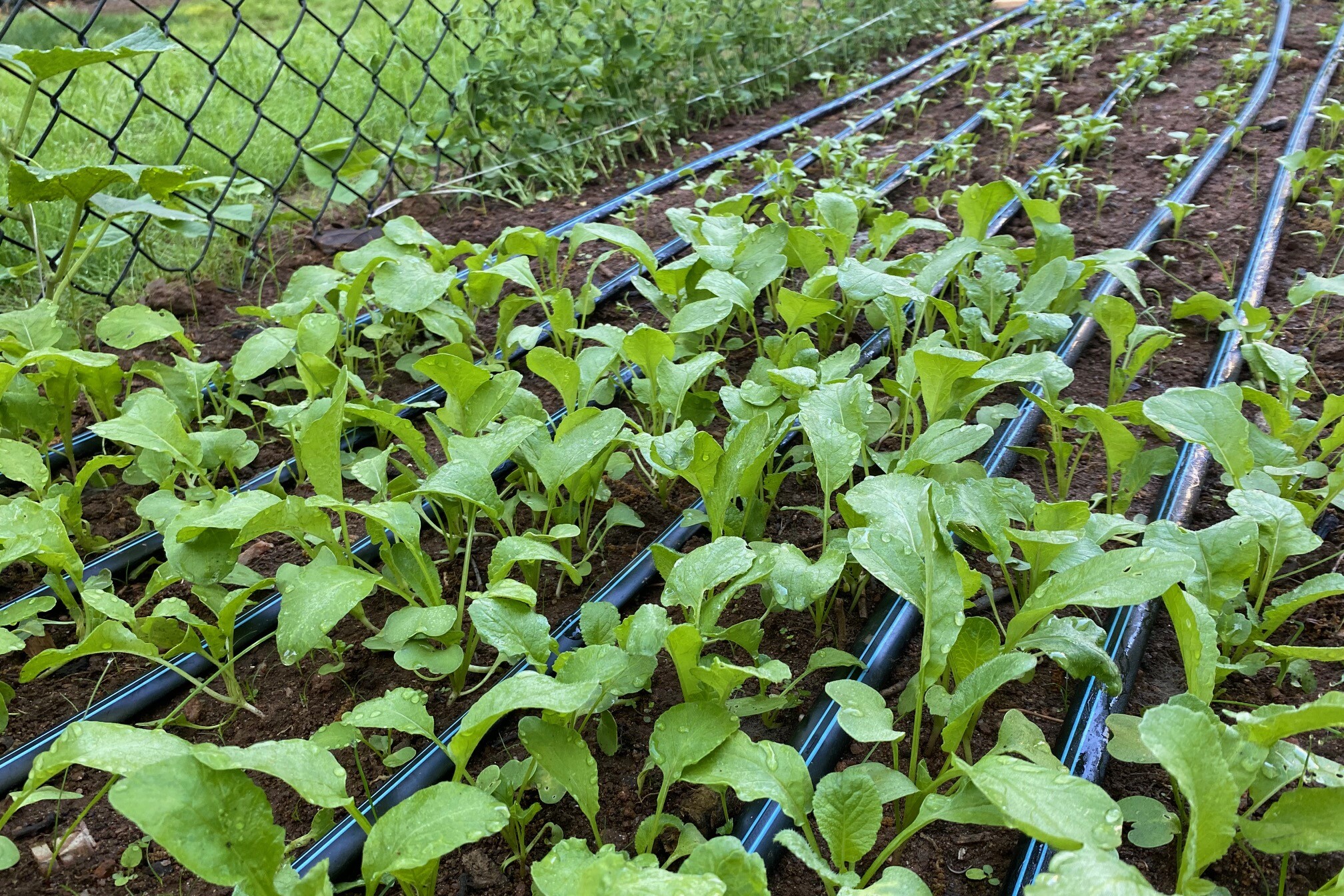
Drip irrigation slowly releases water for a thorough soaking and is the most efficient means of irrigation. Hand watering is effective for small plantings as long as the water is directed at the base of the plant and not the foliage. Sprinkler irrigation is the least desirable watering method in terms of efficiency and disease prevention. If sprinkler irrigation is used, water on sunny mornings when foliage will dry most quickly.
Maintain uniform soil moisture. A mulch layer will help conserve soil moisture and can reduce problems such as blossom end rot (calcium deficiency) of tomatoes and peppers.
Don’t work in the garden when plants and soil are wet. Bacterial and fungal diseases spread easily from one plant to another on hands and clothing when aboveground plant parts are wet.
Mulch
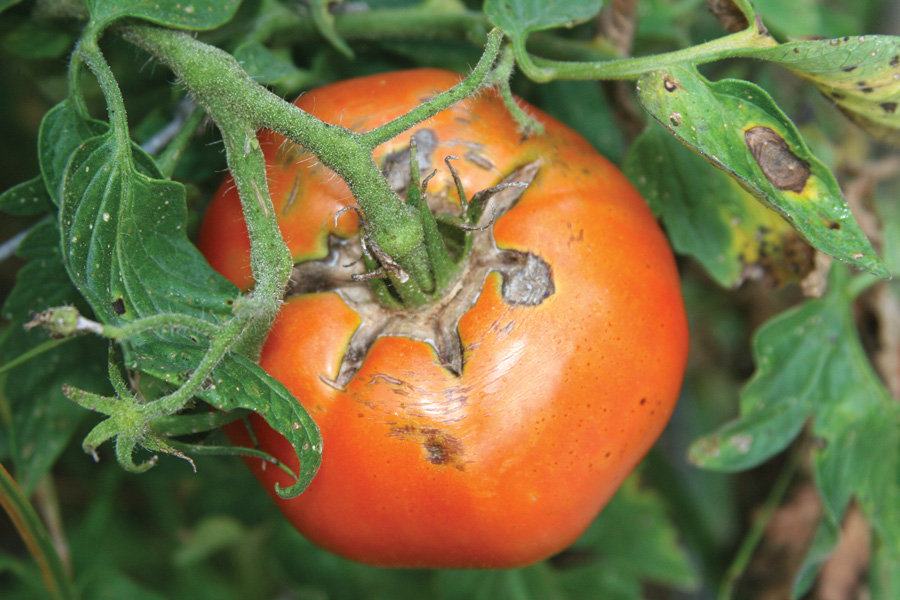
Many plant pathogens survive in the soil and can spend the winter in soil debris. Mulch such as straw, bark, leaves, shredded paper, or plastic will help prevent both soil from splashing onto plants and fruit from touching the bare ground. Tomatoes in particular benefit from a mulch layer to help prevent diseases such as early blight (Figure 1).

Ripening fruit such as strawberries, tomatoes, squash, cucumbers, and melons will easily pick up fruit rots from bare soil. Mulches also help conserve soil moisture, reduce weed infestations, and improve overall plant health. Some mulch materials, such as straw, leaves, shredded wood, or bark, will also add beneficial organic matter as they decompose.
Proper Fertilization and Organic Matter
Adequate fertilization helps prevent vegetable diseases. Test soil three to six months before the growing season, and follow the recommendations to supply appropriate nutrients and to adjust soil pH. Most vegetables prefer soil pH in the range of 6.5 to 7.0.
Soil organic matter from decomposed plant materials is an important factor in plant health. Not only are plants better able to absorb and utilize nutrition, but the microbial diversity in organically rich soils also helps keep diseases from becoming established. An optimal range for soil organic matter content is 2% to 5%. Good quality compost is considered an ideal source of organic matter. Fresh manures can burn plants and introduce pathogens; therefore, manures should be fully composted before they are added to the garden. Cover crops can also supply a portion of the organic matter.
Weed Control
Weeds can be another source of diseases and insects. For example, some weeds can serve as reservoirs for several insect-transmitted viruses that can infect homegrown vegetables. Weeds can also compete with vegetables for nutrients and sun. Good weed control will increase air movement in the garden and decrease conditions such as excessive moisture that favor disease development.
Nematode Control
Plant-parasitic nematode management is important for growing vegetable crops. Most vegetables are susceptible to nematode damage. Nematodes are microscopic soil inhabiting roundworms. Many species are beneficial, but some injure vegetables and other plants by feeding on and damaging their root systems.
Nematode damage may go undetected, but high numbers of the pests can sap the energy from your plants. If you suspect a problem, your soil can be checked for nematodes by submitting a soil sample to your county Extension office. The most damaging nematode in Georgia is the root-knot nematode, named for the knots it produces on infested roots (Figure 2).

The goal is to keep plant-parasitic nematode numbers at a low level. Although there are no nematode pesticides available for home gardeners, and no single method eliminates nematodes entirely, cultural management methods can prove effective. Nematode management strategies may include:
- rotating crops to non-hosts of the problem nematode
- planting varieties with nematode resistance
- planting nematode-suppressive cover crops
- increasing soil organic matter and microbial diversity
- solarization
- using biocontrol products
Optimizing plant and soil health is the first line of defense against nematodes. Active microbial populations have been shown to have a direct suppressive effect on plant-parasitic nematodes; however, this strategy must be combined with rotation to nonhost crops to break the nematode life cycle. Some plant varieties have nematode resistance, especially many hybrid tomatoes.
Sanitation
Sanitation, or removal of potentially diseased plant material, will help reduce the survival of disease-causing organisms and future disease outbreaks. After harvest, remove the plants and plant residue. Uproot entire plants when possible. Promptly remove and destroy diseased plants. Leaf spot outbreaks may be reduced if early-infected leaves are removed and destroyed.
Pesticides
Pesticides should be the last defense available to home gardeners once all other disease prevention options have failed. Home gardeners have fewer fungicides or bactericides available to them compared to commercial growers, and these products may be less effective. Most types of vegetables can be grown most years in the home garden without the use of pesticides. The use of fungicides as a preventative measure may be an option if certain diseases have been problematic in previous years and other management options have not been effective. Your local county Extension office can provide both disease identification and management recommendations.

Mancozeb, Terraclor® (PCNB), Agri-Phos® (phosphorous acid), and sulfur and copper products are homeowner options that can be used for managing specific diseases on certain crops. These products suppress a range of fungal pathogens and are most effective if they are applied in a preventive manner either before or at the very onset of a disease outbreak. Fungicides are not effective on disease symptoms that are already present.
Terraclor® is used as a transplant soil drench to suppress Southern blight (Figure 3) and Rhizoctonia damping-off. Copper products suppress both fungal and bacterial pathogens. Sulfur is effective against powdery mildews. Copper and sulfur products can burn the foliage on some plants so they must be used with care. As with any pesticide, read the label and follow the recommended precautions to ensure the chemical is applied in a safe, effective manner.
Organic Management
Organic disease and pest management is all about prevention. Organic pesticides are not effective unless their use is combined with the other methods of management outlined above. The main disease issues will occur when conditions are warm and humid on crops such as tomatoes (leaf spots and fruit rots) and squash (powdery and downy mildew, anthracnose). Organic products—such as copper, sulfur, Serenade®, and so on—may help with foliar problems if they are used as a preventative before problems develop.
Contact your county Extension office for specific information about pesticide recommendations. Use the Georgia Pest Management Handbook — Home & Garden Edition as a resource.
Summary
Healthy plants are the best prevention against plant diseases. Use proper cultural practices to promote and maintain healthy plants, which do not get diseases as readily as weak plants.
Home Garden Plant Disease Management Framework
This framework, created by Ruchika Kashyap, is a useful summary of how to approach prevention, maintenance, and disease response in home garden vegetables.
Prevention
- Site selection: Select an area that drains well, sunny and open for air circulation.
- Crop rotation: Avoid pathogen buildup by rotating plant families every 3–5 years.
- Input sources: Use disease-free seeds and transplants.
- Resistant varieties: Plant resistant varieties when available.
- Proper planting: Ensure proper spacing, trellising, and planting timing.
- Irrigation: Avoid overhead sprinklers; use drip irrigation instead.
- Scouting: Inspect plants weekly for disease symptoms, pests, and abnormal growth.
Maintenance
- Routine maintenance: Work in healthy areas first and avoid working in the garden when plants are wet.
- Sanitation practices: Clean and disinfect tools, equipment, and hands to prevent disease spread.
- Mulching: Apply mulch to reduce soil splashing, conserve moisture, and limit fruit/soil contact.
- Weed control: Remove weeds regularly to reduce disease reservoirs and improve airflow.
- Soil health: Test soil every 3–6 months to maintain a pH of 6.5–7.0 and the proper nutrient balance. Add quality compost to boost organic matter.
Disease Response
- Identify: Determine whether the issue is biotic or abiotic and diagnose the exact cause.
- Sample submission: For guidance, submit samples to the UGA Plant Disease Clinic through your local county Extension office.
- Removal and destruction: Remove and discard infected plants or diseased debris.
- Cultural practices: Continue following the recommended best management practices (rotation, spacing, watering, sanitation, mulching).
- Treat (as a last resort): Apply treatment only if necessary, following label directions and the Georgia Pest Management Handbook.
Original manuscript by David Langston, Vegetable Plant Pathologist, and Taft Eaker, Former Homeowner IPM Specialist. Initially revised by Elizabeth Little, Home Garden/Small Farm Plant Pathologist. Revised in 2026 by Ruchika Kashyap.