UGA College of Agricultural & Environmental Sciences Field Report
  • Stories
    Almanac

    Science in service of humanity and the environment

    Read our annual magazine here

    READ


    Dive into engaging stories that showcase our statewide, national and global impact.

    Check out our written stories here

    LOOK


    Browse curated photo galleries capturing the people, places and programs that bring CAES to life.

    Check out our photo galleries here

    WATCH


    Experience our stories through videos that highlight our people, projects and passions in action.

    Check out our video library here

    LISTEN


    Tune in to “Cultivating Curiosity,” our podcast featuring in-depth conversations with CAES experts.

    Check out our podcast here
  • Expert Resources

    Expert Resources


    From farms and gardens to families and finances, our expert resources empower Georgians with trustworthy, practical science.

    Gardening
    Invasive species
    Food and food safety
    Ants, termites and other pests
    Pollinators
    Livestock
    Emergency preparedness
    Home safety and maintenance
    Health, family and finances
    Nutrition
    Water quality
    Lawn maintenance and landscaping
    Turfgrass
    View all topics

    What is an Expert Resource?


    We publish unbiased, research-backed expert advice to empower Georgians with practical, trustworthy information they can trust.

    These resources are written and reviewed by experts in the UGA College of Agricultural and Environmental Sciences and the UGA College of Family and Consumer Sciences.

    Learn how we produce science you can trust
  • Events
  • Contact
  • Read
  • Look
  • Watch
  • Listen
Subscribe
  • LinkedIn
  • Facebook
  • Instagram
  • Stories
    Almanac

    Science in service of humanity and the environment

    Read our annual magazine here

    READ


    Dive into engaging stories that showcase our statewide, national and global impact.

    Check out our written stories here

    LOOK


    Browse curated photo galleries capturing the people, places and programs that bring CAES to life.

    Check out our photo galleries here

    WATCH


    Experience our stories through videos that highlight our people, projects and passions in action.

    Check out our video library here

    LISTEN


    Tune in to “Cultivating Curiosity,” our podcast featuring in-depth conversations with CAES experts.

    Check out our podcast here
  • Expert Resources

    Expert Resources


    From farms and gardens to families and finances, our expert resources empower Georgians with trustworthy, practical science.

    Gardening
    Invasive species
    Food and food safety
    Ants, termites and other pests
    Pollinators
    Livestock
    Emergency preparedness
    Home safety and maintenance
    Health, family and finances
    Nutrition
    Water quality
    Lawn maintenance and landscaping
    Turfgrass
    View all topics

    What is an Expert Resource?


    We publish unbiased, research-backed expert advice to empower Georgians with practical, trustworthy information they can trust.

    These resources are written and reviewed by experts in the UGA College of Agricultural and Environmental Sciences and the UGA College of Family and Consumer Sciences.

    Learn how we produce science you can trust
  • Events
  • Contact
  • Read
  • Look
  • Watch
  • Listen
Subscribe
  • LinkedIn
  • Facebook
  • Instagram
Subscribe
  • LinkedIn
  • Facebook
  • Instagram
  1. Home
  2. Expert Resources
  3. Topics
  4. Animal Production
  5. Beef

Beef Resources

Use the Advanced Search
  • Using Live Animal Carcass Ultrasound in Beef Cattle

    B 1337

    Using Live Animal Carcass Ultrasound in Beef Cattle

    One tool that aids producers in the efficient and profitable production of beef cattle is live animal carcass ultrasound. The use of carcass ultrasound is an economical way cattlemen can make genetic improvements in carcass traits, which will, in turn, put profits in their pockets.

    Carole Knight

    |

    Sept. 23, 2024
  • B 1297

    Hay Replacement Rations for Cows and Early Weaned Calves

    Drought can have a double impact on cattle producers. Not only is forage limited during the grazing months, but also the production of hay is limited. With the lack of forage, both grazed and conserved, many producers are looking for sources of feed for their cattle going into the fall and winter. Hay is an option, but it’s not the only option. Hay replacement rations can be an economical option to purchasing additional hay. Grains are often cheaper per unit of energy than hay, especially when hay prices increase during a drought period.
    When considering these feeding options, producers should consider three major issues: 1. Cost of the potential feeds and their nutrients, 2. Which rations will meet the nutritional requirements of their cattle, and 3. How to properly feed cattle with the hay replacement ration.

    Lawton Stewart and Jason Duggin

    |

    June 26, 2024
  • B 1500

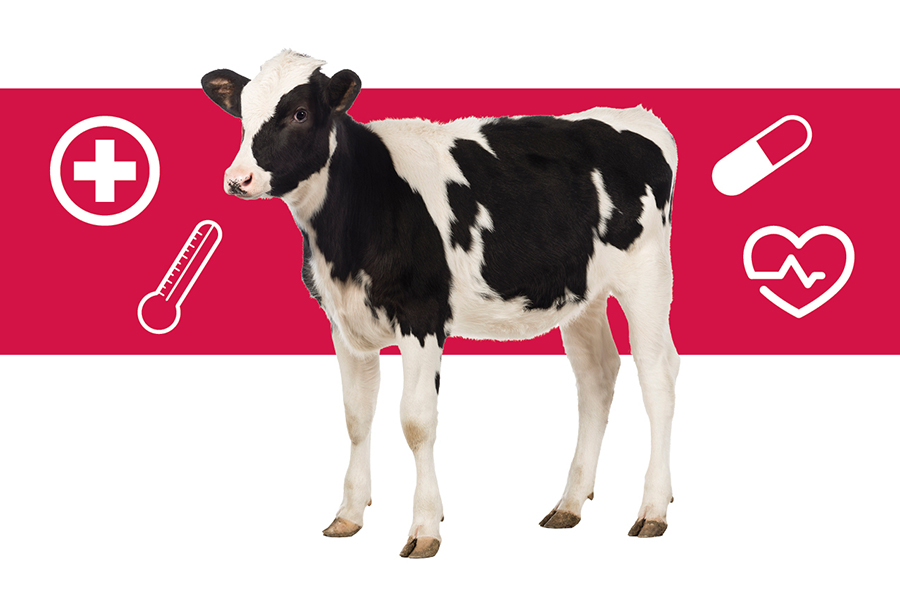
    Calf Health Basics

    Calf health is a key variable for calf growth and performance. Producers should not expect to know all calf health issues, causes, and the most successful treatments. Instead, a producer’s main goal should be to accurately identify and differentiate normal from abnormal in a calf’s physical state and behavior. The topics discussed in this publications are intended to help producers notice key areas of observation while also helping to identify normal and abnormal health parameters in calves. This information can also be used to develop calf management protocols and treatment strategies.

    Jillian Bohlen

    |

    April 18, 2024
  • C 553

    Bull Buyer’s Guide

    Bull procurement decisions can greatly impact your future calf crops and herd genetics for many years. Selecting and buying a herd bull is the quickest way to make genetic improvement in your herd. The selection process must include looking for those traits that are economically important and highly heritable. Demand and buy bulls with total performance that will improve your herd. This publication discusses factors to consider when purchasing a new bull.

    Lawton Stewart, Ted G. Dyer, and Ronald E. Silcox

    |

    April 9, 2024
  • Impact of Infectious Bovine Rhinotracheitis (IBR) on Reproduction in Cattle

    B 1422

    Impact of Infectious Bovine Rhinotracheitis (IBR) on Reproduction in Cattle

    Infectious Bovine Rhinotracheitis (IBR), commonly referred to as “Rednose,” is a disease resulting from bovine herpesvirus type 1 (BHV-1). The detriment of the disease, as well as the positive benefits vaccination can have on a reproductive program, needs to be on the forefront of a producer’s herd health program.

    Jillian Bohlen

    |

    March 15, 2024
  • AP 130-2-08

    2024 Beef Cattle Outlook

    1. The beef cattle outlook is positive in 2024. Tight supplies and stable consumer demand are expected to push cattle prices higher in the year ahead.
    2. Risks come from the demand side if U.S. consumers are uninterested or unable to pay for higher-priced beef. Additionally, input cost uncertainty may squeeze margins.
    3. Overall, beef cattle prices are expected to move higher year-over-year throughout 2024.

    Ben Campbell and William Secor

    |

    Jan. 22, 2024
  • B 1556

    Visual Evaluation of Beef Cattle for Breeding

    Beef cattle evaluation is important for all segments of the cattle industry. Visual evaluation allows you to compare animals not only for various economically viable traits, such as growth performance and potential carcass merit, but also for traits that are indicators of functionality in each production environment, such as skeletal structure. These traits are often difficult to quantify and are commonly considered convenience traits as they do not have a direct impact on income. Still, traits such as these can have a significant management and economic impact across multiple generations of offspring.

    This publication is intended to help the reader develop visual evaluation skills for cattle with particular emphasis on breeding cattle. Visual evaluation combined with industry best management practices is key to overall success in selecting quality replacements.

    Jason Duggin and Dylan Davis

    |

    Jan. 19, 2024
  • C 904

    Freeze Branding Cattle

    To improve efficiency, cattle producers should place a high priority on identifying individual cattle and maintaining accurate records. One type of permanent identification is branding.

    Lawton Stewart

    |

    Nov. 2, 2023
  • A brown cow with a white face looks at the camera while other cows eat from a trough

    B 1371

    UGA Basic Balancer

    The UGA Basic Balancer is a spreadsheet-based decision aid to formulate basic rations for beef cattle operations. The UGA Basic Balancer program consists of a feed library, least cost feedstuff analyzer, a ration analyzer, and sections to balance rations for brood cows, bulls, heifers, and stockers.

    The UGA Basic Balancer is intended to be a simple ration balancer that addresses energy (TDN) and crude protein (CP) requirements of cattle. This program does not take into consideration other requirements or limitations (for example, micro minerals, fat level, effective fiber, nonstructural carbohydrates, etc.). Before feeding any rations developed in this program, contact your local Extension office to address any potential problem.

    Lawton Stewart and Lisa Baxter

    |

    Oct. 24, 2023
Previous Page
1 2 3 4 … 7
Next Page

About CAES

CAES Home

Overview

History

Administration

Jobs

Personnel Directory

Privacy Policy

Accessibility Policy

AI Guidelines

Affiliations

UGA Cooperative Extension

Tifton Campus

Griffin Campus

University of Georgia
  • Schools and Colleges
  • Directory
  • MyUGA
  • Employment Opportunities
  • Copyright and Trademarks
  • UGA Privacy Policy
  • Submit a Student Complaint
#UGA on
© University of Georgia, Athens, GA 30602
706‑542‑3000