Departments and Units Resources
-

AP 124-2
2022 Georgia Cotton Production Guide
The cotton production guide provides an in-depth look at cotton production in Georgia and the southeastern United States. Issues discussed include economic outlook, fertility, weed management, insect management, disease and nematode management, irrigation decisions, precision ag technology, and general agronomics of the cotton crop (varieties, PGR applications, defoliation, etc.).
|
-

B 892
Irrigating Tobacco
This publication is a comprehensive guide to irrigation methods for tobacco in Georgia.
|
-

Johnsongrass is a warm-season perennial weed in pastures and roadsides throughout central and northern Georgia. Populations may germinate from seed in spring after overwintering in the soil. However, Johnsongrass primarily emerges from dormant rhizomes in areas with a history of infestations. Rhizomes are belowground stems that produce daughter plants and storage reserves for new growth in spring. The persistence of Johnsongrass is primarily associated with extensive rhizomatous growth that enable populations to spread laterally and dominate areas by preventing desirable species from flourishing.
|
-

This bulletin provides the scientific basis and food-safety framework for developing a food safety plan for acid/acidified foods. This includes practical food-safety examples for the acidified foods, including foundational support of a recordkeeping system and forms. Learning how to develop a process-flow diagram, developing recordkeeping forms, and applying food-safety principles during acid/acidified-food production will provide a processor with a better understanding of how a systematic approach to food-safety principles should be applied during the production, processing, packaging, storage, and distribution of acid/acidified foods. This publication contains information on how to develop a plan, including FDA requirements for developing a food safety plan, and sample recordkeeping forms to guide an acid/acidified food processor to safely process, package, and distribute acidified foods in commerce.
|
-

This resource describes the process of saving seeds, particularly for heirloom varieties in the Georgia garden. This guide is useful for both home gardens and school or community gardens.
|
-

This bulletin describes a recommended procedure to measure soil saturated hydraulic conductivity (Ks) with a borehole permeameter and convert this value to estimates of percolation rate for on-site wastewater treatment systems. Saturated hydraulic conductivity is a fundamental hydraulic parameter for soil water flow and it is defined as the ratio of the water velocity to the hydraulic gradient. This bulletin also provides information on a computer-based program to help calculate saturated hydraulic conductivity.
|
-
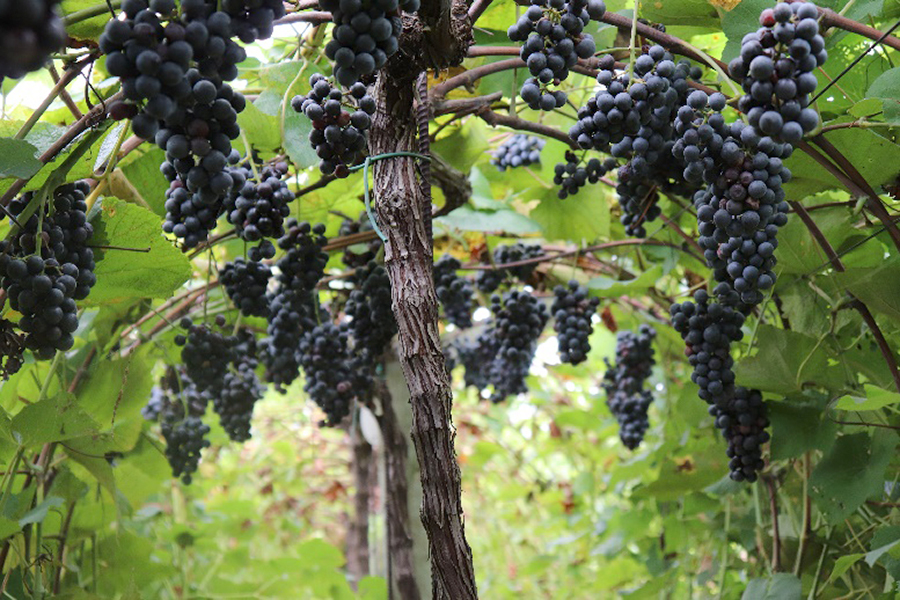
The “Vineyard Canopy Management Series” of Extension circulars reviews a number of canopy-management practices individually. Each circular advises how to effectively implement a canopy-management practice and why it is important to do so. The practices collectively known as “canopy management” aim to maximize canopy leaf exposure, maintain crop yield and quality, decrease disease, and improve vineyard health and sustainability. Though labor-intensive, canopy management should not be considered optional if the goal is annual production of high-quality grapes and wines.
|
-

Results from this study are preliminary, as only 2 years of data have been collected. Research over longer periods of time will be more revealing about how mechanical pruning will impact the perennial crop yield and health of the vineyard. Mechanical pruning is an option for dormant pruning ‘Carlos’ in situations where labor is unreliable and/or there is a low labor-to-acreage ratio which precludes the ability to finish pruning in the dormant period (December through March).
Concerns remain regarding the inaccuracy of mechanical pruning and the resultant amount of diseased and unproductive grapevine wood that remains in the canopy. It therefore may be a good practice to manually prune blocks of the vineyard on a recurring basis in order to reduce canopy congestion and the potential for disease buildup. Mechanical pruning may not be best practice in fresh-market muscadine cultivars, particularly those that produce bronze fruit that are less tolerant of rots and defects than purple fruit.
Mechanical pruning ‘Carlos’ and ‘Noble’ vineyards is worth consideration as these popular juice muscadine cultivars are vigorous and productive and may therefore sustain perennial health under high bud densities. Because of the preliminary nature of this report, it is recommended that mechanical, or “minimal” pruning, be trialed in vineyard blocks or sections before it is widely implemented with confidence.
|
-
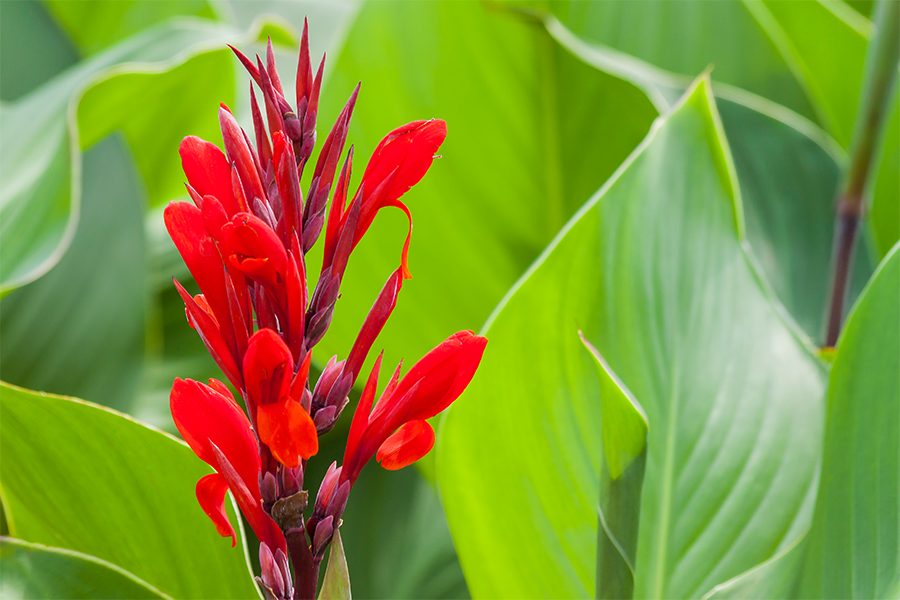
An introduction to the larger canna leafroller, plus information on biology and management.
|