Plant Pests and Diseases Resources
-

In 2016, Georgia’s plant disease losses, including control costs, amounted to an estimated $821 million. The value of the crops used in this estimate was approximately $6,596 million, resulting in a 12.8% relative disease loss across all crops included in this summary. The estimated values for most crops used to compute these disease losses are summarized in the UGA Center for Agribusiness and Economic Development’s 2016 Georgia Farm Gate Value Report (AR-17-01). Some estimates for fruits, ornamentals, and turf rely on specialists’ knowledge of the industry and industry sources for information.
|
-

Soil fumigants alone or in combination with nonfumigant nematicides can provide vegetable growers effective and reliable control of plant-parasitic nematodes, profitable yield and product quality, and increased profits. Treating soil with fumigant nematicides has been very beneficial to vegetable growers in Georgia, but environmental concerns may restrict the broad usage of these products. Telone II has been an important nematode management tool for the field production of many vegetable crops. Vegetable growers will have very limited options if soil fumigants, in particular Telone II, are no longer available. The development of new effective and environmentally safe nonfumigant nematicides has reduced the dependency on fumigant nematicides, but the application of fumigants still has great value for growers in Georgia.
|
-

Currently, European gypsy moth is one of the top quarantine species in the United States. Thanks to the efforts of the U.S. Forest Service and other organizations, such as the Slow the Spread Foundation, the spread of European gypsy moth has slowed dramatically and has yet to become established in Georgia. However, residents and commercial landscape/nursery persons should continually monitor for the pest. This review is intended to provide an introduction to European gypsy moth for residents and green industry professionals in the Southeast. It provides information on European gypsy moth identification, life cycle, means of spread, methods of control, and what can be expected in the Southeast if/when the insect arrives and becomes established.
|
-

David R. Coyle, A. Brady Self, James D. Floyd, and John J. Riggins
Four species of Ips bark beetles (also commonly known as Ips engraver beetles or Ips beetles) occur throughout pure and mixed pine forests in the southeastern U.S.: the six-spined ips (Ips calligraphus), the pine engraver (Ips pini), the eastern five-spined ips (Ips grandicollis), and the small southern pine engraver (Ips avulsus). Ips beetles appear similar to other bark beetles in this region, including the southern pine beetle (SPB), black turpentine beetle, and red turpentine beetle. These beetles occur throughout the entire southeastern U.S., with the exception of the pine engraver and red turpentine beetle, which are found only in the Appalachian region.
|
-

J. Holly Campbell and David R. Coyle, Southern Regional Extension Forestry
Littleleaf disease is a forest health concern for several pine species in the southeastern United States. This disease is a particular problem for shortleaf pine (Pinus echinata Mill.) and is one reason why this species is less widely planted compared with other pines. Littleleaf disease results from a combination of biological factors and site characteristics, when combined with a susceptible host tree. Some factors are more important – i.e., they have a primary role in disease formation – while others have a secondary role, and mostly contribute to making disease symptoms worse.
|
-
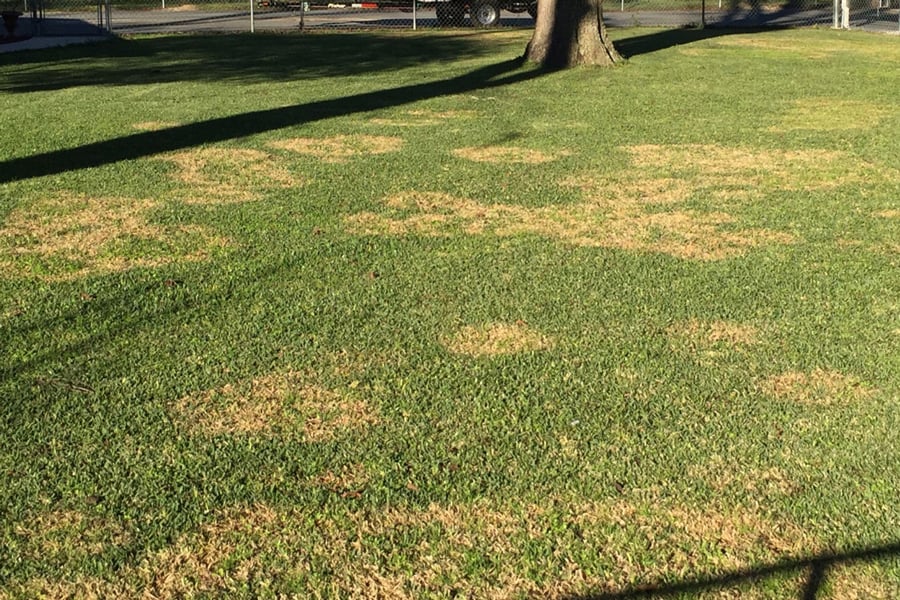
This publication includes a summary of the impact of plant disease on the major crops produced in Georgia. It’s published annually by the Department of Plant Pathology and is compiled based on input from department Extension personnel.
|
-

The diamondback moth is a common pest of crops including cabbage, collards, turnip greens, mustard greens, broccoli, cauliflower and other leafy greens.
This insect has a long history of becoming resistant to insecticides beginning with DDT in 1953. Since then, DBM has become resistant to each new class of insecticide arriving to the market whenever those insecticides were used intensively and repeatedly to control a DBM population.
Prevention is critical. To delay the onset of resistance follow the practices listed in this circular. Even if resistance is detected in an area, these tips can inhibit its spread and preserve insecticide effectiveness.
|
-

Weed management is one of the most critical and costly aspects for container nursery production. Weeds can quickly outcompete the crop for light and other resources, reducing the rate and amount of crop growth as well as salability. Preventative practices are most effective, primarily with the use of preemergent herbicides. Weed management alternatives to synthetic herbicides include sanitation, exclusion, prevention, hand weeding, mulching and use of cover crops, heat, and nonsynthetic herbicides. Only some of these alternative methods can be used to control weeds in containers, but all can be used to manage weeds around containers and in noncrop areas.
|
-
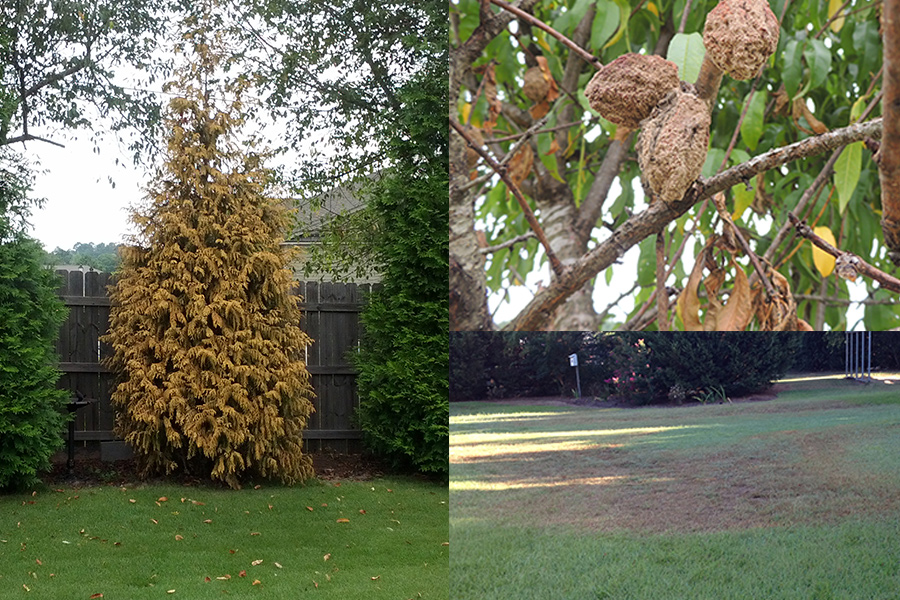
This annual publication is compiled by the Department of Plant Pathology based on input from department Extension personnel.
|