Horticulture Resources
-
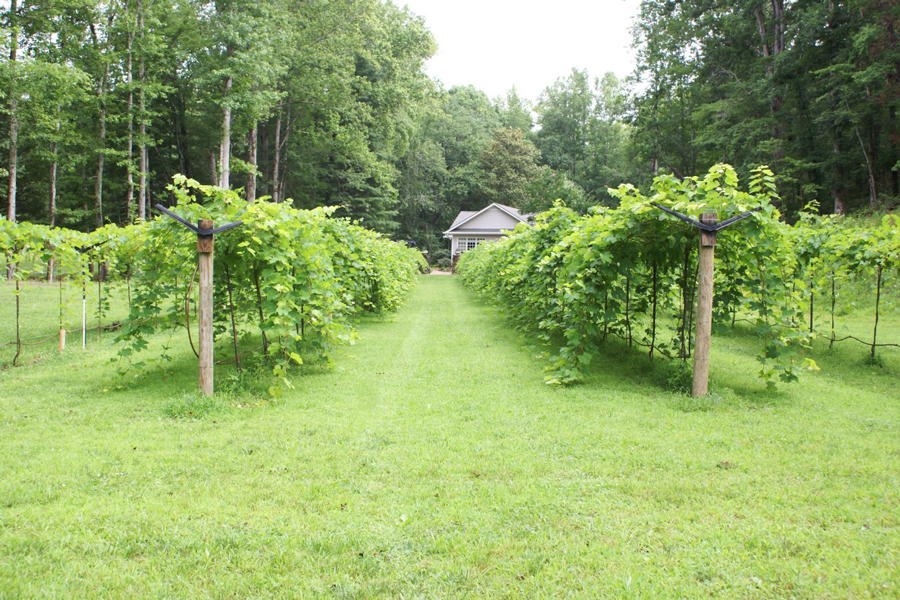
There are two main trellising system categories: divided and single canopy. Jerry Watson, a grape grower and owner of Austin County Vineyards in Cat Spring, Texas, developed the divided canopy “Watson System” in 2002 to solve some issues he was having with bunch rot management and harvest inefficiency in his vineyards. The Watson hardware and wires separate clusters from the canopy foliage and limit cluster touching compared to a standard, single high wire system. A high wire-trained vineyard could be retrofitted to Watson training with success.
|
-

The commercial citrus industry in Georgia has only recently been established, with most groves planted after 2014. Initially, satsuma mandarins (Citrus unshiu) on trifoliate rootstocks (Poncirus trifoliata) were planted for their cold-hardiness, seedlessness, and ease of peeling. Satsuma fruits begin to attain commercial maturity in early November and usually avoid hard freezes in southern Georgia. As of 2022, approximately 75% of the 3,300 acres of citrus planted in Georgia are satsumas, but that proportion is trending downward. To strengthen the new Georgia citrus industry, growers recently have begun to diversify their citrus varieties. Little is known about how these varieties will perform under Georgia weather and soil conditions. Therefore, research is necessary to determine what varieties can best tolerate Georgia’s winter weather and to determine cultural norms such as maturation time, fruit quality, and insect and disease tolerance. This publication is associated with Circular 1275, the initial publication containing reference photos for the varieties tested.
|
-
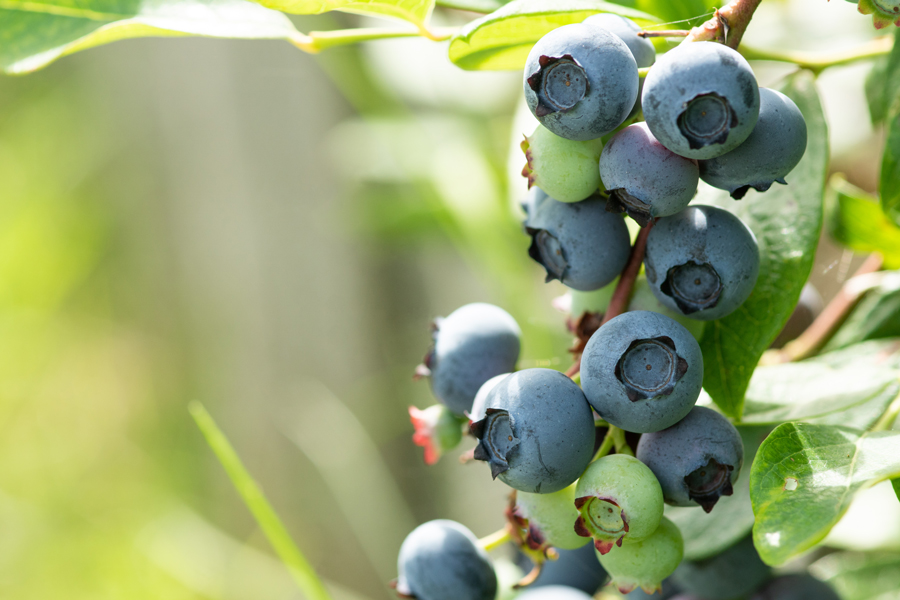
This resource is for commercial blueberry growers and covers basic postharvest harvesting, handling and cold storage principles for fresh-market blueberries to ensure the highest possible shelf life and quality while minimizing postharvest losses.
|
-

Drip irrigation is an important component of vegetable production systems in Georgia. Drip irrigation is more desirable than other irrigation methods for several reasons. Two important advantages are (1) water conservation and (2) potentially significantly improving fertilizer management. Fertigation is the timely application of small amounts of fertilizer through drip tubes directly to the root zone. Compared to conventional ground application, fertigation improves fertilizer efficiency.
|
-

Producing greenhouse-grown containerized transplants is an increasingly popular way to establish vegetable crops. Compared to field-grown transplants, greenhouse transplants have several advantages. They can be produced earlier and more uniformly than field-grown plants. Their growth can be controlled more easily through fertility and water management and they can be held longer and harvested when needed.
|
-
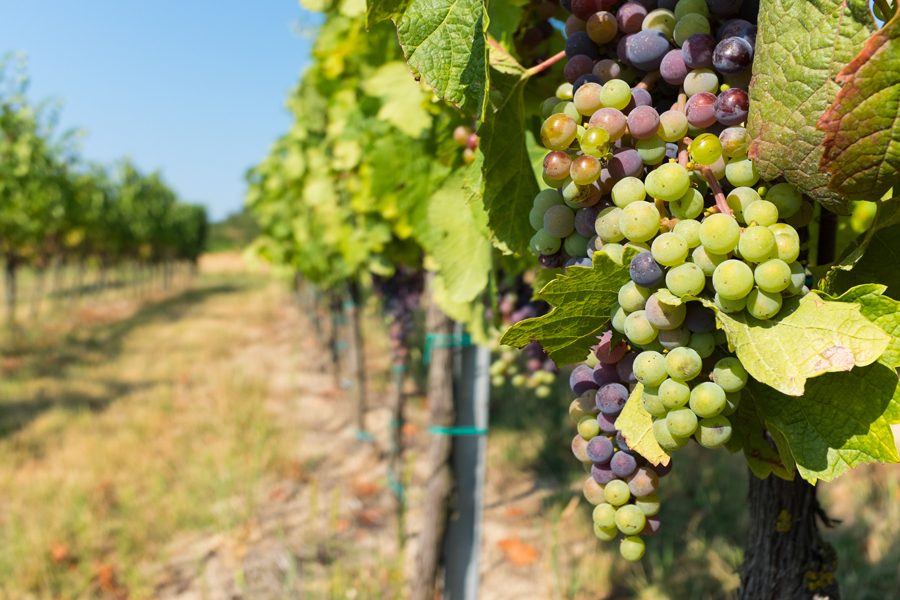
There are many ways to manage grapevine growth, and many grape-growing regions implement unique and preferred training methods. Vine growth management is achieved by applying a trellising system, which is a framework of metal cross arms, wires, and support posts that are used to direct grapevine vegetation to maximize fruit quality and production. Trellising and pruning combinations will sometimes be referred to as “training” systems, but “trellising,” “training,” and “pruning” are not interchangeable terms. Understanding the different forms of trellising and pruning can be a challenge for new growers. The goal of this publication is to provide a general introduction to some of the more common trellising and pruning terms used to describe grapevine management systems. There is a glossary at the end of this publication.
|
-
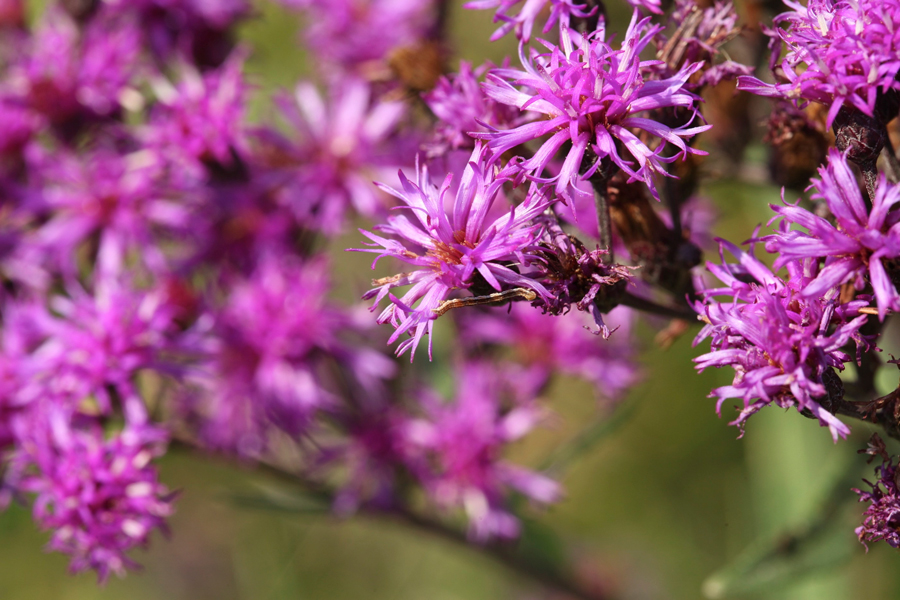
This publication is intended to be a quick guide for plant enthusiasts of North Georgia. Each plant listing is accompanied by a photograph and a brief plant description. The description contains the common name, scientific name, leaf description, flower description, habitat and plant uses.
|
-
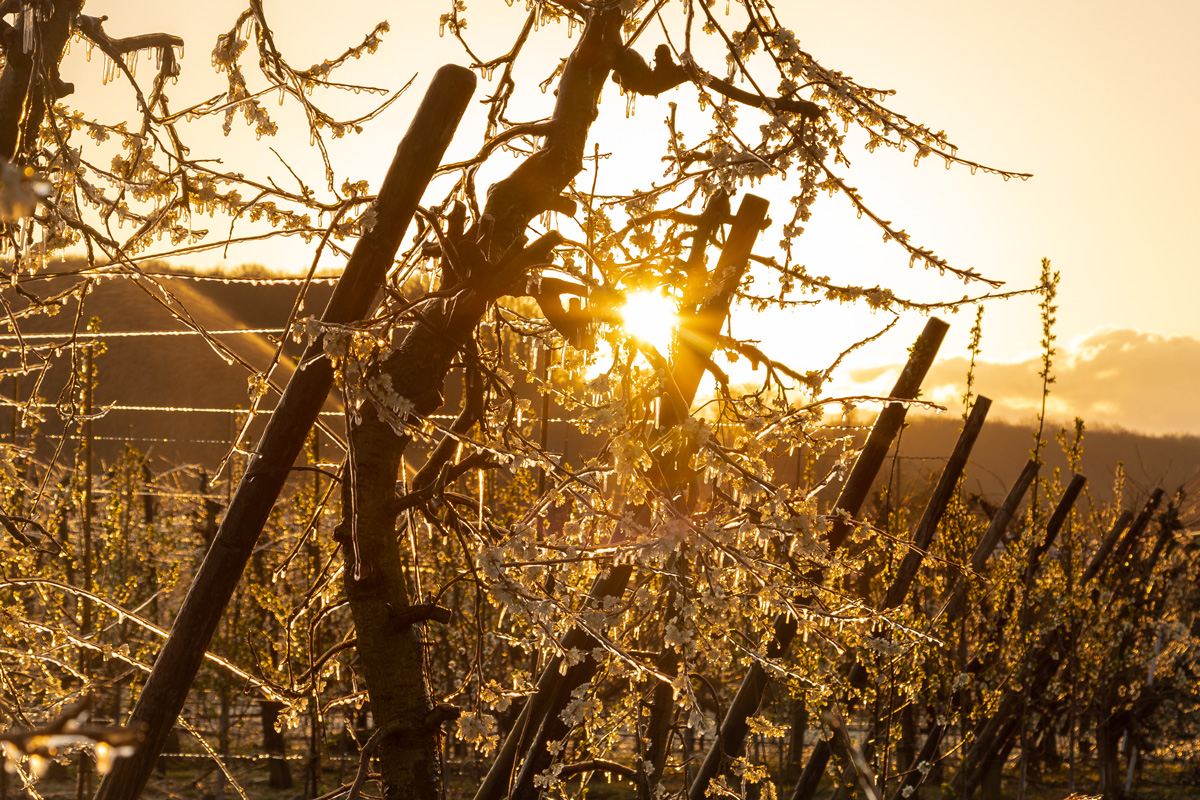
Freeze protection efforts should be based on the type of freeze, temperature, and wind speed that is impacting your crop. To apply frost protection, consider your crop value, the freeze protection capacity of your system, and the crop’s susceptibility to injury at each growth stage.
|
-

This publication provides information on variety types, suggested vegetable varieties for organic production, and steps to saving your own seed.
Organic farming and vegetable production are becoming increasingly popular. Nationally, organic sales have increased 80% since 2007, organic produce has a wholesale value typically twice that of conventional produce, and 75% of organic products are sold within 100 miles of the farm. These facts suggest that there is a tremendous market potential for organic vegetables in Georgia, yet organic production remains only a fraction of conventional vegetable production. Because of our humid subtropical climate, organic production in the Southeast is continually challenged by intense disease, insect and weed pressure. The purpose of this guide is to detail the importance of varietal selection for organic growers.
|