UGA College of Agricultural & Environmental Sciences Field Report
  • Stories
    Almanac

    Science in service of humanity and the environment

    Read our annual magazine here

    READ


    Dive into engaging stories that showcase our statewide, national and global impact.

    Check out our written stories here

    LOOK


    Browse curated photo galleries capturing the people, places and programs that bring CAES to life.

    Check out our photo galleries here

    WATCH


    Experience our stories through videos that highlight our people, projects and passions in action.

    Check out our video library here

    LISTEN


    Tune in to “Cultivating Curiosity,” our podcast featuring in-depth conversations with CAES experts.

    Check out our podcast here
  • Expert Resources

    Expert Resources


    From farms and gardens to families and finances, our expert resources empower Georgians with trustworthy, practical science.

    Gardening
    Invasive species
    Food and food safety
    Ants, termites and other pests
    Pollinators
    Livestock
    Emergency preparedness
    Home safety and maintenance
    Health, family and finances
    Nutrition
    Water quality
    Lawn maintenance and landscaping
    Turfgrass
    View all topics

    What is an Expert Resource?


    We publish unbiased, research-backed expert advice to empower Georgians with practical, trustworthy information they can trust.

    These resources are written and reviewed by experts in the UGA College of Agricultural and Environmental Sciences and the UGA College of Family and Consumer Sciences.

    Learn how we produce science you can trust
  • Events
  • Contact
  • Read
  • Look
  • Watch
  • Listen
Subscribe
  • LinkedIn
  • Facebook
  • Instagram
  • Stories
    Almanac

    Science in service of humanity and the environment

    Read our annual magazine here

    READ


    Dive into engaging stories that showcase our statewide, national and global impact.

    Check out our written stories here

    LOOK


    Browse curated photo galleries capturing the people, places and programs that bring CAES to life.

    Check out our photo galleries here

    WATCH


    Experience our stories through videos that highlight our people, projects and passions in action.

    Check out our video library here

    LISTEN


    Tune in to “Cultivating Curiosity,” our podcast featuring in-depth conversations with CAES experts.

    Check out our podcast here
  • Expert Resources

    Expert Resources


    From farms and gardens to families and finances, our expert resources empower Georgians with trustworthy, practical science.

    Gardening
    Invasive species
    Food and food safety
    Ants, termites and other pests
    Pollinators
    Livestock
    Emergency preparedness
    Home safety and maintenance
    Health, family and finances
    Nutrition
    Water quality
    Lawn maintenance and landscaping
    Turfgrass
    View all topics

    What is an Expert Resource?


    We publish unbiased, research-backed expert advice to empower Georgians with practical, trustworthy information they can trust.

    These resources are written and reviewed by experts in the UGA College of Agricultural and Environmental Sciences and the UGA College of Family and Consumer Sciences.

    Learn how we produce science you can trust
  • Events
  • Contact
  • Read
  • Look
  • Watch
  • Listen
Subscribe
  • LinkedIn
  • Facebook
  • Instagram
Subscribe
  • LinkedIn
  • Facebook
  • Instagram
  1. Home
  2. Expert Resources
  3. Topics
  4. Environment

Environment Resources

Use the Advanced Search
  • C 858-14

    Uranium in Your Water

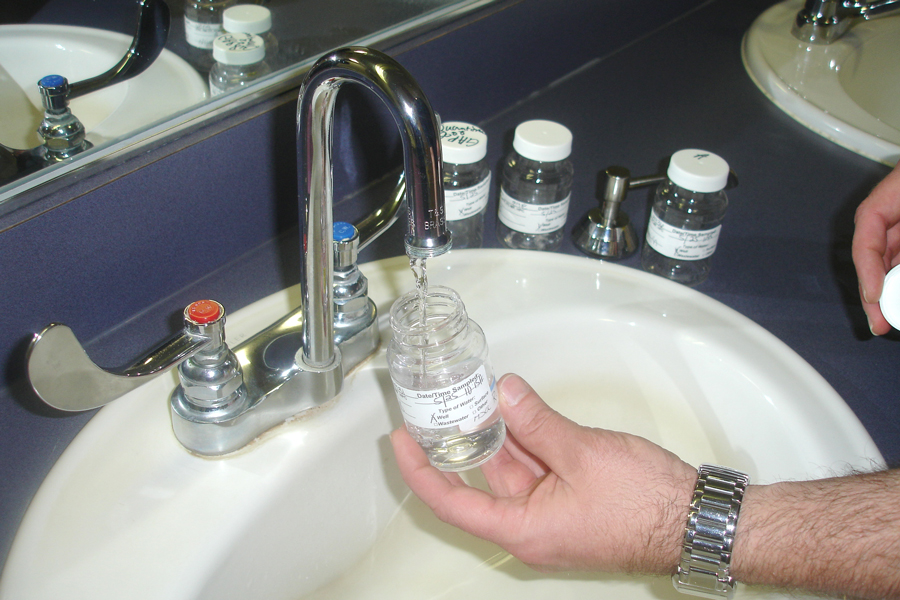
    Uranium in your drinking water may be harmful to your health. If your water comes from a public system, it is routinely tested to ensure safe levels of uranium. If your source of household water is a private well, cistern or spring, you are solely responsible for the quality of your own drinking water. Private well owners are encouraged to monitor uranium through water testing.

    Uttam K. Saha

    |

    May 4, 2026
  • B 1523

    Mechanical Filtration Methods and Devices

    Mechanical filtration removes suspended solids and dirt to greatly improve the clarity of water. Various kinds of mechanical filtration methods and devices are available for home water treatments. Primarily, the size of the suspended solids will determine the appropriate type of mechanical filtration device suitable for your unique situation. Consumers interested in filtration devices should discuss the advantages and disadvantages of various available options with a water treatment professional. This publication discusses the various aspects of mechanical filtration.

    Uttam K. Saha, Gary L. Hawkins, and Jason Lessl

    |

    April 30, 2026
  • B 1152-03

    Improving the Condition of Your Drinking Water Well

    About 95 percent of Georgia’s rural residents depend on groundwater to supply their drinking water and farm needs. Wells are designed to provide clean water. If improperly constructed and maintained, however, they can allow bacteria, nitrates, pesticides, or petroleum products to contaminate ground water. These contaminates can put family and livestock health at risk. This assessment allows you to evaluate the environmental soundness of your farm and operational practices relating to the condition of your drinking water well.

    Uttam K. Saha, Gary L. Hawkins, and Laurel Dunn

    |

    April 30, 2026
  • Green algae on the surface of water

    B 1419

    Microalgae Utilization in Wastewater Treatment

    Low-energy input systems that utilize microalgae and the natural biological process of photosynthesis can drive efficient wastewater treatment systems. This publication describes the use of microalgae in wastewater treatment.

    Brian H Kiepper

    |

    April 30, 2026
  • C 858-4

    Disinfecting Your Well Water: Shock Chlorination

    Shock chlorination is the process by which home water systems such as wells, springs, and cisterns are disinfected using household liquid bleach (or chlorine). Shock chlorination is the most widely recommended means of treating bacterial contamination in home water systems. This publication contains guidelines for safely and effectively using shock chlorination — a standard treatment for sanitizing your well system.

    Uttam K. Saha

    |

    April 17, 2026
  • B 1519

    How Wetlands Benefit Georgia Agriculture

    Many people view wetlands as “wastelands,” having few virtues. But it is now known that wetlands provide many useful services, from improving water quality to providing habitat for important fish and wildlife. These kinds of benefits would be costly to create, so maintaining natural wetlands is good for both the economy and the environment. Many smaller wetlands occur in Georgia farmlands, and many of the values provided by wetlands benefit Georgia farmers. This resource highlights the key virtues of wetlands to agriculture, describing how wetlands associated with Georgia farms can contribute to agricultural value.

    Darold P Batzer, Lori Sutter, Gabriela A Cardona-Rivera, Jason Schmidt, and Ashfaq A. Sial

    |

    March 27, 2026
  • SB 48-04

    Aquatic Environments Pest Management

    This section of the Home & Garden Edition covers external parasite control in aquatic environments, including fishery chemicals, aquatic weed control, response to herbicides, restrictions, and calculating concentrations in aquatic environments. Beginning in 2022, the Home & Garden Edition has been updated biennially. When purchasing a product based on a first-year recommendation of the Handbook, check the current product label before purchase to be sure it is still labeled for the use for which you are buying it. For pesticide products you have on hand from earlier purchases, you are allowed to use them until they are depleted without penalty under the law. Always follow label instructions before use. Contact the product’s manufacturer for the most up-to-date label.

    Wesley Gerrin, Jay Shelton, and Braxton Grey Crews

    |

    March 18, 2026
  • SB 48-13

    Vertebrate Pest Control

    This section of the Home & Garden Edition covers control of vertebrate pests such as beavers, chipmunks, deer, and bats, as well as repellents and how to manage reptiles, amphibians and birds. Note that prior to killing protected animals in Georgia, it is necessary to obtain a permit from the Wildlife Resources Office of the Georgia Department of Natural Resources. A permit is also required to take furbearing animals or game animals out of season. A current hunting or trapping license is required to take game or furbearing animals in season. Beginning in 2022, the Home & Garden Edition has been updated biennially. When purchasing a product based on a first-year recommendation of the Handbook, check the current product label before purchase to be sure it is still labeled for the use for which you are buying it. For pesticide products you have on hand from earlier purchases, you are allowed to use them until they are depleted without penalty under the law. Always follow label instructions before use. Contact the product’s manufacturer for the most up-to-date label.

    Carsen Dean

    |

    March 18, 2026
  • an attractive home landscape with a red Japanese maple tree and dry creek bed

    B 1444

    Water-Wise Landscape Guide for the Georgia Piedmont

    Do you want a landscape that is beautiful, saves you time, effort and money and uses less water? If you do, a water-wise landscape is for you. Water-wise landscapes are designed, organized, and maintained by practices that use water strategically and wisely. Follow the seven basic steps outlined in this guide to create a beautiful water-wise yard or home garden.

    Sheri Dorn, Bodie V. Pennisi, and Clint Waltz

    |

    Feb. 5, 2026
Previous Page
1 2 3 4 5 … 20
Next Page

About CAES

CAES Home

Overview

History

Administration

Jobs

Personnel Directory

Privacy Policy

Accessibility Policy

AI Guidelines

Affiliations

UGA Cooperative Extension

Tifton Campus

Griffin Campus

University of Georgia
  • Schools and Colleges
  • Directory
  • MyUGA
  • Employment Opportunities
  • Copyright and Trademarks
  • UGA Privacy Policy
  • Report an Accessibility Barrier
  • Submit a Student Complaint
#UGA on
© University of Georgia, Athens, GA 30602
706‑542‑3000